
What Jerusalem data centers need to treat
A Jerusalem data center should segregate cooling-tower blowdown, sanitary wastewater, process drains, equipment washwater, air-conditioning condensate, and any laboratory or battery drains before selecting treatment equipment. Cooling blowdown can carry 3,000–10,000 mg/L TDS and may contain salts, metals, biocides, corrosion inhibitors, and altered pH, so direct sewer discharge cannot be assessed from flow alone (HydropureWater, 2026). A defensible concept compares measured stream chemistry, seasonal cooling demand, cycles of concentration, disposal routes, local sewer limits, and Jerusalem approval requirements. This extends the data center cooling blowdown treatment framework to Jerusalem conditions.
Jerusalem’s water scarcity makes reuse and cooling optimization central, but climate alone does not determine the treatment train. Foundation Israel’s 2026 review identifies desert heat, limited freshwater, groundwater salinity, reclaimed municipal wastewater, and a need to quantify water source and volume in environmental-impact documentation. It also describes closed or hybrid cooling, reclaimed-water use during peak demand, and separate collection of air-handling condensate as relevant design measures.
The design basis should therefore begin with seasonal heat rejection and source-water chemistry, not a selected process name. For each stream, establish normal and peak flow, water temperature, chemical inventory, and disposal destination. Obtain written sewer conditions or a confirmed brine route before sizing equalization, membranes, evaporators, or crystallizers.
| Wastewater stream | Design focus before treatment selection | Permit or route question |
|---|---|---|
| Cooling-tower blowdown | Flow series, TDS, conductivity, pH, hardness, silica, chloride, oils, organics, biocides, and inhibitor inventory | Can the receiving utility accept the residual stream, or is brine discharge prohibited? |
| Sanitary wastewater | Peak flow, load, effluent objective, and whether off-site biological treatment is adequate | Does the municipal system have capacity for the project and cumulative load? |
| Process and equipment drains | Contaminant inventory and chemical compatibility | Do any streams require separate treatment or prohibited discharge? |
| Air-conditioning condensate | Cleanliness, episodic flow, storage capacity, and fallback route | Is reuse as cooling makeup permitted, subject to quality control? |
| Laboratory or battery drains | Specific contaminant analysis and segregation | Must the stream enter a licensed or specially approved waste stream? |
Water Utility Report’s 2026 checklist asks communities to establish discharge volume, expected chemistry, pretreatment requirements, and whether the local wastewater system has assessed cumulative load. Those four items should appear in the Jerusalem pre-design and permitting record.
Why cooling blowdown is the critical wastewater stream
Cooling blowdown is the concentrated residual left when water evaporates but dissolved salts and treatment chemicals remain behind. Its composition therefore depends on the makeup water, cycles of concentration, evaporation rate, and chemical-treatment program. Water Utility Report, updated 2026-04-14, identifies elevated salts, heavy metals, biocides, corrosion inhibitors, and altered pH as possible constituents, while emphasizing that actual quality depends on source water and treatment.
HydropureWater’s 2026 engineering guidance gives 3,000–10,000 mg/L TDS as a typical planning range for cooling-tower blowdown. That range is a screening value, not a site design result. The permit case and equipment sizing require representative sampling of the actual makeup, basin water, and blowdown.
Reclaimed municipal water can reduce freshwater withdrawals, but it changes rather than removes the water-quality challenge. Its dissolved salts, hardness, silica, alkalinity, and residual organic matter may require additional pretreatment, scaling control, corrosion control, and monitoring. The same applies to internal recycle: the recovered water enters a heat-transfer circuit where concentration and biological control remain critical.
Source control also reduces membrane and thermal-system risk. DAF pretreatment for cooling-tower blowdown can remove suspended solids, oils, and organics before they foul downstream equipment. UF filtration for RO pretreatment and biological control supplies a secondary barrier against residual particulates, colloids, and microorganisms. The required pretreatment sequence must follow measured water quality rather than a standard package.
Build a source-separation and equalization strategy
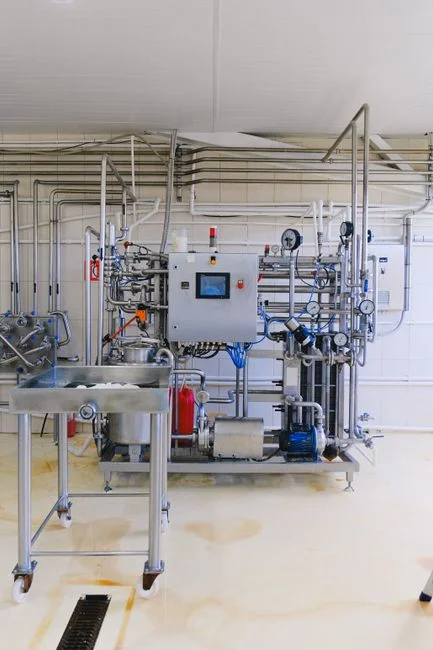
Source separation is the first treatment decision: keeping clean condensate, sanitary wastewater, and chemically contaminated drains apart prevents one stream from setting the loading and permit basis for all the others. Clean condensate should enter a dedicated, inspected route and should not mix uncontrolled with blowdown. Any area that could contain process chemicals, washwater, oil, or battery-derived contaminants needs its own drain isolation, inspection point, and disposal instruction.
Equalization then smooths variable blowdown and wastewater flow before treatment. Operators should monitor flow, pH, conductivity, and turbidity continuously, with alarms and an auditable operating record. Tank number, volume, and retention time cannot be selected from IT load alone; they require the measured flow series, operational variability, and the treatment unit’s response to chemical-dosing and startup conditions.
| Control point | Required information | Engineering consequence |
|---|---|---|
| Stream segregation | Floor drainage plan, chemical inventory, contamination assessment, and clean-condensate route | Prevents membrane, biological, and permit-loading conflicts |
| Equalization | Continuous flow, pH, conductivity, and turbidity; normal and peak operation | Sets hydraulic and chemical feed requirements |
| Sanitary wastewater | Peak flow and load, treatment objective, and receiving-system capacity | Determines whether off-site treatment is adequate or on-site biological treatment is justified |
| Cooling chemistry | Biocide, corrosion inhibitor, antiscalant, pH adjustment, deicing, and cleaning chemicals | Sets compatibility, pretreatment, and residual-management requirements |
| Representative sampling | Normal operation, peak cooling demand, startup, shutdown, and chemical-dosing events | Prevents one sample from defining annual load |
For sanitary wastewater, off-site treatment may be sufficient if the receiving utility confirms both hydraulic and pollutant capacity. HydropureWater’s 2026 MBR information presents on-site biological treatment for industrial process-water and reuse projects up to 2,000 m³/day; that benchmark does not establish the Jerusalem project’s requirement, which remains flow- and load-dependent. Automatic dosing should follow an inventory-based chemical control and containment strategy, not a generic dose rate.
Select the treatment train for reuse or discharge
The partial-reuse path is a sequence: collect and equalize blowdown, remove oil and suspended material, apply a secondary filtration barrier, then use RO to recover low-ionic-strength permeate for blending or controlled reuse. DAF addresses suspended solids, oils, and organics; UF or multimedia filtration protects the RO stage from residual particulates; RO removes dissolved ions while producing a concentrated brine. This sequence is justified by HydropureWater’s 2026 process guidance.
HydropureWater reports 75–90% recovery for RO and 99% or greater for ZLD. Those are process benchmarks, not selection thresholds. If the receiving sewer can accept the concentrate and freshwater remains available, RO may be the simpler route. If a discharge restriction effectively prevents liquid brine disposal, ZLD may be necessary, but its thermal and solids-handling burden must be included in the investment case.
| Decision condition | Conditional treatment route | Critical design and evidence |
|---|---|---|
| Partial reuse is justified and the sewer accepts brine | Equalization → DAF → UF or multimedia → RO → conditioning and controlled cooling reuse | HydropureWater’s 2026 benchmark: 75–90% RO recovery; recycled makeup below 500 mg/L TDS, below 30 mg/L COD, and below 1,000 µS/cm conductivity |
| Cooling makeup has a chloride-sensitive use | RO followed by conditioning, with a separate chloride control | HydropureWater’s 2026 recycled-cooling target: chloride below 150 mg/L |
| The sewer accepts the residual chemistry and brine | Equalization and treatment as required by written local conditions | Obtain sewer limits for flow, TDS, pH, chloride, metals, organics, and surcharge terms; do not infer acceptance from reuse targets |
| No practical liquid-concentrate route exists | RO or equivalent concentration followed by thermal evaporation and crystallization | HydropureWater’s 2026 benchmark: 99% or greater ZLD recovery; verify available power or heat, solids disposal, and operator capability |
Reclaimed-water targets and cooling-basin limits serve different purposes. HydropureWater’s 2026 recycled-makeup targets—TDS below 500 mg/L, COD below 30 mg/L, and conductivity below 1,000 µS/cm—describe the quality of water returned to service. They are more stringent than the cited basin ceiling and should not be substituted for sewer conditions.
Permeate also requires loop-specific controls before reuse. HydropureWater’s 2026 guidance identifies chlorine dioxide as effective against biofilms and Legionella at the higher pH common in recycled loops and identifies RO/UF pretreatment as part of the control strategy. A chlorine dioxide treatment basis must be coordinated with the site water-safety plan; disinfectant generation alone does not establish residual control or regulatory approval.
ZLD should be selected only after the buyer states the actual liquid-discharge constraint, identifies a solids-disposal route, and accepts the additional operating burden. A high recovery percentage is not a substitute for a permitted, operable discharge solution.
Protect the cooling loop and satisfy permit conditions
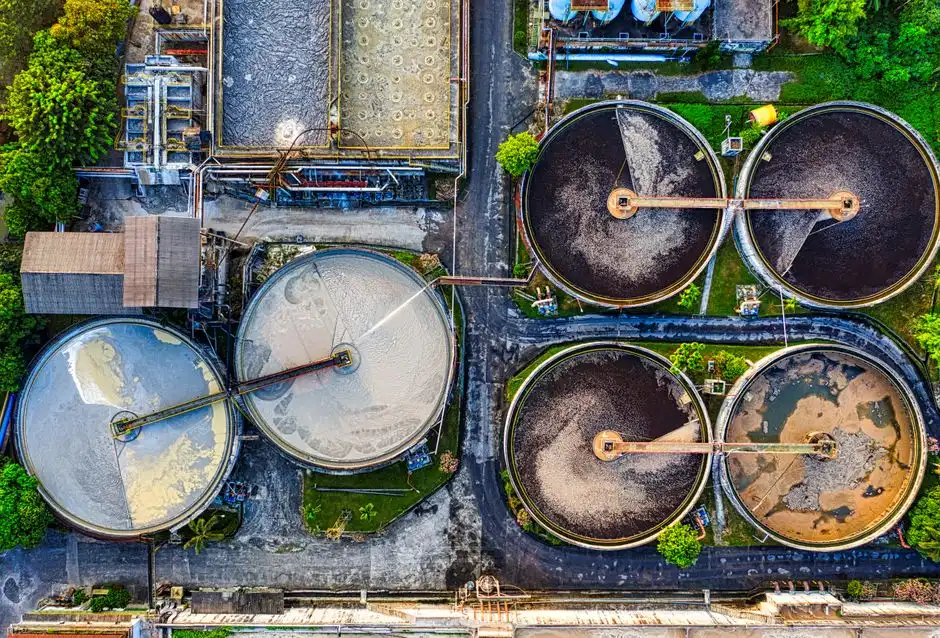
Cooling-water quality must be translated into operating limits, monitoring, safety controls, and compliance evidence. HydropureWater’s 2026 review cites ANSI/ASHRAE/ICC/USGBC/IES Standard 189.1-2017 Addendum i, approved by ANSI on 2019-07-24. The cited values include a 2,050 ppm TDS recirculating-water maximum, a 1,500 mg/L discharge-TDS exception, 150 mg/L silica as SiO₂, 300 ppm chlorides as Cl, 600 ppm calcium hardness as CaCO₃, 600 ppm alkalinity as CaCO₃, 250 ppm sulfates, and an LSI limit of +2.8.
Those values are not Jerusalem discharge limits. The same source describes a 90% maximum-action provision, exceptions, and equipment-dependent application. The engineering team must use the applicable standard, equipment configuration, and operating basis correctly, then obtain the sewer, groundwater, construction, and environmental conditions that control the selected route.
| Control | Design use | Compliance distinction |
|---|---|---|
| Continuous conductivity | Real-time indication of ionic concentration and blend control | Reuse target is below 1,000 µS/cm in HydropureWater’s 2026 cited specification |
| pH, turbidity, TDS or conductivity, chloride, silica, and hardness | Trend scaling, corrosion, membrane fouling, and chemical dosing | Select frequencies from treatment and cooling-loop risk |
| Biocide, corrosion inhibitor, and residual disinfectant | Verify chemical control and the concentration leaving the treatment train | Do not treat a cooling-loop limit as a sewer permission |
| Legionella-risk monitoring and water-safety plan | Control biofilm, stagnation, and residual-disinfectant performance | HydropureWater’s 2026 guidance references ASHRAE Standard 188; applicable Jerusalem health and safety requirements still govern |
| Flow and discharge records | Reconcile source, reuse, and final discharge quantities | Each destination requires confirmation with the relevant Jerusalem authority or receiving utility |
HydropureWater’s 2026 specification is more stringent for recycled makeup than the cited basin ceiling: below 500 mg/L TDS and below 1,000 µS/cm conductivity. That separation matters. The basin may be operated within its own limits, while recovered makeup remains a controlled, lower-ionic-strength stream. A treated-water RO/UF membrane and element basis should therefore specify both permeate and concentrate obligations.
Cooling-loop compliance does not authorize a sewer discharge, groundwater infiltration, or construction-stage discharge. Conversely, sewer acceptance does not demonstrate that recycled makeup is safe for the cooling equipment. Each route needs its own approval basis and operating record.
Compare equipment and cost before ordering
Equipment comparison should begin with the contaminant-removal task and end with the disposal constraint. HydropureWater’s 2026 global benchmark ranges are $500–$1,500 per m³/day of installed capacity for industrial RO and $2,000–$4,000 per m³/day for full ZLD. These are global benchmarks, not Jerusalem quotations. The cited ZLD operating-cost range is $3.00–$5.00 per m³; a site bid should separately price energy, brine disposal, pretreatment, membrane replacement, chemicals, and residual treatment.
| Technology | Primary function | Procurement risk |
|---|---|---|
| DAF | Remove suspended solids, oils, and organics | Require a performance basis against measured oil and solids loads |
| UF or multimedia filtration | Remove bacteria, colloids, and suspended solids; protect RO | Define flux, loading, cleaning, and redundancy assumptions |
| RO | Remove dissolved ions and support partial recovery | Specify recovery, permeate quality, concentrate chemistry, and pretreatment scope |
| ZLD | Concentrate the residual brine and produce a dry solid cake | Price thermal duty, available heat or power, crystallizer operation, and solids disposal |
Do not select ZLD solely for its headline recovery rate. The buyer must state the discharge prohibition, sewer condition, brine route, available heat or power, reliability requirements, and operator capability. These inputs determine whether ZLD is the only route or merely the most expensive option.
Every bidder should size the system from measured blowdown flow, TDS, hardness, silica, chloride, pH, oil, and organics, together with available reclaimed-water and potable-makeup quality. A multimedia filtration package can be compared with UF only after the required particulate-removal duty and membrane-protection requirements are documented. Nameplate IT load does not determine treatment capacity by itself.
Site data and supplier request checklist
Send bidders the wastewater and blowdown flow series, source-water analyses, chemical-treatment inventory, cycles of concentration, operating schedule, seasonal heat profile, and future IT-load scenario. The package should also distinguish each drain’s origin and contamination risk. For equipment sizing, require a documented design flow, recovery, permeate and concentrate quality, pretreatment sequence, redundancy, monitoring, chemical consumption, sludge handling, cleaning requirements, energy demand, commissioning tests, and performance guarantees.
Permit and commercial information is equally important. Request current sewer or receiving-system limits, permit conditions, discharge route, brine-disposal options, reclaimed-water specifications, construction and environmental approval requirements, and any authority assessment of cumulative load. Also request the basis for delivery, commissioning, operator training, spare parts, membrane or media replacement, and performance-test remedies.
Water Utility Report’s 2026 principle is straightforward: the assessment must establish where the water goes and what it contains when it leaves the cooling system. That applies to Jerusalem whether the final route is internal reuse, municipal sewer discharge, or zero liquid discharge.
- Obtain source-water and wastewater analyses for normal, peak, startup, shutdown, and chemical-dosing conditions.
- Issue a flow diagram showing segregation, equalization, treatment, reuse, and final discharge.
- Define the reuse target and disposal constraint in writing.
- Require each bidder to identify exclusions, pretreatment obligations, guarantees, and operating assumptions.
- Confirm the Jerusalem approval and receiving-utility route before equipment order.
Final equipment sizing requires site-specific influent testing, current permits, and the final equipment proposal. A mechanical bar-screen basis may be included for solids control where the measured stream requires it, but it cannot substitute for source separation or water-quality characterization.
Frequently Asked Questions
What does cooling-tower blowdown treatment cost for a Jerusalem data center?
HydropureWater’s 2026 global benchmark is $500–$1,500 per m³/day for industrial RO and $2,000–$4,000 per m³/day for full ZLD; cited ZLD operating cost is $3.00–$5.00 per m³. These are not Jerusalem quotations. Request a bid stating pretreatment, energy, chemicals, membrane replacement, brine or solid disposal, and operator costs separately.
How should treatment capacity be sized?
Size from measured stream flows and chemistry, not IT load alone. Give bidders the flow series, seasonal cooling profile, source-water analysis, TDS, hardness, silica, chloride, pH, oil, organics, cycles of concentration, required recovery, and final disposal route.
Can reclaimed water be used directly as data-center cooling makeup?
Do not assume that sewer or reclaimed-water availability establishes cooling-loop suitability. The buyer should request the reclaimed-water specification and compare it with the intended makeup target, including TDS, conductivity, hardness, silica, chloride, organics, pH, biological risk, and treatment requirements.
How should a treatment supplier be selected?
Require a site-specific process basis, guaranteed flow and recovery, permeate and concentrate limits, pretreatment scope, monitoring, O&M assumptions, commissioning tests, and reference projects. Check that each proposal states the Jerusalem sewer or disposal constraint, rather than offering a generic DAF, UF, RO, or ZLD package.
Related Equipment
- DAF pretreatment for cooling-tower blowdown — specifications, capacity range, and technical data