Is MBR suitable for carpet manufacturing wastewater?
An MBR can be suitable for carpet manufacturing wastewater when dye, sizing, latex, binder and cleaning-chemical inputs are controlled and representative wastewater is characterized before design. The appropriate train is equalization and solids screening, characterization-based pretreatment, biological treatment with submerged membrane separation, and polishing where the reuse target requires it. The EPA’s Membrane Bioreactors—Wastewater Management Fact Sheet identifies applicability, design features and design considerations as core planning elements. A 2015 Istanbul Technical University dissertation supports the treatment of textile wastewater with laboratory- and pilot-scale submerged MBRs, but it does not validate performance for a current carpet plant. Verify the integrated submerged MBR treatment system against plant-specific analysis, reuse requirements and pilot results before selection.
Carpet factory wastewater is not a fixed recipe. Composition depends on carpet construction, coloration, coating or latex application, water consumption, cleaning practices and batch production. A rinse stream collected during one campaign may not represent intermittent dumping, washdown or chemical dosing peaks. This variability is the first engineering issue—not the membrane brand.
An MBR combines biological wastewater treatment with membrane separation: microorganisms reduce biodegradable organics, while the membrane retains solids and separates biomass from the treated liquid. That arrangement can fit industrial process-water and reuse projects, but the EPA framework does not establish carpet-specific suitability by itself. Suppliers must connect the selected process to measured flows, contaminant loads, operating conditions and the required effluent specification.
For carpet applications, treat the MBR as the final separation stage of a process train rather than as a substitute for source control or pretreatment. The distinction matters because dyes, sizing chemicals, binders, latex, oils and cleaning chemicals can affect biological treatment, membrane fouling or the need for additional polishing. The design review should also use the MBBR process-design guide for industrial food wastewater only as a broader industrial-design reference, not as evidence of carpet wastewater performance.
Characterize the wastewater before selecting the process
Carpet wastewater design should begin with a full-cycle sampling program because a grab sample can miss the concentrations and loads that determine pretreatment and membrane performance. The factory must identify the production sequence and sample dyeing or coloration, coating or latex stages, washing, rinsing, equipment cleaning and intermittent dumping across representative operating periods. Request analysis for the contaminants that can affect the selected process and the final discharge or reuse specification. Concentrations and loading rates should remain explicit design inputs until the factory verifies them; no generic carpet limit can substitute for plant data.
Tell the laboratory which operating conditions each sample represents, including color, product, batch, production stage and whether production was increasing, steady or declining. Ask for peak and average flow measurements, operating hours, equalization volume and the volume of each segregated stream. A supplier should state which parameters were measured, when they were measured and whether the dataset covers peak and average production conditions.
| Characterization input | Why it affects process selection | Evidence to request before design |
|---|---|---|
| Flow and operating schedule | Defines equalization, biological loading and membrane area | Average and peak flows, operating hours, batch dumping records |
| Suspended solids, pH, temperature and oils or greases | Influences screening, biological treatment, sludge handling and fouling | Results tied to production stage and sampling period |
| Biodegradable and non-biodegradable organics | Determines biological feasibility and potential need for oxidation | COD or BOD, relevant fractionation methods and load calculations |
| Color, dyes, surfactants, sizing chemicals, binders and latex | Identifies toxicity, color, foam and membrane-loading risks | Plant-specific analytical results and source information |
| Permit or reuse constituents | Sets final treatment and monitoring requirements | Applicable permit and customer water-quality specification |
Stream segregation should be tested as a design option. Separate coating or latex-bearing wastewater from lower-strength rinse water only if the process records confirm the separation and identify the receiving stream for each flow. Segregation can reduce biological loading or prevent material from reaching the membrane, but it cannot be assumed from the factory layout.
Use the resulting pollutant profile to decide the next unit. Equalization addresses variable flow and load; screening removes debris; coagulation and pH control address documented treatment barriers; biological pretreatment may improve biodegradability; advanced oxidation should be justified by refractory organics. A supplier may include an automatic chemical dosing system for wastewater pretreatment, but chemical selection and dose must come from jar tests and the characterized feed—not a generic recipe. A GX Series wastewater bar screen may protect downstream equipment where fibers, plastics and other debris are confirmed in the waste stream.
Build a pretreatment and MBR process train
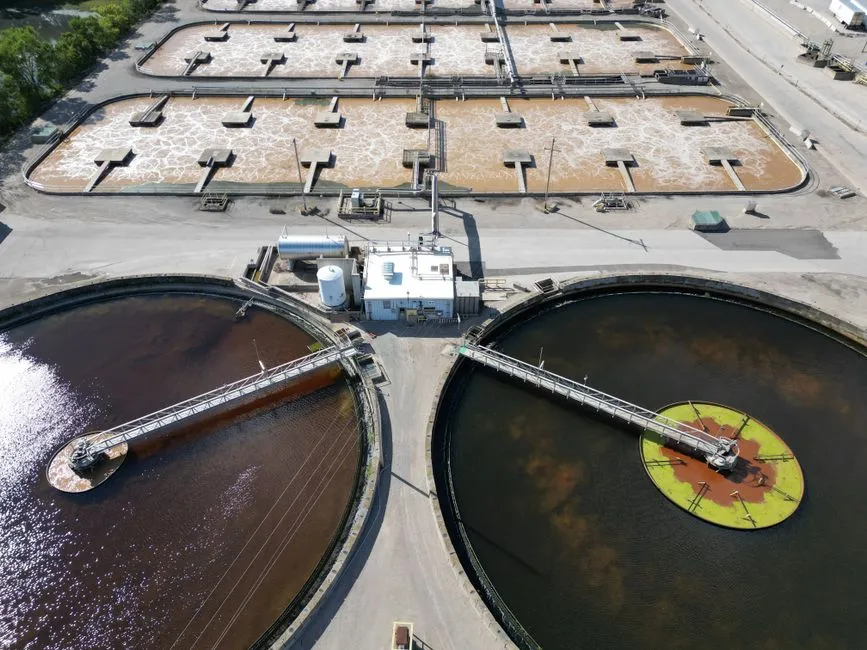
A defensible carpet-wastewater train places membrane protection behind verified pretreatment. Screening and equalization come first; characterization-based chemical or biological pretreatment follows; the biological reactor removes biodegradable organics; submerged membranes separate the treated water from biomass; and optional polishing addresses the final discharge or reuse specification. Each stage should have a defined purpose, an operating control and evidence that it can handle the factory’s actual variability.
The GX Series rotary mechanical bar screen is listed for continuous-duty removal of suspended solids, rags, plastics and fibrous debris from municipal and industrial headworks. That makes screening a logical control point where carpet fibers, packaging fragments or other visible solids are present. Its selection still requires a debris characterization and a site-specific solids-handling arrangement.
| Process stage | Primary function | Key procurement evidence |
|---|---|---|
| Screening and equalization | Remove debris and buffer variable flow and load | Confirmed debris profile, flow study, equalization calculation and duty sequence |
| Chemical or biological pretreatment | Improve the feed’s treatmentability | Jar-test results, chemical demand, control limits and residual-management plan |
| Biological reactor | Remove biodegradable organics and produce manageable sludge | Loading basis, aeration, residence-time rationale and sludge strategy |
| Submerged membrane separation | Retain solids and separate biomass from treated water | Membrane area, flux basis, scouring, controls and cleaning triggers |
| Final polishing | Meet discharge or reuse requirements beyond MBR treatment | Constituent-specific guarantees and pilot effluent data |
Automatic chemical dosing can apply coagulant, flocculant, pH adjustment or another specialty chemical under controlled conditions, but the required dose must follow jar testing and operating trials. A biological stage before MBR separation can improve organic removal while producing sludge that must be assessed for membrane fouling and withdrawal demand. These functions should be evaluated together rather than treating sludge handling as an accessory.
Advanced oxidation is a contingency, not a default. In a 2022 Polish Journal of Environmental Studies trial, Fenton oxidation broke some polyethylene glycol and surfactant molecules into smaller components before MBR treatment of cutting-fluid wastewater characterized by high COD, complex components and poor biodegradability. That evidence supports considering oxidation where the carpet factory identifies similar refractory compounds; it does not show that carpet wastewater always requires Fenton.
Define the equipment boundary clearly. The integrated submerged MBR treatment system combines activated-sludge treatment with submerged PVDF membrane filtration. By contrast, the DF-series flat-sheet MBR modules are membrane modules with integrated aeration for continuous scouring. A full treatment scope should also identify sludge dewatering requirements; a plate-and-frame filter press may be evaluated where the resulting sludge quantity and handling route justify it.
Select submerged membranes without overlooking fouling and cleaning
Submerged flat-sheet and hollow-fiber membranes both remove solids from treated water, but their module design, replacement arrangements, scouring methods, available area and flux-management strategies affect plant operability. The choice cannot be made from pore size alone. It requires manufacturer performance data or pilot evidence using representative carpet factory wastewater.
The verified DF-series data provide a useful comparison basis: 0.1 μm membrane pore size; 80–225 m² configurations; 32–135 m³/day production; individually replaceable membrane elements; integrated aeration; and stated energy consumption 10–20 times lower than external cross-flow systems. These are catalog specifications, not guarantees for a carpet plant, and the production range should not be treated as a hydraulic capacity guarantee without the supplier’s loading calculation.
| Selection topic | Flat-sheet modules | What the buyer must verify |
|---|---|---|
| Module design | DF series uses flat-sheet elements with integrated aeration | Fit with tank geometry, access, lifting and installation constraints |
| Maintenance | Elements are individually replaceable | Replacement procedure, spare availability and expected outage |
| Fouling control | Continuous integrated aeration is provided for scouring | Scouring effectiveness on the actual wastewater and cleaning triggers |
| Performance basis | 0.1 μm pores; 80–225 m²; 32–135 m³/day catalog range | Project-specific flux, membrane area, operating envelope and guarantees |
Membrane fouling control depends on the combined process: adequate pretreatment, stable biological operation, effective scouring, hydraulic or flux management and a defined cleaning regime. The supplied evidence does not support a universal cleaning interval, membrane life or carpet-specific chemical dose. Require the supplier to explain how each cleaning trigger is detected, what chemicals and recovery steps are permitted, and how the system responds to atypical batches.
The complete integrated submerged MBR treatment system is offered in a 10–2,000 m³/day catalog range with filtration below 1 μm and a stated footprint 60% smaller than conventional systems. The DF series is a different offer: replaceable flat-sheet modules. Procurement documents should identify the exact boundary being purchased rather than comparing a complete plant specification with a module specification. Membrane material, operating envelope, cleaning method, instruments, spares, service response and project guarantees should be mandatory schedule items.
Size the system from verified load and performance data
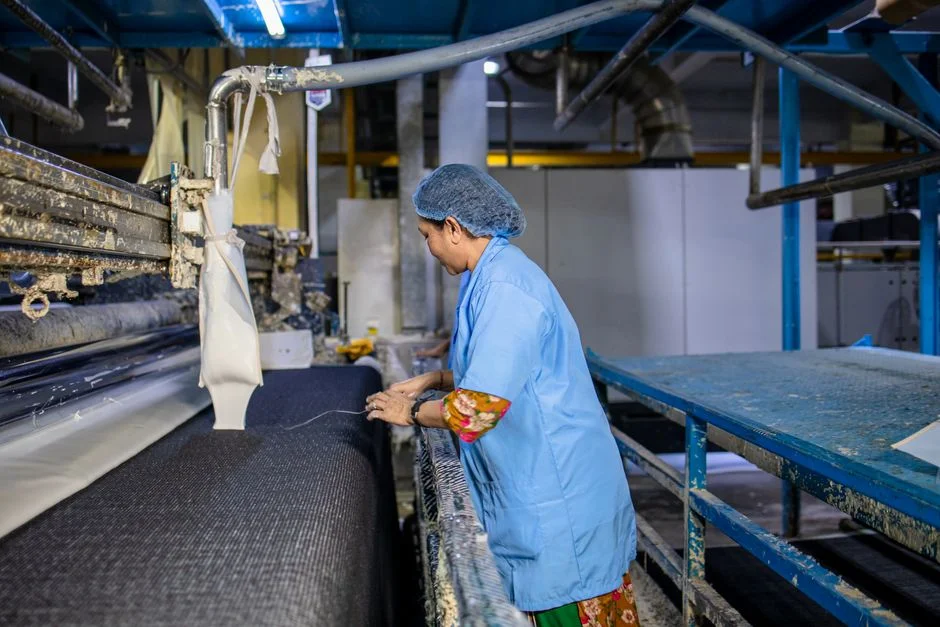
System size should be calculated from verified factory conditions rather than selected from a catalog range. Required inputs include average and peak wastewater flows, operating schedule, equalization storage, contaminant concentrations, biodegradable load, temperature, pH, suspended-solids profile, reuse demand and applicable discharge or sewer constraints. For batch operations, the calculation must also show how intermittent dumping and cleaning events affect membrane and biological loading.
The integrated MBR’s 10–2,000 m³/day range and the DF module’s 32–135 m³/day production range identify available configuration boundaries; they do not establish the required capacity. A technically defensible sizing submission should state the design flow, contaminant loads, membrane area, documented flux or other loading basis, number of modules, redundancy, tank volume and expected operating envelope.
| Required sizing input | Question the supplier must answer |
|---|---|
| Hydraulic profile | How were average flow, peak flow, operating hours and equalization translated into design duty? |
| Organic and solids loads | Which measured concentrations and load equations were used for biological and membrane sizing? |
| Water quality | What operating envelope applies to the characterized carpet wastewater? |
| Redundancy | How does the design maintain treatment during cleaning, module replacement or equipment outage? |
| Reuse demand | How much treated flow is required at each operating condition? |
Pilot testing is particularly valuable when composition changes by color, batch or cleaning cycle. The pilot should demonstrate biological response, membrane operation, cleaning behavior and effluent quality under representative loads. Agree analytical methods and monitoring frequency before testing; otherwise, apparent performance cannot be compared with the final specification.
Commercial evaluation should also cover membrane replacement, air scouring, pumping energy, chemicals, sludge handling, operator attention, planned shutdowns and service support. The supplied evidence provides no carpet-specific MBR cost or energy figures. Require written estimates using the confirmed design basis, and use the 2026 MBR cost-per-m3 guide as a commercial framework rather than a source of carpet-plant pricing.
Decide between discharge, process reuse and water reuse
The intended use must be fixed before final polishing is specified. Direct discharge, pretreatment for another downstream process, process-water reuse and higher-quality reuse impose different constituent limits and reliability requirements. This decision determines whether membrane separation is the final treatment step or whether another barrier is required.
The integrated MBR’s filtration below 1 μm and submerged PVDF design make it relevant to industrial process-water and reuse applications, but particle separation does not establish compliance or suitability for every reuse application. The buyer should define whether the objective is solids removal, reuse in a specific carpet process, equipment cooling, washdown, boiler feed or another application, then identify the receiving water-quality specification.
Additional treatment should be matched to the contaminant gap. Reverse osmosis may be relevant where dissolved salts or very low conductivity are limiting, while ultrafiltration may suit a different solids-removal objective. These systems are not interchangeable with the MBR. A reverse osmosis system should not be presented as a universal polishing step, and a ultrafiltration system should be selected only against the required water quality.
Ask the supplier to guarantee the parameters that match the intended use: COD, BOD, TSS, color, turbidity, nutrients, pathogens, conductivity and other constituent-specific requirements. Pore size cannot establish biodegradability, color removal, salinity control or pathogen requirements. The final guarantee should also specify sampling conditions, compliance frequency and consequences if performance falls outside the agreed envelope.
Use a structured supplier and pilot acceptance plan
Procurement should compare bidders on a common process basis, not on catalogue capacity. Every bidder should submit a process flow, equipment list, membrane data, duty calculations, materials schedule, control philosophy, utility and chemical requirements, commissioning plan, O&M plan and measurable performance criteria.
Require each bidder to label claims in three categories: catalogue values, project-specific guarantees and matters requiring pilot confirmation. This prevents a general product claim from being mistaken for evidence on carpet factory wastewater. A detailed MBR design comparison for industrial wastewater can support that review, but it does not replace project testing.
| Acceptance area | Information required before approval | Evidence retained after approval |
|---|---|---|
| Process design | Flow diagram, duty calculations, pretreatment basis and equipment list | Approved design and final sizing calculations |
| Pilot | Representative feed, methods, frequency, cleaning triggers, downtime criteria and pass/fail parameters | Raw results, deviations, final pilot report and scale-up basis |
| Controls and maintainability | Alarms, scouring strategy, module access, sludge withdrawal and critical spares | Approved control narratives, drawings and spares list |
| Compliance | Permit and customer water-quality requirements | Separate signed acceptance documents |
Check redundancy and maintainability as part of design review. Ask about module access, individually replaceable elements where applicable, critical spares, control alarms, membrane-cleaning access and service response. If the factory lacks internal expertise, the scope and response time for local service support should be contractual rather than assumed.
Treat the environmental permit, pretreatment agreements and customer reuse specifications as separate acceptance documents. A generic statement that an MBR is suitable for carpet wastewater is not a substitute for any of them. Where textile-sector regulation is part of the market decision, use the 2026 textile wastewater regulatory update as a source-specific policy reference while confirming current requirements for the project location and destination.
Frequently Asked Questions
What does an MBR for carpet manufacturing wastewater cost?
The supplied evidence provides no carpet-specific MBR price. Request a capacity-based quotation that separates pretreatment equipment, MBR equipment, installation, membranes, aeration and pumping energy, chemicals, sludge handling, commissioning and service. Ask the supplier to show which entries are measured, quoted or provisional so equivalent scopes can be compared.
How should an MBR system be sized for a carpet factory?
Use verified average and peak flow, contaminant loads, operating hours, equalization, reuse demand and the supplier’s documented membrane-area calculation. The integrated system’s 10–2,000 m³/day range and DF modules’ 32–135 m³/day range are configuration boundaries, not sizing answers. Require the supplier to show how each measured input affects the selected area, module count, tank volume and redundancy.
Which membrane supplier should be selected for carpet wastewater?
Require demonstrated membrane data from representative textile or carpet wastewater, relevant pilot references and project-specific guarantees. Review controls, cleaning strategy, module access, spares and local service capability in addition to catalogue flow ranges. Claims should be labelled as catalogue information, guaranteed performance or pilot-dependent.
What pretreatment is needed before biological treatment and membrane separation?
Begin with source reduction and stream segregation, then use measured wastewater data to select screening, equalization, coagulation, pH control, biological pretreatment or advanced oxidation. Dye, sizing chemicals, binders, latex and cleaning chemicals should be quantified before dose or process selection. Jar tests and pilot work should establish the pretreatment basis and membrane-fouling response.