
What Wastewater Characteristics Decide MBR Versus Activated Sludge?
The selection should begin with a source-specific wastewater characterization, not with a preference for membrane technology. For plastics manufacturing wastewater and rubber processing wastewater, document flow, pH, temperature, COD or BOD, ammonia, suspended solids, oil and grease, surfactants, and any process-specific polymers, fillers, pigments, or rubber additives. Batch dumps, cleaning chemicals, hydraulic shocks, and slug loads also need to be identified because they can destabilize biology and increase membrane fouling. PCI Membranes reports that industrial waste streams may contain high organic loadings and chemicals that are particularly difficult to handle or degrade, making early treatability and compatibility testing essential.
Separate biodegradable organics from compounds that are nonbiodegradable, inhibitory, or persistent. Membrane retention can preserve biomass and improve biological contact, but it does not make an unsuitable wastewater stream biodegradable. The permitted discharge route or intended reuse determines the required effluent quality; a Gaston limit should not be assumed without checking the receiving authority and the plant’s permit.
| Project input | Why it affects selection | Evidence required before design |
|---|---|---|
| Flow and loading | Defines hydraulic, biological, and membrane capacity. | Average, peak, batch, and slug-load data. |
| COD or BOD, ammonia, and nutrients | Determines whether aerobic, anoxic, or anaerobic biology is needed. | Representative sampling across production conditions. |
| Suspended solids, oil and grease, surfactants | Identifies pretreatment and fouling risks. | Source-specific analysis and compatibility testing. |
| Polymers, fillers, pigments, and rubber additives | Some compounds may foul membranes or inhibit biological treatment. | Process inventory, safety data, and treatability testing. |
| Discharge or reuse target | Sets the required solids separation and polishing objective. | Receiving authority requirements and the reuse specification. |
Mechanical screening can remove coarse solids before biological treatment, while an industrial DAF pretreatment system may be evaluated where oil, grease, or floatable material requires physical separation. The rotary mechanical bar screen is a mechanical pretreatment option, but neither device should be assumed to solve dissolved contaminant or chemical-compatibility problems.
How Each Treatment Train Removes Plastics and Rubber Pollutants
Conventional activated sludge treats biodegradable organics biologically and then separates biomass by gravity in a secondary clarifier. MBR retains biomass with microfiltration or ultrafiltration membranes, which replace the clarifier. PCI Membranes identifies both MF and UF as MBR membrane types and states that UF is generally preferred because of its separation characteristics and lower pore-clogging tendency.
Within the biological reactor, treatment zones should follow the objective. Aerobic conditions support organic-matter removal and ammonia oxidation. Anoxic conditions support denitrification, while anaerobic conditions can address organic load. These zones are not interchangeable labels: their allocation depends on the influent chemistry, nitrogen targets, oxygen demand, and whether the organics are biologically compatible with the selected culture.
The membrane performs solids separation; it does not biologically remove dissolved contaminants. Polymer carryover, soluble dyes, certain surfactants, and other dissolved compounds may require biological degradation, adsorption, precipitation, or additional treatment. MBR can retain biomass and support recalcitrant-substrate biodegradation, as PCI Membranes reports, but retention does not guarantee acceptance of every industrial chemical.
For an industrial wastewater reuse train, MBR permeate is generally a more suitable feed for reverse osmosis than clarified CAS effluent because the membrane barrier removes suspended solids and retained solids. That advantage does not eliminate residual-treatment requirements. A complete reverse-osmosis design still needs to address dissolved salts, scaling constituents, organic fouling, and membrane compatibility. The 2026 MBR cost-per-m3 guide provides additional context for comparing reuse-ready configurations, but site analysis remains necessary.
MBR Versus Conventional Activated Sludge: Engineering Comparison
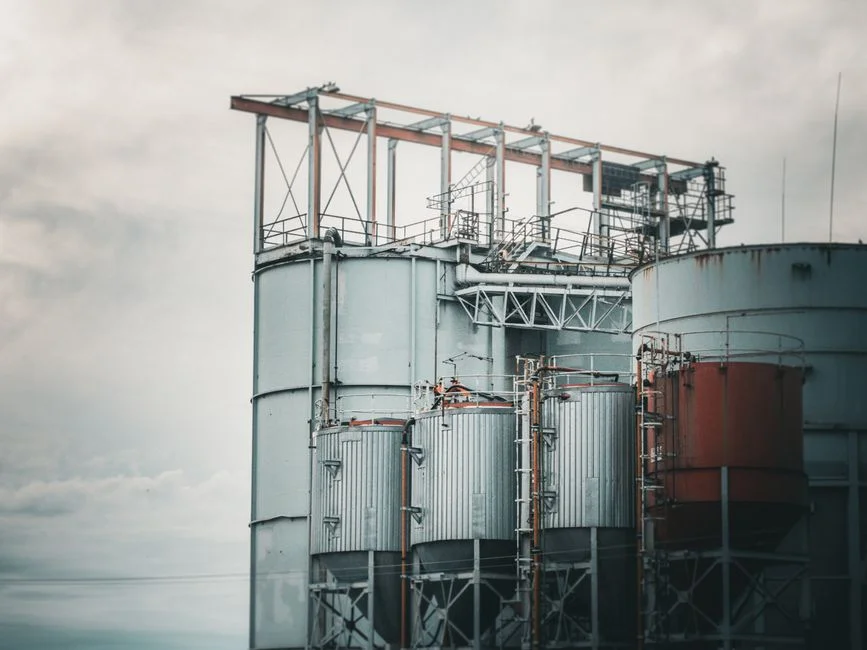
MBR replaces clarifier-dependent solids separation with membrane retention, while CAS separates biomass by settling. PCI Membranes reports that MBR effluent is free of suspended solids and has reduced bacterial and viral content; the biological reactor still performs the treatment of dissolved and biodegradable pollutants.
Footprint is a common differentiator, but the comparison must use the same wastewater and design basis. PCI Membranes states that the higher biomass concentration supported in an MBR can result in an up to 50% smaller footprint. Separately, the HydropureWater verified product catalog claims a 60% smaller footprint for its integrated MBR system. That catalog value describes that system and should not be generalized to every MBR installation.
| Design issue | Conventional activated sludge | MBR | Decision implication |
|---|---|---|---|
| Solids separation | Secondary clarifier and gravity settling. | MF or UF membrane replaces the clarifier. | Compare settling reliability, solids handling, and membrane maintenance. |
| Biological control | Depends on wasting, return sludge, and clarifier performance. | Can retain biomass and maintain higher concentrations. | Assess biological objectives and control requirements. |
| Effluent and reuse | Clarified effluent may require additional solids removal and polishing. | Permeate is suitable for sensitive discharge, reuse, and direct RO feed, subject to requirements. | Apply the permit or reuse specification, not generic claims. |
| Operations | Clarifier, sludge, and solids-handling duties. | Adds membrane cleaning, transmembrane-pressure control, air scour, and replacement. | Compare staffing, controls, maintenance, and downtime exposure. |
| Energy and footprint | Usually has a larger biological and settling footprint. | Can reduce footprint, but membrane aeration adds energy demand. | Include aeration and pretreatment in the life-cycle model. |
PCI Membranes reports that MBR operation can be automated to reduce operator intervention, but routine membrane and process monitoring remains necessary. The University of Liège thesis, published in 2011, reports high aeration costs in a full-scale MBR landfill-leachate application operated at high sludge age and low food-to-microorganism ratio. That application is not plastics wastewater, but it shows why biological control and aeration energy cannot be omitted from an MBR comparison. The integrated MBR membrane bioreactor system and DF series flat-sheet MBR modules should therefore be evaluated as complete alternatives, not by membrane price alone.
Where MBR Can Fail: Fouling, Pretreatment, and Membrane Selection
Suspended solids and colloidal material increase membrane fouling and can make spiral-wound configurations unsuitable. PCI Membranes specifically states that spiral-wound formats are not suitable for MBR applications because of their sensitivity to suspended solids. A plastics or rubber plant therefore cannot evaluate membrane material or configuration without first establishing the solids, oil, polymer, and chemical profile of its wastewater.
Pretreatment should be assigned by function rather than by equipment name. Mechanical screening addresses coarse solids. DAF can remove oil, grease, and floatable solids where the wastewater analysis supports that application. Equalization addresses hydraulic and concentration variability from batch production and cleaning operations. Chemical dosing should be justified by characterization, with compatibility and residual effects evaluated before use. A DAF pretreatment system and an automatic chemical dosing system address different parts of the train and neither substitutes for biological treatability testing.
Configuration is a project decision. PCI Membranes states that pressure-driven membranes are generally used for smaller installations or difficult industrial waste streams, while submerged membranes are generally used for medium and large installations. The HydropureWater catalog specifies submerged PVDF filtration for the integrated MBR system, while the DF series uses 0.1-micrometer PVDF flat-sheet modules with integrated aeration and individually replaceable elements.
Require each supplier to define normalized flux, design transmembrane pressure, cleaning method and frequency, expected recovery, chemical compatibility, replacement assumptions, and monitoring requirements. A performance guarantee should follow representative feed characterization and pilot results, not precede them. If the wastewater contains materials that repeatedly foul the membrane or interfere with cleaning chemistry, a clarification, polishing, or hybrid train may be more defensible than a standalone MBR.
Choose MBR, CAS, or a Hybrid Train by Project Objective
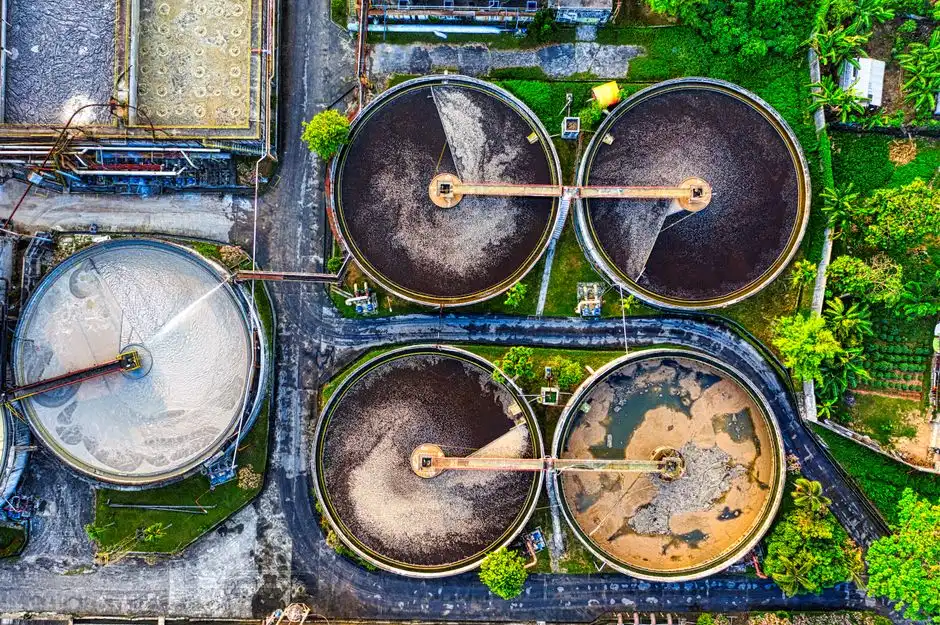
Select MBR when low-solids effluent, industrial wastewater reuse, downstream reverse osmosis, or a constrained footprint outweigh the added membrane and aeration requirements. Select conventional activated sludge when the wastewater is consistently biodegradable, land and tank space are available, and the objective is a conventional process with fewer membrane-specific duties. Neither choice should be made without a source-specific wastewater profile and a defined receiving or reuse requirement.
A hybrid train can separate distinct objectives: physical pretreatment for floating or coarse material, biological treatment for biodegradable organics and nutrients, and membrane polishing for solids separation or reuse preparation. A staged investment can also allow pretreatment and biological capacity to be installed before full membrane capacity, provided the design preserves the hydraulic and treatment objectives of the final train.
| Project objective | Preferred starting point | Required confirmation |
|---|---|---|
| Reliable low-solids effluent or RO feed | MBR, with biological zones matched to the treatment objective. | Effluent specification, dissolved contaminants, and pilot results. |
| Simpler conventional treatment | CAS when biodegradability and settling are reliable. | Batch variability, sludge settleability, and available footprint. |
| Distinct pretreatment, biology, and polishing roles | Hybrid train. | Mass balance for solids, oil, polymers, and dissolved organics. |
| Staged capital deployment | Pretreatment and biology first, with membrane capacity added later. | Future flow and quality requirements, plus hydraulic reserve. |
The 2026 broader plastics-wastewater MBR comparison can inform the decision structure, but it does not establish Gaston requirements. Request the site-specific flow, permit, reuse target, footprint, energy tariff, waste-disposal route, and future expansion plan. The University of Liège thesis also supports evaluating high sludge age and low food-to-microorganism ratio, while recognizing that its landfill-leachate application does not prove the same biological performance for plastics wastewater. A related pulp-and-paper MBR comparison may help organize contaminant questions, but pulp-and-paper data should not be substituted for the plastics or rubber plant’s own analysis.
Build the Pilot, Procurement, and Cost-Evaluation Plan
A representative pilot should use production wastewater rather than only synthetic water. The test should vary the relevant loading and record biological response, membrane flux, fouling tendency, cleaning frequency, recovered-water quality, and performance during batch or slug-load conditions. Pilot duration should reflect the operating conditions being tested, and the results should be reduced to the actual wastewater profile before equipment sizing.
Request comparable MBR and CAS proposals that show biological tank volume, membrane area or flux, aeration demand, pretreatment, sludge handling, controls, footprint, installation requirements, and replacement-cycle assumptions. This makes capital and operating assumptions visible instead of reducing the decision to purchase price. The 2026 MBR cost-per-m3 guide provides a structure for the cost model; the project number still depends on defined flow, wastewater analysis, pretreatment, aeration, membrane area, controls, and site conditions.
| Pilot or proposal item | Buyer check | Decision output |
|---|---|---|
| Representative wastewater | Production-derived stream with relevant batch and cleaning conditions. | Treatability and fouling evidence. |
| Membrane performance | Normalized flux, transmembrane pressure, cleaning, recovery, and compatibility. | Usable membrane area and operating envelope. |
| Biological train | Volume, loading basis, aeration, sludge age, and control strategy. | Verified biological and solids-handling design. |
| Life-cycle cost | Energy, chemicals, membrane replacement, sludge, labor, downtime, and disposal. | Comparable cash-flow comparison. |
| Equipment selection | Use the catalog range of 10 to 2,000 m³/day only as an initial screen. | Final size based on flow, loading, hydraulics, pretreatment, and pilot results. |
Define the objective before ranking alternatives: lowest capital cost, lowest life-cycle cost, maximum reuse value, or compliance-risk reduction. The integrated system catalog lists a capacity range of 10 to 2,000 m³/day, but that range cannot size a Gaston installation without the hydraulic profile, organic and solids loads, treatment targets, and pilot confirmation.
Frequently Asked Questions
How much does an MBR cost for plastics or rubber wastewater in Gaston?
No defensible project price can be stated without average and peak flow, wastewater analysis, pretreatment requirements, aeration demand, membrane area, controls, and site conditions. Use the 2026 MBR cost guide as the model, then request a written cost breakdown covering equipment, installation, energy, chemicals, sludge handling, membrane replacement, labor, and disposal. A quoted treatment cost should identify the flow and wastewater profile used to calculate it.
Should an MBR or conventional activated sludge system be sized first?
Neither should be sized from flow alone. Request average and peak flow, organic and solids loads, pH, temperature, nutrients, oil and grease, surfactants, process chemicals, treatment objectives, and pilot results. Use those inputs to establish hydraulic capacity, biological volume, membrane area, aeration demand, and pretreatment requirements.
What should a buyer check when selecting an MBR supplier?
Request membrane material and configuration, design flux, expected operating flux, transmembrane-pressure limits, cleaning method, chemical compatibility, controls, performance guarantees, replacement-element availability, and local service support. Also ask the supplier to show how its proposed configuration addresses the results of testing with the actual plastics or rubber wastewater.
Which permit limits apply to a Gaston wastewater reuse project?
Identify the receiving authority and the applicable permit or reuse specification first; no universal Gaston limit can be inferred from the available research. The buyer should provide the proposed discharge route, reuse application, production flow, effluent analysis, and pretreatment description for agency confirmation. If reuse occurs within the plant, obtain the site’s own process, safety, and water-quality requirements as well.
Related Equipment
- industrial DAF pretreatment system — specifications, capacity range, and technical data