
Start with the Factory’s Effluent, Not a System Name
A Hyderabad factory usually needs an industrial ETP, a DAF system, or a combined treatment train selected from its actual wastewater profile—not a standard package chosen by flow alone. DAF is best suited to wastewater containing oil, grease, floating material, suspended solids and colloidal matter because pressurized air forms tiny bubbles that carry these pollutants to the surface for skimming. A full ETP may also require primary equalization, pH control and flocculation, biological treatment and tertiary polishing. The right configuration depends on representative effluent testing, average and peak flow, required reuse or discharge quality, available footprint and applicable consent conditions.
Begin the procurement exercise by asking the prospective supplier to define a representative sampling plan. Samples should cover normal production, cleaning cycles, batch discharges and known upset conditions; otherwise, a single “clean” sample can conceal the load that determines equipment performance. The best DAF unit engineering specs and decision framework is useful for checking that the sampling basis and proposed duty are documented together.
Record oil and grease, suspended solids, pH, temperature, flow, COD, BOD and other industry-relevant pollutants. Their treatment functions differ: oil and grease influence flotation or oil-separation requirements, suspended solids affect clarification and solids handling, pH affects chemical dosing and biological operation, and COD and BOD indicate organic load that may require biological treatment. These parameters should not be reduced to a single flow figure or a generic compliance limit.
Document average flow, peak flow, peak duration, operating hours and batch-discharge patterns. The equipment must handle the verified hydraulic and contaminant duty, not merely the average daily discharge. Also define the treated-water destination: discharge, process reuse, cooling reuse, sewer connection or transfer to a common treatment facility. Space, power, operator skill, chemical availability, sludge disposal, the factory’s environmental consent and receiving-sewer or discharge requirements should be recorded before equipment is selected.
| Input to establish | Why it affects selection | Evidence required from the supplier |
|---|---|---|
| Representative effluent profile | Defines whether oil, solids, organics and colloids require clarification, biological treatment or both. | Sampling plan, laboratory results, identified variability and design duty. |
| Average and peak flow | Determines hydraulic capacity, equalization, retention and batch handling. | Design flow, peak-flow duration, operating hours and process flow diagram. |
| Discharge or reuse objective | Sets the required final treatment stage. | Applicable consent conditions and the specified reuse or discharge quality. |
| Site and operating constraints | Controls civil works, utilities, chemical use, staffing and sludge handling. | Footprint, power, utilities, controls, O&M assumptions and sludge route. |
DAF or Industrial ETP: Which Treatment Role Fits?
DAF is a physico-chemical clarification process, not a substitute for every stage of an industrial effluent treatment plant. Wastewater is pressurized and saturated with air, then released into a flotation tank; the bubbles attach to suspended solids and oil droplets, and the resulting float is skimmed. The industrial DAF system for factory wastewater therefore belongs in the clarification and oil-removal train, not automatically at the end of a biological or reuse system.
The most appropriate choice follows the dominant pollutant and the final treatment objective. A DAF unit is a strong candidate when the priority is oil-and-grease removal, floating-material capture, suspended-solids reduction or separation of suitable colloidal matter. Aqua Green Tech’s DAF system description identifies efficient clarification, oil-and-grease removal, suspended-solids reduction, low maintenance and chemical savings among its stated benefits. These are treatment roles, not a substitute for factory-specific performance testing.
A full ETP is required when the train must combine physical and chemical primary treatment, biological treatment under aerobic or anaerobic conditions, and tertiary cleaning before discharge. The ETP treatment-level description published on Quora identifies primary treatment as physical and chemical methods, including pH control and flocculation; secondary treatment as aerobic or anaerobic biological treatment; and tertiary treatment as the final cleaning stage before release.
For oil-heavy wastewater, DAF may be a secondary clarifier after an API separator rather than its replacement. The refinery example explains that an API separator first removes large free-floating oil and heavy sediment, while emulsified oil and fine solids may remain. DAF then removes those residuals with chemical coagulation before they reach biological reactors, where excessive oil can impair microbial activity and oxygen transfer. The DAF versus API separator comparison should therefore be read as a staged-process decision, not a one-unit-versus-another ranking.
The research does not establish one universal DAF or ETP configuration for every Hyderabad factory. Selection follows the effluent profile, flow profile, reuse or discharge target, site constraints and consent conditions.
| Decision condition | Primary treatment role | Indicative train | Key caution |
|---|---|---|---|
| Oil, grease, floating material and suspended solids are the main targets | DAF clarification | Equalization and preparation → DAF → downstream treatment if required | Confirm bubble attachment, skimming and sludge removal for the actual wastewater. |
| Free oil is high and emulsified oil remains | Physical oil separation followed by DAF | API separator → equalization and chemical conditioning → DAF | DAF does not automatically replace upstream oil separation. |
| Biodegradable organic load is significant | Biological ETP | Primary treatment → aerobic or anaerobic biology → tertiary treatment | Remove oil and excessive solids before biological treatment. |
| Treated water must meet a defined reuse specification | ETP with polishing | DAF where suitable → biological treatment if required → filtration or membranes | Final equipment depends on the process, cooling or product-quality specification. |
Match the Treatment Train to the Factory Process
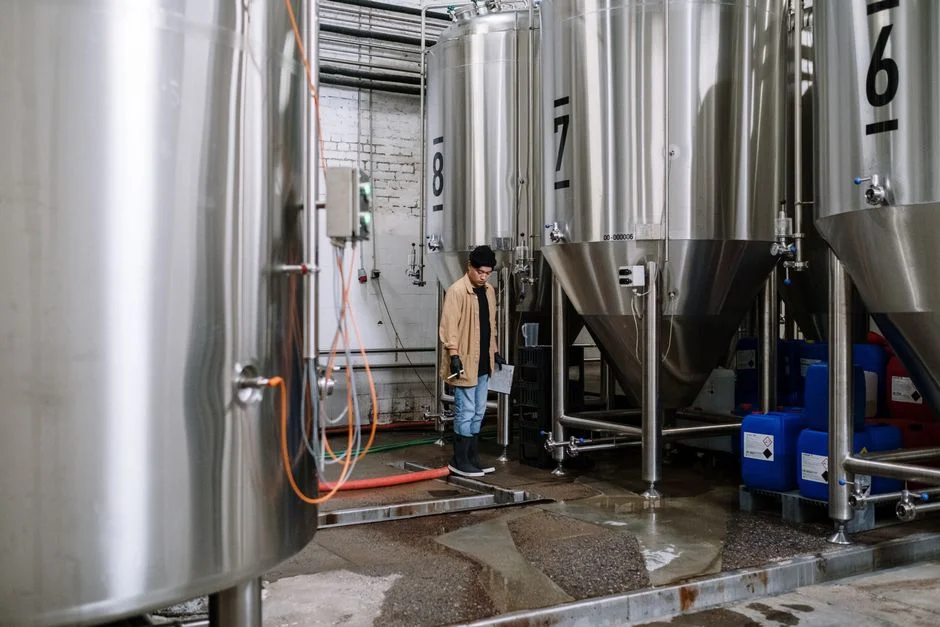
A practical treatment train begins with a sequence matched to the factory’s production and wastewater problems, rather than a generic list of ETP equipment. The indicative flow is: collection and segregation → screening or solids removal → equalization and pH correction → physical oil separation where required → chemical conditioning or flocculation → DAF clarification where suitable → aerobic or anaerobic biological treatment for biodegradable organic load → filtration, membrane treatment or disinfection for reuse where required → sludge handling.
For oil and grease streams, use a physical separation stage before DAF when free oil, large grease accumulations or emulsified oil justify staged removal. An API separator handles gravity separation of free oil and sediment; DAF captures remaining suspended solids and oil droplets through bubble attachment. Neither device should be credited with every oil-removal function without a pilot test or validated design basis.
For suspended solids, paper fibres, food-processing solids, textile material and metalworking particles, remove oversized material before pumps, DAF or biological equipment. Screening protects the treatment train from blockage and excessive abrasion. Where screening is required, the rotary mechanical bar screen provides one equipment option, but the selected duty must match the factory’s solids.
For pH-sensitive or flocculant-dependent wastewater, combine equalization with controlled chemical addition before flotation. An automatic chemical dosing system for ETP pretreatment can be evaluated for this duty, while the supplier must define the chemical, dose-control method, mixing and operating response.
For biodegradable organic load, add aerobic or anaerobic biological treatment after adequate oil and solids removal. Biological wastewater treatment should not be asked to compensate for an untreated emulsified-oil stream or excessive suspended solids.
For reuse or polishing, evaluate filtration, membranes and disinfection against the end-use specification. HydropureWater’s ultrafiltration systems use 0.03-micron PVDF membranes and cover 2,000–40,000 L/h, according to the supplied product research; this makes ultrafiltration one possible polishing option, not a universal ETP substitute. The ultrafiltration system for reuse polishing should therefore be assessed only after the upstream treatment objective is defined.
The DAF catalog’s food-processing, pulp-and-paper, textile, metalworking, petrochemical and municipal pre-treatment applications are starting points for application matching. They are not proof that a unit will meet a particular factory’s effluent or reuse specification.
Size the DAF and ETP from Verified Load Data
Industrial ETP sizing must use the verified hydraulic and contaminant load, including average and peak flow, operating hours, batch-discharge profile, retention needs and pollutant loading. Average daily discharge is an input, not a sufficient design basis. The buyer should also reconcile the selected flow with equalization, recycle streams, treated-water demand and the operating mode proposed by the supplier.
Micro-bubble size is a design variable, not a catalogue slogan. The refinery explanation published on Quora describes bubbles measuring 10–100 microns; it identifies them as the mechanism that attaches to suspended solids and tiny oil droplets. The correct operating point must still be checked against the wastewater characteristics, floc condition, tank design and supplier’s performance basis.
For HydropureWater DAF, the supplied catalog range is 4–300 m³/h across 13 standard models. This range is a fit-check for industrial ETP sizing, not proof that a particular model meets the factory’s duty. Selection should map the verified design flow and contaminant load to the model, tank arrangement and auxiliary equipment, using the DAF sizing and decision framework to check the proposal.
Require the technical offer to state design flow, process flow diagram, tank details, pump and compressor selection, control philosophy, sludge-removal method and the expected performance basis. If a supplier quotes only surface area, tank dimensions or nominal catalogue flow, ask how those details correspond to the factory’s measured load.
Operating cost depends on selected flow, pressure, chemical regime, sludge volume, labour and reuse value. The supplied research does not provide a defensible Hyderabad cost range, so procurement should request a quotation based on the completed design basis and should compare power, chemicals, sludge handling, maintenance and operator attendance separately.
| Sizing item | Input required | Supplier deliverable | Buyer’s check |
|---|---|---|---|
| Hydraulic capacity | Average flow, peak flow, peak duration, operating hours and batch profile. | Verified design flow and process flow diagram. | Does the offer include recycle, bypass and equalization flows? |
| Treatment duty | Representative effluent analysis and required clarified-water quality. | Performance basis and treatment calculations. | Are guarantees tied to defined inlet and outlet parameters? |
| Flotation system | Oil, solids, colloids, pH, chemicals and operating conditions. | Tank, saturation, compressor, pump, skimming and sludge details. | Has the supplier addressed the actual wastewater rather than a generic duty? |
| Lifecycle inputs | Electricity tariff, chemical plan, labour, maintenance and sludge route. | Utility and consumable estimates with stated assumptions. | Are exclusions and operating assumptions visible in the quotation? |
Plan Sludge, Controls and Lifecycle Support
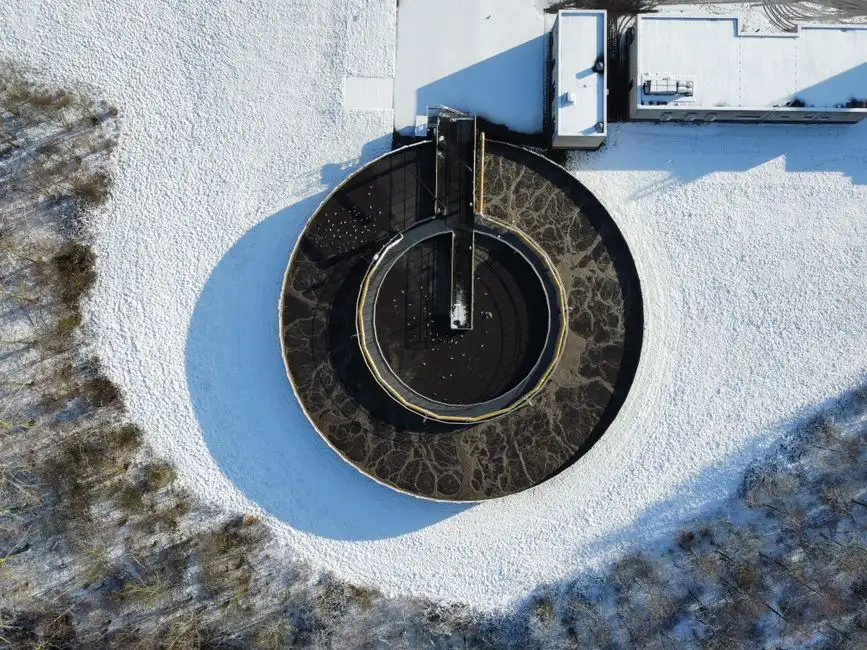
A DAF system is incomplete if it removes floating material but leaves the buyer without a workable route for handling the separated float. Specify automatic skimming, a transfer arrangement for the float or sludge, and the intended route to collection, dewatering and disposal. The hydraulic and solids balance should be reviewed together because a clarification device can shift the treatment burden downstream.
Evaluate PLC-controlled operation, automatic skimming and skid-mounted construction as procurement criteria. A DAF manufacturer source from India identifies customized units, compact skid-mounted construction, fully automatic PLC-based systems and after-sales or AMC support as selection considerations. These features should be matched to the factory’s available footprint, operator competence and maintenance arrangements rather than accepted as universal requirements.
For factories with significant sludge volumes, compare the DAF scope with dedicated dewatering equipment. HydropureWater plate and frame filter presses offer filtration areas from 1 m² to 500 m² and manual, hydraulic or fully automatic PLC operation, according to the supplied product research. The appropriate configuration depends on float characteristics, dewatering duty, operating hours and the final disposal route.
Ask every supplier to define remote monitoring, critical alarms, spare-parts availability, operator training, preventive maintenance and local service coverage in Hyderabad. Apply the industrial DAF maintenance protocol when reviewing the maintenance schedule and handover requirements.
Require a handover package covering process drawings, O&M manuals, electrical details, instrumentation lists, commissioning records, training records and performance-test criteria. Clarify whether performance testing is included, who supplies reagents, which spares are recommended, and which obligations remain with the factory after commissioning.
Build a Supplier Evaluation Checklist Before Buying
A technically credible proposal should connect the factory’s sampling basis to calculations, equipment selection, guarantees and lifecycle obligations. Shortlist suppliers with relevant industrial applications, then ask for case evidence identifying the wastewater type, duty, operating conditions and measured outcomes. A photograph or application label is not evidence of performance for the buyer’s effluent.
Request a site-specific proposal covering the sampling basis, process calculation, process flow diagram, guarantees, utilities, civil and structural interfaces, controls, commissioning, training, O&M support and sludge handling. Confirm that it addresses the factory’s consent conditions, reuse specification and sludge-disposal route. Do not accept a generic DAF performance statement as a substitute.
Compare bids on the total installed scope and lifecycle implications, not only the equipment price. Separate chemical use, power, consumables, maintenance, sludge handling and operator attendance. Clarify exclusions such as foundations, electrical upgrades, chemical supply, disposal charges, taxes, commissioning and performance testing. The supplied research does not provide a defensible Hyderabad price range; therefore, a comparable quotation requires the same design basis and scope across bidders.
Use the 4–300 m³/h HydropureWater DAF range only as a catalogue fit-check. Final selection should follow a vendor-reviewed design basis and a documented technical and commercial comparison, supported by the DAF procurement decision framework.
| Evaluation area | Document or evidence to request | Decision question |
|---|---|---|
| Application evidence | Case reference with wastewater type, duty, operating conditions and measured outcomes. | Has the supplier handled a comparable stream, and what evidence supports the result? |
| Technical design | Sampling basis, calculations, process flow diagram, equipment schedule and guarantees. | Does the proposal explicitly address this factory’s effluent and peak load? |
| Compliance and reuse | Consent-condition matrix and reuse or discharge design basis. | Can the selected train demonstrate the required final quality? |
| Delivery and handover | Project schedule, commissioning plan, training, documents, spares and service coverage. | Who is accountable for each interface, test and post-commissioning obligation? |
| Commercial comparison | Itemized installed-price schedule and lifecycle assumptions. | Are the bids technically comparable, including exclusions and operating costs? |
Frequently Asked Questions
Can flow and factory location alone determine the right DAF or ETP configuration?
No. A defensible selection requires representative wastewater analysis, average and peak-flow data, batch-discharge patterns, the intended discharge or reuse outcome, site constraints and applicable consent conditions. Hyderabad location may affect service access and receiving requirements, but it does not replace process design.
Is a DAF unit a complete alternative to an industrial effluent treatment plant?
No. DAF is a physico-chemical clarification step suited to oil, grease, floating material, suspended solids and suitable colloidal matter. A full ETP may also need primary equalization, pH control, flocculation, aerobic or anaerobic biological treatment and tertiary cleaning. DAF can be combined with an ETP where its clarification duty supports the downstream process.
What should a buyer request when budgeting for a DAF or ETP system?
Ask for an itemized quotation based on the completed design basis, including equipment, tanks, pumps, compressors, controls, civil interfaces, installation, commissioning, training, chemicals, power assumptions, sludge handling and exclusions. The supplied research contains no defensible universal cost range for Hyderabad, so do not use a generic online price as the budget basis.
Which documents and commitments should be checked before selecting a supplier?
Check the sampling plan, process calculations, process flow diagram, equipment schedule, performance basis, applicable consent conditions, commissioning scope, training, O&M documentation, critical alarms, spare-parts plan, local service coverage and performance-test criteria. Also request comparable case evidence and confirm that the commercial bid includes the same total installed scope.
Why might an oil-heavy factory need both an API separator and DAF?
The refinery application describes the API separator as the first stage for gravity removal of free-floating oil and heavy sediment. DAF then coagulates and removes residual emulsified oil and fine solids before biological treatment, where oil carryover can impair microbial activity and oxygen transfer. The DAF and API-separator process comparison explains this staged duty; one unit is not a universal substitute for the other.