
What an Effluent Treatment Plant in Jordan Must Achieve
An industrial effluent treatment plant in Jordan should be selected through a staged engineering process: characterize the wastewater, remove suspended solids and contaminants, biologically treat biodegradable loads, polish or disinfect where required, and manage the resulting sludge. DAF suits oil, grease and solids-rich industrial streams; MBR combines biological treatment with membrane separation; UF removes colloids and suspended solids before sensitive reuse stages; and RO is an advanced polishing option for demanding reuse applications. Jordan’s wastewater-reuse potential is significant, but the Seil Al-Zarqa and Middle Jordan Valley study found nitrogen supply could exceed crop demand by a factor of 7–8, so reuse plans must address nutrients as well as water quality.
An industrial ETP treats process effluent at a plant boundary. Wastewater treatment plant effluent is instead the output from a broader wastewater-treatment system. The distinction matters because industrial ETP design starts with a defined process stream, its variability and its discharge or reuse destination.
Before selecting equipment, separate three outcomes: compliant discharge, safe reuse after treatment, and recovery of water for a defined industrial process. Each requires a different effluent specification, monitoring regime and receiving-system assessment. A buyer should also document flow variability, wastewater composition, land constraints, expected availability, utility requirements and the route for sludge handling.
Advanced reuse is not a synonym for conventional treatment. A University of Twente thesis evaluated nanofiltration as a means of polishing wastewater treatment plant effluent to EU Water Framework Directive standards for agricultural or direct/indirect potable use, as stated in its research record. The buyer must therefore state the intended application and receiving standard rather than assume that one polished-water specification fits every reuse route. The [2026 ETP buyer’s guide](/blog/12910-effluent-treatment-plant-in-manama-2026-buyer-s-guide.html) provides a related framework for structuring that decision.
Characterize the Wastewater Before Choosing Equipment
Wastewater characterization must cover the operating states that will actually reach the plant, because one ideal sample can conceal the loads that determine equipment selection. Request flow, pH, COD, BOD5, TSS, oil and grease, nitrogen species, conductivity or TDS, metals and process-specific contaminants. Where these data do not exist, list them as sampling and laboratory requirements rather than assuming acceptable values.
Separate normal production, cleaning, batch discharge and peak production. For each state, obtain representative samples and record production activity, flow duration, pH, temperature, toxicity where relevant, and any shock load. The sampling plan should identify whether the industrial ETP Jordan contractor will treat a continuous stream, discrete discharges or a combination of both.
The Kaduna textile study is useful as a warning about variable industrial effluent, not as a Jordanian limit. Across five textile mills, seven parameters exceeded the applicable Federal Ministry of Environment limit. The study reported average exceedances of colour at about 350-fold, COD at 24-fold, TSS at 13-fold, NH3 at 8-fold, BOD5 at 7-fold, sulfide at 3-fold and copper at about 3-fold in 80% of samples. Those results show why a plant-specific analysis matters: the contaminant profile can vary enough to change both the treatment sequence and pretreatment needs (Global NEST Journal, “Characterization of Textile Industries’ Effluents in Kaduna, Nigeria and Pollution Implications”).
Match each analysis output to the process decision it should inform. Settleable solids indicate the need for clarification or DAF; biodegradable organics determine whether biological treatment is justified; dissolved salts and conductivity affect membrane feasibility; and nitrogen species are essential to reuse planning. Screening equipment should also be considered when the waste stream contains screenings or other coarse material, as illustrated by this rotary mechanical bar screen for preliminary solids removal.
| Characterization input | Decision supported | Buyer action |
|---|---|---|
| Flow and production-state log | Equalization, pumping and turndown requirements | Sample normal, cleaning, batch and peak conditions |
| COD and BOD5 | Biodegradable-load treatment requirement | Obtain representative laboratory results for each operating state |
| TSS, settleable solids, oil and grease | DAF, clarification or other solids/oil pretreatment | Identify emulsions, colloids and free oil where present |
| Nitrogen species | Biological treatment and irrigation nutrient balance | Quantify nitrogen through the relevant production states |
| Conductivity or TDS, metals and process chemicals | RO/NF suitability, fouling risk and reuse compatibility | Obtain complete feed chemistry before membrane selection |
Build the Treatment Train from Headworks to Reuse
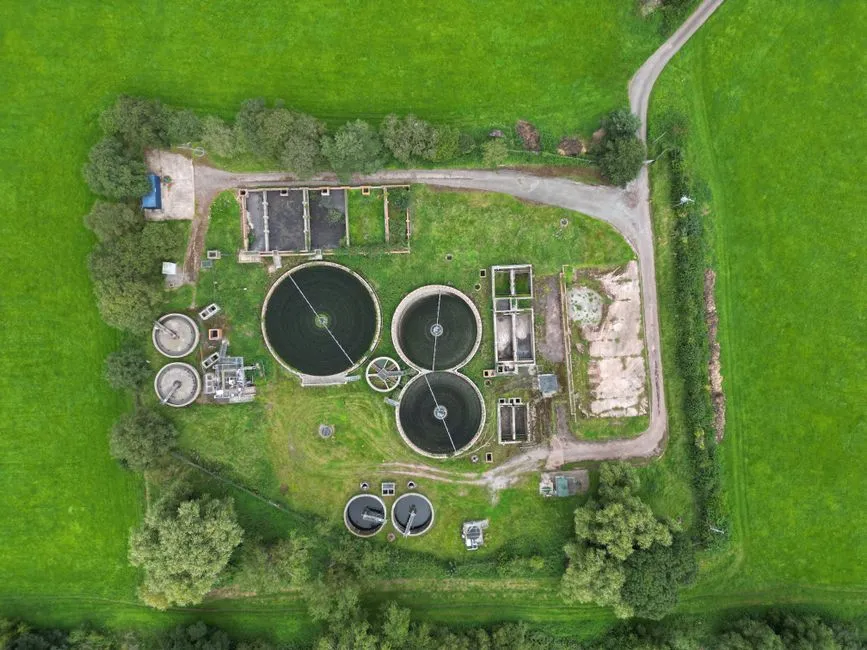
A complete treatment train follows the contaminant logic rather than a preferred equipment list: source control and screening; equalization and pumping; DAF or clarification where required; biological treatment where biodegradable loading requires it; membrane or tertiary polishing where necessary; disinfection where required; and sludge concentration and dewatering. Each stage removes or controls a defined fraction of the load, so omitting equalization, biological treatment or sludge handling can shift the problem downstream.
- Control the source and remove coarse material before it reaches the treatment units.
- Equalize flow and wastewater characteristics to protect downstream equipment.
- Remove oil, grease, suspended solids or colloids with DAF or clarification where the influent requires it.
- Apply biological treatment where the biodegradability results justify it.
- Add UF, RO or another polishing stage only against a defined downstream quality requirement.
- Disinfect where the discharge or reuse pathway requires it.
- Concentrate, dewater and route the resulting sludge.
Position DAF after flow equalization for streams containing suspended solids, oil, grease, FOG or colloidal matter. The referenced industrial DAF system for solids, oil and grease removal covers 4–300 m³/h across 13 standard models, but the duty point must be selected after flow characterization rather than inferred from the model range.
MBR is appropriate where biological treatment and compact fine separation are both valuable. The referenced MBR wastewater treatment system for Jordan covers 10–2,000 m³/day and uses submerged PVDF membrane filtration below 1 μm. Its catalog states a 60% smaller footprint than conventional systems; buyers should request the comparison basis and site-specific layout rather than treat the catalog claim as a guarantee.
Use UF as a solids and colloid barrier when downstream membranes, process equipment or reuse requirements need protection. The referenced UF pretreatment and polishing system covers 2,000–40,000 L/h, uses 0.03 μm PVDF membranes, and includes automatic backwash and air scour. These are catalog parameters, not universal design values.
Reserve RO for advanced polishing where the application and feed chemistry justify the separation duty. The referenced industrial RO polishing system states recovery rates up to 95%, but achievable recovery requires a finalized water analysis and system design. A solids-balance-based sludge scope should include the referenced plate-and-frame filter press range of 1–500 m² filtration area.
| Process stage | Primary function | Selection evidence required |
|---|---|---|
| Source control and screening | Remove coarse material and protect the plant | Waste stream inventory and screening analysis |
| Equalization and pumping | Stabilize flow and loading | Flow-state record and required turndown |
| DAF or clarification | Remove solids, oil, grease, FOG or colloids where present | Oil, grease, TSS, settleable-solids and colloid data |
| Biological treatment or MBR | Remove biodegradable organics and provide fine separation where combined | COD, BOD5, nutrient and process-toxicity data |
| UF, NF or RO polishing | Meet downstream water-quality or reuse requirements | Feed chemistry, target quality, recovery and disposal constraints |
| Disinfection | Control pathogens for the intended pathway | Receiving-water and reuse requirements |
| Sludge concentration and dewatering | Reduce sludge volume and prepare it for disposal or recovery | Solids generation, moisture target and final disposal route |
Match Each Technology to the Treatment Objective
DAF, MBR, UF and RO solve different problems and should not be compared as interchangeable products. The decisive question is the contaminant and quality barrier that must be crossed next.
| Technology | Choose it when | Do not assume |
|---|---|---|
| DAF | The objective is efficient removal of suspended solids, FOG, oil and grease or colloidal matter, including pretreatment ahead of biological or membrane systems | That it removes dissolved salts or fully corrects variable organic loading |
| MBR | Biodegradable wastewater treatment, high-quality separation and a compact installation must be combined | That biological loading and pretreatment requirements disappear |
| UF | Suspended solids and colloids must be removed before sensitive equipment, reuse polishing or RO | That a 0.03 μm membrane and a 2,000–40,000 L/h catalog range establish universal suitability |
| RO | Advanced purification of pretreated water is required and the feed quality and economics support the separation | That the catalog’s recovery rate of up to 95% is guaranteed for an unidentified industrial feed |
| Package biological treatment | A packaged biological system suits residential communities, hotels, hospitals, factories and rural sites | That it replaces industrial pretreatment or membrane polishing |
For RO, compare feed chemistry, salt passage, recovery and concentrate-disposal constraints with the available nanofiltration alternative. The technical comparison in RO versus nanofiltration for industrial wastewater polishing is the appropriate starting point, not a substitute for a site-specific mass balance.
The package biological alternative has a 1–80 m³/h WSZ range and combines A/O contact oxidation, sedimentation and disinfection in a buried unit. Its possible fit must still be checked against the industrial wastewater characterization, required effluent quality, land conditions and sludge route.
No membrane substitutes for characterization, equalization, required biological treatment, pretreatment or sludge management. When comparing an MBR route with activated sludge, MBR versus conventional activated sludge for food wastewater provides a focused technical comparison; the final choice remains a plant-level decision.
Apply Jordan’s Water-Reuse Context Without Overclaiming
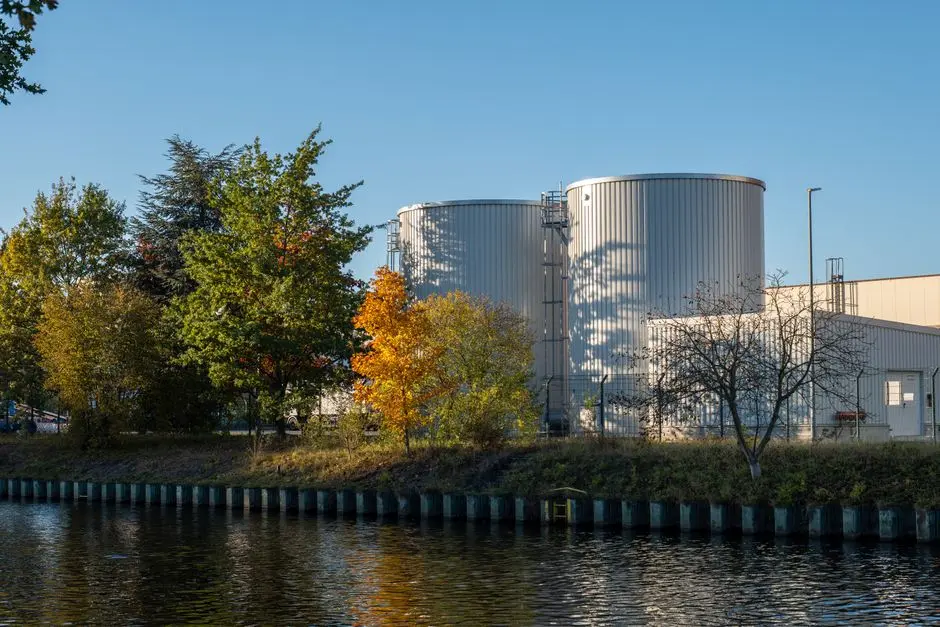
Jordan’s reuse assessment must distinguish regional planning evidence from current regulatory permission. A Water Practice & Technology study examined wastewater irrigation in the Seil Al-Zarqa and Middle Jordan Valley regions through field studies on 13 fields, semi-quantitative methods and a simplified nutrient mass-balance model. It found nitrogen supply up to a factor of 7–8 above demand, demonstrating that reuse cannot be evaluated only through pathogen removal and available water (Water Practice & Technology, “Wastewater irrigation in Jordan: A mismatch in macro nutrient provision”).
That finding makes nutrient management part of the design basis. A permitted reuse pathway should define the receiving water, the recipient-water compatibility, the monitoring plan and the agronomic assessment. Where irrigation is proposed, the ETP objective must address not only water quality but also the nitrogen balance identified in the study.
International research can inform options without establishing Jordanian approval. A Wageningen University thesis published on 23 September 2022 investigated constructed wetlands for micropollutant removal from wastewater treatment plant effluent. The University of Twente thesis investigated nanofiltration for effluent reclamation. These are complementary research routes, not evidence that either route is currently authorized for a Jordanian project.
Before ordering equipment, obtain the current permit, reuse and discharge requirements from the relevant Jordanian authority and document the responsible approving body. A regional reuse concept should therefore be treated as an input to regulatory engagement, not as a substitute for approval. Further context is available in the discussion of wastewater reuse and water security in the regional October 2026 forum.
Turn the Project Brief into a Supplier-Comparable Scope
A comparable tender requires every supplier to answer the same design and risk questions. Issue one common scope covering design flow, influent characterization, required effluent and reuse criteria, process train, automation, utilities, civil works, installation, commissioning, training, spare parts and O&M support. Without a common scope, differences in exclusions can make the lowest equipment price appear to be the lowest project cost.
Require each supplier to state assumptions, exclusions, performance guarantees, turndown range, sludge output, membrane or consumable replacement strategy, and utility consumption. A supplier that omits a duty point, feed-water assumption or disposal route has not made the bid technically comparable.
Request a project risk register covering variable industrial inflows, upset loads, odour, flooding, power interruptions, membrane fouling, chemical availability, operator capability and spare-parts lead time. For automated plants, the SCADA alarm and flood management for wastewater plants guide identifies the kind of control and response planning that should be reflected in the scope.
Review lifecycle criteria rather than headline purchase price: initial equipment, installation, consumables, energy, chemicals, sludge handling, maintenance, monitoring and replacement of wear items. For membrane systems, obtain the stated cleaning and replacement assumptions separately.
The intended University of Jordan study, “Wastewater Treatment and its Reuse in Jordan,” was inaccessible because the supplied page was rejected. Obtain and review the full paper before finalizing the reuse design; do not rely on claims that cannot be inspected. A regional reuse brief should also distinguish industrial ETP Jordan requirements from broader municipal wastewater reuse.
| Bid item | Required supplier response | Buyer check |
|---|---|---|
| Design basis | Flow states, analysis results, target effluent and reuse criteria | Confirm assumptions against plant records and laboratory data |
| Process and equipment | Process train, duty points, materials, guarantees and exclusions | Check that every upstream and downstream duty is covered |
| Operations | Automation, utilities, turndown, sludge output and waste routes | Compare operating assumptions and resource requirements |
| Delivery and support | Installation, commissioning, training, spare parts and O&M support | Make delivery boundaries, acceptance tests and support responsibilities explicit |
| Risk and lifecycle | Risk register, maintenance, consumables and replacement strategy | Compare total obligations rather than equipment price alone |
Frequently Asked Questions
What is the difference between an industrial ETP and wastewater treatment plant effluent?
An industrial ETP treats process effluent at an industrial plant boundary. Wastewater treatment plant effluent is the treated output from a broader wastewater-treatment system. The terms describe different scopes of responsibility, so a reuse or discharge specification must identify the source stream and treatment objectives before equipment is selected.
How do I size an effluent treatment plant in Jordan for variable industrial flow?
Size against a flow record that separates normal production, cleaning, batch discharge and peak production, then confirm the selected duty with representative wastewater analysis. Ask each bidder to state design flow, turndown, equalization assumptions and performance at the stated loads. The supplied research does not provide a universal sizing rule or Jordanian industrial flow allowance, so those inputs must come from the plant’s operating data and regulatory requirements.
When should I choose DAF, MBR, UF or RO?
Choose DAF for suspended solids, oil, grease, FOG or colloidal separation; MBR when biological treatment and fine separation must be combined; UF as a solids and colloid barrier before sensitive processes; and RO for advanced polishing after adequate pretreatment. Confirm the choice against the contaminant analysis, target water quality, feed chemistry, recovery, concentrate disposal and whole-plant cost.
What information should I request before comparing ETP suppliers and budgets?
Issue a common scope and request priced line items for equipment, civil works, installation, commissioning, utilities, chemicals, sludge handling, monitoring, training, spares and O&M. Also require assumptions, exclusions, guarantees, turndown, replacement strategy and utility consumption. No supported ETP quotation is available in the research, so request an itemized quotation rather than compare a headline price.
Can treated wastewater from Jordan be reused for irrigation?
Reuse may be technically feasible, but it requires a defined and permitted pathway, compatible receiving water, monitoring and an agronomic assessment. The Seil Al-Zarqa and Middle Jordan Valley study found nitrogen supply up to a factor of 7–8 above demand, so treatment design must address nutrients as well as pathogens. Confirm current Jordanian permissions with the relevant authority before setting the ETP’s reuse target. If chemical dosing is part of the proposed train, request supplier data for the automatic chemical dosing system alongside storage, containment and operator safeguards.