When MBR Is the Right Fit for Snack Food Wastewater
An MBR is a credible fit for snack food wastewater when the plant needs compact biological treatment, membrane-grade solids separation, or a route to reuse. A documented Alabama snack-food installation used a membrane bioreactor as its wastewater treatment facility, and the resulting quality was reported as good enough for discharge to the local watercourse while avoiding significant municipal surcharges, according to Filtration & Separation (2011). The same source does not establish a universal effluent standard: it provides no flow rate, influent COD, membrane area, footprint, or cost. Those inputs must be established from site data before equipment is sized.
The strongest purchase cases are plants with limited available land, a defined reuse application, or a discharge arrangement where reducing municipal surcharges has measurable economic value. The broader engineering basis for MBR versus conventional activated sludge for food wastewater is the separation of biological treatment from solids separation: the membrane retains solids while producing clarified permeate, removing the need for a separate clarifier within the biological process.
Average flow alone is not a sufficient selection criterion. High-strength cleaning wastewater, production-driven variability, grease, fibers, suspended solids, and packaging fragments can change the pretreatment train, biological loading, membrane area, controls, and cleaning requirements. A wastewater profile with only a composite average can conceal the peak events that determine fouling risk.
Use this sequence: confirm production-day and cleaning-day wastewater characteristics; identify the required effluent use and receiving route; evaluate whether pretreatment can control identified foulants; compare lifecycle implications with conventional treatment; then size the biological and membrane stages. If reuse quality or membrane-grade solids separation is not required, the site has ample footprint, and wastewater characteristics and flows are stable, conventional activated sludge may remain the more straightforward alternative.
Snack Food Wastewater Characteristics That Shape the MBR Design
Snack manufacturing wastewater must be characterized across production and cleaning cycles because a composite sample can hide the loads that control pretreatment and membrane performance. The designer needs flow, COD, BOD, suspended solids, fats and oils, pH, and temperature for production days, changeovers, and cleaning days. The research provides no universal snack-food influent limits, so these values must come from the plant’s own monitoring and, where justified, a site trial.
Process segregation is the first design decision. Keep high-strength product losses, starches, sugars, seasonings, and oils separate where practical, and identify where cleaning chemicals enter the stream. The treatment sequence should then be reviewed as:
- Segregate and collect the relevant waste streams.
- Equalize flow and load variation.
- Apply source-specific pretreatment for identified solids, grease, fibers, and contaminants.
- Provide biological treatment for biodegradable organics.
- Separate solids in the membrane stage.
- Apply disinfection or reuse polishing where required.
- Manage the resulting sludge and residuals.
Equipment selection should follow the contaminants identified in that sequence. A rotary mechanical bar screen may address recoverable coarse material or packaging fragments, while a dissolved air flotation machine may be relevant if the wastewater analysis supports oil or floatable-solids removal. Neither device should be assumed sufficient without confirming the debris characteristics and wastewater analysis. The food and beverage pretreatment limits guide provides additional context for separating site pretreatment requirements from membrane performance claims.
| Design input | Evidence available | What the buyer must establish |
|---|---|---|
| Untreated COD | Near 2,000 mg L⁻¹ in untreated mall wastewater, reported by Ambiente e Agua (2012) | Snack-food COD across production, changeover, and cleaning periods; this mall value is a benchmark, not a snack-food design input |
| Flow and load variation | No snack-food values in the supplied research | Average and peak flow, production schedule, batch discharges, and equalization requirements |
| Fats, oils, solids, and debris | No universal thresholds in the supplied research | Source and characteristics of product losses, oils, fibers, packaging fragments, and cleaning chemicals |
| Effluent objective | The Alabama case reported discharge to the local watercourse, according to Filtration & Separation (2011) | Applicable permit, sewer authority limits, direct-discharge conditions, and any reuse quality specification |
| Site constraints | No site-specific footprint or utility data in the supplied research | Available area, power supply, sludge removal route, chemical-use restrictions, and operating access |
How the Biological and Membrane Stages Work Together
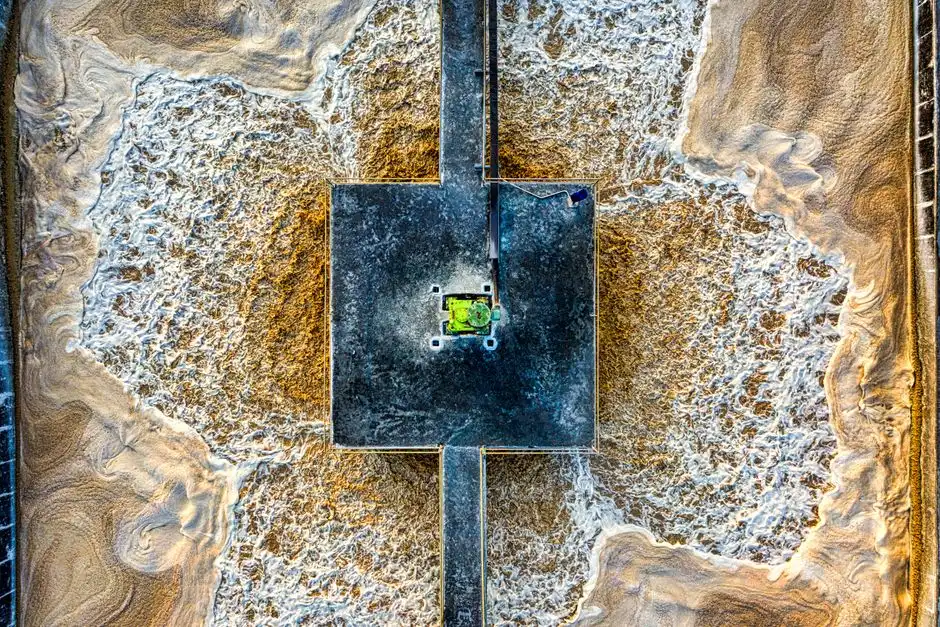
A membrane bioreactor couples activated-sludge biology with membrane separation: microorganisms reduce biodegradable organics, and the membrane retains solids while producing clarified permeate. This arrangement removes the separate clarification step found in a conventional activated-sludge process, but it also transfers solids-retention, scouring, cleaning, and pressure control into membrane operations.
The primary design variables are hydraulic loading, organic loading, mixed-liquor suspended solids, sludge age, membrane area, design flux, transmembrane pressure, aeration demand, and cleaning frequency. None should be selected from a generic flow figure. Organic loading determines the biological capacity, while membrane area and design flux determine the solids-separation duty. Transmembrane pressure and normalized flux provide the main operating indication of hydraulic resistance and fouling.
The Ambiente e Agua mall-wastewater study provides a clearly labeled operating benchmark: constant pressure of 40 kPa, 60 days of operation, a 30-day sludge age, biomass of 3,738 ± 930 mg L⁻¹, and average permeate flux of 7.0 L h⁻¹ m⁻² (2012). These values describe a different wastewater application. They do not guarantee flux, cleaning frequency, biological performance, or membrane life for snack-food wastewater because feed composition, temperature, operating objectives, biological conditions, membrane configuration, and fouling potential differ.
| Variable or indicator | Source-labeled value or definition | Engineering interpretation |
|---|---|---|
| Pressure | 40 kPa in the mall-wastewater MBR study, Ambiente e Agua (2012) | Operating benchmark only; the snack-food design must reflect membrane configuration and fouling conditions |
| Test duration | 60 days in the mall-wastewater MBR study, Ambiente e Agua (2012) | Evidence from the reported study, not a validation period for a snack-food procurement |
| Sludge age | 30 days in the mall-wastewater MBR study, Ambiente e Agua (2012) | Controls biomass retention and biological behavior; site loading must determine the design |
| Biomass concentration | 3,738 ± 930 mg L⁻¹ in the mall-wastewater MBR study, Ambiente e Agua (2012) | Observed study condition, not a default snack-food operating target |
| Average permeate flux | 7.0 L h⁻¹ m⁻² in the mall-wastewater MBR study, Ambiente e Agua (2012) | Benchmark for comparison with supplier design data, not a performance guarantee |
| Normalized flux | Flux corrected to a common reference condition | Use with transmembrane pressure to identify changes in membrane resistance and trigger investigation |
Fouling control starts upstream. Remove or manage grease, fibers, and high solids loads before they reach the membrane, then maintain suitable biological conditions and continuous membrane scouring. Track pressure and normalized flux, define cleaning triggers, and confirm recovery after each chemical or physical cleaning event. A submerged configuration can be evaluated through the integrated submerged-PVDF MBR system, while the DF flat-sheet MBR modules offer a distinct module format to assess against the selected pretreatment and operating envelope.
The Membrane Society of Japan paper, Removal of Pathogenic Viruses in Wastewater Treatment by Membrane Bioreactor (2001), specifically addresses pathogen-virus removal. It supports the broader observation that biological treatment combined with membrane separation can improve effluent quality, but it does not establish a universal virus-removal guarantee for a snack-food installation.
MBR Versus Conventional Activated Sludge for Snack Food Plants
The strongest reason to choose MBR is not simply a smaller tank; it is the combination of membrane solids separation, compact treatment, and the potential to produce effluent suited to a defined reuse application. Conventional activated sludge remains appropriate when the site has ample footprint, relatively simple pretreatment, stable flows, and no requirement for membrane-grade separation or reuse.
| Decision factor | Conventional activated sludge | MBR |
|---|---|---|
| Biological treatment | Activated sludge followed by clarification | Activated-sludge biology integrated with membrane separation |
| Solids separation | Separate clarifier required | Membrane retains solids and produces clarified permeate |
| Footprint | Requires separate settling and process space | HydropureWater’s verified catalog states 60% smaller footprint than conventional systems; this is a manufacturer claim, and final layouts require site comparison |
| Filtration quality | Depends on clarification and any downstream polishing | HydropureWater’s catalog states filtration below 1 μm using submerged PVDF membranes; it does not establish universal reuse or regulatory acceptance |
| Mechanical complexity | Generally simpler separation train, with aeration, sludge handling, and pumping still required | Adds membrane modules, scouring, pressure monitoring, cleaning, and replacement planning |
| Operational focus | Biological control, settling, wasting, and solids handling | All of the above plus flux, transmembrane pressure, cleaning, and integrity monitoring |
| Variable loads | May tolerate variation when equalization and clarifier performance are adequate | Requires source-specific pretreatment and controls for grease, solids, and cleaning wastewater peaks |
| Reuse readiness | Usually requires additional clarification or polishing | Potentially better suited to reuse where the specified quality can be demonstrated at the agreed influent basis |
Filtration below 1 μm and “near-reuse-quality” effluent are catalog claims for the integrated submerged-PVDF system, not guarantees for every application. The Alabama installation provides commercial context: the reported discharge outcome avoided significant municipal surcharges, but a different plant must establish its own tariff, baseline wastewater charge, discharge route, and receiving-water requirements. The 2026 MBR cost per m³ guide provides the appropriate basis for site-specific commercial evaluation, not a universal price.
A defensible comparison requires a lifecycle estimate covering equipment, installation, membranes, aeration, pumping, chemicals, energy, preventive maintenance, cleaning, membrane replacement, sludge disposal, and avoided sewer charges. Capital cost, energy use, and payback cannot be inferred from the supplied case studies because those site inputs and cost data are absent.
Equipment Sizing and Supplier Selection for a 2026 Project
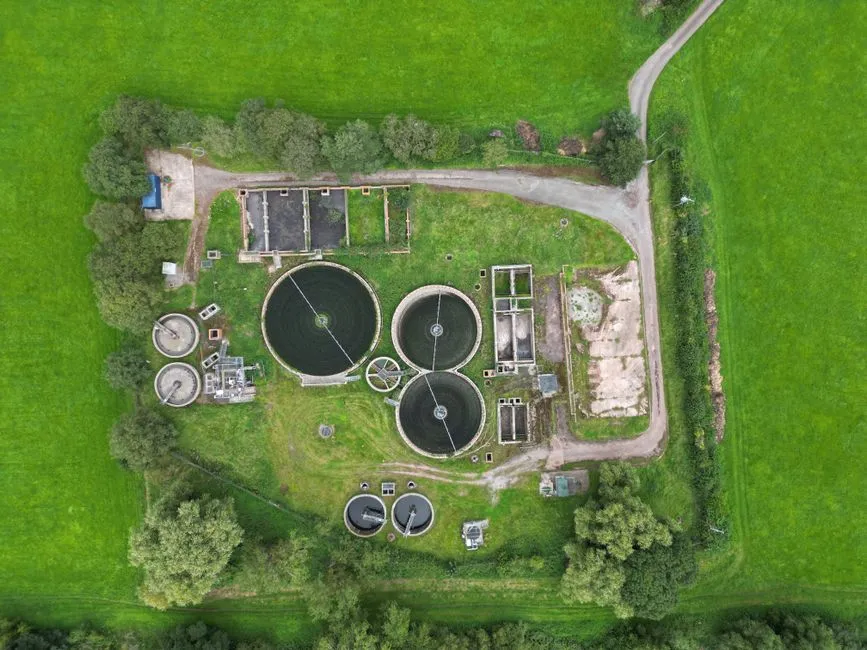
The HydropureWater verified catalog covers integrated MBR systems from 10 to 2,000 m³/day, but that range does not determine the required train. The supplier must define whether the quoted capacity is based on average flow, peak flow, influent loading, production schedule, or another basis, and must show how peak cleaning wastewater affects equalization and membrane capacity. The range is a catalog boundary, not a sizing calculation.
The supplied DF flat-sheet module specifications are more specific: 0.1 μm PVDF flat-sheet elements, an integrated aeration box, individually replaceable elements, a stainless-steel frame, configurations from 80 to 225 m², and stated production capacity from 32 to 135 m³/day. These specifications should be checked against the site’s hydraulic, organic, fouling, and reuse requirements rather than used as standalone selection criteria.
| RFQ item | Minimum information required from bidders | Buyer’s acceptance check |
|---|---|---|
| Design basis | Guaranteed design flow, peak-flow basis, production schedule, influent COD, BOD, suspended solids, fats and oils, pH, and temperature | Does the guarantee address the agreed worst-case and average conditions? |
| Treatment performance | Expected permeate quality, relevant removal basis, and the conditions on which the claim applies | Are guarantees tied to the agreed influent and effluent specification? |
| Membrane system | Membrane area, configuration, design flux, pressure basis, cleaning method, cleaning frequency, and replacement plan | Can the supplier show how the selected flux responds to the specified wastewater? |
| Operations | Controls, aeration demand, redundancy, monitoring, maintenance, and operator training | Are failure responses and alarm coverage defined? |
| Scope and cost | Separate prices for equipment, installation, membranes, aeration, pumping, chemicals, energy, maintenance, cleaning, replacement, and sludge disposal | Are exclusions, replacement cycles, and lifecycle assumptions visible? |
| Evidence | Comparable food or snack-process references and acceptance-test method | Do the references have comparable wastewater and treatment objectives? |
The DF catalog states energy consumption of 10–20 times lower than external cross-flow systems. Buyers should require the comparison basis, including system boundaries, production basis, design load, and whether all aeration, pumping, cleaning, and pretreatment energy were included. A headline ratio is not a bankable energy guarantee.
For auxiliary requirements, request a clear bill of materials for valves, controls, instruments, and membrane-spares interfaces from the treatment-parts and valve package. A complete RFQ should also define sludge removal, chemical delivery, utilities, access, training, commissioning, and acceptance testing around the agreed influent and effluent basis.
Implementation, Monitoring, and Compliance Risk
Commissioning should verify that the installed system performs on the wastewater basis used for design, not on a generic clean-water or averaged influent condition. Start with confirmation of the influent characterization, establish the biological population under controlled loading, complete membrane integrity checks, calibrate flow, pressure, aeration, and controls, and conduct performance testing at the agreed design basis.
Monitor flow, transmembrane pressure, normalized flux, mixed-liquor suspended solids, sludge age, pH, temperature, and effluent quality. The mall-wastewater study provides measured pressure, sludge age, biomass concentration, and average permeate flux (2012), confirming their use as operating indicators. Their values should not be copied into a snack-food specification without site-specific justification.
Compliance must be treated as a site-specific condition. Obtain the applicable discharge permit, sewer authority requirements, direct-discharge conditions, reuse rules, and any food-sector hygiene constraints before finalizing the treatment objective. The supplied research contains no universal numerical effluent standard. The Alabama case demonstrates an application outcome reported by Filtration & Separation (2011), not a permit that can be transferred to another plant. Verify the actual Alabama discharge route and receiving-water context during site-specific permitting.
Prepare operating responses before commissioning. The response plan should cover increasing transmembrane pressure, declining normalized flux, membrane cleaning and recovery, biological upset, and peak cleaning wastewater. Each event needs an alarm or operating trigger, a defined operator action, an escalation route, and a check against the discharge or reuse limit. If biological upsets follow production changes, review equalization performance and pretreatment operation before increasing membrane capacity. The activated-sludge bulking troubleshooting guide is relevant to diagnosing biological instability, although the MBR must also be assessed for membrane-specific fouling and scouring performance.
Frequently Asked Questions
What does an MBR for snack food wastewater cost?
No defensible price can be given without the design flow, wastewater analysis, pretreatment requirements, discharge or reuse target, footprint, and energy assumptions. The 2026 MBR cost per m³ guide explains the cost structure. Request a site-specific lifecycle estimate separating equipment, installation, membranes, aeration, pumping, chemicals, energy, maintenance, cleaning, replacement, sludge disposal, and avoided sewer charges.
How should an MBR system be sized for a snack food plant?
The catalog range of 10 to 2,000 m³/day does not determine the required train (HydropureWater verified product catalog). The designer must evaluate average and peak flow, organic loading, production and cleaning schedules, fouling risk, equalization, membrane area, and design flux. A supplier should state its design-flow and influent basis explicitly.
Which supplier qualifications matter most?
Require comparable food or snack-process references, an explicit influent and effluent design basis, membrane-area and cleaning terms, measurable performance guarantees, defined guarantee boundaries, and a lifecycle cost schedule. Also require the supplier to disclose excluded costs, membrane replacement assumptions, controls, redundancy, sludge handling, and acceptance-test conditions.
Can the Alabama installation be used as a discharge-compliance example?
Only as an application outcome, not as a universal permit or effluent standard. Filtration & Separation (2011) reported that the Alabama snack-food installation produced wastewater suitable for discharge to the local watercourse while avoiding significant municipal surcharges. A different plant must confirm its own permit, receiving route, discharge conditions, and reuse requirements.
What site data is needed before selecting MBR equipment?
Request production-day and cleaning-day flow and wastewater analyses, the production schedule, discharge or reuse targets, available footprint, power supply, sludge-removal arrangements, chemical-use restrictions, and pretreatment observations. These inputs are needed to determine biological loading, equalization, source-specific pretreatment, membrane area, controls, and acceptance criteria.