Package wastewater treatment plant cost Luzon Philippines buyers should read as a capacity problem first. A modular train treats 50–5,000 m³/day of industrial or municipal wastewater and is sized for 90–98% BOD/COD removal under DENR DAO 2016-08. For a 1,000 m³/day project, capital cost is ₱15M–₱30M and operating cost is ₱0.80–₱1.50/m³, with the spread set by MBR versus SBR and by the discharge class.
Local suppliers such as HydropureWater quote 6–12 week delivery on pre-engineered skids. International vendors such as SUEZ and Organica cover 6,500–100,000 m³/day, often at 2–3× the cost of a single-site package.
Package Wastewater Treatment Plant Cost Luzon Philippines: CAPEX and OPEX
A 1,000 m³/day package wastewater treatment plant in Luzon costs ₱15M–₱30M in capital cost. MBR packages at that flow sit at ₱25M–₱30M, and an SBR near 500 m³/day sits at ₱10M–₱15M on the 2025 table. Operating cost is ₱0.80–₱1.50 per cubic meter. Payback on a typical park unit is 5 to 7 years once fines and civil works are counted.
Capital expenditure for a 1,000 m³/day unit runs from ₱15M to ₱30M once automation and membranes are chosen. International municipal bids, including SUEZ lines, can pass ₱60M+ when capacity leaves the factory range. Procurement teams should price a 10-year total, not the purchase order alone.
Operating cost in Luzon falls between ₱0.80 and ₱1.50 per cubic meter of treated water. Blowers take 40–50% of that bill. Chemicals take 10–20%, covering coagulant, dewatering polymer, and chlorine or UV. Most plants we size for food parks in Cavite run at the lower end when fats are removed before the aeration tank.
Labor stays modest because a PLC watches the cycle, so the site does not need a full night crew. Sludge hauling is the wild card in Bulacan and Pampanga, where tip fees move the peso-per-cubic-meter figure more than polymer dose. A 1,000 m³/day park plant often pays back in 5 to 7 years through avoided fines, less potable makeup when reuse is allowed, and a smaller civil package.
The 2025 benchmark below holds the same cell values used for recent Luzon bids.
| Capacity (m³/day) | Technology | CAPEX (₱ Million) | OPEX (₱/m³) | Payback (Years) |
|---|---|---|---|---|
| 100 | MBR | ₱5M – ₱8M | ₱1.20 – ₱1.80 | 6–8 |
| 500 | SBR | ₱10M – ₱15M | ₱0.90 – ₱1.30 | 5–7 |
| 1,000 | MBR | ₱25M – ₱30M | ₱1.00 – ₱1.50 | 5–6 |
| 5,000 | Conventional | ₱40M – ₱50M | ₱0.60 – ₱0.90 | 4–6 |
Six items move the quote more than the brochure does. Check each one before you compare vendors.
- Process choice: MBR, SBR, or conventional A/O, using the footprint and energy rows above.
- Blower power, which is 40–50% of operating cost at the design air rate.
- Chemicals, which are 10–20% once coagulant, polymer, and disinfection are counted.
- Sludge haul distance, especially in Bulacan and Pampanga.
- PLC scope versus a manned shift.
- Receiving-water class, because a tighter class adds process steps.
- Buried tank versus an open civil yard on high-priced park land.
Livestock sites ask a different budget question. The separate note on how much a wastewater treatment facility for poultry farm in the philippines covers farm flows, which this factory table does not.
Why Luzon Industrial Parks Switch to Package Plants
Luzon industrial parks wait 18–24 months for a stick-built plant, while a modular package is on site in 6–12 weeks. Laguna electronics lines and Batangas food plants hit this wall when output grows faster than concrete. Influent TSS often sits at 300 to 1,000 mg/L. COD swings between 500 and 2,000 mg/L.
Under the LLDA, permit writers have often asked for BOD below 30 mg/L and TSS below 50 mg/L. Those figures are design targets, not the Class C numbers in DAO 2016-08. Bespoke plants in Luzon have blown past bids exceeding ₱100M and then waited on permits. According to the WEPA Outlook 2024 Philippines profile, only 10% of domestic wastewater is treated.
The same profile states that only 5% of the population is connected to a sewer network. Older Luzon briefs still say less than 30% of wastewater is treated. Both figures describe a thin treatment base, so DENR enforcement is not a paper drill. The Organica facility in Laguna, at 6,500 m³/day for 15,000 households, shows a town-scale biological plant, and it is the wrong size for one factory.
Town-scale options are set out in Municipal Sewage Treatment Plants in Luzon Philippines: 2026. The Ilugin municipal plant, at 100,000 m³/day, sits in that class. A single factory should not copy it. Most plants we size for a single line in Laguna stay under 1,000 m³/day and ship while the civil pad is still curing.
Package plants close the gap because fabrication runs in parallel with the pad. A buried skid, the Underground Package Sewage Treatment Plant (WSZ Series), cuts the yard when land in Cavite, Laguna, or Batangas is priced like floor space. Footprint can drop by up to 50% against a conventional activated-sludge yard. That saving is why parks drop the 18–24 month concrete schedule.
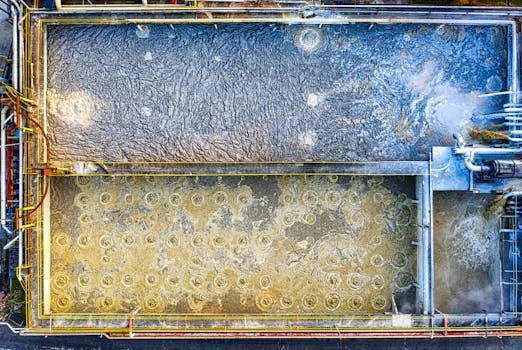
Package Wastewater Treatment Plant Technologies for Luzon: MBR vs. SBR vs. Conventional
Membrane bioreactor packages reach up to 98% BOD removal and 99% TSS reduction, which is why tight Luzon sites pick them when the yard is small. The receiving water sets the legal ceiling, and the footprint sets the process. Parks that discharge to inland Class C water or the Laguna Lake basin live or die on the Permit to Operate. Choose MBR when land is scarce, and choose SBR when the organic load swings.
The MBR package plant for high-efficiency wastewater treatment in Luzon uses submerged PVDF membranes with a 0.1 μm pore size. That barrier replaces the secondary clarifier, so a biological upset does not dump solids. Energy use is 0.8–1.2 kWh/m³. Removal of BOD and COD lands at 95–98% when the membrane is intact.
Food plants with shock loads often do better on an SBR. The tank fills, aerates, settles, and decants, so the operator stretches aeration when COD spikes. Conventional A/O plus a clarifier is the lowest capital route and the largest footprint. It is a poor fit where Cavite or Laguna land is the expensive line on the estimate.
The 2025 Luzon comparison below keeps the benchmark cells used for bid leveling.
| Technology | BOD Removal (%) | TSS Removal (%) | Footprint (m²/1,000 m³/day) | Energy Use (kWh/m³) | CAPEX (₱/m³/day) |
|---|---|---|---|---|---|
| MBR | 95–98% | 99% | 100–150 | 0.8–1.2 | 25,000–30,000 |
| SBR | 90–95% | 90–95% | 250–350 | 0.5–0.8 | 15,000–20,000 |
| Conventional (A/O) | 85–92% | 80–90% | 500–700 | 0.3–0.6 | 10,000–15,000 |
High fats or high TSS should not hit the membrane raw. A pretreatment DAF system for high-TSS industrial wastewater in Luzon ahead of biology protects membranes and diffusers. Most plants we size for snack and meat lines in Batangas add that step when influent TSS exceeds 300 mg/L. With pretreatment in place, the package is designed for a 15–20 year life.
DENR DAO 2016-08 Compliance Package Plant Laguna
According to the DENR briefing at the February 2019 WEPA meeting, DAO 2016-08 sets Class C effluent at BOD5 50 mg/L, COD 100 mg/L, and TSS 100 mg/L. The same briefing lists Class C ammonia as NH3-N at 0.5 mg/L, phosphate at 1 mg/L, nitrate as NO3-N at 14 mg/L, and pH from 6.0 to 9.5. Class B BOD5 on that table is 30 mg/L. Class D, the navigation class, is BOD5 120 mg/L and COD 200 mg/L.
Industrial plants in Luzon still quote effluent BOD below 50 mg/L as the DAO 2016-08 line, and that matches Class C. Earlier package notes used COD below 200 mg/L and TSS below 50 mg/L as a blanket target. Treat 200 mg/L COD as the Class D cap. Treat 50 mg/L TSS as a voluntary design target that is tighter than the Class C legal TSS of 100 mg/L.
The older Laguna Lake note of 30 mg/L BOD matches Class B, not the Class C table LLDA later adopted. Ammonia limited to <10 mg/L does not appear in that Class C column, where ammonia as NH3-N is 0.5 mg/L in the 2019 briefing. Keep a signed BOD below 30 mg/L or TSS below 50 mg/L guarantee, because it is harder than the legal floor. The GES applies to point sources regardless of industry category.
The approval path still takes 12 to 24 weeks even when the skid is fast. DENR-EMB is the national gate, and CALABARZON adds LLDA. According to the same DENR briefing, the Pollution Adjudication Board can fine a violator not less than ₱10,000 and not more than ₱200,000 per day. According to the WEPA Outlook, EMB recorded 46% compliance in 2019, after 4,930 notices of violation among 9,060 monitored firms.
Most plants we size for Laguna parks budget the sampling taps and the courier for the self-monitoring report before they budget the fence. A workable sequence is still the one permit officers expect.
- Pre-application meeting (2–4 weeks): Confirm the receiving-water class with DENR-EMB or LLDA, including Class C or Class D.
- ECC application (4–8 weeks): File the Environmental Compliance Certificate with the Environmental Management Plan.
- Engineering report: Show the process, the design flow, and the effluent numbers the class requires.
- Permit to Operate and Discharge Permit: Issued after construction, once initial tests meet DAO 2016-08.
Skipping that sequence draws Cease and Desist orders. Batangas and Laguna zones have seen more of them as the Clean Water Act is enforced. The Ilugin works at 100,000 m³/day are a municipal lesson in monitoring discipline, not a template for a package.
LLDA Discharge Permit Package Treatment Plant CALABARZON
An LLDA discharge permit for a package treatment plant in CALABARZON is required where LLDA Board Resolution No. 322 series of 2007 says a permit is due. LLDA Memorandum Circular No. 2017-05, adopted on 22 November 2017 and filed on 25 January 2018, tells staff how to apply DENR DAO 2016-08. Section 1.1 requires every point source to meet Tables 9 and 10 of DAO 2016-08, so Laguna de Bay waters hold Class C and Manila Bay holds Class SB.
Significant parameters follow Table 8 of DAO 2016-08 and the plant PSIC code. Results go to LLDA in the Self-Monitoring Report. A plant that treats both process waste and domestic sewage is also checked against domestic parameters under PSIC Code No. 37000. Most plants we size for PEZA locators in Laguna report BOD, COD, and TSS every cycle, then add a nutrient if the inspection names it.
Strong wastewater is a separate gate. The circular asks for at least ten monthly results, or twelve results over a 6-month period, showing influent BOD equal to or greater than 3,000 mg/L, from a DENR-recognized laboratory. Only then does Table 10 replace the ordinary BOD cap. For every parameter other than that BOD case, Table 9 still applies, and strong waste draining straight to Manila Bay stays on the Table 9 BOD cap.
According to the WEPA Outlook, the LLDA 2018 split of Laguna Lake pollution load was domestic 77%, agriculture 11%, industry 11%, and forestry 1%. A factory package does not fix the domestic share. It does stop the industrial slice from adding BOD the lake cannot take. Reuse on crops still needs a Department of Agriculture certificate under Administrative Order 2007-26, valid for the life of the discharge permit.
Supplier Evaluation Checklist for a Package Plant Vendor in Luzon
A Luzon package-plant proposal is acceptable only when the guaranteed effluent matches the class on the discharge permit, whether that class is C or D. Local shops, including HydropureWater, typically deliver in 6–12 weeks and can send a crew from Metro Manila or Calamba. International membrane vendors may quote a stronger sheet and then take a 12–24 month lead time. The price gap is real, and so is the cost of a silent plant while the permit clock runs.
Score the bid against four checks before you release a deposit.
- Technical guarantees: The bid states BOD <30 mg/L and TSS <50 mg/L in writing. Hesitation on those numbers usually means the biological design is thin.
- Automation: The skid includes a PLC and remote monitoring. Manual plants in Luzon fail when a shift misses a decant.
- After-sales support: A technician can reach the site within 4 hours, for example from Metro Manila or Calamba, before a fine day stacks up.
- Reference sites: The vendor can open a working package in a similar Luzon industrial park so odor control and weld quality can be seen.
Power cuts are common on some locator feeders. If the bid has no generator note for the blowers, treat that silence as a red flag. The warranty should still read 1 year on electrical and mechanical parts and 3–5 years on membranes or the tank shell. Most plants we size for Cavite parks lose more uptime to a dead blower than to the biology.
Sites that are really buying storage, not treatment, should read waste water tanks + luzon instead of stretching this cost table. A package plant is a process train, not a holding tank. Do not let a tank quote stand in for the biological guarantee.
Who Should Order a Package Plant, and the Next Step
A package plant fits a Luzon factory or park at 50–5,000 m³/day, with a known discharge class and a need to be online in 6–12 weeks. Food, electronics, and other process sites in Cavite, Laguna, Batangas, Bulacan, and Pampanga are the usual fit. Stick-built concrete still makes sense only when the flow is municipal and the land is already owned.
Look elsewhere if the flow is the Organica class at 6,500 m³/day or the Ilugin class at 100,000 m³/day. Those jobs are municipal plants, not a factory skid. A poultry yard and a hospital tank yard are different briefs, already linked above, and they should not be forced into this CAPEX table. Most plants we hand over still need the class letter before the blower curve is frozen.
Send the design flow in m³/day, influent COD and TSS in mg/L, and the receiving class through one package plant quote for this Luzon site. Ask the reply to state Class C or Class D limits in writing before any membrane count is frozen.
Frequently Asked Questions
How much does a 1,000 m³/day package plant cost in Luzon?
A 1,000 m³/day package plant in Luzon costs ₱15M–₱30M in capital cost. MBR systems sit at the top of that band, at ₱25M–₱30M, because the membranes dominate the bill. SBR systems for a similar duty are often quoted at ₱15M–₱20M. Operating cost averages about ₱1.00/m³ inside the wider ₱0.80–₱1.50/m³ band.
What effluent limits does DAO 2016-08 set for a Luzon package plant?
Class C effluent under DAO 2016-08 is BOD5 50 mg/L, COD 100 mg/L, and TSS 100 mg/L. Bids that promise BOD below 50 mg/L match that Class C line, while BOD below 30 mg/L matches Class B, not the Laguna de Bay Class C rule in LLDA Circular 2017-05. You still need an ECC, a Permit to Operate, and a Discharge Permit before legal discharge. Keep a tighter contract number if it is already signed.
How long does a package wastewater treatment plant take to install in Luzon?
Local suppliers deliver and install a modular package in 6–12 weeks. A stick-built civil plant still takes 18–24 months because tanks, clarifiers, and the permit for permanent works stack in series. The package schedule overlaps fabrication with the pad, which is why a Laguna locator can meet a production ramp that concrete cannot. Allow the same 12 to 24 weeks for ECC and discharge-permit paperwork, because the skid can arrive before the permit does.
Can a package plant treat food-processing wastewater in Luzon?
Yes, a package plant can treat food-processing wastewater if fats and solids are removed first. A pretreatment DAF system for high-TSS industrial wastewater in Luzon is the usual front end when TSS runs from 300 to 1,000 mg/L and FOG is high. MBR then holds BOD and COD removal in the 95–98% band on the high-COD hours. SBR is the alternative when the operator can stretch the aeration step during a shock load.
What financing rate do Philippine banks quote for these plants?
Major local banks such as BPI and RCBC offer green-finance programs at 6–8% interest for compliance projects. DENR-led grants, where they exist, are aimed at municipal-scale plants rather than a single factory. A 1,000 m³/day plant with a 5 to 7 year payback still leans on avoided fines of up to ₱200,000 per day. Ask the lender to refresh the 6–8% sheet against your ECC schedule before you freeze the bid.