Package wastewater treatment plant India cost typically ranges ₹2.5–₹8 lakh per KLD across MBBR, MBR, and SBR skids treating 1–80 m³/h with 90–97% BOD removal. Inland-surface discharge plans to BOD ≤30 mg/L and COD ≤250 mg/L under Schedule VI where general limits apply.
Package Wastewater Treatment Plant India Cost Overview
The package wastewater treatment plant india cost question is answered by three lines: skid price of ₹2.5–₹8 lakh per KLD by technology, installed adders for foundations, cabling, piping, and commissioning, and lifecycle OPEX from power, chemicals, sludge, and membrane or media replacement. Footprint runs about 0.5 m²/KLD for MBR to 1.5–2.0 m²/KLD for SBR. Most plants we size for variable factory flows sit mid-band and spend the savings on equalization.
Why Package Wastewater Treatment Plants Are Scaling in India
Package wastewater treatment plants for Indian industrial and municipal sites typically treat 1–80 m³/h with 90–97% BOD removal and 85–95% TSS reduction when sized to influent load. Modular MBBR, MBR, and SBR trains commonly quote ₹2.5–₹8 lakh per KLD. Footprint ranges from about 0.5 m²/KLD for MBR to 1.5–2.0 m²/KLD for SBR.
Package wastewater treatment plants cut civil CAPEX by roughly 30–40% versus reinforced-concrete STPs priced around ₹4–₹12 lakh/KLD, and compress install time from 6–12 months to about 4–8 weeks for plug-and-play skids. Earlier project briefs often cite CPCB 2022 discharge targets of BOD below 30 mg/L and COD below 250 mg/L. Schedule VI of the Environment (Protection) Rules 1986 still sets inland-surface limits at BOD ≤30 mg/L (3 days, 27°C) and COD ≤250 mg/L for general industrial effluent where no stricter sector rule applies.
Water stress in Maharashtra, Gujarat, Tamil Nadu, Karnataka, and Uttar Pradesh, plus ZLD pressure in Hyderabad pharma and Vapi chemical clusters, keeps packaged biology ahead of RO and evaporation. In Tirupur textile reuse schemes, advanced treatment has enabled reuse of over 70% of treated effluent under Tamil Nadu Water Investment Company 2024 sustainability benchmarks. Automated packaged trains also cut environmental litigation risk versus manual site-built plants in 2023–2024 CPCB audit commentary cited in project reviews.
How Packaged STPs Work: Process Flow and Engineering Parameters
Biological treatment in packaged STPs depends on hydraulic retention time (HRT) and organic loading rate (OLR) to hit consent limits inside a compact footprint. Flow usually starts with mechanical screening, then primary sedimentation at an HRT of 1–2 hours for settleable solids. The reactor may be Anoxic/Oxic (A/O), Moving Bed Biofilm Reactor (MBBR), or Membrane Bioreactor (MBR).
Indian urban sewage often carries high grit, so a vortex grit chamber or 2–5 mm fine bar screen protects pumps and membranes. Equalization should hold at least 8–10 hours of peak flow to damp pH and organic spikes. Dairy and food plants can swing pH from 4.0 to 11.0 in one shift, which will kill biomass if buffering is weak.
MBBR media fill is typically 30–50% with an OLR of 0.5–1.5 kg BOD/m³/day, which helps under shock load. Wikipedia's MBBR overview confirms the carriers can occupy as much as 70 percent of the tank, so fill ratio is a real design lever rather than a catalogue footnote. MBR units hold Mixed Liquor Suspended Solids (MLSS) at 8–12 g/L and run membrane flux near 15–25 LMH, so they skip secondary clarifiers when reuse quality is required. For tight plots, a compact A/O-based packaged STP for space-constrained sites balances footprint and stable BOD removal.
Secondary clarification after biology (except MBR) needs an HRT of 2–4 hours. Sludge yield is usually 0.3–0.5 kg TSS per kg BOD removed. Filter presses reach about 15–25% solids; centrifuges reach about 20–30% solids. Disinfection uses chlorine dioxide at about 2 mg/L with 30 minutes contact for a 99.9% bacterial kill, or UV at 30 mJ/cm² to align with WHO 2022 disinfection guidance. Many Indian reuse trains add multi-grade and activated-carbon filters before toilet flush or cooling-tower makeup.
| Parameter | MBBR (Moving Bed) | MBR (Membrane) | SBR (Sequential Batch) |
|---|---|---|---|
| MLSS Concentration | 2,500 – 3,500 mg/L | 8,000 – 12,000 mg/L | 3,000 – 4,500 mg/L |
| HRT (Biological) | 4 – 8 hours | 4 – 6 hours | 12 – 20 hours (Total Cycle) |
| Organic Loading Rate (OLR) | 0.5 – 1.5 kg BOD/m³/d | 1.0 – 2.5 kg BOD/m³/d | 0.15 – 0.4 kg BOD/m³/d |
| Sludge Yield | 0.4 – 0.5 kg TSS/kg BOD | 0.2 – 0.3 kg TSS/kg BOD | 0.4 – 0.6 kg TSS/kg BOD |
| Typical Footprint | 1.2 – 1.5 m²/KLD | 0.5 – 0.8 m²/KLD | 1.5 – 2.0 m²/KLD |
MBR vs. MBBR vs. SBR: Which Packaged STP Technology Fits Your Project?
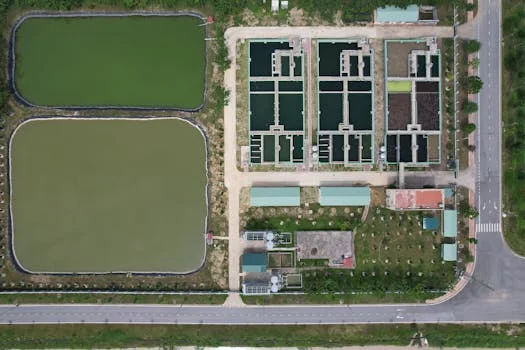
Membrane Bioreactor (MBR) trains produce effluent turbidity below 1 NTU, which suits hotels and hospitals that reuse water for HVAC cooling or landscaping. Wikipedia's process overview notes that membrane bioreactors raise removal to 96–99 percent versus about 95 percent for conventional activated sludge, with typical hydraulic retention times between 3 and 10 hours; immersed MBRs handle MLSS between 4 and 12 g/L, which brackets the 8–12 g/L band tabulated above. When evaluating an MBR-based packaged STP for reuse-quality effluent, operators must plan for higher CIP and PLC skill than MBBR or SBR. MBBR suits food plants with variable organic loads because biofilm recovers faster after toxic or flow shocks.
Operator skill often decides long-term uptime. MBR needs staff who can run PLC screens and handle citric acid or caustic CIP chemicals. MBBR is usually preferred at remote sites in Chhattisgarh or Odisha where specialist labour is scarce. Projects chasing LEED or IGBC water credits often select MBR because it supports near-full flush-water recovery when polishing is added.
Footprint still separates the three options. MBR needs about 0.5–0.8 m²/KLD, while SBR needs about 1.5–2 m²/KLD because aeration and settling share timed cycles in one tank. Rural municipal jobs sometimes pick SBR for simplicity, but continuous flow needs parallel SBR cells. MBBR media checks every six months are lighter than weekly MBR CIP cycles used to hold membrane permeability.
OPEX often closes the purchase decision. MBR OPEX of ₹0.8–₹1.2/KLD is driven largely by PVDF flat sheet membranes for MBR systems replaced about every 5–7 years. MBBR OPEX of ₹0.3–₹0.5/KLD reflects plastic media lives beyond 10 years. A 2023 Mumbai hotel case on a 200 KLD MBR train reported 98% BOD removal, full landscaping reuse, and about 3.2 years ROI after tanker and sewage-cess savings.
| Comparison Factor | MBBR | MBR | SBR |
|---|---|---|---|
| Effluent Quality (BOD) | < 20 mg/L | < 5 mg/L | < 20 mg/L |
| Effluent Quality (TSS) | < 30 mg/L | < 1 mg/L | < 20 mg/L |
| Maintenance Complexity | Low | High (Weekly CIP) | Medium (Automation) |
| Shock Load Resistance | Excellent | Moderate | Good |
| Membrane/Media Life | 10+ Years | 5 – 7 Years | N/A |
MBR Packaged STP Cost India 2025
MBR packaged STP cost in India in 2025 sits near ₹6–₹8 lakh per KLD because the quote carries membranes, controls, aeration, and cleaning provisions plus a membrane replacement reserve. The lifecycle view is the honest one: MBR saves about 0.5–0.8 m²/KLD of plot and produces reuse-grade water, but the same buyer must budget ₹0.8–₹1.2/KLD OPEX, weekly CIP labor, and a 5–7 year membrane swap. Compare that against MBBR at ₹3.5–₹5 lakh/KLD and SBR at ₹2.5–₹4 lakh/KLD before committing.
MBBR vs SBR Packaged STP India
MBBR versus SBR packaged STP selection in India turns on flow pattern, operator skill, and footprint. Wikipedia's SBR overview describes five stages in one tank: Fill, React, Settle, Decant, and Idle, which is why an SBR saves equipment but needs reliable level control and parallel cells for continuous inflow. MBBR runs a continuous attached-growth process on plastic carriers and tolerates uneven food, dairy, or hostel loads.
Choose MBBR when loads swing and the site needs a simple continuous-flow train with media checks about every six months. Choose SBR when batch operation fits the hydraulic pattern, land for 1.5–2.0 m²/KLD exists, and the owner can maintain automation. Neither process should be picked from a price sheet without influent BOD, COD, TSS, oil and grease, temperature, peak flow, and the discharge route on the table.
Packaged STP CPCB Compliance India
Packaged STP CPCB compliance in India means designing to the exact discharge route and Consent to Operate, never one national number for every outlet. Schedule VI of the Environment (Protection) Rules 1986 keeps the general inland-surface planning targets at BOD ≤30 mg/L (3 days, 27°C) and COD ≤250 mg/L where no stricter sector rule applies, while public-sewer and CETP inlet duties can be set looser by the receiving authority. The State Pollution Control Board consent remains the enforceable design basis for each site.
Heavy-metal limits are not relaxed for sewer discharge under the general schedule, so metal-bearing streams still need dedicated removal ahead of any common plant. Online continuous effluent monitoring is increasingly required for large dischargers, which raises the value of stable packaged biology before the final outlet. Quarterly lab reports, flow logs, and sludge haulage records belong in one compliance file from day one.
Cost Breakdown: How Much Does a Packaged STP Cost in India?
Capital expenditure for a packaged STP in India in 2025 still clusters around ₹2.5–₹8 lakh per KLD by technology and automation level. MBR sits near ₹6–₹8 lakh/KLD because of membranes and controls. MBBR sits near ₹3.5–₹5 lakh/KLD, while basic-compliance SBR quotes near ₹2.5–₹4 lakh/KLD for mild-steel or FRP containerized builds common on industrial tenders.
Beyond the equipment quote, buyers must fund foundations, cabling, interconnecting piping, lifting, and commissioning that raise installed cost above the skid price. For a broader market view of packaged wastewater treatment plant costs, compare like-for-like scope: tanks, blowers, dosing, PLC, and tertiary polish. Phased sites often start at 50 KLD and expand toward 200 KLD by adding parallel modules instead of rebuilding civil works.
Lifecycle cost also includes power, chemicals, sludge haulage, and membrane or media replacement. MBR power and CIP chemicals run higher than MBBR, while SBR can save blower energy if idle settle phases are well tuned. Unlike shipboard sewage treatment plants (marpol compliant) sized to IMO marine rules, Indian land-based packages must meet SPCB Consent to Operate limits and any CETP inlet rules that apply to the estate.
What CETP discharge standards apply in India?
CETP discharge standards in India depend on whether you are designing the member-industry outlet or the CETP final outfall. Schedule VI public-sewer and CETP inlet limits allow BOD up to 350 mg/L and COD up to 600 mg/L for general parameters. Inland-surface outfalls remain at BOD ≤30 mg/L and COD ≤250 mg/L where those general limits govern. CPCB still lists Common Effluent Treatment Plants under its industry-specific effluent standards index, and State Boards set the binding inlet quality for each CETP in the Consent to Operate.
Member units therefore size pre-treatment to the CETP’s published inlet sheet, not only to Schedule VI. Heavy-metal limits are not relaxed for sewer discharge under the general schedule, so metal-bearing streams still need dedicated removal before the CETP. Online continuous effluent monitoring is increasingly required for large dischargers, which raises the value of stable packaged biology ahead of the common plant.
What CPCB norms apply to steel plant water?
CPCB norms for steel plant water start from the Iron & Steel (Integrated) industry-specific effluent standards on the Board’s effluent/emission index. State Board Consent to Operate conditions remain the enforceable design basis. Where organic limits track the general inland-surface schedule, BOD ≤30 mg/L and COD ≤250 mg/L remain the common planning targets for treated discharge to surface water. Packaged biological stages are usually only one block in a larger steel ETP that also handles oil, cyanide, phenol, and suspended solids from rolling and finishing.
Can package plants sit near boreholes?
Package treatment plants can sit near water boreholes only when tanks are sealed, secondary containment is provided, and untreated effluent cannot reach the aquifer through soak pits or damaged drains. Keep untreated equalization and sludge areas hydraulically downhill and separated from potable wellheads, and confirm setback and groundwater conditions with the State Pollution Control Board before civil works. Reuse of treated water for gardening is safer than any land soakage next to a drinking-water borehole.
Containerized Sewage Treatment Plant KLD Price India
Containerized sewage treatment plant KLD price in India depends on process, steel or FRP construction, automation level, civil scope, and whether tertiary polishing is inside the box. For first budgeting, SBR quotes near ₹2.5–₹4 lakh/KLD, MBBR near ₹3.5–₹5 lakh/KLD, and MBR near ₹6–₹8 lakh/KLD inside the broader ₹2.5–₹8 lakh/KLD packaged range. These are planning figures, not a firm offer for an untested influent.
Containerized builds buy schedule certainty: the 4–8 week delivery window beats the 6–12 months of civil STP construction, and factory pre-commissioning reduces site errors. The trade is thermal gain in Indian summers, which raises blower duty, and limited operator headroom inside a standard container.
Supplier Checklist for Indian Packaged STP Procurement
Procurement teams should score vendors on more than tank thickness. Ask for contracted effluent BOD/COD/TSS at the stated flow and temperature, media or membrane brand, blower redundancy, and a written CIP or media-inspection plan. Confirm Indian spare-parts lead times and whether the PLC alarm list covers DO, level, and turbidity trips that stop non-compliant discharge.
- Influent BOD, COD, TSS, oil & grease, and peak/average flow with units
- Required discharge route: inland surface, CETP inlet, land irrigation, or reuse
- Available footprint in m² and any underground preference for the Underground Package Sewage Treatment Plant (WSZ Series)
- Operator skill on site and remote monitoring needs
- Power tariff, sludge disposal route, and membrane/media replacement budget
- After-sales response time for Tamil Nadu, Maharashtra, Gujarat, and other target states
- Factory acceptance test protocol with sample points and warranty period
The phrase wtp plants package shows up in many procurement searches, but a tender still has to define the treatment duty, sampling point, and acceptance test rather than the search wording. For a municipal comparison outside India, see the engineering notes on municipal sewage treatment plants in Singapore, then map only the process lessons that fit Indian SPCB consent language.
Who this is for: plant engineers, EPC contractors, and procurement managers specifying 1–80 m³/h packaged biology for factories, hotels, campuses, and estate CETP pre-treatment. Who should look elsewhere: ship owners needing MARPOL-certified marine units, or integrated steel mills that need full oily-waste and cyanide trains rather than a sanitary package alone. Next step: send influent data and consent limits for a duty-point selection across MBBR, MBR, and SBR skids through the India packaged STP enquiry route.
Frequently Asked Questions
What BOD and COD limits should a packaged STP meet in India?
Most inland-surface industrial discharges still plan to BOD ≤30 mg/L and COD ≤250 mg/L under Schedule VI general standards when no stricter sector rule applies. CETP member outlets often follow looser inlet BOD/COD caps set by the common plant, while metro sewage reuse schemes may demand tighter BOD near 10–20 mg/L. Always design to the SPCB Consent to Operate text for the exact site.
How much does a packaged STP cost per KLD in India?
Packaged STP CAPEX in 2025 commonly ranges ₹2.5–₹8 lakh per KLD, with SBR near the low end, MBBR in the middle, and MBR near ₹6–₹8 lakh/KLD. Civil STPs often quote ₹4–₹12 lakh/KLD and take 6–12 months versus 4–8 weeks for containerized units. Add foundations, electrics, and commissioning when comparing bids.
MBR or MBBR: which packaged technology should I buy?
Choose MBR when you need turbidity below 1 NTU, BOD below 5 mg/L, and reuse for HVAC or landscaping on a 0.5–0.8 m²/KLD plot. Choose MBBR when shock loads are likely, OPEX must stay near ₹0.3–₹0.5/KLD, and operators are limited. SBR remains workable for small municipal duties if land for 1.5–2.0 m²/KLD is available.
Do pharmaceutical and chemical plants use packaged STPs for ZLD?
Yes. In Hyderabad pharma and Vapi chemical clusters, packaged biology is often the primary stage before RO and evaporation under Zero Liquid Discharge programmes. The package must stabilize BOD and TSS so membranes and evaporators see predictable feed. ZLD economics fail if the biological stage cannot hold consent-quality feed during production spikes.
What hidden costs should procurement include?
Budget civil pads, cable trays, interconnect piping, lifting, chemicals, sludge transport, and membrane or media replacement beyond the skid price. MBR adds CIP chemicals and 5–7 year membrane swaps; MBBR needs media retention checks about every six months. Non-compliance penalties cited in 2023 enforcement reviews reached up to ₹5 lakh per violation in some cases, so stable automation is part of the cost case.
What is the MBR packaged STP cost in India in 2025?
MBR packaged STP cost in India in 2025 typically quotes near ₹6–₹8 lakh per KLD, including membranes, PLC controls, and a membrane replacement reserve. OPEX then runs ₹0.8–₹1.2/KLD, driven by scour air, CIP chemicals, and the 5–7 year module swap. The premium buys turbidity below 1 NTU and BOD below 5 mg/L for reuse duty.
MBBR vs SBR packaged STP in India: which is better?
MBBR is better for continuous flow with shock loads and limited operators, running media fill of 30–50% and OLR of 0.5–1.5 kg BOD/m³/day. SBR is better when batch cycles suit the site and land for 1.5–2.0 m²/KLD exists, because Fill, React, Settle, Decant, and Idle all share one tank. Let the flow pattern and operator roster decide, not the skid price.
What does packaged STP CPCB compliance in India require?
Packaged STP CPCB compliance in India requires designing to the discharge route in the Consent to Operate: BOD ≤30 mg/L and COD ≤250 mg/L for general inland-surface duty, looser CETP inlet caps where the common plant publishes them, and full retention of monitoring records. Quarterly lab testing, flow logging, and accredited laboratories complete the file. Sector-specific standards override the general schedule where they exist.
What is the containerized sewage treatment plant KLD price in India?
Containerized sewage treatment plant KLD price in India spans ₹2.5–₹8 lakh per KLD across the three technologies, with SBR at ₹2.5–₹4 lakh/KLD, MBBR at ₹3.5–₹5 lakh/KLD, and MBR at ₹6–₹8 lakh/KLD. Delivery runs about 4–8 weeks versus 6–12 months for civil builds. Add foundations, power, and commissioning before comparing the box price to a civil tender.