Separate the Kota data center's water and wastewater streams
A Kota data center needs a source-specific water strategy: reduce consumptive demand first, then treat each remaining stream to its actual reuse or disposal requirement. Sewage or greywater may need biological treatment followed by filtration; cooling-tower blowdown requires control of suspended solids, hardness, conductivity and scale-forming chemicals before reuse as make-up water. Closed-loop liquid cooling can reduce water consumption, but it does not eliminate treatment needs. Any reclaimed-water system should be sized from measured flows and water chemistry, with energy, recovery, concentrate handling and long-term operator capability included in the purchase decision.
Do not treat everything generated inside the facility as one wastewater stream. The first design task is to separate origin, contaminant profile, destination and required degree of treatment. Domestic sewage and greywater are biological-treatment streams; process wastewater may contain oils, colloids or industrial chemicals; cooling-tower blowdown is chemically concentrated circulating water; and equipment-room wastewater may contain washdown chemicals or suspended solids. Evaporation is not wastewater, but it is the site’s consumptive loss and must appear in the water balance.
Genesis Water Technologies explains the distinction in its 2026 article: water consumption is permanently removed through evaporation or incorporation, while water usage includes water withdrawn, used and returned after treatment. That distinction matters because the same WUE result can conceal different freshwater withdrawals and discharge effects.
Use a source water survey to approve actual wastewater generation, average and peak blowdown, seasonal evaporation and intended reuse before selecting equipment. Do not route cooling-tower blowdown into a domestic sewage plant without checking hydraulic loading, salinity, biocide carryover and treatment compatibility. An automated MBR wastewater treatment system may suit a segregated biological stream, but it does not remove the need to characterize other streams independently.
| Stream | Main characteristics to verify | Potential destination | Design warning |
|---|---|---|---|
| Domestic sewage | Organics, suspended solids, pathogens and variable flow | Treatment followed by defined reuse or permitted discharge | Do not combine with cooling blowdown before hydraulic and chemical checks |
| Greywater | Organics, fats, soaps, suspended solids and cleaning chemicals | Treatment for toilet flushing, washing or another specified service | Match the treatment barrier to the receiving fixture |
| Process wastewater | Oil and grease, colloids, suspended solids, pH and industrial chemicals | Source-separated treatment and reuse or discharge | Each process stream needs its own characterization |
| Cooling-tower blowdown | Concentrated dissolved salts, hardness, silica, suspended solids and treatment chemicals | Cooling make-up, lower-grade reuse or segregated discharge | Assess scaling, corrosion and chemical compatibility with the cooling system |
| Equipment-room wastewater | Washdown residues, suspended solids and possible chemical contamination | Treatment or controlled collection | Keep cleaning chemicals segregated where practicable |
| Evaporation | Freshwater lost from the cooling system | No reuse destination | Include it as consumption, not as recoverable wastewater |
Design cooling and water recovery as one system
Closed-loop direct-to-chip cooling can recirculate more than 95% of coolant, with relatively small losses associated with maintenance or leaks, according to Schneider Electric’s September 2026 India article. This is the relevant point for Kota: select the cooling architecture and water-recovery strategy together, rather than designing an evaporative system and attempting to repair its freshwater demand with treatment later. Future rack density, coolant temperatures, heat-rejection options and local source-water availability should be considered at concept stage.
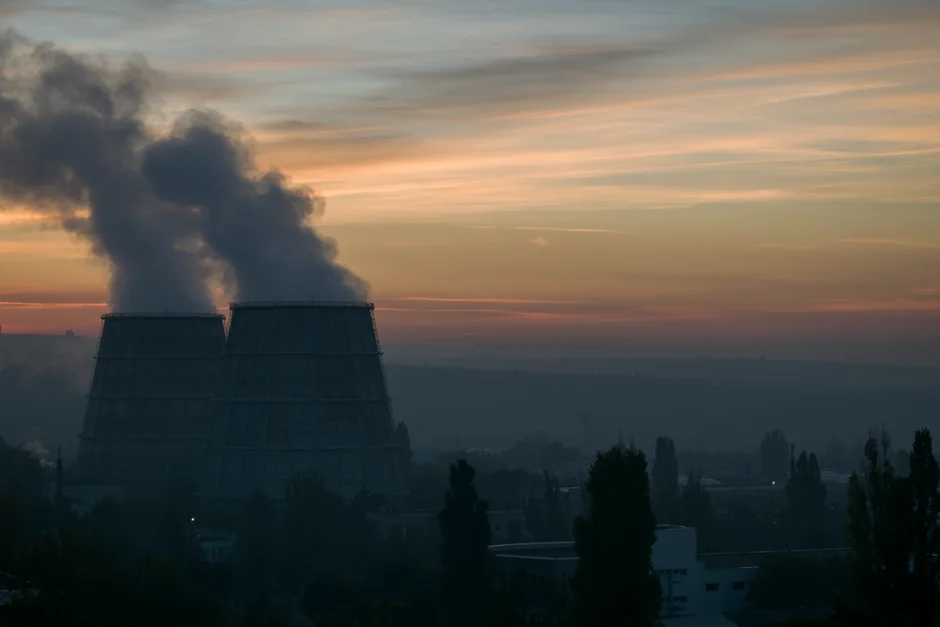
For an evaporative cooling tower, evaporation leaves dissolved salts behind. The remaining water becomes more concentrated, so blowdown is required to control scale, corrosion, microbiological growth and the chemical balance of the circulating system. Reuse does not eliminate this concentration process; it changes where the make-up water comes from and may permit a higher cooling-tower cycles of concentration if the chemistry and treatment route can support it.
Genesis Water Technologies’ 2026 article gives the relationship as blowdown ratio = 1/(CoC−1). At 4 CoC, the theoretical blowdown ratio is 25%; at 6 CoC, it is 20%. Moving from 4 to 6 CoC therefore represents a five-percentage-point reduction in blowdown, not the often-assumed 50% reduction.
Actual blowdown can nevertheless exceed the theoretical calculation by 15–30% because of unmeasured losses and emergency dumps, according to the same 2026 Genesis article. Size the treatment train against measured makeup, evaporation, blowdown and dump events rather than a steady-state equation alone. The cooling blowdown treatment planning for another data center illustrates why site-specific water accounting must precede equipment selection.
- Reduce evaporative consumption through heat-rejection and cooling-architecture decisions.
- Measure makeup, evaporation, blowdown, leaks and emergency dumps.
- Determine whether the recovered stream is needed as cooling make-up, lower-grade service water or simply requires a controlled discharge route.
- Select treatment only after defining the required product-water envelope and concentrate fate.
Use recycled water to replace a freshwater withdrawal where the treatment and thermal system can sustain it. Do not count a reuse train as a solution to evaporation: evaporation remains consumptive demand, and higher CoC only reduces the blowdown required for a given operating condition.
Set quality targets for every point of reuse
Reclaimed water is not automatically suitable for cooling. Schneider Electric’s September 2026 India article identifies total dissolved solids, hardness and suspended solids as parameters that can contribute to scaling, fouling and corrosion. The finished-water specification must therefore be written for the selected heat-rejection equipment, chemical programme, materials of construction and site-water chemistry, rather than against a generic “reuse water” label.
IDE’s 2026 article identifies silica, calcium carbonate and calcium sulfate as sparingly soluble compounds that can constrain cooling-tower blowdown recovery. The request for quotations should identify which of these constituents are present, their concentrations and the proposed control strategy. A softener may address hardness, while UF or RO may be required where dissolved solids or colloids must be reduced; the choice depends on the actual cooling-water envelope and the UF treatment equipment specification.
Specify online and laboratory monitoring before selecting equipment. At minimum, define control and response for conductivity, pH, suspended solids, hardness, silica, residual treatment chemicals and microbiological condition. Include automatic diversion when limits are exceeded, along with a defined destination for diverted water. A downstream cooling system must not be the first indication that an upstream treatment train has failed.
For sewage-derived reuse, place biological treatment and disinfection before polishing. Define whether reclaimed water enters cooling make-up, another process use, toilet flushing or only a low-grade service. A treatment train cannot be selected from the source category alone; the point-of-use requirement determines the required barrier.
| Point of reuse | Quality attributes to define | Required treatment logic | Operational control |
|---|---|---|---|
| Cooling-tower make-up | TDS, hardness, silica, suspended solids, scaling and corrosion tendency | Filtration, softening and dissolved-salt control as required | Continuous chemistry monitoring with automatic diversion |
| Toilet flushing | Organics, suspended solids, pathogens and fixture compatibility | Biological treatment, solids removal and disinfection | Disinfectant residual and sanitary acceptance criteria |
| Washing or equipment washdown | Suspended solids, residual chemicals, oil and grease | Targeted solids and contaminant removal | Segmented monitoring before reuse |
| Landscaping | Salinity, residual chemicals, pathogens and site irrigation limits | Treatment appropriate to the receiving environment | Chemical and salinity control |
Build the right treatment train for each stream
Sewage and high-strength process wastewater require biological treatment for organics, while physical separation should precede polishing where oil, colloids or suspended solids interfere. Biological treatment and an MBR are appropriate when compact installation, automated operation and near-reuse-quality effluent below 1 μm are priorities. The supplied MBR product range is specified from 10 to 2,000 m³/day; confirm that the quoted unit matches measured average, peak and minimum duties.
Use dissolved air flotation where oily, colloidal or solids-rich industrial wastewater requires efficient separation of suspended solids, FOG, oil and grease or colloidal material. The supplied Hydro DAF catalogue range is 4–300 m³/h. This is a process selection range, not a Kota sizing recommendation: the design flow must come from the source-water survey.
UF is appropriate as a pretreatment or solids barrier where the specified 0.03 μm membranes, bacteria and colloid removal, automatic backwash and air scour are required. The supplied flow range is 2,000–40,000 L/h, with turbidity tolerance up to 300 ppm. Confirm the actual feed condition and all pretreatment obligations; a nominal turbidity limit does not establish compatibility with cooling-tower chemicals or variable process wastewater.
Industrial RO is the principal route when dissolved-salt reduction is necessary. The supplied industrial reverse osmosis system for cooling make-up specifies recovery rates up to 95%, while IDE reports that conventional brackish-water RO commonly plateaus at 75–80% recovery because of scaling constraints. Treat these as different design claims with different scopes, not interchangeable guarantees. Recovery must be demonstrated for the actual Kota feed and concentrate-management arrangement.
Use softening where hardness must be removed for cooling or RO pretreatment; the supplied KJ-WT range is 1–45 T/h. Where on-site microbial control is required for industrial cooling loops or process wastewater, the supplied chlorine dioxide generator configurations span 50 g/h to 20,000 g/h. Neither equipment should be selected before the water chemistry, target dose and treatment-train compatibility are established.
| Treatment route | Primary objective | Best-fit application | Critical design input |
|---|---|---|---|
| Biological treatment or MBR | Organic matter and soluble biodegradable load reduction; MBR also provides a solids barrier | Domestic sewage and qualifying high-strength process wastewater | Influent load, flow profile, biodegradability and reuse target |
| DAF | Oil, grease, colloids and floatable solids separation | Industrial process wastewater and solids-rich pretreatment | Oil and grease, solids, pH and chemical dosing |
| UF | Suspended solids, colloids and microbial barrier | RO pretreatment or defined reuse polishing | Feed turbidity, flux, backwash and cleaning method |
| Industrial RO | Dissolved-salt reduction | Cooling make-up and high-quality process reuse | Silica, hardness, scaling risk, recovery and reject fate |
| Softener | Hardness reduction | Cooling water or RO pretreatment | Hardness profile, resin capacity and regeneration waste |
| Chlorine dioxide | On-site microbial control | Industrial cooling loops and selected process streams | Demand, contact conditions, safety and residual monitoring |
Choose reuse, segregated discharge or a hybrid route
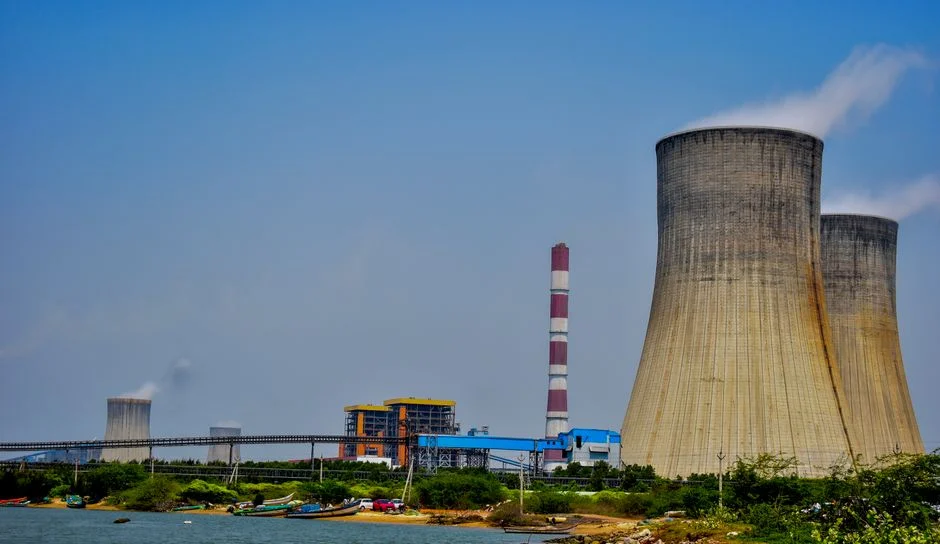
A compliant discharge route can be a valid engineering outcome when reuse would not produce a reliable benefit after treatment, concentrate management and operating costs. It should not be described as a water-reuse solution. Conversely, reusing blowdown as cooling make-up is credible only when the cooling system, water chemistry, treatment train and concentrate-handling strategy operate as one closed loop.
For lower-grade reuse, verify the health and facility controls required by the receiving system before treating the stream as toilet-flushing, washing or landscaping water. The receiving equipment must accept the treated-water chemistry, and residual disinfectants or other constituents must be compatible with the intended use.
A hybrid train often provides the most defensible design: biological treatment for sewage, source-specific physical separation for process water, and UF or RO polishing only where the reuse quality and energy budget justify it. This avoids applying a high-grade treatment train to every stream while protecting higher-value reuse points.
Evaluate the route over its operating life, not only on product cost. Open Engineering Inc’s 2026 LCA found the wastewater scenario had about twice the global warming potential of the freshwater scenario, with treatment energy accounting for roughly 80% of the difference. The study also found that the UF+RO wastewater scenario used more than five times the energy of the freshwater scenario, although higher cooling-tower CoC reduced blowdown and chemical consumption. These results support a site-specific lifecycle comparison, not a universal conclusion for Kota.
| Decision condition | Preferred route | Required evidence |
|---|---|---|
| Receiving route is compliant and reuse adds little reliable value | Segregated discharge | Permit conditions, receiving-system capacity and lifecycle cost |
| Quality supports a defined low-grade service | Lower-grade reuse | Health controls, fixture compatibility and monitoring |
| Cooling chemistry and concentrate management support recirculation | Blowdown-to-make-up reuse | Water balance, scaling analysis, recovery and product-water specification |
| Streams have different contaminants and reuse destinations | Hybrid treatment | Stream-by-stream analysis, isolation, product-water routes and reject handling |
Also review available treatment parts, valves and filter media for maintenance strategy, but do not use catalogue breadth as a substitute for a process design.
Size the system from measured duty and credible risks
System capacity should follow measured duty, not the facility’s current nameplate or a generic data-center ratio. Request hourly and daily wastewater and blowdown flows, peak and minimum flows, seasonal evaporation, current and planned cooling-tower CoC, chemical usage and facility expansion. Include emergency dumps and unmeasured losses because Genesis Water Technologies’ 2026 article attributes a 15–30% exceedance of theoretical blowdown to unmeasured losses and emergency dumps.
Provide a complete influent analysis covering pH, conductivity or TDS, suspended solids, oil and grease, hardness, silica, temperature and residual chemicals. State the required product-water quality, reuse pressure, allowable footprint, utility connections, automation protocol and operator staffing level. These are required sizing and commercial inputs, even where the supplied research provides no Kota-specific values.
Ask each bidder to state design flow, recovery, product-water quality, concentrate or reject fate, membrane or media cleaning method, redundancy and treatment-stage-by-stage energy consumption. A recovery percentage without feed-water conditions, scaling assumptions and reject fate is not a comparable offer.
IDE reports approximately 95% recovery in one brine-desalter application with about 1 mg/L silica in the permeate. That application demonstrates a possible design outcome; it must not be assumed for every Kota feed. Bidder guarantees should be tied to the agreed feed analysis and operating envelope.
| Procurement document | Information required from bidder | Acceptance basis |
|---|---|---|
| Design basis | Hourly and daily flow; peak, minimum and expansion cases | Matches measured site data and approved future scenario |
| Influent and product specification | Full analysis, treatment stages and guaranteed product quality | Limits tied to the receiving cooling or reuse system |
| Recovery and reject | Recovery, concentrate composition, volume and disposal route | Calculated for the specified feed, not generic catalogue values |
| Reliability | Redundancy, automatic diversion, cleaning and maintenance intervals | Consistent with the facility’s operating philosophy |
| Lifecycle | Stage-by-stage energy, chemicals, consumables and operator workload | Comparable assumptions across suppliers |
Plan for Kota's water policy and long-term operating risk
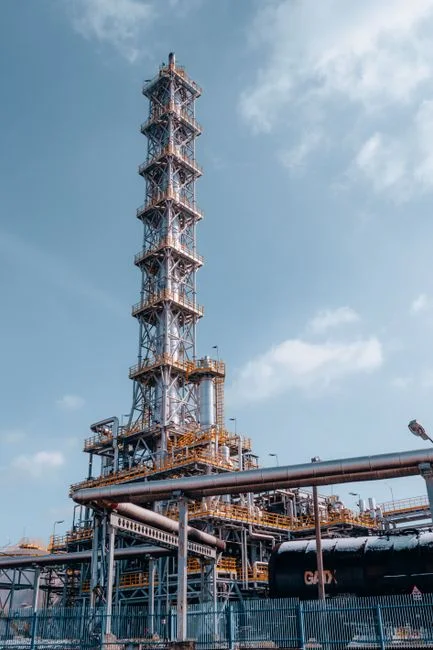
Water availability must be treated as an infrastructure constraint. Schneider Electric’s September 2026 India article reports that India has around 18% of the world’s population but only 4% of its freshwater resources. For a Kota project, source-water reliability, groundwater dependence, future rack density and cooling architecture should be assessed together rather than after the treatment plant has been tendered.
The same source reports that the Bureau of Energy Efficiency’s 2023 District Cooling Guidelines encourage treated wastewater for cooling-tower make-up where feasible. It also reports that rules introduced in 2025 require bulk users consuming more than 5,000 litres per day to increase wastewater treatment and reuse. These are national policy references; the bidder must still identify the applicable Kota permissions, sewer or discharge conditions, water-source requirements and responsible handling of sludge, reject or concentrate.
Include membrane cleaning, chemical supply, spare parts, monitoring, operator training and energy consumption in the lifecycle evaluation. Ask who will hold operating responsibility, how alarms will be escalated and what happens when product water exceeds its reuse envelope. A low purchase price is of little value if the site lacks the operators, utilities or maintenance support needed to keep the plant available.
For current policy context, review 2026 wastewater reuse and water security developments, then require each bidder to translate them into site-specific permit and operating deliverables.
Frequently Asked Questions
What treatment system is best for a Kota data center cooling-tower blowdown?
Start with a solids barrier, then add softening and dissolved-salt control only where the specified cooling-water envelope requires them. The correct choice depends on measured blowdown chemistry, especially hardness, silica, TDS and scaling tendency. Require the bidder to demonstrate product water, recovery, reject fate, cleaning and automatic diversion rather than selecting UF and RO by default.
How much should a wastewater and cooling-blowdown treatment system cost?
No supported Kota-specific quotation is available, so a responsible budget cannot be stated as a fixed price. Request capital cost, installation, commissioning, annual energy, chemicals, membrane or media replacement, operator labour, sludge handling and concentrate disposal as separate priced items. Ask bidders to use the same measured flows, feed analysis, product-water specification and reuse assumptions so that proposals can be compared.
Should the project use MBR, UF, RO or a packaged sewage treatment plant?
Use MBR for a biological stream that needs compact automated treatment and a strong solids barrier; use UF as a pretreatment or polishing barrier; use RO where dissolved-salt reduction is required; and use a packaged sewage treatment plant where the verified domestic-sewage duty and disposal route support it. These technologies are not substitutes at the same point in the train.
What water-quality testing is needed before selecting treatment equipment?
Test each source stream for pH, conductivity or TDS, suspended solids, oil and grease, hardness, silica, temperature and residual treatment chemicals. Add microbiological testing where sewage, greywater or on-site microbial control is involved. Obtain representative hourly and seasonal data, not only one grab sample, and align the results with the water-quality envelope required at each reuse point.
What compliance and supplier due-diligence records should an owner request?
Ask for the proposed Kota permit and discharge basis, water-source documentation, applicable reuse obligations, concentrate and sludge handling plan, equipment references for comparable flows and water chemistries, guarantees, test protocols, spare-parts support, training scope and operator documentation. Also check whether the quoted recovery and product quality are conditional on the influent values the bidder has used.