How to Choose Between DAF and a Clarifier for Chemical Wastewater
For chemical wastewater in Clearfield, choose dissolved air flotation (DAF) when the stream contains oil, grease, colloids, or other solids that can be conditioned and floated; choose a conventional gravity clarifier when the target pollutants are reliably settleable. Neither technology automatically solves dissolved COD. ClearFox reports that DAF performs well when COD is associated with FOG, proteins, or suspended matter, but performs less well when COD is mainly dissolved and biodegradable. A 2026 factory decision should therefore begin with wastewater characterization, jar testing, chemical-conditioning requirements, flow variability, footprint, sludge handling, and applicable discharge or reuse limits.
DAF is a physico-chemical clarification process in which micro-bubbles attach to impurities and flocculated particles, carrying them to the surface for skimming. Clearwater Industries states that its micro air bubbles measure 30–50 micron. A gravity clarifier instead separates settleable material by settling and withdrawal from the bottom. Most DAF systems also include a compartment or basin for settled sludge, so the presence of a sludge collection area does not make a DAF unit a conventional clarifier.
Do not select equipment from the generic label “chemical wastewater” or from a COD value alone. The wastewater characterization must separate free oil, emulsified oil, suspended solids, colloids, dissolved organics, metals, pH, temperature, surfactants, and flow variation. The selected train must then satisfy the factory’s pretreatment, discharge, or reuse requirements; the supplied research does not establish a specific Clearfield limit.
| Decision condition | Preferred starting technology | Reason | Required validation |
|---|---|---|---|
| Free oil, grease, emulsified oil, colloids, or conditioned solids are primary targets | DAF | Micro-bubbles float conditioned material that may not settle reliably | Jar tests, pH range, chemical dose, flotation recovery, and sludge characteristics |
| Heavy, reliably settleable solids are primary targets | Gravity clarifier | Solids can be removed through gravity settling and bottom withdrawal | Settling tests, solids inventory, sludge removal, and upset conditions |
| COD is mainly dissolved and biodegradable | Neither technology alone | Clarification does not remove most dissolved COD | Biological treatment assessment and final effluent or reuse criteria |
| Oil, emulsions, colloids, and dissolved COD are all significant | Conditioning plus DAF, followed by further treatment | DAF can recover floatable material while downstream treatment addresses remaining dissolved load | Complete mass balance and staged pilot or bench testing |
If the final decision depends on a broader technology comparison, the same contaminant logic in the broader DAF versus clarifier comparison remains useful, but local wastewater data should take precedence over a generic industry description.
What Each Technology Actually Removes
DAF removes material by flotation, while clarification by gravity removes material by settling; neither mechanism separates dissolved molecules from water by itself. Clearwater Industries explains that a DAF unit is filled with clean water for startup, after which clarified water is recirculated, pressurized, and saturated with air. When that saturated water enters the flotation tank, micro-bubbles form, attach to incoming impurities and flocculated particles, and create a floating sludge blanket. A skimmer removes the blanket, and clarified water exits below it and above the settled-solids zone.
That operating sequence explains why DAF is often effective for light or buoyant contaminants. Clearwater Industries markets its systems for FOG, TSS, BOD, COD, and industrial pollutants, but a listed application does not imply that every fraction of COD is physically removed. The contaminant association matters more than the aggregate COD result.
ClearFox reports that DAF is strong when COD comes from FOG, proteins, and curd fines, and that performance depends on stable pH and coagulant control. It performs well where COD is dominated by emulsified or free oil and suspended matter, while removal is usually lower as a standalone step when COD is mainly dissolved and biodegradable. For petroleum-refinery applications, ClearFox describes effective removal of free and emulsified oil and particulate COD, while dissolved refractory COD remains harder to remove.
Soluble dyes and soluble organics are another stated limitation. ClearFox says DAF is often limited by these fractions and is better used as pretreatment than as a full COD solution. A conventional clarifier can be appropriate for heavy, reliably settleable solids, but oil, emulsions, or buoyant material may require source control, conditioning, or a dedicated pretreatment step rather than relying on gravity alone. Where soluble COD must also be removed, compare biological treatment options for chemical wastewater after defining the soluble load and treatability.
| Wastewater fraction | DAF response | Gravity clarifier response | Engineering interpretation |
|---|---|---|---|
| Free oil and buoyant FOG | Strong physical separation after suitable conditioning | Potential loss if material floats or escapes the hopper | DAF is usually the stronger starting point for floatable contamination |
| Emulsified oil | Can be effective when destabilization and flocculation release or aggregate the oil | Emulsions may remain suspended or rise rather than settle | Jar-test the conditioning chemistry; do not infer performance from free-oil results |
| Colloids and light solids | Micro-bubbles can lift flocculated particles | Performance depends on settling behavior and residence time | Conditioning and solids characterization determine the advantage |
| Heavy settleable solids | Possible if conditioned and floatable | Natural fit for gravity separation | A clarifier may minimize unnecessary flotation equipment |
| Dissolved biodegradable COD | Usually limited as a standalone removal mechanism | Usually limited as a standalone removal mechanism | Plan biological or other downstream treatment |
| Soluble dyes and refractory organics | May remain after flotation | Remain in the clarified water | Consider advanced polishing after solids removal |
For a preliminary equipment discussion, the industrial dissolved air flotation system page provides a catalog reference, but the contaminant split and jar-test results should determine the final configuration.
DAF and Clarifier Comparison for Factory Applications
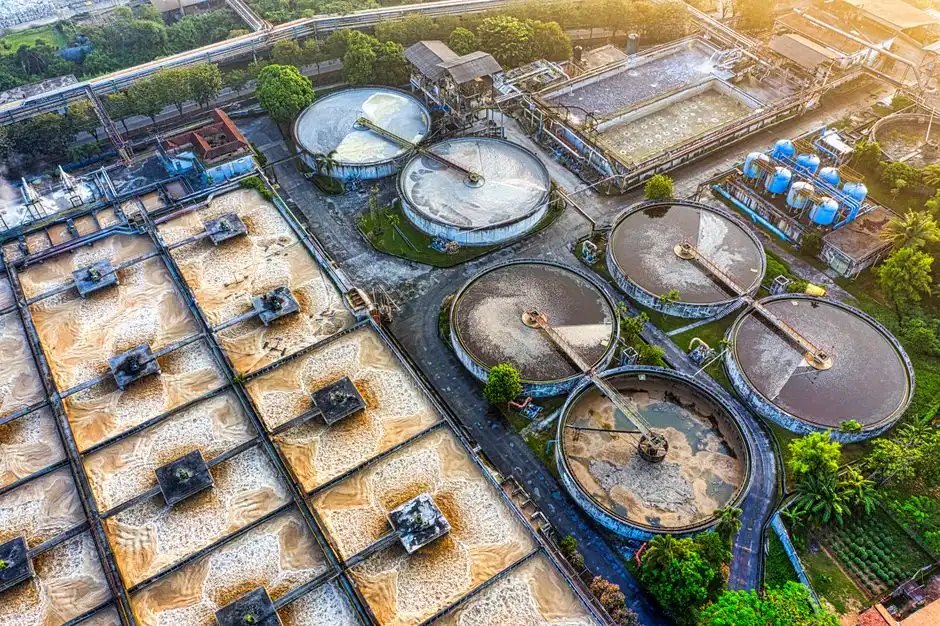
DAF and gravity clarification differ most where they affect project feasibility: contaminant capture, chemical use, equipment arrangement, sludge handling, and material selection. DAF lifts conditioned particles with micro-bubbles, while a conventional clarifier depends on gravity and bottom sludge withdrawal. Neither supplier comparison should substitute for a wastewater-specific mass balance.
Both technologies may require pH control. DAF commonly uses a coagulant and polymer flocculant to make contaminants large enough to float reliably. Clearwater Industries describes flash-mixing tubes that provide 15–45 seconds of contact time, with dosing locations for coagulant, pH adjustment, and polymer. A gravity clarifier may also need coagulant or flocculant when particles settle slowly or would otherwise carry through. Clearwater Industries states that variable chemical-contact requirements should be established through jar testing.
Configuration depends on the site. DAF suppliers offer skid-mounted, containerized, standalone, and custom systems. ClearFox describes a round, modular DAF as space-efficient, corrosion resistant, and expandable, with either free-standing or containerized installation. A conventional clarifier may be attractive where a gravity-separation basin fits the available footprint, but that does not remove the need to handle conditioning chemicals, settled sludge, odor control, access, and drainage.
Sludge characteristics affect downstream cost and space. ClearFox states that its flotation design can produce up to twice the dry solids content in generated sludge compared with conventional systems. That is a supplier claim, not a Clearfield performance guarantee; the actual sludge must be tested because oil, polymers, pH, and chemical dose can change handling behavior. If the solids will be dewatered, the plate-and-frame filter press should be evaluated after flotation or settling performance establishes the required solids characteristics and dryness.
Materials also require a project-specific corrosion review. ClearFox states that polypropylene and high-density polyethylene offer greater resistance to aggressive chemicals such as chlorides and acids than steel. Compatibility still depends on the full wastewater composition, temperature, chemicals, and cleaning practices.
| Procurement issue | DAF | Conventional clarifier | Buyer’s decision evidence |
|---|---|---|---|
| Primary mechanism | Flotation with 30–50 micron micro-bubbles, as stated by Clearwater Industries | Gravity settling and sludge withdrawal | Jar-test or pilot separation behavior |
| Best-fit contaminants | Oil, grease, FOG, colloids, and conditioned solids | Reliably settleable solids | Oil, TSS, solids-size, and colloid characterization |
| Conditioning | Typically coagulant, pH adjustment, and polymer; Clearwater Industries describes 15–45 second flash-mixing tubes | pH control and possibly coagulant or flocculant | Defined pH window, chemical dose, mixing time, and feed arrangement |
| Site arrangement | Skid, containerized, free-standing, or custom configurations | Basin-based gravity separation | Available footprint, access, civil work, and future expansion |
| Sludge | Floating sludge plus settled solids; ClearFox states up to twice the dry solids content of conventional-system sludge | Concentrated settled sludge | Measured solids content, stability, dewatering behavior, and disposal route |
| Materials | Options may include polypropylene and high-density polyethylene | Project-specific steel, concrete, lining, or other materials | Written compatibility review and materials schedule |
Chemical-feed controls affect both operating reliability and operator workload. A PLC-controlled chemical dosing system should be specified around the required chemicals, tank capacity, interlocks, sensors, and confirmed wastewater chemistry rather than treated as an accessory selected after the clarifier is ordered.
Build a Treatment Train That Meets the Final Effluent Goal
Chemical wastewater usually requires a treatment train because clarification removes suspended and floatable material, while dissolved or refractory contaminants need another process. A defensible sequence begins with equalization and characterization, then proceeds through pH adjustment, chemical conditioning, DAF or gravity clarification, sludge separation, and optional biological or advanced polishing before reuse or discharge. The final objective determines whether dissolved COD needs biological treatment, additional oxidation, adsorption, membrane treatment, or another specified process.
A 2026 Maryland solicitation illustrates the equipment scope currently being purchased for wastewater treatment. The September 2026 solicitation covers a DAF clarifier, flocculation equipment, air saturation, a sludge skimmer, subnatant collection, and associated wastewater process piping. It also includes a temporary 80 gpm DAF system. The scope demonstrates that flotation, flocculation, air supply, solids removal, collection piping, and temporary operation are separate procurement items that should be defined rather than treated as part of an unspecified “DAF package.”
For a Clearfield factory, this supports a staged approach:
- Establish equalization for production shifts, cleaning cycles, batch discharges, and upset flows.
- Characterize the wastewater and establish the required pH window and coagulant/flocculant doses through jar testing.
- Select DAF for floatable material or gravity clarification for reliably settleable solids.
- Define how flotation sludge or settled sludge is stored, conditioned, dewatered, and disposed of.
- Evaluate biological treatment for dissolved biodegradable COD and advanced treatment where remaining soluble contaminants exceed the reuse or discharge basis.
- Confirm the final train against the applicable permit, pretreatment, discharge, or reuse requirements.
Do not let clarification vendors imply that upstream solids removal guarantees final effluent quality. If the plate-and-frame filter press is part of the project, establish the required cake dryness and solids volume from representative sludge first. If wastewater reuse is the objective, evaluate the integrated wastewater treatment approach against the specific reuse quality and site constraints rather than treating it as a default substitute for clarification.
What Clearfield Factories Need to Size and Specify
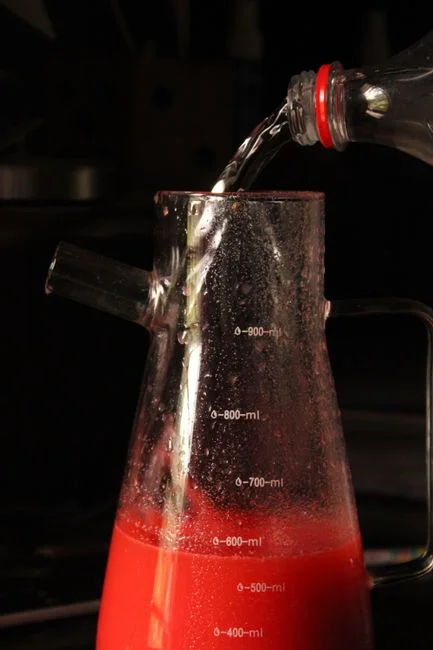
Wastewater treatment plant sizing requires more than an average flow because chemical production streams can contain batch discharges, cleaning peaks, emulsions, and changing contaminant loads. A vendor-ready engineering package should begin with representative characterization and operating data, then require bidders to show how their proposed clarification technology and equipment dimensions follow from that basis.
The characterization package should cover pH, oil and grease, TSS, COD, BOD, the dissolved versus suspended fraction, metals, temperature, surfactants, and emulsions. Flow records should state minimum, average, peak, and batch-discharge conditions, including production shifts, cleaning cycles, upset scenarios, and available upstream equalization. If the stream is segregated, document whether each stream receives a distinct treatment step.
Require jar testing before final equipment selection. Clearwater Industries states that variable chemical contact time should be determined through jar testing. Testing should establish the pH operating window, coagulant and flocculant doses, mixing requirements, flotation or settling behavior, and resulting sludge characteristics. Performance claims should refer to the tested influent and operating conditions, not an abstract “chemical wastewater” basis.
Each bidder should state the proposed technology, sizing calculation or hydraulic basis, equipment dimensions, utility demand, materials of construction, controls, sludge-removal method, and commissioning scope. For preliminary screening only, HydropureWater lists a standard DAF range of 4–300 m³/h across 13 models. That catalog range is not a selected capacity: final sizing still requires the wastewater data and application-engineering review described above.
| Information package | Minimum content requested | Why it affects selection |
|---|---|---|
| Wastewater characterization | pH, oil and grease, TSS, COD, BOD, dissolved and suspended fractions, metals, temperature, surfactants, and emulsions | Identifies whether the target is floatable, settleable, dissolved, or refractory |
| Flow record | Minimum, average, peak, batch-discharge, production-shift, cleaning-cycle, and upset conditions | Establishes hydraulic and equalization requirements |
| Jar-test report | Chemical doses, pH window, mixing time, separation behavior, and sludge observations | Defines conditioning and the required equipment basis |
| Bidder calculation | DAF or clarifier technology, hydraulic basis, dimensions, utilities, materials, controls, and sludge removal | Allows technically comparable equipment proposals |
| Acceptance conditions | Defined influent limits, operating conditions, test method, and remedy for noncompliance | Prevents reliance on a generic removal promise |
Use the industrial dissolved air flotation system as a starting point for technical questions, not as a substitute for the sizing package or a completed application review.
Procurement Checklist for a 2026 Chemical Wastewater Project
A comparable RFQ should require every bidder to document its process basis, sizing calculation, materials schedule, electrical load, utility list, controls narrative, and commissioning plan. This is the minimum evidence needed to distinguish a properly engineered package from a model description with a flow-rate table.
- State the design flow basis, wastewater characterization, pH window, chemical doses, hydraulic calculation, and equipment dimensions.
- List utilities, electrical load, controls, alarms, sensors, skid boundaries, foundations, access, and required building conditions.
- Separate included equipment from pretreatment, polishing, sludge dewatering, civil work, installation, commissioning, and off-site disposal allowances.
- Provide a materials schedule supported by a chemical-compatibility and corrosion review of the actual wastewater.
- Describe startup, clean-water flotation startup, chemical calibration, alarm response, freeze protection, and the required clean-water supply.
- Request pilot or jar-test recommendations and define any performance guarantee against stated influent and operating conditions.
- Document sludge discharge, storage, conditioning, dewatering interface, cleaning, and maintenance access.
The chemical-feed package deserves its own review. A PLC-controlled chemical dosing system should include the required tanks, metering pumps, instrumentation, interlocks, calibration method, and control logic for the selected chemicals. A generic skid reference does not establish chemical compatibility or adequate reserve.
Frequently Asked Questions
Is DAF or a clarifier better for chemical wastewater in Clearfield?
Choose DAF when the principal targets are free oil, grease, emulsions, colloids, or conditioned solids that can be floated. Choose a gravity clarifier when the main target is reliably settleable material. If COD is mainly dissolved and biodegradable, neither device should be presented as the complete solution; use the clarification stage to recover floatable or suspended material and evaluate biological treatment for the remaining soluble load. The final selection must match the actual wastewater characterization, available space, sludge route, and applicable reuse or discharge requirements.
What information is required to size a DAF or clarifier?
Flow rate alone is insufficient. Request minimum, average, peak, and batch-discharge flows; pH, oil and grease, TSS, COD/BOD, dissolved and suspended fractions, metals, temperature, surfactants, and emulsions; and results from jar testing. Those inputs establish the hydraulic loading basis, chemical-conditioning requirement, flotation or settling behavior, and expected sludge characteristics. The bidder should then show the calculation, dimensions, utility demand, and controls tied to those inputs.
How should a factory select a wastewater equipment supplier?
Require the supplier’s application engineer to show the proposed process basis, materials selection, controls, skid boundaries, commissioning plan, and performance conditions. Check that the proposed model matches the wastewater fractions and flow profile rather than relying on a model number. For DAF, also confirm clean-water availability, chemical-feed scope, air-saturation requirements, sludge removal, and utility connections. Request a written scope so that omissions do not become change orders after award.
How much does a DAF or clarifier cost near Clearfield, and how should the budget be compared?
The supplied research does not provide a defensible Clearfield price range, so request a site-specific quotation rather than accepting a generic budget figure. Compare installed scope, foundation and civil work, chemical use, utility demand, controls, maintenance materials, sludge handling, downstream treatment, commissioning, and disposal allowances. Review the industrial dissolved air flotation system as a technical catalog reference, but price only after the process basis and scope boundaries are defined.