Why a Saudi Aramco Acquisition Changes the Wastewater Risk Profile
When Saudi Aramco acquires a Malaysian plant, the wastewater review must cover two separate but connected layers: binding Malaysian environmental and sewer requirements, and Aramco’s corporate environmental expectations. Before closing, the buyer should verify permits, discharge routes, pretreatment conditions, monitoring records, waste classification, change-of-control provisions, and treatment capacity. A practical acquisition approach follows Saudi Aramco plant acquisition wastewater requirements from legal verification through technical assessment.
Operational continuity does not establish compliance continuity. A change in the permit holder, operating company, responsible personnel, maintenance priorities, product mix, or capital plan can alter who is accountable for the discharge even when the treatment process and receiving point remain unchanged.
The strategic context is Aramco’s water-conservation roadmap, which governs its operational use of water through nontraditional sources, water-efficient practices, increased wastewater reuse, reduced losses, awareness, demand assessment, and collaboration with authorities. These are corporate priorities, not substitutes for Malaysian permits or sewer conditions.
The acquisition question therefore extends beyond whether the plant passed a recent inspection. The buyer must determine whether it can remain compliant after transfer, support an economically credible reuse programme, and satisfy Aramco governance requirements without creating a discharge or performance liability for the new owner.
Separate Malaysian Legal Duties from Aramco Corporate Requirements
Malaysian regulators and sewer authorities determine the legal discharge conditions, while Aramco determines the additional standards, instructions, and management controls it requires of an acquired operation. Public Saudi guidance does not establish Malaysian law, and a Malaysian permit does not demonstrate compliance with a buyer’s corporate standard set.
| Review layer | Evidence to request | Decision use |
|---|---|---|
| Malaysian legal and sewer requirements | Current environmental approval; industrial effluent discharge permit; sewer or trade-waste agreement; monitoring records; incident and enforcement history; water-abstraction position; fee and reporting evidence | Confirms the authorised receiving route, applicable conditions, permit holder, reporting duties, and whether ownership or process changes affect permission |
| Aramco corporate requirements | Current waste-management, water-conservation, process-safety, hazardous-material, contractor-access, monitoring, and reporting instructions applicable to the site | Establishes buyer-imposed operating, governance, reuse, and capital requirements beyond Malaysian law |
The Malaysian layer should be assembled from source documents, including the site’s current environmental approval, industrial effluent discharge permit or sewer conditions, monitoring history, correspondence, and evidence of fee or reporting compliance. The buyer should also test whether the approval identifies a specific receiving point and whether any abstraction or use of water is separately authorised.
The corporate layer should be obtained directly from Aramco. The applicable waste-management instruction may include requirements for air emissions, asbestos, chemicals, hydrocarbon products, hydrotest water, medical waste, and oily waste. It also identifies Aramco’s Environmental Protection Department as the source for waste-management questions and approvals. The publicly available guidance is therefore a screening document, not proof that the complete controlling instruction set has been reviewed.
The separate treatment of oily waste and hydrotest water is significant: these streams need their own collection, storage, treatment, and disposal routes. A generic industrial wastewater permit does not demonstrate that stream-specific oily wastewater and hydrotest-water management will satisfy either Malaysian conditions or Aramco’s requirements.
Verify Permits, Sewer Rights and Change-of-Control Conditions
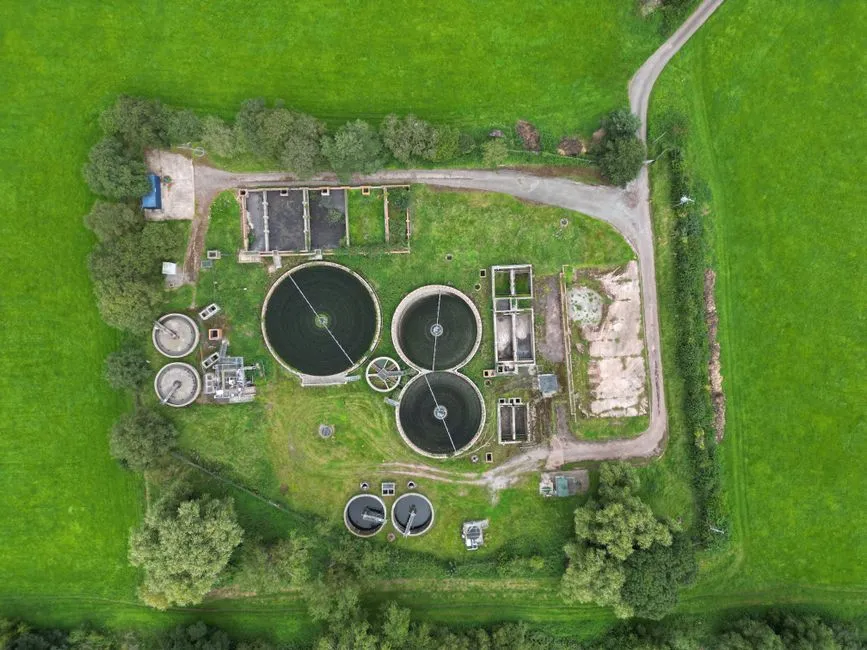
A permit register should identify the holder, authority, scope, receiving point, transfer mechanism, expiry, monitoring duties, renewal status, and responsible person for every wastewater-related approval. A missing transfer mechanism or unresolved correspondence is a transaction issue, not an administrative detail to be repaired after closing.
| Approval or obligation | Pre-signing verification | Closing-risk indicator |
|---|---|---|
| Direct environmental approval | Confirm the authorised receiving water, permitted effluent characteristics, sampling, reporting, record-retention, and emergency-notification conditions | Unapproved route, lapsed approval, missing data, or unresolved exceedance |
| Sewer or trade-waste permit | Obtain the current authority permit and local limits; determine whether consent is site-specific and whether ownership or process changes require notice or reapproval | Assumption that a general trade-waste licence covers the acquired site |
| Waste and site liabilities | Review controlled or toxic substances, scheduled or hazardous waste, contaminated soil, manifests, and disposal records separately from ordinary wastewater | Historical waste routed through a pathway that is now unavailable or noncompliant |
| Change-of-control provisions | Search the sale and purchase agreement for permit representations, notice duties, conditions precedent, capex commitments, indemnities, and retained liabilities | Consent not obtained before the effective transfer date |
For direct discharge, inspect the approval as an operating document: what may be discharged, where it may go, how samples must be taken, what must be reported, and which route applies during an incident. For indirect discharge, obtain the sewer authority’s current trade-waste or industrial-effluent permit and local limits. As industrial wastewater pretreatment limits demonstrate conceptually, discharge acceptance depends on the receiving system’s controls rather than on a generic description of the plant’s effluent.
Toxic or controlled substances, hazardous waste, scheduled waste, and contaminated soil should be reviewed separately from process wastewater. The available Aramco waste-management guidance distinguishes these management streams, so the diligence file should preserve the chain from source generation through collection, storage, treatment, manifest, and final disposal.
Transaction documents should address exceedances, missing monitoring records, pending notices, contamination, sludge disposal, permit transfer, and the cost of required remediation. A nontransferable permit, unresolved enforcement action, absent analytical data, or unapproved discharge route should be conditioned, priced, escrowed, or treated as grounds to reconsider the transaction.
Characterize Every Wastewater Stream Before Valuing the Treatment Plant
The valuation basis should be a plant-specific wastewater mass balance, not an equipment list. Flow and quality must be connected to each process source, treatment step, sludge stream, discharge route, and possible reuse destination.
| Assessment layer | Required information | Purpose |
|---|---|---|
| Stream inventory | Continuous process wastewater, intermittent discharges, stormwater, washdown, cooling and utility blowdown, domestic sewage, laboratory wastewater, oily waste, hydrotest water, and hazardous or controlled wastes | Prevents a high-risk stream from being hidden inside a diluted site average |
| Quality characterization | Flow, temperature, pH, oil and grease, suspended solids, biochemical oxygen demand, chemical oxygen demand, salinity, toxicity, metals, hydrocarbons, cleaning chemicals, and other relevant parameters | Tests whether the installed treatment train addresses the actual contaminants |
| Sampling basis | Representative samples across production, upset, and clean-in-place conditions; analytical methods, detection limits, flow records, chain of custody, and historical exceedances | Tests both present performance and the reliability of the operating record |
| Water balance | Freshwater demand, sewer discharge, process losses, final effluent, sludge and hazardous-waste destinations, and potential reuse destinations | Links compliance, production continuity, residuals, and reuse feasibility |
Annual summaries are not enough. A buyer needs raw analytical reports, method references, detection limits, flow records, chain-of-custody documentation, operating logs, alarms, bypass records, and exceedance history. The sampling plan should show whether routine samples represent the operating range or merely a stable production period.
Build the water balance from source to destination. Account for incoming water, process losses, final effluent, sludge volume, hazardous waste, sewer discharge, and any proposed recovery. Then test whether the balance reconciles with metered discharge and production data. An unexplained discrepancy can indicate unpermitted dilution, bypass, unrecorded discharge, or an incomplete waste inventory.
New water use, a changed product mix, another chemical, a new production campaign, a different discharge route, or a changed operating pattern can invalidate the historical design basis. Those changes may affect pretreatment load, biological treatability, sludge production, monitoring, permits, and reuse quality. The treatment evaluation should therefore be completed before the existing asset is valued as fit for the buyer’s intended operating plan.
Match the Treatment Train to Malaysian Limits and Aramco Reuse Priorities
Treatment selection must begin with the stream characterization and the site-specific Malaysian permit or sewer conditions, then test whether the train can support the buyer’s reuse priorities. A process technology should be selected because it performs the required function under the actual flow, chemistry, operating envelope, and residuals pathway.
Where oil, grease, FOG, suspended solids, or colloidal material could interfere with biological equipment or violate sewer controls, evaluate physical pretreatment. An industrial DAF pretreatment system may be relevant, but its selection should follow characterization, hydraulic loading, chemical demand, recovered-solids handling, and the applicable local limits.
For suitable soluble organic loads, biological treatment may be appropriate. When the reuse objective requires a smaller footprint and near-reuse-quality effluent, evaluate MBR against the receiving requirement rather than treating reuse as an assumed outcome. The MBR wastewater treatment and reuse system supplied by HydropureWater is specified for filtration below 1 μm and capacities from 10 to 2,000 m³/day; those specifications do not establish Malaysian discharge limits or guarantee suitability for the acquired plant.
Chemical dosing should be assessed against actual process chemistry and automatic-control requirements. A treatment train may also need polishing depending on the reuse destination, public-health exposure, process-water quality, or Aramco’s corporate acceptance criteria. Those criteria must be obtained in their current applicable form.
Sludge treatment belongs in the same assessment as the liquid stream. The plate and frame filter press offered by HydropureWater provides solid-liquid separation with filtration areas from 1 m² to 500 m² and manual, hydraulic, or fully automatic operation. Dewatering choice must still be matched to sludge characteristics, disposal route, operating hours, and the buyer’s required residual handling.
Reuse should be connected to the site water balance and receiving requirements. Trade.gov reports that treated non-potable wastewater in Saudi Arabia is used as grey water and for green-space, crop, and industrial reuse; it also cites a national goal of 100% reuse of treated urban wastewater by 2025. Those are Saudi reuse indicators, not Malaysian discharge conditions or a requirement automatically imposed on the acquired Malaysian plant.
| Design question | Evidence needed | Commercial implication |
|---|---|---|
| Can the existing train meet the applicable Malaysian route? | Permit or sewer limits, current performance, hydraulic and contaminant loading, operating reliability | Defines rehabilitation, additional treatment, or compliance exposure |
| Can treated water serve a defined reuse destination? | Water balance, receiving-water quality specification, seasonal demand, health and process requirements, Aramco criteria | Separates feasible projects from reuse options lacking a demand or acceptance case |
| Are residuals sustainable? | Sludge and hazardous-waste quantities, treatment route, disposal contracts, destination and contingency | Prevents liquid-treatment capital from hiding an unresolved residual liability |
Water productivity is a corporate performance issue as well as a design consideration. Aramco reported freshwater consumption of 78.5 million m³ for wholly owned and operated facilities at the end of 2025, 5.4% below 83.0 million m³ in 2024. This does not establish a target for the Malaysian acquisition, but it explains why reuse and loss reduction will receive management attention after close.
Convert Wastewater Findings into Acquisition Decisions
Each material wastewater finding should become an explicit transaction decision rather than an unpriced post-close work item. The decision should reflect legal status, technical consequence, approval dependency, schedule, operating impact, and residual liability.
| Decision | Use when | Required commercial protection |
|---|---|---|
| Accept | The obligation is valid, transferable, supported by complete evidence, and the installed system meets it | Confirm no uncapped historical liability or excluded waste stream |
| Condition before close | Permit transfer, regulator consent, sampling confirmation, or a limited corrective action must precede closing | Condition precedent, responsible party, completion evidence, and long-stop date |
| Price adjustment | A quantified gap has a defined scope and an identifiable cost band supported by current quotations | Specific adjustment or escrow rather than a generic environmental representation |
| Transfer with a defined capital plan | The gap can remain operational after close and does not prevent lawful transfer | Agreed scope, budget, schedule, owner, and linkage to Aramco integration targets |
| Exit | No lawful or technically credible compliance path exists, or the residual risk exceeds the transaction rationale | Document the failed condition and the alternative acquisition structure |
For every gap, record its probability, consequence, responsible party, approval dependency, estimated expenditure band based on current vendor quotations, schedule, operating impact, and residual liability. Where the research does not establish site-specific Malaysian costs, the buyer should request current quotations against a defined scope rather than insert an assumed price.
The purchase agreement should contain specific representations covering permits, exceedances, contamination, sludge disposal, pending notices, sampling data, and change-of-control requirements. Indemnities or escrow should match the identified exposure rather than act as a substitute for missing technical evidence.
A generic compliance certificate is not proof that the wastewater system will satisfy Malaysian authorities or Aramco after the transaction. Require source documents, operating records, analytical results, and regulator-facing obligations. The wastewater requirements applied to another Saudi Aramco acquisition provide a useful transaction structure, but Malaysian legal evidence remains controlling for the acquired site.
Post-close integration should cover Aramco standards, local reporting, operator training, monitoring, contractor controls, emergency response, and periodic review of reuse opportunities. Integration milestones should be owned by named personnel and supported by auditable evidence.
Pre-Close Wastewater Due-Diligence Checklist
A pre-close request should allow the buyer to trace each obligation from approval through operation and final disposal. The document request should include:
- The complete permit register, approvals, sewer agreement, monitoring reports, regulator correspondence, notices, audits, incident records, analytical data, flow records, waste manifests, and disposal records.
- The wastewater mass balance, process diagrams, chemical inventory, sampling plan, equipment register, maintenance history, control narratives, emergency plans, and current capital plan.
- Evidence supporting the water balance, including metering arrangements, discharge routes, reuse proposals, sludge destinations, and contractor responsibilities.
Conduct the site walkdown with the environmental manager, EHS lead, utilities manager, production representatives, and wastewater operator. Verify that installed equipment, pipework, flow routes, controls, sampling points, and metering match the documentary record. Review MBR versus conventional activated-sludge considerations only as part of the site-specific process and reuse assessment.
Maintain an open-items log identifying missing evidence, conflicting records, unresolved correspondence, and the party responsible for each response. A permit, pretreatment, contamination, or disposal issue should not be closed by assumption.
Frequently Asked Questions
How should wastewater remediation costs be allocated in the acquisition price?
Separate costs into legal compliance, permit transfer, known exceedances, treatment rehabilitation, reuse capital, and residual-waste obligations. Require a defined scope, schedule, responsible party, and current vendor quotation for each quantified item. The acquisition decision framework can then support a price adjustment, condition precedent, escrow, defined post-close capital plan, or exit decision. Do not use a generic environmental allowance to cover an unquantified permit or contamination issue.
What evidence should a buyer request when sizing a wastewater treatment system?
Request the site-specific effluent permit and sewer conditions, a reconciled water balance, representative flow and quality data, operating and upset conditions, analytical methods, detection limits, and historic exceedances. Then define the intended production plan and reuse destination. These inputs are needed before selecting capacity or comparing an MBR with conventional biological treatment; the Malaysian numerical limits must come from the applicable approval or sewer authority.
How should a buyer select an equipment supplier for the acquired plant?
Evaluate suppliers against the characterized flow and chemistry, the required Malaysian discharge or pretreatment condition, the intended reuse specification, the required footprint, automation and local-service capability, and the complete waste and sludge route. Ask for a performance basis, scope boundary, commissioning criteria, operator training, maintenance support, and delivery programme. Product capacity alone does not establish compliance or suitability.
Is wastewater reuse feasible for a Malaysian plant acquired by Saudi Aramco?
Feasibility depends on a defined reuse destination and its acceptance requirements, the plant water balance, treatment performance, seasonal demand, operating reliability, and Aramco’s current site-applicable standards. A Malaysian company must still obtain a treatment system and documentation showing how its reuse is addressed. The skid-mounted treatment-system procurement considerations include integration and handover, but they cannot replace site-specific reuse analysis or regulatory confirmation.