What Changes When Freeport-McMoRan Acquires an Indian Plant?
An acquisition by Freeport-McMoRan does not create a special India-specific wastewater rule. The buyer must verify the plant’s existing pollution-control-board consent, effluent and sewer conditions, monitoring records, outstanding compliance issues and treatment-system condition, then determine whether ownership or operational changes require consent to be amended or transferred. A change in production, raw materials, water supply, waste generation or reuse may also trigger a revised consent. Freeport-McMoRan’s disclosed water practice supports a rigorous due-diligence approach: its 2017 CDP response reported 1,740,000 megaliters of operating-process water use in 2016, approximately 80% recycled, and annual monitoring of withdrawals, discharges, destinations, treatment methods and discharge quality.
The controlling question is therefore not whether the acquirer’s name changes the law. It is whether the transaction changes the legal holder, operating footprint, permitted activity, discharge pathway or compliance position. Plant-level consents, approval records and operating evidence must be read together before the purchase price, capital plan or closing conditions are settled. The broader framework for Indian plant-acquisition wastewater requirements remains useful, but each conclusion must be tied to the target’s documents and operating plan.
A share purchase and an asset purchase require different legal and operational analyses. In a share transaction, the acquired company retains its legal identity, while its ownership, governance and finances change. In an asset transaction, the buyer may acquire selected plant assets and associated liabilities, potentially requiring a different approach to consent transfer. Indian counsel and the relevant pollution-control board must confirm the applicable mechanism; a buyer should not assume that signing, closing or the press announcement is sufficient.
The buyer also enters the inherited operating history that regulators and lenders will examine. That includes monitoring gaps, unresolved exceedances, reporting failures, remediation requirements and treatment assets that may be under-capacity. Corporate sustainability disclosures provide context, not proof that the Indian plant is compliant. The better starting point for Freeport-McMoRan acquisition due diligence is the plant’s own permit trail, equipment condition and performance record.
Transaction history illustrates why environmental liabilities need to be defined early. The Kellogg School of Management’s 2007 case, published online by Sage on 2017-01-04, states that Freeport-McMoRan’s acquisition of Phelps Dodge created the world’s largest publicly traded copper company and involved $17.5 billion in debt financing and $1.5 billion in credit facilities. That financing structure does not determine Indian wastewater obligations, but it shows why a large acquisition can carry obligations that must be converted into specific conditions, indemnities and funded capital plans.
The Five Due-Diligence Gates for Indian Wastewater Compliance
Indian wastewater diligence should follow five gates because each gate tests a different source of transaction risk: legal authority, actual flow, demonstrated performance, physical treatment capacity and post-closing change.
- Gate 1—consent identity and scope. Obtain every current and historical pollution-control-board approval, including the consent to establish, consent to operate, amendments, renewals, closure or decommissioning records. Map each document to the exact plant, utility, production line, outfall and process it covers.
- Gate 2—discharge and reuse. Identify every discharge route, public-sewer connection, zero-discharge claim, reuse destination and groundwater or surface-water pathway. Compare the authorized flow and characteristics with the current water balance.
- Gate 3—performance and records. Request the full monitoring period, laboratory methods, sampling locations, calibration records, non-compliance reports, show-cause notices, consent amendments and correspondence concerning closure or restricted operation.
- Gate 4—treatment and sludge. Inspect inlet and outlet loads, hydraulic capacity, bypasses, chemical storage, sludge generation, authorized disposal or reuse, and residual life of membranes, pumps, blowers and control systems.
- Gate 5—transaction and post-closing plan. Determine whether legal transfer, consent amendment, change-in-process approval, closure obligations or expansion consents are closing conditions. Assign each residual action to closing, transition or post-closing implementation.
Freeport-McMoRan’s 2017 CDP Water response provides a useful evidence benchmark. The company reported that withdrawal and discharge data—including volume, destination, treatment method and discharge quality—were collected and reported annually at 76–100% of sites and facilities, depending on the data category. It also stated that most of its mining operations were managed as zero-discharge facilities and that only a few facilities actually discharged water. These are corporate disclosures from global operations, not Indian legal requirements, but they support an evidence-led review rather than reliance on isolated compliance statements.
| Gate | Controlling evidence | Failure to resolve |
|---|---|---|
| 1. Consent | Approvals, amendments, renewals and closure records | Unresolved legal authority or inconsistent plant scope |
| 2. Flow and reuse | Water balance, meters, sewer agreements and outfall records | Undisclosed discharge path or unsupported zero-discharge claim |
| 3. Performance | Monitoring, laboratory, calibration and enforcement records | Unquantified exceedance or unreliable compliance evidence |
| 4. Treatment and sludge | Load tests, condition reports, bypass register and sludge trail | Under-capacity assets or unmanaged residual risk |
| 5. Transaction | Closing matrix, transfer advice and post-closing capital plan | Regulatory gap discovered after ownership changes |
Permits, Consents and Conditions to Reconcile Before Closing
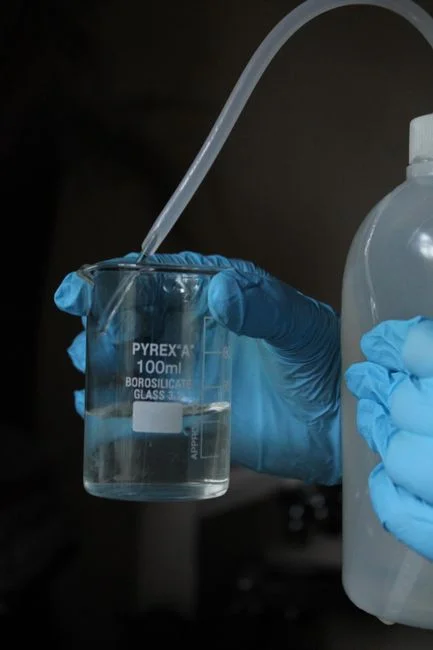
A permit proves that an authority has issued conditions; it does not prove that the plant has complied with those conditions. The transaction file needs a permit-to-evidence reconciliation that closes the gap between authorization and operation.
Build a register for every consent. For each document, record its number, issuing authority, issue and expiry dates, covered process, authorized outlet, permitted flow, conditions, reporting frequency, renewal status and responsible person. The title block may describe a different company, production capacity, outfall or treatment technology from the plant being acquired. That mismatch is not a clerical detail; it may require amendment, transfer or fresh consent.
| Permit field | Evidence to obtain | Reconciliation question |
|---|---|---|
| Legal holder and site | Consent, amendments and ownership records | Does the consent cover the legal and physical plant proposed after closing? |
| Production and process | Process description, product data and modification records | Does actual production remain within the approved activity? |
| Outlet and flow | Outfall map, sewer agreement, meters and discharge records | Do authorized and actual destinations and flows agree? |
| Treatment | Process drawings, performance tests and operating records | Is the installed train aligned with the permitted technology? |
| Monitoring and reporting | Sampling plan, laboratory reports, returns and portal records | Were all required samples, analytes and methods completed? |
| Reuse | Reuse agreement, destination records and quality results | Is reuse lawful, controlled and fit for its stated purpose? |
Condition review should cover sampling points, analytes, analytical methods, frequency, record retention, annual returns, reporting portals, designated laboratories, reuse conditions and regulator access. The buyer should also test whether planned changes to production, raw materials, water sources, processes, discharge quantities, reuse, outfalls or beneficial ownership require an application, amendment, transfer or fresh consent. The relevant pollution-control board must confirm the route; national or corporate assumptions are not enough.
Each discrepancy needs a commercial and regulatory disposition. A missing laboratory report may require a pre-closing cure. A known exceedance may justify a price adjustment, escrow or indemnity. A treatment shortfall may need an operating covenant and post-closing capital project. Local counsel should confirm enforceability and sequencing, especially where the regulator must act before closing.
Turn the Water Balance into a Compliance and Capacity Test
A credible water balance connects every source of water, process use, recycle stream, loss, wastewater flow, treatment output and final destination. It tests both legal compliance and treatment headroom.
Start with source-water supply, process withdrawals, recycle loops, evaporation, product or concentrate losses, wastewater generation, treatment, reuse and final discharge. Reconcile these against approved flows and reported monitoring data. Unexplained losses, or a mismatch among production, reuse and discharge records, are diligence findings—not accounting noise. Verify metering locations, calibration status and the period represented by each submission.
Do not test treatment only against average daily demand. Assess the worst credible process batch, upset, bypass and variable-flow condition. The review should include the plant’s permitted operating envelope, equipment redundancy, chemical supply, power availability, control logic and the consequence of downtime. A treatment train that meets normal flow but cannot maintain compliance during a production peak has no defensible operating headroom.
Freeport-McMoRan’s 2017 CDP response is a corporate-practice benchmark, not an Indian design basis. The company reported 1,740,000 megaliters of operating-process water use in 2016, approximately 80% recycled, and said most recycled water came from reclaimed-water capture at tailings storage facilities and leach pads. It also reported total water withdrawals of 329,800 megaliters, consumption of 1,738,300 megaliters and discharge of 121,610 megaliters for 2016. These figures describe the company’s reported global boundary. They must not be transferred into an Indian plant’s mass balance or used to size equipment.
The practical model is scenario-based. Test current production, credible production growth, raw-material changes, dry-season water constraints, treated-wastewater reuse, stricter reuse conditions and a verified zero-discharge case. A zero-discharge conclusion requires the plant’s actual water balance to account for evaporation, product losses, sludge carryover and other residuals, together with permit conditions and operating evidence. The comparison between MBR versus conventional activated sludge is then technical context for capacity and reuse decisions, not a substitute for site data.
Choose Treatment Technology Against the Actual Acquisition Risk
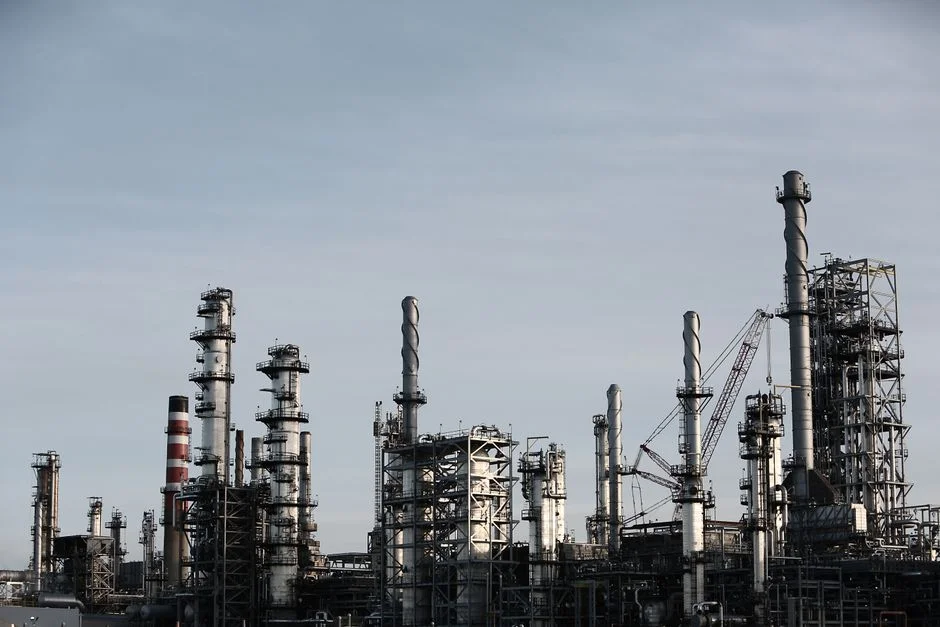
Treatment selection must follow effluent characterization, discharge obligations, reuse requirements and asset condition. Prescribing a process before sampling makes the buyer responsible for the consequences of a wrong assumption.
| Acquisition finding | Technical decision | Evidence required before selection |
|---|---|---|
| Oil, grease and floatable solids are present | Evaluate a DAF system for oily industrial wastewater | Influent characterization, flow variation, relevant contaminant loads and performance data |
| Biological treatment is suitable and reuse quality requires solids separation | Evaluate MBR wastewater treatment for industrial reuse | Reuse specification, biological response, membrane design conditions and site constraints |
| Metals, solids or non-biodegradable contaminants constrain biology | Define physical-chemical pretreatment and sludge management before the downstream process | Contaminant behavior, residual generation, sludge characteristics and authorized disposal route |
| Existing treatment asset is acquisition-critical | Repair, replace, recommission or expand based on condition and duty | Asset register, drawings, condition report, controls, guarantees, operating history and pending maintenance |
For DAF, the design question is not whether floatables are visible at the inlet. It is whether the selected system addresses the characterized oil-and-grease, suspended-solids and colloidal load, including the relevant hydraulic and operating envelope. For MBR, the buyer must establish why biological treatment, solids separation and the required reuse quality justify the process. Membrane area, pretreatment, recovery, cleaning, redundancy, controls and residual life must be supported by the acquired site’s actual conditions.
Where metals, solids or non-biodegradable contaminants interfere with biological treatment, the downstream process should not be selected in isolation. Define how pretreatment removes or stabilizes the constraint, how residuals are captured, and where sludge or other waste is authorized to go. A sludge solution that merely relocates the contaminant is not a complete treatment plan.
Treat the train as acquisition-critical equipment. Request asset registers, drawings, condition reports, control narratives, software versions, critical spares, performance guarantees, operating history and pending maintenance. This is also why Freeport-McMoRan’s 2017 disclosure that most mining operations were managed as zero-discharge facilities is a site-specificity warning: zero discharge must be demonstrated through the acquired plant’s actual balance, permits and treatment evidence, not copied from another operation.
Build a Close-Safe Wastewater Action Plan
A close-safe plan converts environmental findings into enforceable transaction decisions, funded engineering work and measurable post-closing controls.
Classify each finding as a closing blocker, pre-closing condition, price or escrow item, indemnity, operating covenant or post-closing capital expenditure. Obtain local legal advice on enforceability and the regulator’s procedural sequence. A severe unresolved exceedance, invalid discharge authorization or treatment asset incapable of lawful operation may need to be cured before closing; a documented capital deficiency may be acceptable only if the transaction documents the allocation and funding.
Prepare a 30-60-90-day stabilization plan covering sampling, metering, calibration, operator competency, chemical inventory, preventive maintenance, bypass inspection, sludge tracking and reporting reconciliation. Set clear evidence for each task: a validated sample, calibrated meter, completed bypass test, reconciled return or closed corrective action.
Capital requests should state design flow, wastewater characteristics, required treatment objectives, reuse destination, site constraints, power availability, automation requirements and acceptance criteria. Do not size equipment from corporate sustainability data. Require the design basis to identify worst-case conditions, redundancy, consumables, maintenance access and the link between installation and consent compliance.
Add quarterly reporting for consent status, exceedances, corrective actions, treatment uptime, water balance, reuse, sludge disposition and capital milestones. Freeport-McMoRan’s 2017 CDP response described annual facility-level water-risk assessment beyond six years and separate evaluation of water risks to growth over the next ten years. Although that is not an Indian compliance rule, it supports testing whether acquired assets remain viable under future operating and water conditions; the broader transaction approach is compared in plant-acquisition wastewater planning for 2026.
Frequently Asked Questions
Does Freeport-McMoRan need a new wastewater consent when it acquires an Indian plant?
Not necessarily. The requirement depends on the transaction structure, the existing consent holder, permit conditions and whether ownership or planned operating changes require transfer or amendment. Confirm the route with Indian counsel and the relevant pollution-control board before signing or closing.
How much should the buyer budget for wastewater compliance?
The budget cannot be set from the acquisition value or a corporate water policy. It depends on the permit gaps, monitoring and approval work, treatment-capacity deficit, reuse objective, sludge handling and identified capital works. The supplied research contains no India-specific cost figure for this transaction, so request a site-specific estimate built from the reconciled water balance, condition assessment, treatment design basis and implementation schedule.
Should the buyer specify MBR or DAF before sampling?
No. Select DAF only where influent data demonstrates a suitable oil, grease, floatable-solids or colloidal separation duty. Consider MBR where biological treatment, compact solids separation and the verified reuse specification justify it. Sample flow and contaminant variability, discharge obligations and reuse quality first.
What should a wastewater supplier demonstrate during due diligence?
Request the relevant design basis, capacity calculations, reference installations, operating performance data, maintenance records, automation details, critical spares and acceptance criteria. For MBR, also request membrane design conditions, cleaning requirements and redundancy; for DAF, request the characterized contaminant duty and demonstrated operating envelope.
How should the buyer handle historical permit violations?
Quantify each violation, corrective action and current authority status, then obtain advice on residual liability. Allocate the exposure through closing conditions, price, escrow or indemnity as appropriate, with a binding follow-up obligation where the issue can be cured operationally.