
What Changes When BHP Acquires a Malaysian Plant?
When BHP acquires a plant in Malaysia, the buyer must verify the EQA 1974 approvals, any EIA condition, site-suitability assessment, discharge consent, monitoring records and remediation obligations. The acquisition should not close until legal status, effluent characteristics, drainage route and treatment capacity have been independently checked. Department of Environment Malaysia’s investor guide identifies EIA approval, site suitability, written permission and discharge-related approvals as central requirements. The industrial plant acquisition wastewater due-diligence framework provides a useful transaction sequence, but Malaysian approvals must be verified against current instruments.
The transaction question has two parts: can the acquired plant lawfully operate and discharge under its current approvals, and can the wastewater system support the intended post-acquisition operating plan? Working equipment does not answer either question. A buyer also needs to establish whether an asset or share transaction changes the approval holder, whether the approval remains valid, and whether historical non-compliance, sludge disposal or remediation obligations travel with the business.
Separate immediate diligence from post-closing capital work. Legal status, records, sludge liabilities and baseline performance require confirmation before signing. Treatment upgrades should then follow verified capacity, permit and compliance gaps. The Department of Environment’s Environmental Requirements: A Guide for Investors, Eleventh Edition, October 2010, says environmental requirements are considered early in project planning and vary with industry, activity and location; it also describes environmental assessment as a mechanism for understanding likely project impacts before development proceeds. Because that guide is foundational but not a current consolidated register, the acquisition team must use current DOE instruments and site-specific conditions.
Map Every Environmental Approval Before Signing
The Environmental Quality Act 1974 is the central statute identified in the DOE’s Environmental Requirements: A Guide for Investors, Eleventh Edition, October 2010, and the Act restricts discharges contrary to acceptable conditions. The guide recorded 38 sets of Regulations and Orders at publication; that historical count must not be treated as the current legal register.
Build a permit map that links each legal instrument to the asset, activity, receiving route, approval holder and condition it governs. Do not assume that an approval transfers automatically or remains unchanged following a share or asset acquisition. Request the original instrument, amendment history and written confirmation of continuity from DOE and other relevant authorities.
| Approval or evidence | DOE guide requirement | Acquisition check |
|---|---|---|
| EIA report and approval | Section 34A approval for prescribed activities; the project may not proceed without approval. | Match the approval to the current activity, production profile and proposed expansion. |
| Site-suitability evaluation | Applies to non-prescribed activities. | Confirm the assessment location, receiving environment and unresolved conditions. |
| Written permission to construct | Section 19 applies to specified prescribed premises, including scheduled-waste treatment and disposal facilities and crude palm oil mills. | Request the permission, construction scope and evidence that the treatment works were authorised. |
| Licence to use and occupy | Section 18 covers prescribed premises and prescribed conveyances. | Confirm the licensed premises, conveyances, holder and transfer position. |
| Discharge-related approval | Current consent and receiving-route conditions govern the applicable pathway. | Identify whether the route is a public sewer, private drainage system, holding pond or direct environmental discharge. |
Assign a regulatory owner to every discharge point. A trade wastewater route may involve DOE, local authorities, sewer operators and other authorities, each with a different function. The 2010 DOE guide also identifies notification for a new source of sewage, industrial effluent and leachate discharge or release. Use that as a checkpoint for proposed expansion, not as proof of the current consent.
Build the Wastewater Due-Diligence Request List
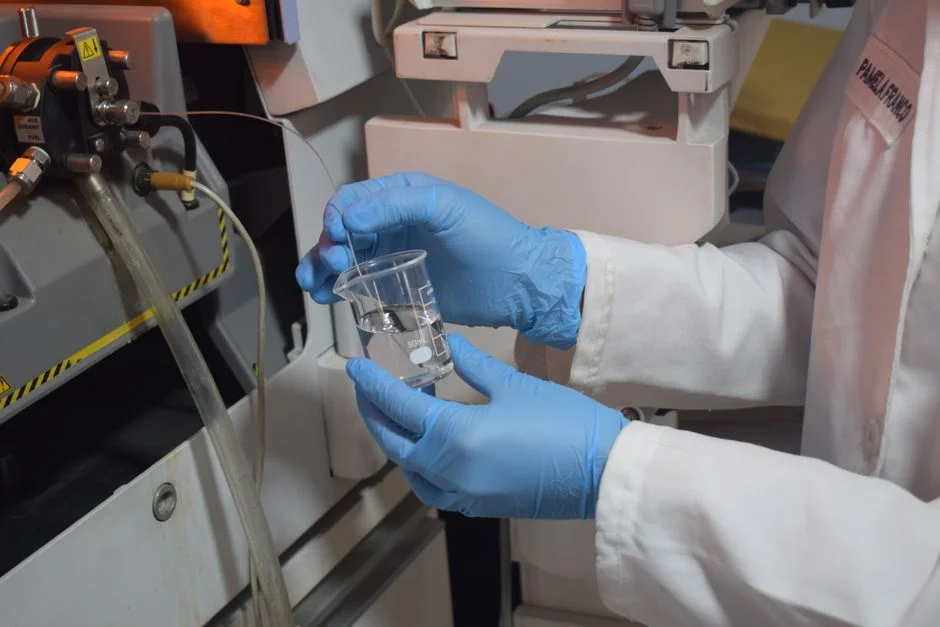
A permit register is only useful if the underlying records can be tested. Before signing, convert the legal map into a document request and assign each missing record to a legal, technical or financial workstream owner.
| Request group | Records required | Decision supported |
|---|---|---|
| Legal approvals | EQA approvals, EIA reports and approvals, site-suitability studies, written permissions, prescribed-premises or conveyance licences, discharge consents, environmental permits, amendments and conditions. | Continuity of lawful operation and expansion. |
| Design and operations | Commissioning reports, process and mass-flow drawings, hydraulic calculations, equipment registers, control narratives, alarm rationales, bypass procedures and proof of the design production profile. | Technical adequacy and hidden design changes. |
| Compliance evidence | Effluent results, laboratory reports, calibration certificates, flow totals, notices, enforcement correspondence, incidents and audit history for the full available compliance period. | Historic exposure and reliability of the monitoring chain. |
| Residuals and remediation | Sludge quantities, hazardous-waste classifications, manifests, disposal contracts, disposal-site records and provisions or accruals for pending treatment and disposal. | Inherited liabilities and closure exposure. |
| Change history | Changes to production, chemicals, raw materials, products, shifts, drainage routing, reuse and discharge arrangements. | Whether prior approvals still match operations. |
Ask the seller to explain every production or drainage change since approval. Review both the engineering change and the regulatory response; a modified plant without corresponding consent is a material diligence issue. Obtain the complete available monitoring record and test whether it can be reconstructed from source data, laboratory records and flow records.
Residuals deserve separate treatment from treated effluent. Quantify sludge generation, classification, storage, transport and final disposal, then identify who bears pending treatment or remediation costs. Any acquisition-related expansion that creates a new discharge source or materially changes the wastewater profile should be referred for a specific notification or approval assessment under the current framework.
Test the Treatment Train Against Real Wastewater
A treatment train is adequately sized only if it can handle the acquired site’s measured flow and pollutant loads under normal, peak and upset conditions while continuing to meet the enforceable discharge conditions.
Construct an industrial effluent mass balance. Map every wastewater source, stream, segregation point, bypass, flow meter, treatment stage and authorised discharge route. Compare measured flow and loads with approved design conditions and current production. Do not rely only on daily averages; peak-hour flows, batch discharges and storm or production upsets can expose inadequate equalisation, solids separation or storage.
| Diligence test | Evidence to obtain | Acquisition significance |
|---|---|---|
| Flow and load balance | Calibrated flow records, production data, pollutant analyses and stream-level mass flows. | Tests hydraulic and treatment capacity. |
| Surge and upset response | Equalisation data, batch-discharge records, alarm and bypass logs, contingency procedures. | Reveals reliance on controlled operation. |
| Treatment performance | Stage-level operating data, laboratory results, chemical and energy use, maintenance history. | Separates process capability from final compliance. |
| Monitoring integrity | Sample-point records, meter and sensor calibration, laboratory accreditation, data retention and reconstruction checks. | Tests the evidence available to defend compliance. |
| Solids management | Sludge-generation records, dewatering performance, storage, classification and disposal evidence. | Identifies capacity and liability beyond the liquid treatment train. |
The 2026 commercial compliance guide from Totalmas identifies BOD, COD, TSS, oil and grease, pH, temperature and flow as priority parameters. Treat this as a screening checklist, not the enforceable permit. The current permit, site classification and current DOE instruments determine the applicable requirements.
For a minerals or metals operation, examine pH control, metal removal, chemical dosing, precipitation and sludge generation. For POME, examine anaerobic performance, methane and odour control, land stability and final-effluent polishing. Check equalisation, biological treatment, solids separation, dewatering, required disinfection, controls, power resilience and redundancy. A compliant monthly average does not establish adequate surge, upset or maintenance capacity. For metals wastewater, the technical comparison in MBR versus conventional activated sludge for metals wastewater provides a starting point, not a substitute for site-specific testing.
Confirm the Receiving Environment and Effluent Route
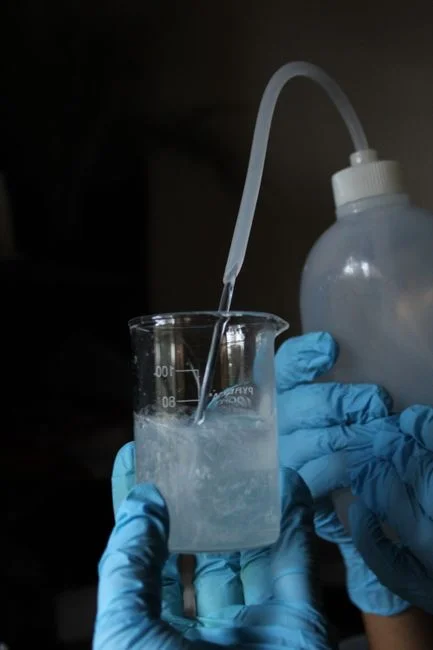
The receiving route determines which conditions apply; a treatment plant cannot be assessed correctly until the final effluent destination and regulatory owner are established.
Confirm whether the final effluent discharges to inland water, a public sewer, a private drainage system, a holding pond or another controlled route. Identify the applicable current DOE instrument and the facility’s own consent for that route. Do not import a parameter limit from another facility’s classification.
Totalmas reports in its 2026 commercial guide that Standard A has a BOD limit of 20 mg/L, while Standard B has a BOD limit of 50 mg/L. These are reported diligence benchmarks, not a substitute for the current regulations, the site’s location and the permit conditions. Legal counsel and the environmental lead should confirm the controlling instrument before either value is used in an investment model.
For a sewer or industrial-drainage connection, obtain the operator’s acceptance conditions, pretreatment requirements, surcharges, monitoring rules and enforcement history. Clarify who controls the connection and whether the operator can restrict or interrupt discharge. Then review downstream water sensitivity, flood controls and emergency containment. Those conditions can justify additional retention or contingency capacity even where final discharge limits are unchanged.
Document the evidence chain from final treatment stage to discharge point: physical route, ownership, sampling point, flow measurement and applicable consent. An unresolved boundary between site infrastructure and a third-party network is a transaction risk, not an operating detail.
Retain, Upgrade or Replace the Wastewater Plant
The retain, upgrade or replace decision should follow the verified permit basis, process performance, asset condition and post-acquisition operating plan—not equipment appearance or purchase price alone.
Retain when there is documented compliance margin, sound structural and equipment condition, reliable controls, available redundancy and adequate life-cycle performance. Upgrade when the process concept remains suitable but a defined unit, control or capacity deficiency creates risk. Replace when the platform, layout, receiving-route assumptions or permit basis is fundamentally inadequate.
| Option | Use when | Key costs and risks to quantify |
|---|---|---|
| Retain | Current assets demonstrate compliance and resilience at acquired and planned loads. | Inspection, maintenance, control renewal, redundancy, monitoring and performance uncertainty. |
| Upgrade | The process is suitable but a unit or control has a defined deficiency. | Equipment, civil works, installation, controls, commissioning, downtime and residual performance. |
| Replace | The treatment platform, layout or permit basis cannot support the required route and quality. | Full civil and mechanical scope, temporary treatment, approvals, commissioning and business interruption. |
Normalise each option to include base equipment, installation, civil works, instrumentation, chemicals, energy, sludge handling, operator labour, monitoring, permits, downtime and residual-performance risk. For high-solids or oil-and-grease streams, compare DAF pretreatment with other clarification routes. The industrial DAF system for acquired-plant pretreatment is stated to cover 4–300 m³/h across 13 models for suspended solids, FOG, oil and grease and colloidal matter.
For an integrated biological route, assess whether an integrated MBR wastewater treatment system fits the required footprint and effluent objective. The stated product configuration combines activated sludge with submerged PVDF membrane filtration, provides filtration below 1 μm, occupies 60% less footprint than conventional systems and handles 10–2,000 m³/day. For separated solids, include sludge dewatering; the stated plate and frame range is 1–500 m² with manual, hydraulic or automatic PLC operation.
These are supplier-stated equipment parameters, not proof of site suitability. Select only after confirming flow, pollutant loads, operating envelope, receiving route and required final-water quality. Nameplate capacity is not a sizing method.
Price Compliance Risk and Environmental Liabilities

The treatment investment should be priced together with the environmental liabilities it avoids or resolves; separating the equipment bid from inherited compliance exposure understates the transaction risk.
Create an environmental liability schedule covering historic exceedances, regulator discussions, notices, remediation, sludge disposal, third-party claims, permit renewal, monitoring gaps and mandatory capital works. Assign evidence status, responsible owner, likely cost source and completion date to each item.
Totalmas reports in its 2026 commercial guide that pollution of inland waters under amended legislation may attract imprisonment of up to five years and fines from RM50,000 to RM10 million. This is a commercial-source risk indicator, not legal advice. Counsel must verify the currently enacted amendment, applicable provisions and facts before assigning liability or pricing an indemnity.
| Liability or expenditure layer | Price treatment | Evidence required |
|---|---|---|
| Verified historical exposure | Separate from acquisition price and sustaining capital. | Notices, correspondence, remediation records, reserves and legal advice. |
| Permit and upgrade expenditure | Include in the capital plan with an owner and date. | Current approvals, approved design basis and site-specific cost estimate. |
| Post-closing non-compliance downside | Model as a risk scenario. | Permit conditions, monitoring reliability and remaining compliance gaps. |
| Business interruption | Model loss of treatment availability and contingency coverage. | Critical spares, redundancy, response time and temporary-treatment plan. |
| Sludge and closure costs | Recognise outstanding quantities, treatment and disposal obligations. | Manifests, contracts, disposal records, classifications and financial provisions. |
Include compliance and operations capability in the comparison. A lower-cost skid may create more exposure if local process knowledge, spare parts, laboratory support or control-system expertise is unavailable. A plate and frame sludge dewatering system should therefore be compared on the complete solids-handling chain, not on press capacity alone. Obtain quotations only after the buyer has defined the basis of design, performance tests and scope exclusions.
Complete the Acquisition Within the First 180 Days
A staged control plan converts transaction findings into evidence that the acquired plant can continue operating lawfully and support the planned operating model.
- Before signing: Confirm approvals, records completeness, historic compliance, sludge liabilities, receiving-route constraints, treatment capacity and a preliminary remediation and capital estimate. This is a condition to the investment decision, not a post-closing administrative task.
- Within 60 days after closing: Appoint one permit owner; consolidate every condition into a compliance register; verify monitoring equipment and calibration; retrain operators; test alarms and emergency containment; and close identified data gaps.
- Within 90 days: Complete a controlled performance test using representative production wastewater. Reconcile measured mass flows with the compliance model and document treatment capacity at average and peak conditions.
- Within 180 days: Implement agreed upgrades, obtain missing approvals or notifications, validate the final monitoring chain, update emergency and bypass procedures, and present residual risk and capital spending to the operating committee.
Track each action against the actual permit or consent condition. A corporate integration plan cannot substitute for site-specific authorisation, monitoring or evidence. Where historical records remain incomplete, preserve that limitation in the risk register and purchase-price or indemnity mechanism rather than treating an unsupported clean record as evidence of compliance.
Frequently Asked Questions
Which acquisition team should own Malaysian wastewater compliance?
Assign one accountable lead, normally the Malaysia EHS or operations function, with Malaysian environmental counsel, a wastewater process engineer, a structural and mechanical inspector, and a financial-assurance adviser. Each specialist should have a defined deliverable: legal status, permit conditions, treatment performance, asset condition and liability quantification.
How should wastewater treatment equipment be sized for the acquired site?
Use measured flow, current and planned pollutant loads, batch peaks, the operating envelope, receiving route and enforceable permit conditions. Nameplate capacity alone is not an adequate basis. Require each supplier to state the wastewater characteristics and operating conditions on which its sizing and performance guarantee depend.
How should retrofit and replacement quotations be compared on cost?
Normalise the quotations to the same scope: equipment, civil works, installation, instruments, controls, utilities, sludge handling, commissioning, training, monitoring, approvals and life-cycle operating costs. Add downtime, temporary treatment and residual performance risk where applicable. A supplier quotation should identify exclusions rather than leaving them as implicit assumptions.
What checks should buyers use when selecting a wastewater supplier?
Require a site-specific basis of design, comparable reference projects, performance guarantees tied to defined inputs and outputs, local service capability and transparent scope exclusions. Also check whether the supplier can support commissioning, operator training, spare parts and control-system integration. Supplier capability matters because monitoring and OEMS assertions remain commercial claims until checked against the site’s current permit and DOE instruments.
What should the buyer do if historical monitoring or compliance records are incomplete?
Document the evidence gap, preserve independent sampling and investigate historic performance through available plant and laboratory data. Seek regulator confirmation of the approval position, and reflect the remaining uncertainty in price, indemnity and capital reserves. Do not convert missing evidence into an assumption of compliance.
Related Equipment
- industrial DAF system for acquired-plant pretreatment — specifications, capacity range, and technical data