Start With Fort Worth's Water and Wastewater Rules
Fort Worth Water officials reported in October 2026 that the city supports closed-loop data-center cooling and has included a closed-loop requirement on the water-demand side of its design requirements. Fort Worth Report, 2026-10-24, reported average monthly water use of 300,000 to 1 million gallons for closed-loop systems, compared with 4 million to 6 million gallons for evaporative systems. These figures are planning context, not discharge limits or equipment-sizing criteria. A similarly sized residential neighborhood was described as using approximately 2 million gallons monthly; that comparison is also context, not a regulatory threshold.
That planning position affects wastewater, but it does not define one treatment train for the site. The engineering team should establish four interfaces: Fort Worth Water, the industrial-waste hauler if hauled disposal is selected, the receiving treatment or discharge authority, and the operators responsible for the cooling and sanitary systems. The relevant Texas wastewater due-diligence requirements provide a useful structure for separating source-reported policy from site-specific obligations.
Fort Worth Report also described a closed-loop concept in which water enters a drain and catch tank before tanker removal. That is a planning concept, not confirmation that a proposed generator, transporter, treatment facility, waste code, or disposal route is acceptable. Meter loading, water and wastewater infrastructure capacity, discharge authorization, and hauled-waste acceptance must therefore be confirmed during design development.
Separate the Four Wastewater Streams
Domestic sewage and cooling blowdown have different constituent profiles, reuse values, and disposal routes, so they should not be merged by default. A useful inventory separates sanitary wastewater, cooling blowdown, process wastewater, and hauled residuals; a data-center wastewater treatment planning guide provides a comparable stream-by-stream framework.
| Stream | Definition | Primary planning question |
|---|---|---|
| Sanitary wastewater | Sewage from restrooms, kitchens, and employee facilities | Can it go to sanitary sewer, or does it require onsite biological treatment and disinfection? |
| Cooling blowdown | Water removed to control mineral and scale accumulation | Which cooling chemicals, salts, solids, and metals constrain reuse or discharge? |
| Process wastewater | Equipment cleaning, water-treatment discharges, make-up conditioning, washdown, and candidate liquid-cooling discharges | Can each event flow be segregated, treated, or collected separately? |
| Residuals | Spent media, sludge, brines, chemical tanks, spent carbon, membrane-cleaning waste, and laboratory waste | Which independent handling and disposal route applies? |
UGA Extension identified anti-corrosion and scaling chemicals, biocides, chlorine compounds, and glycols among additives used in data-center cooling systems in 2026. It also warned that some non-water liquid coolants may contain refrigerants and PFAS, requiring separate management. Those facts argue for an inventory of liquid-coolant chemistry, not an assumption that every liquid can enter the sanitary sewer. Equipment-cleaning chemicals and concentrated brines also require source-specific assessment before reuse or disposal.
Residuals should be tracked from generation through final disposition. Sludge is not equivalent to spent filter media, and neither is equivalent to a concentrated brine. Their physical states, chemical constituents, and receiving-facility acceptance criteria will differ.
Characterize Each Stream Before Sizing Equipment
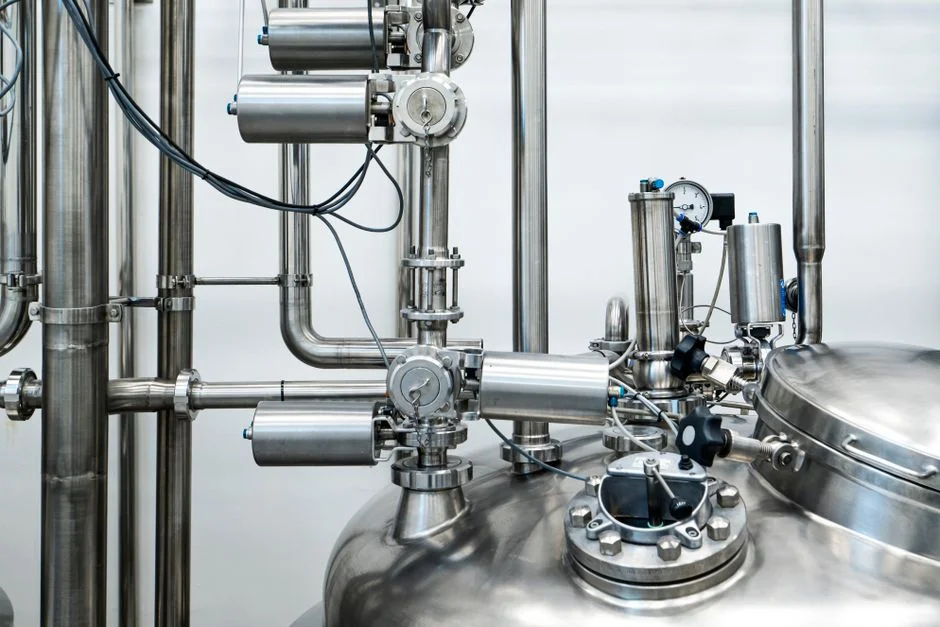
Equipment sizing should follow measured source-by-source flow and quality data, not the city’s neighborhood comparison. Prepare separate hydraulic records for average flow, peak flow, design flow, blowdown frequency, event duration, cleanout volumes, and anticipated growth. Reconcile cooling-system water balance, make-up water, evaporation, blowdown, and reuse demand before assigning any design flow.
For cooling streams, request a chemistry panel covering pH, conductivity, total dissolved solids, hardness, alkalinity, chloride, sulfate, calcium, magnesium, silica, total organic carbon, chemical oxygen demand, biochemical oxygen demand, nutrients, oil and grease, suspended solids, temperature, and residual treatment chemicals, as applicable. The cooling-blowdown treatment workflow illustrates why each constituent must be connected to a treatment objective.
| Investigation input | Why it is needed | Procurement consequence |
|---|---|---|
| Continuous and event flow records | Defines hydraulic peaks, equalization duty, and cleaning-event storage | Prevents treatment capacity from being based only on average flow |
| Full chemistry panel | Identifies salt, scaling, organic, metal, and chemical-treatment constraints | Determines whether biological, membrane, desalination, or diversion treatment is credible |
| Variability sampling | Captures normal, high-load, chemical-addition, cleaning, and blowdown conditions | Sets conservative pretreatment and equalization requirements |
| Vendor operating data | Documents chemical inventory, cycles of concentration, make-up quality, and existing permit constraints | Defines guarantees, controls, and operating-cost assumptions |
Add microbiology and Legionella testing to the site program. UGA Extension’s 2026 publication identifies bacteria and cooling-system growth as operational concerns, but it does not establish a universal Legionella limit; applicable criteria must come from the site’s cooling design and the receiving authority. Sample across normal operation, high cooling load, chemical addition, cleaning events, and blowdown events. A single grab sample will not support defensible unit sizing.
Match the Treatment Train to the Discharge Route
The discharge route determines the required treatment objective, and no discharge route should be assumed available without written confirmation. Fort Worth Report, 2026-10-24, described a possible catch-tank and tanker-removal concept for closed-loop systems, while UGA Extension stated in 2026 that direct wastewater discharges to waterways may require Clean Water Act NPDES coverage. The engineering basis for these distinctions is the receiving route’s constituent and capacity requirements.
| Route | When it may fit | Treatment and acceptance checks |
|---|---|---|
| Sanitary sewer or Fort Worth industrial discharge | Sanitary and qualifying industrial streams are accepted by the authority | Confirm prohibited constituents, pretreatment requirements, meter and flow limits, sampling, and local infrastructure capacity |
| Permitted direct discharge | A surface-water discharge is legally available and the treatment objective can be met | Confirm NPDES applicability and permit limits, receiving-water constraints, monitoring, and residuals disposal |
| Controlled reuse or cooling make-up | Quality, chemistry, and reliability are compatible with the intended cooling service | Validate treatment performance, corrosion and scaling effects, storage, distribution, and contingency discharge |
| Off-site hauled waste | Collection and treatment by a licensed industrial-waste route is accepted | Confirm waste characterization, waste code, generator status, transporter, treatment facility, route, and pickup compatibility |
For sanitary wastewater, compare normal sewer discharge with onsite biological treatment and disinfection. An MBR wastewater treatment for sanitary and qualifying process streams may be considered where footprint, effluent objectives, and site conditions support it; a packaged wastewater treatment system requires the same route-specific review. A DAF system for cooling-blowdown pretreatment becomes relevant when characterization demonstrates removable oil, suspended solids, or colloidal material.
For cooling blowdown, the candidate sequence is equalization, oil and solids separation where justified, chemical adjustment, filtration, and biological treatment only if the constituent profile supports biological treatment. Conventional sewage treatment does not inherently remove dissolved cooling chemicals or salts. For zero liquid discharge or partial reuse, DOE’s ANL/ES-115 report, Wastewater and Sludge Control-Technology Options for Synfuels Industries (1981), provides treatment precedents involving biological treatment, carbon adsorption, solids management, effluent desalting, partial-water reuse, zero-discharge flows, and brine concentration. That report is design precedent, not data-center performance data or a current Fort Worth permit basis.
Build the Treatment and Residuals-Management Train
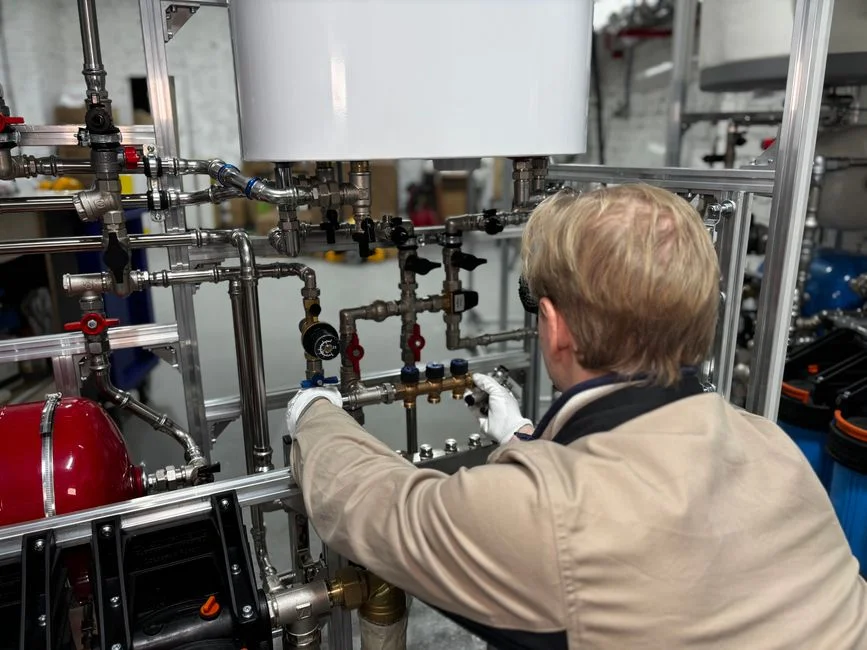
A defensible treatment train separates sources before combining them, controls flow and chemistry, treats each selected route, monitors performance, and gives every residual an identified endpoint. The sequence should begin with source segregation, followed by equalization; screening or solids removal; pH and chemical control; the selected treatment process; disinfection where required; monitoring; reuse or permitted discharge; and residual collection.
| Function | Design condition | Residual or control issue |
|---|---|---|
| DAF | Use before biological or membrane treatment when characterization shows oil, grease, suspended solids, or colloidal matter requiring separation | Skim, sludge, and chemical residuals require collection and disposal |
| Ultrafiltration | Use when solids, colloids, and microbial protection are required before sensitive reuse or reverse-osmosis duties | Backwash, cleaning waste, and membrane replacement are separate residuals |
| Industrial reverse osmosis | Use where dissolved-salt reduction or high-quality reuse is required | Concentrate brine requires a separately accepted management route |
| Chemical dosing | Provide controlled pH adjustment, coagulation, flocculation, or specialty treatment under an operating plan | Chemical inventory, storage, secondary containment, and dosing controls require review |
DAF removes material that could interfere with downstream biological or membrane processes; it does not solve dissolved-salt rejection. Ultrafiltration can protect downstream equipment, but it is not a substitute for treatment designed to remove dissolved contaminants. The linked ultrafiltration system reference describes 2,000 to 40,000 L/h capacity, 0.03-micron PVDF membranes, and acceptance of up to 300 ppm turbidity; those are product parameters, not Fort Worth site requirements. The linked industrial reverse-osmosis reference lists product recovery rates up to 95%, also a product specification rather than a site guarantee.
Use the automatic chemical-dosing reference to develop a controlled dosing concept, including chemical compatibility, interlocks, alarms, and secondary containment. Do not overlook sludge, spent carbon, membrane-cleaning waste, and concentrated brine. Each needs its own handling method, storage allowance, transporter or receiving-facility decision, and operating responsibility.
Convert Site Data into a Defensible Design
Conceptual treatment selection becomes defensible only when hydraulic and mass balances are reconciled to measured site data. Maintain separate balances for sanitary flow, cooling blowdown, process wastewater, cleaning events, and reuse demand. Do not use Fort Worth Report’s 300,000 to 1 million gallons monthly closed-loop figure as a treatment flow; it is a reported water-use context and must be reconciled to the site’s balance-of-plant data.
Run a wastewater pilot treatability study on site wastewater or a representative blended sample before finalizing materials, controls, and guarantees. The pilot should test the selected unit process against the relevant event condition, including the chemistry that drives removal or rejection. DOE’s ANL/ES-115 bench-scale treatability and organic-removal work is a precedent for this approach, but its coal-gasification and quench-water results cannot be transferred directly to a data center.
- Reconcile each stream’s flow, constituents, variability, and destination.
- Select the unit process against the receiving route’s actual requirements.
- Pilot the selected process with representative site water or event composites.
- Specify monitoring, alarms, redundancy, automatic controls, chemical storage, and secondary containment.
- Design access for sludge removal, spent-media handling, membrane cleaning, and tanker pickup.
- Prepare the permit and procurement package for agency review.
That package should contain the source characterization, treatment calculations, process flow diagram, material balance, chemicals list, residuals plan, commissioning protocol, and operating narrative. It should also identify unresolved assumptions rather than converting them into equipment guarantees. The data-center treatment planning precedent supports this evidence-led sequence, while the MBR and conventional activated-sludge comparison illustrates why application-specific performance data must be requested from suppliers.
Frequently Asked Questions
What treatment does a Fort Worth data center need for cooling blowdown?
Start with equalization and characterization, then select solids or oil separation, chemical control, filtration, biological treatment, desalination, reuse, or diversion according to the constituent profile and discharge route. Fort Worth Report, 2026-10-24, described a possible drain, catch tank, and tanker-removal concept, but the receiving facility and acceptance conditions must be confirmed before fixing the design.
Does Fort Worth require closed-loop cooling for a new data center, and how does that change the treatment design?
Fort Worth Water officials reported in October 2026 that city design requirements support a closed-loop requirement on the water-demand side, while the source separately reported that evaporative systems are not supported. Confirm the current project-specific requirement with Fort Worth Water; closed-loop water-demand policy does not itself define wastewater treatment or permit limits.
How much does a data-center wastewater and cooling-blowdown treatment system cost?
No supported project price is available, so a responsible quotation cannot be assigned from the supplied research. Request an itemized bid after receiving the stream-by-stream flow and chemistry package, selected discharge routes, reuse target, residual destinations, site footprint and utility constraints, controls scope, pilot results, and commissioning requirements. That lets suppliers separate treatment equipment, pretreatment, chemical systems, tanks, residuals handling, controls, and site works.
What should a wastewater-treatment equipment supplier provide before quotation?
Require the supplier to state the design flow and design chemistry, selected treatment route, performance obligations, rejected streams, pretreatment needs, chemical consumption, residuals, controls, utilities, redundancy, and site-specific exclusions. For capacity and supplier selection, make selection conditional on the Fort Worth receiving authority’s acceptance and the results of a representative pilot. No DAF, MBR, or packaged-system capacity should be selected from the reported neighborhood water-use comparison or the 300,000-to-1-million-gallon monthly closed-loop context alone.