Which Rules Govern Discharges from Foley-Area Mining Plants?
Mining and metals plants near Foley generally meet sewer pretreatment limits by treating each wastewater stream according to its chemistry, then demonstrating compliance with the applicable NPDES, state, and local sewer requirements. EPA’s 40 CFR Part 436 covers mine drainage, mineral-processing wastewater, and stormwater runoff, with its mining requirements incorporated into NPDES permits. A practical train may combine equalization, pH correction, coagulation and flocculation, clarification, multimedia filtration, and membrane polishing when dissolved metals or salts remain above the sewer limit. The final design must use current permits, representative influent testing, peak flow, and the receiving sewer authority’s limits—not a generic treatment train.
The governing distinction is between direct discharge to the environment and indirect discharge to a POTW. A permitted outfall or receiving-water discharge falls under the facility’s NPDES or state permit and applicable effluent conditions. A connection to a municipal sewer generally requires review by the sewer authority and an industrial-user or pretreatment authorization. A site may have both obligations, so the owner should not treat the NPDES permit and sewer permit as substitutes for one another.
For context, EPA says 40 CFR Part 436 was promulgated in 1975 and amended in 1976, 1977, 1978, and 1979. It covers wastewater from mine drainage, mineral-processing operations, and stormwater runoff, and Mineral Mining requirements are incorporated into NPDES permits (US EPA, Mineral Mining and Processing Effluent Guidelines). The regulation identifies active and reserved subparts, including Dimension Stone (Subpart A), Lightweight Aggregates (Subpart H), Lithium (Subpart U), Ball Clay (Subpart AH), Feldspar (Subpart AI), Talc, Steatite, Soapstone, and Pyrophyllite (Subpart AJ), and Garnet (Subpart AK). The operator must confirm the mineral and process against the current rule rather than infer applicability from the site description alone.
| Discharge route | Primary compliance question | Documents to obtain before equipment selection |
|---|---|---|
| Direct surface-water or other permitted outfall | Which NPDES or state permit conditions apply, and are Part 436 requirements incorporated? | Current permit, approved discharge monitoring plan, applicable state conditions, outfall and flow documentation |
| Indirect discharge to a municipal sewer | What local sewer limits, prohibited discharges, monitoring rules, and authorization conditions apply? | Sewer-use or pretreatment permit, sewer authority limits, industrial-user discharge authorization, local monitoring requirements |
| Both routes | Which flow receives which treatment and reporting obligation? | Site drainage map, flow segregation plan, permit correspondence, discharge authorizations, applicable redundancy conditions |
No Foley-specific numeric limits, flow bands, or prices were identified in the supplied research. Obtain the current permit package, sewer-use or pretreatment permit, written sewer limits, and any approved industrial-user discharge authorization from the responsible agencies. A useful cross-market workflow for identifying overlapping obligations is described in the wastewater requirements review for an acquired mining site; the acquisition context differs, but the permit-verification logic does not.
Characterize Each Wastewater Stream Before Choosing Equipment
Mine drainage, process water, tailings-pond effluent, stormwater, and dewatering discharge must be sampled separately because their chemistry and required treatment differ. The Society for Mining, Metallurgy & Exploration states that acid rock drainage forms when water and oxygen react with sulfide minerals such as pyrite and pyrrhotite; the resulting acidic water can mobilize toxic metals, sulfate, and other dissolved solids (SME, Mining and Water Quality). That means a single clear-water result or one storm sample cannot establish a defensible treatment basis.
Genesis Water Technologies reports that mining wastewater commonly contains suspended solids, acidic water, metals, heavy metals, organic compounds, and metalloids including iron, arsenic, and manganese. It also identifies pH adjustment as the first treatment step because it can precipitate dissolved metals, followed by coagulant and flocculant addition to aggregate suspended solids and fine metal particles before clarification and filtration (Genesis Water Technologies, Mining Water Treatment: How to Meet Stricter Standards).
Process-specific sources can add contaminants that the final sewer limit may control. Ore washing, flotation, leaching, and chemical-treatment circuits can contribute dissolved ore constituents, high TDS, and process reagents. The supplied mining-water research identifies cyanide, ammonia, or chloramines in some circuits, depending on the process. Tailings-pond effluent can carry fine solids, processing chemicals, and leached metals. Dewatering discharge may vary with geology and may contain substantial metal loading. A site-specific sampling program should therefore identify the reagent parameters that matter, rather than testing only generic indicators.
| Wastewater source | Contaminants or hazards to investigate | Representative sampling focus |
|---|---|---|
| Mine drainage and acid rock drainage | Acidity, metals, sulfate, dissolved solids, suspended solids | Source-specific flow, pH, hardness, metals, TDS, and suspended solids across operating and wet-weather conditions |
| Mineral-processing water | Suspended solids, dissolved metals, high TDS, process reagents | Identify ore, circuit, and chemical inputs; sample the combined or segregated process stream |
| Tailings-pond effluent | Fine solids, leached metals, residual processing chemicals | Collect from the point that represents the stream entering the proposed treatment train |
| Stormwater runoff | Sediment, metals, acidity, site-specific contaminants | Characterize the wet-weather event that controls the applicable drainage path and monitoring condition |
| Dewatering discharge | Metals, suspended solids, acidity, dissolved solids | Record pumping rate, operating period, geology, and source-water chemistry |
Record peak and average flow together with pH, hardness, metals, TDS, suspended solids, and any process-reagent parameter required by the sewer authority. Use this mining plant sewer-limit compliance workflow as a model for organizing source characterization, but validate all local limits and sampling requirements for the Foley-area receiving sewer.
Build a Compliance-Driven Treatment Train
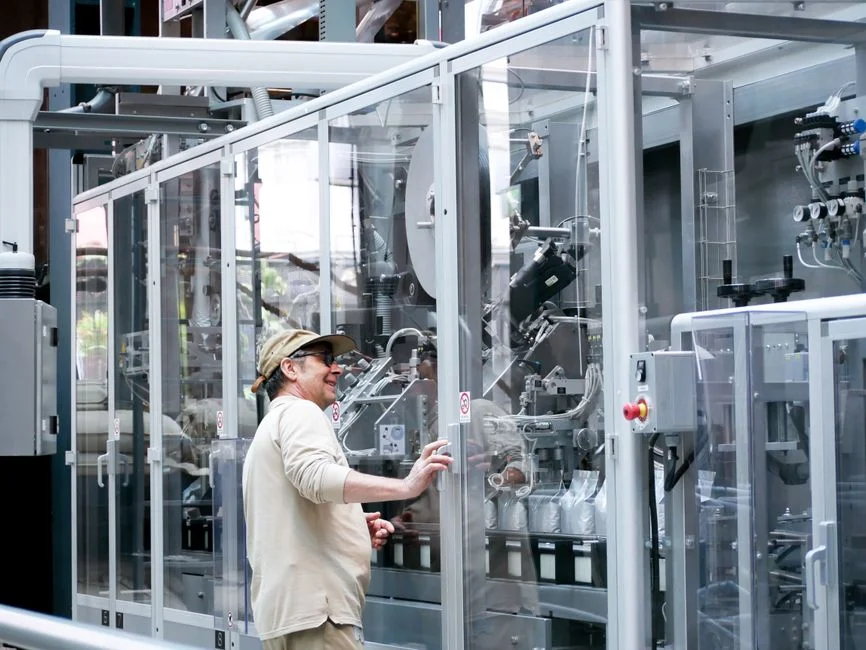
The treatment train should follow the contaminants that control compliance, with each stage having a defined purpose. Equalization comes first because variable mine and stormwater flows require hydraulic buffering before chemistry and solids-removal equipment. Then correct pH so dissolved metals can precipitate as metal hydroxides. Genesis Water Technologies identifies pH adjustment as the first treatment step and explains that it helps dissolved metals precipitate (Genesis Water Technologies, Mining Water Treatment: How to Meet Stricter Standards). Use a PLC-controlled automatic chemical dosing system where the design requires controlled lime, coagulant, flocculant, or pH-adjuster addition.
Next, coagulate and flocculate the suspended solids and fine metal particles, then select the separation mechanism from the resulting floc. A DAF system for mining wastewater solids separation is appropriate where floc is buoyant or the stream contains oils and floatable fines. A lamella clarifier is attractive where sludge volume and footprint are the principal constraints. The supplier’s stated DAF capacity is 4–300 m³/h; HydropureWater’s lamella tanks are rated at 20–40 m/h surface loading and advertise chemical-consumption reduction of up to 30% (HydropureWater, 2026). Those figures describe particular equipment offerings, not a Foley flow band or guaranteed site performance.
Clarification removes the bulk of precipitated solids, but filtration may still be needed for residual suspended solids, turbidity, and colloids. The supplied research describes multi-media filtration as pretreatment that protects downstream membranes, and the relevant equipment specification calls for an SDI condition suitable for RO protection. Ultrafiltration is the next option when finer colloidal control is required. HydropureWater’s hollow-fiber UF systems use 0.03-micron PVDF membranes, handle 2,000–40,000 L/h, accept turbidity up to 300 ppm, and provide automatic backwash and air scour (HydropureWater, 2026). These are procurement specifications, not assumptions about the site’s duty.
RO is conditional rather than automatic. Add it when representative analysis shows that dissolved metals or salts remain above the sewer limit after the preceding steps. AMPAC USA research from 2025-09 reports more than 99% rejection of dissolved metals and salts, 50–70% recovery for AMD feed, and 70–85% recovery for the RO stage of a ZLD train (AMPAC USA, 2025-09). The engineer should verify those values against the selected equipment and the actual feed.
| Process step | Primary purpose | Selection condition | Key design evidence |
|---|---|---|---|
| Equalization | Buffer variable flows and stabilize downstream operation | Required where discharge flow varies materially | Peak flow, operating sequence, equalization volume, pumping basis |
| pH correction | Support metal hydroxide precipitation | Dissolved metals require precipitation or another removal mechanism | Representative pH, alkalinity, hardness, metal profile, reagent demand |
| Coagulation and flocculation | Aggregate suspended solids and fine metal particles | Solids require particle-size or charge enhancement | Jar or pilot testing, chemical compatibility, sludge characteristics |
| DAF or lamella clarification | Remove bulk floc or precipitated solids | Use DAF for buoyant floc, oils, or floatable fines; use lamella where sludge volume and footprint drive selection | Settling or flotation test, loading basis, sludge removal, underflow handling |
| Multimedia filtration | Reduce suspended solids, turbidity, and colloids | Required to protect downstream membranes or meet solids limits | Filtration target, backwash demand, treated-water quality |
| UF | Control finer colloids before RO | Filtration alone does not establish required feed quality | Feed turbidity, membrane material, flux, recovery, backwash and air scour |
| RO | Remove residual dissolved metals and salts | Those constituents remain above the final sewer limit | Feed chemistry, recovery curve, rejection basis, concentrate destination, reuse target |
Turn Sewer Limits and Water Quality into a Sizeable Design Basis
A comparable quotation requires the final sewer limits, representative influent chemistry, peak and average flow, and a defined recovery target. Request flow in m³/h; representative influent pH, metals, TDS, suspended solids, and relevant process reagents; current sewer limits for metals, pH, and TSS; and the desired recovery percentage if mining wastewater reuse is in scope. The supplied research publishes no complete-system price or defensible Foley flow range, so an engineer should not fill those gaps with generic capacity assumptions.
Size equalization and pumping around the highest anticipated discharge, then document the hydraulic basis for every downstream stage. This includes flow splitting, backwash and reject streams, chemical storage and dosing, sludge removal, membrane recovery, and the treatment required for residual streams. If a direct discharge also exists, document whether the two routes have distinct flow, treatment, monitoring, and reporting requirements.
Controls should hold pH, flow, and conductivity at defined setpoints and retain POTW self-monitoring records, as described in the supplied Tenino research (HydropureWater, 2026-02). The system interface should also expose chemical-dosing status, clarifier performance, filter or membrane condition, high-high alarms, and bypass interlocks.
Chemical precipitation creates metal hydroxide sludge, so sludge generation and dewatering belong in the project scope. The supplied research identifies plate-and-frame filter presses as a standard fit for precipitation-derived mining sludge. Obtain a plate-and-frame filter press quotation against the expected cake volume, target cake dryness, cycle time, and filtrate destination. The filter press installation and commissioning guide provides a useful basis for defining mechanical and operational readiness.
| Quotation input | Minimum information required | Why it changes the equipment scope |
|---|---|---|
| Flow basis | Peak and average flow, operating schedule, storm contribution, recycle flow | Controls equalization, pumping, treatment capacity, and storage |
| Influent quality | Representative pH, metals, TDS, suspended solids, hardness, and process-reagent data | Determines chemical demand, separation, filtration, and polishing requirements |
| Final limits | Current sewer limits for applicable parameters and permit conditions | Sets the required removal performance and determines whether RO is justified |
| Reuse objective | Target recovery percentage and end use | Changes membrane recovery, concentrate handling, storage, and water-balance design |
| Residuals and controls | Sludge disposal route, filtrate destination, utility needs, PLC/HMI scope | Prevents an incomplete treatment quote and clarifies operating responsibility |
For reuse, request a recovery curve rather than relying on a single nameplate value. AMPAC USA, 2025-09, reports a 40–60% reduction in freshwater intake from internal reuse enabled by RO treatment compared with once-through operations. The recovered water still must satisfy the sewer limit when any portion remains a discharge stream.
Verify Performance Before the First Sewer Discharge
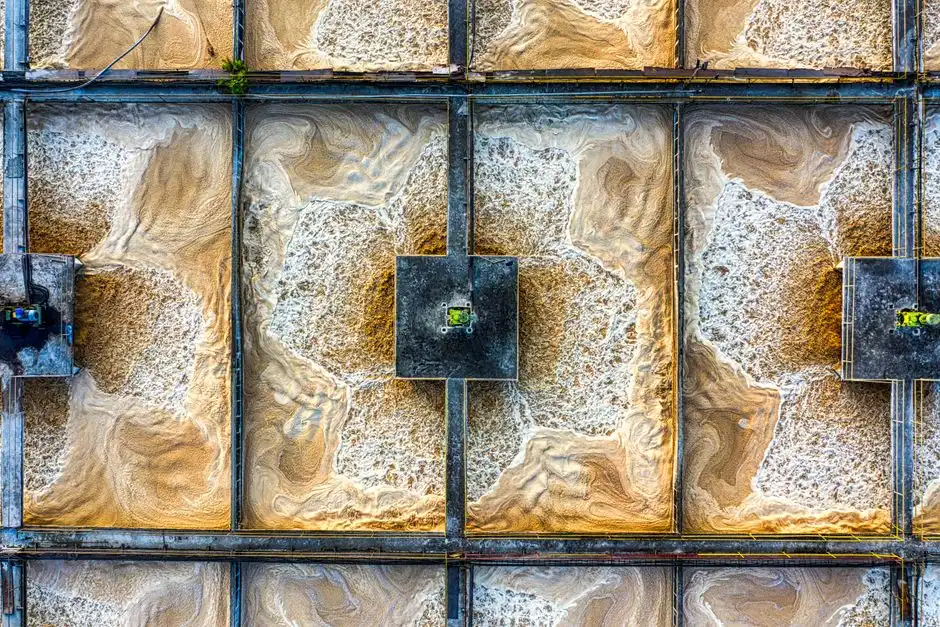
Acceptance testing should demonstrate compliance with the current sewer authority’s limits and the facility’s permit using representative wastewater, not clean water. Establish which parameters require continuous monitoring, which require laboratory sampling, and the operating and weather conditions that trigger additional monitoring. Keep the permit and sewer limits in the acceptance-test protocol so a supplier cannot define success against a generic specification.
Connect treatment controls to compliance evidence. pH, flow, and conductivity can support continuous process control, while turbidity, suspended solids, and metals provide additional evidence of solids separation and contaminant removal. Set alarms and interlocks for chemistry excursions, high flows, excessive differential pressure, invalid instrument readings, and bypass conditions. A bypass must be detectable, recorded, and managed under the applicable permit rather than treated as an invisible hydraulic event.
Retain chemical batch records, calibration records, operating logs, bypass alarms, sludge handling records, membrane or filter operating data, and laboratory results. Reconcile the final effluent against both the sewer permit and any redundant or more stringent NPDES or state conditions. If an industrial user authorization requires self-monitoring, preserve the sampling records and analytical chain of custody in a form the operator can produce during an audit or enforcement review.
Mine-water management should also reduce the load reaching treatment. SME supports preventing or minimizing contaminant generation, maximizing recycling, integrating treatment into mine planning, and monitoring treatment effectiveness during operations (SME, Mining and Water Quality). A packaged treatment skid is not a substitute for source control, runoff diversion, or management of contaminated sludge.
Questions to Ask Before Selecting a Treatment Supplier?
The quotation should be tied to the site’s own flow, chemistry, sewer limits, and reuse target. Ask each bidder to identify which contaminant controls each proposed unit operation, what design evidence supports the selection, and which items remain excluded. A product name or theoretical removal percentage is not enough to establish process fit. Use the mining and metals plant sewer-limit workflow as a check that the bid addresses the complete site data rather than a generic mining application.
Request references for comparable mining or metals installations at relevant flows and wastewater chemistries. Ask the bidder to identify the supplier’s role across chemical dosing, clarification, filtration, membrane controls, sludge handling, PLC/HMI integration, utilities, and commissioning. Scope boundaries should be explicit: owner-supplied reagents, power, drains, containment, waste disposal, installation, training, and performance testing should not remain implied.
Also request utility consumption, chemical storage requirements, spare parts, operator training, maintenance support, and the performance-test criteria. Confirm that the proposed train addresses every contaminant and limit identified in the representative dataset. The DAF versus lamella clarifier selection for mine wastewater comparison is useful for challenging a separator recommendation before pilot or jar testing confirms it.
Frequently Asked Questions
How much does a mining wastewater pretreatment system near Foley cost?
The supplied research does not publish a complete-system price for a Foley-area mining operation. Request a site-specific quotation using peak and average flow in m³/h, representative influent pH and metal data, current local sewer limits for metals, pH, and TSS, and any desired recovery percentage. The quote should also identify sludge handling, controls, utilities, commissioning, and excluded work so costs can be compared on the same scope.
Should a Foley mine choose DAF or a lamella clarifier?
Choose DAF when testing shows buoyant floc, oils, or floatable fines; consider lamella clarification when sludge volume and footprint are the principal constraints. The supplied research describes the selection in those terms. A second check is the chemical and sludge consequence: confirm coagulant and flocculant compatibility, flotation or settling performance, underflow handling, and downstream filtrate quality through jar or pilot testing.
How large should the pretreatment system be?
Use the highest anticipated discharge for equalization and pump sizing, then size each treatment stage from representative chemistry and the final sewer limit. No reliable Foley flow band is available in the supplied research. The quotation request should also account for backwash, reject, membrane recovery, and sludge streams so the quoted hydraulic capacity covers the complete plant rather than only the main treatment line.
Does every mining plant near Foley need reverse osmosis?
No. RO becomes a candidate when dissolved metals or salts remain above the applicable limit after pH correction, clarification, and filtration. AMPAC USA research from 2025-09 reports more than 99% rejection of dissolved metals and salts, but the recovery, pretreatment needs, concentrate destination, and operating cost must be checked against the actual feed and reuse target.
What can cause a permit non-compliance finding?
Common exposure points include untreated bypasses, chemistry setpoint failures, inadequate sludge handling, sampling outside required monitoring conditions, and operating equipment without current permit limits in the acceptance protocol. A final check should reconcile operating logs, calibration and chemical records, laboratory results, and the permit’s monitoring schedule to demonstrate that the sewer-discharge condition was actually met.