
Start with the Riffa site and discharge objective
Domestic sewage treatment in Riffa should start with the facility’s wastewater profile, peak flow, available footprint, discharge or reuse objective, and authority requirements—not with a fixed product choice. The US EPA identifies sanitary sewers, infiltration and inflow, wet-weather peaks, blockages, equipment failures, broken pipes, and vandalism as important collection-system risks that can affect treatment reliability. For decentralized applications, the WSZ underground package sewage treatment plant combines A/O contact oxidation, sedimentation, and disinfection in a buried, automated unit serving 1–80 m³/h. An MBR is more appropriate where compactness or near-reuse-quality effluent justifies added membrane complexity, with the supplied system range of 10–2,000 m³/day.
Classify the source before selecting equipment. A residential community, hotel, hospital, factory, rural property, or mixed domestic-sewage application has different flow patterns, wastewater characteristics, maintenance expectations, and discharge constraints. The WSZ Series is explicitly intended for residential communities, hotels, hospitals, factories, and rural areas, according to the HydropureWater verified product catalog. The source inventory should identify kitchen and laundry flows, industrial process water, medical wastewater, septic-tank discharge, and any other non-domestic contributions.
Give the supplier average daily flow and peak-hour flow separately. The verified WSZ capacity range is 1–80 m³/h, while the supplied MBR system range is 10–2,000 m³/day; neither range establishes the selected duty. Wet-weather and diurnal peaks must be considered in the design basis rather than concealed inside a broad “sewage-treatment plant” description.
Define where the treated water will go: discharge, reuse, or transfer to a receiving sewer. The US EPA explains that NPDES permits establish discharge limits and conditions for municipal wastewater treatment facilities, providing a regulatory principle for confirming permit requirements rather than a Bahrain-specific limit. No authoritative Riffa discharge limits, groundwater conditions, reuse rules, or cost figures were supplied in the research, and these must be verified locally. See the domestic sewage treatment buyer’s guide for Manama and the effluent treatment planning guide for Bahrain for related regional planning considerations.
Map the treatment process from inlet to effluent
A complete treatment train follows six functional stages: incoming sewage, inlet protection or screening, biological treatment, solids separation, disinfection, and monitored effluent or reuse. The process should be selected around the actual wastewater and the required receiving or reuse conditions, rather than around a single unit name.
For the WSZ configuration, anoxic and aerobic A/O biological contact oxidation is followed by sedimentation and disinfection within a single buried package unit, according to the HydropureWater verified product catalog. The MBR sequence combines activated-sludge treatment with submerged PVDF membrane filtration; supplier information states filtration below 1 μm and near-reuse-quality effluent. These descriptions represent process capabilities, not evidence that either system satisfies an unverified Riffa discharge or reuse standard.
The US EPA states that collection and treatment of domestic sewage protect public health and clean water, and that treated wastewater may be discharged or reused. That is the basis for assessing whether the proposed treatment train covers the necessary functions. Inlet protection limits the entry of solids that could foul downstream components. Biological treatment addresses biodegradable organics, solids separation captures material removed from the liquid stream, and disinfection controls viable pathogens before the water enters the agreed route.
Disinfection scope also requires clarification. The WSZ package includes disinfection within the integrated unit, while an equipment train assembled from separate screens, biological systems, clarifiers, filters, and disinfection equipment must be checked for gaps in treatment and monitoring. If upstream protection is required, a [rotary mechanical bar screen]( /product/13-rotary-mechanical-bar-screen-gx.html) can be evaluated as part of the inlet train, while solids handling may require a separate [plate-and-frame filter press]( /product/9-plate-frame-filter-press.html).
| Treatment function | Engineering purpose | Questions for the supplier |
|---|---|---|
| Inlet protection or screening | Removes or retains material that could damage or foul equipment | What debris is expected, where is access located, and how is the screen cleaned? |
| Biological treatment | Reduces biodegradable organic material | Which process configuration is proposed, and what influent characteristics define it? |
| Solids separation | Separates biological or incoming solids from the treated liquid | How are separated solids removed, stored, and handled? |
| Disinfection | Controls pathogens before the designated discharge or reuse route | What method is included, how is it controlled, and what monitoring is required? |
| Effluent or reuse | Provides the required final water quality and route | Which parameters will be measured, and who owns compliance sampling? |
Account for wet-weather flow and collection-system risk
Sanitary sewers collect wastewater only and generally do not provide widespread drainage for stormwater runoff, according to the US EPA. The agency warns that cracks, faulty seals, and improper connections can admit large volumes of infiltration and inflow during wet weather, potentially causing sanitary sewer overflows and operational problems at the treatment facility serving the collection system.
Wet weather is therefore a separate design condition, not merely a larger daily average. Ask the supplier to state the design-flow basis, how peak flows are controlled, where equalization is provided if required, how the inlet resists fouling, and what remains operable during a power failure. Maintenance access and response procedures should also be defined. No universal reserve-flow percentage is supported by the supplied research, so it should not be inserted into an RFQ without a project-specific hydraulic basis.
The US EPA also identifies blockages, equipment failures, broken pipes, and vandalism as distinct causes of sewage overflows. These are reliability and access issues, not normal hydraulic variation. A package plant can be correctly sized for dry-weather flow and still lose performance if the inlet fouls, a component fails, or maintenance cannot be performed safely. Inlet arrangements should therefore be maintainable, and the O&M plan should identify response responsibilities, local spares, and access requirements.
EBMUD’s wastewater-treatment data show the scale difference between a municipal peak-flow system and a decentralized installation. EBMUD reports primary treatment for up to 320 MGD, maximum secondary treatment of 168 MGD, and short-term hydraulic peak storage capacity of 415 MGD, according to the East Bay Municipal Utility District wastewater-treatment source. These values illustrate the infrastructure used for municipal-scale peak management; they are not capacity recommendations for a Riffa site.
Where site drainage or upstream collection defects may contribute to peak loading, investigate the source before assigning extra treatment capacity. A mechanical inlet-protection arrangement such as the referenced [rotary mechanical bar screen]( /product/13-rotary-mechanical-bar-screen-gx.html) may form part of that review, but it does not by itself solve infiltration into the collection system.
Compare decentralized, WSZ package, and MBR treatment
Decentralized treatment is the site-level option where no suitable sewer connection exists, provided the selected process handles the local wastewater characteristics and operating requirements. Neither decentralized treatment nor a package unit removes the need to establish flow, effluent, residual-handling, and approval criteria before purchasing equipment.
The WSZ Series is positioned for compact, below-grade, automated deployment. It combines anoxic and aerobic A/O biological contact oxidation, sedimentation, and disinfection in one buried unit, handles 1–80 m³/h, and requires no operator, according to the HydropureWater verified product catalog. It can be installed below grade with landscaping above or mounted on a trailer for mobile deployment. The WSZ underground package sewage treatment plant therefore fits projects seeking an integrated treatment train with limited above-ground occupation.
The MBR is relevant where compact footprint and highly separated effluent are priorities. The supplied integrated MBR wastewater treatment system serves 10–2,000 m³/day, provides filtration below 1 μm, and has a stated 60% smaller footprint than conventional systems. Those figures describe the supplied MBR offering, not a comparison of quoted installed costs in Riffa.
Membrane fouling, maintenance access, solids handling, and confirmed effluent quality are the principal comparison points. The buyer should ask how membrane cleaning, membrane replacement, electrical requirements, biological-solids removal, and access to submerged components affect operation. The MBR versus conventional activated sludge comparison provides additional process context.
EBMUD serves a municipal population of 740,000 and reports average treatment of about 63 million gallons per day, according to the East Bay Municipal Utility District wastewater-treatment source. That figure is a municipal reference, not an analogue for a residential, hospitality, healthcare, industrial, or rural installation in Riffa.
| Decision point | Decentralized treatment | WSZ package plant | MBR system |
|---|---|---|---|
| Primary selection driver | Absence of a suitable sewer connection, with a process matched to local waste | Integrated, below-grade deployment with limited above-ground occupation | Compact footprint and highly separated effluent |
| Verified treatment configuration | Depends on the selected treatment train | Anoxic/aerobic A/O contact oxidation, sedimentation, and disinfection in one buried unit | Activated sludge with submerged PVDF membrane filtration |
| Supplied capacity range | Not stated in the supplied research | 1–80 m³/h | 10–2,000 m³/day |
| Installation and operation | Architecture-dependent | Below grade or trailer-mounted; automated; stated as requiring no operator | Confirm installation, control, and maintenance arrangements in the quotation |
| Effluent evidence | Must be established for the selected process and route | Includes disinfection; Riffa compliance remains to be confirmed | Supplier states filtration below 1 μm and near-reuse-quality effluent; local compliance remains to be confirmed |
| Principal selection risk | Undefined process basis or inadequate site integration | Hydraulic peaks, access, and local authorization | Membrane fouling, maintenance, solids handling, and confirmed effluent quality |
Specify the WSZ package plant without oversizing
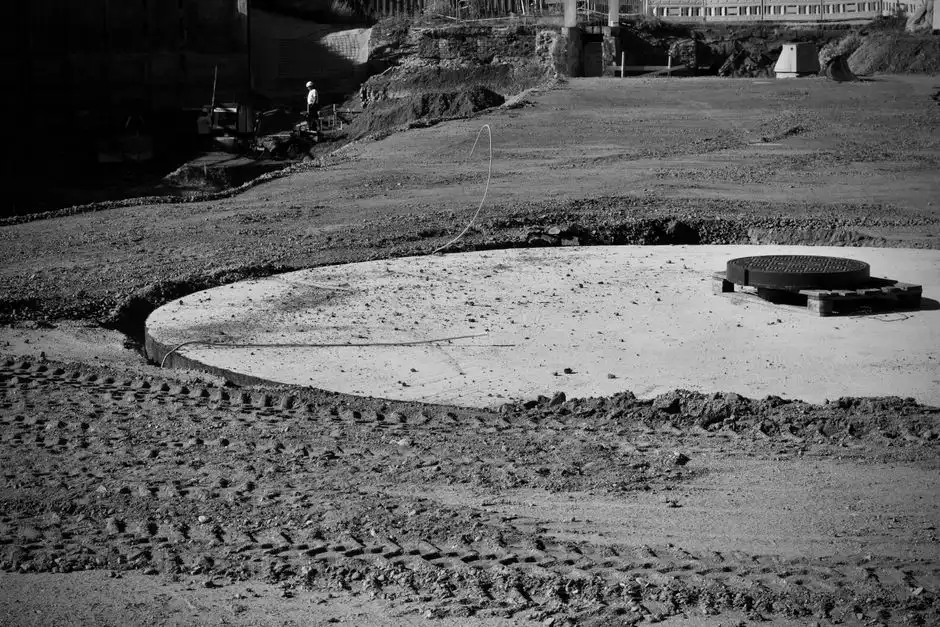
The verified WSZ configuration is an underground integrated package plant using anoxic and aerobic A/O biological contact oxidation, sedimentation, and disinfection within a single buried unit. The HydropureWater verified product catalog gives a capacity range of 1–80 m³/h and identifies residential communities, hotels, hospitals, factories, and rural areas as intended applications.
The installation options are below grade with landscaping above, or mounting on a trailer for mobile deployment. Neither option removes the need to establish the wastewater design basis. Select the flow range from documented average and peak conditions, then obtain the supplier’s process design for that duty rather than choosing the upper end of the catalog range without justification.
The RFQ should identify the design flow basis, influent characteristics, treatment stages, disinfection method, control philosophy, power and utility requirements, access arrangements, commissioning tests, and O&M scope. It should also state how sludge or other residuals are removed and handled, how alarms are communicated, what routine maintenance is required, and which consumables or spare parts must be stocked locally. No unsupplied numerical operating values should be assumed.
Maintainability should be specified as part of the process design. The US EPA lists blockages, equipment failures, broken pipes, and vandalism among the conditions that can cause sewage overflows, according to its municipal-wastewater guidance. The package layout should therefore preserve safe access for inlet inspection, routine maintenance, and repair without unnecessary excavation.
| RFQ field | Information the buyer should provide or require |
|---|---|
| Design basis | Average daily flow, peak-hour flow, and applicable wet-weather condition |
| Influent | Domestic wastewater source inventory and wastewater characteristics |
| Process | A/O contact oxidation, sedimentation, disinfection, and any upstream or downstream equipment |
| Installation | Below-grade or trailer-mounted arrangement, excavation requirements, access, and final site conditions |
| Controls and utilities | Automatic controls, alarms, electrical supply, and other required utilities |
| Residuals | Sludge collection, removal, handling, and responsible party |
| Verification | Commissioning tests, acceptance criteria, training, and O&M documentation |
Build a pre-purchase and commissioning checklist
A defensible procurement package begins with a source inventory, average and peak flows, wastewater characteristics, the proposed discharge or reuse route, and the relevant authority contact. Identify whether the facility is residential, hospitality, healthcare, industrial, rural, or mixed, and record every wastewater contribution that could change process loading or effluent quality.
Confirm whether sanitary sewer and stormwater are separate. The US EPA identifies sanitary sewers as wastewater-only systems and warns that wet weather can create significant treatment-plant flow and operating challenges, according to its municipal-wastewater guidance. For a decentralized site, inspect private drains, manholes, and any upstream inflow or infiltration that could affect the selected unit.
Obtain written confirmation of the applicable discharge, reuse, construction, and operating requirements. The research supplies the US EPA NPDES permit principle but no Riffa permit limits, so the equipment specification must preserve the ability to meet whatever conditions the relevant Bahrain authority confirms.
Require each bidder to state proposed guarantees, control functions, alarms, maintenance intervals, spare-parts support, sludge or residual handling, training scope, and commissioning criteria. Clarify who performs sampling, what parameters are monitored, and what happens if an agreed operating condition is exceeded. These items belong in the supply scope rather than in an unpriced assumption.
For a below-grade installation, address construction sequencing, excavation, groundwater, final landscaping, vehicle loading, equipment access, noise, and future inspection requirements. The related packaged sewage treatment plant guide for Delhi housing and Riffa-relevant domestic sewage treatment engineering guide provide further context on project integration and selection.
Frequently Asked Questions
What is the cost of domestic sewage treatment in Riffa?
No authoritative Riffa price or total-cost figure was supplied in the research. Request comparable quotations that state the selected capacity, process scope, civil works, installation, controls, utilities, commissioning, training, routine maintenance, consumables, membrane or component replacement provisions, and residuals handling. Compare quotations on the same scope rather than relying on a headline equipment price.
Should I select a WSZ package plant or an MBR system?
Use the site flow and operating requirements to determine the candidate architecture. The verified WSZ range is 1–80 m³/h, while the supplied MBR range is 10–2,000 m³/day, and the supplier states filtration below 1 μm for the MBR. Obtain the design calculation for the actual average, peak, and wet-weather conditions, then compare footprint, access, solids handling, maintenance, and confirmed effluent requirements.
How do I select a supplier for a domestic sewage treatment package in Riffa?
Require a process basis, itemized equipment scope, performance guarantees, commissioning evidence, an O&M plan, and support for local permit coordination. Check that the supplier addresses maintenance access, alarms, power loss, fouling control, sludge handling, spare parts, training, and the proposed treatment capacity. Headline capacity alone does not demonstrate suitability.
Does a treatment unit with the required process capability make the project compliant?
No. Equipment capability and legal authorization are separate decisions. A treatment unit does not replace confirmation of the applicable Riffa discharge, reuse, construction, and operating requirements, or written agreement on how compliance will be demonstrated. Obtain those requirements before finalizing the performance specification and acceptance tests.