What Counts as Domestic Sewage in Coimbatore — and Why It Matters
Domestic sewage from a Coimbatore residential complex is the combined stream of toilet blackwater, kitchen, bath, and laundry greywater leaving the premises. It is distinct from industrial effluent because it carries moderate-to-high organic load, suspended solids, pathogens, and nutrients, but relatively low heavy-metal or toxic loading (IntechOpen sewage treatment chapter, 2018). For a builder or facility manager, that distinction allows for biological treatment and disinfection rather than the chemical-physical trains that industrial wastewater demands.
Coimbatore sits in a semi-arid zone where groundwater stress and reuse pressure are documented research topics. An academic study published in Human and Ecological Risk Assessment (2019) examined domestic wastewater irrigation on finger millet and maize in semi-urban and rural Coimbatore, confirming that local researchers treat the reuse of treated domestic sewage as a working agricultural question. Decentralized, premise-level treatment is technically viable in such contexts: an IntechOpen study on vermifiltration (2022) notes that climate change has pushed semi-arid regions toward water reuse, and that decentralized domestic sewage treatment is efficient and requires less specialized expertise than centralized plants.
Local service providers in Coimbatore already market residential STP services covering design, equipment supply, installation, commissioning, annual maintenance contracts, performance monitoring, and system upgrades (VPPL Engineering, residential sewage treatment Coimbatore service scope). For a gated community, apartment block, hotel, hospital, or campus that falls outside the UnderGround Drainage (UGD) network, a domestic STP is a design decision with reuse, footprint, and compliance consequences.
Typical Influent Characteristics You Should Design Around
Domestic sewage is characterized qualitatively as moderate-to-high in BOD, COD, suspended solids, pathogens, and nutrients, with relatively low heavy-metal or toxic loading (IntechOpen sewage treatment chapter, 2018). Before any vendor quotes you, you should know the envelope of parameters you are designing against. That qualitative description is the engineering baseline; the actual numbers for your project must come from your site's occupancy data and the local UGD reference, not from a generic brochure.
Two design drivers sit above everything else: per-capita water use in litres per day, and per-capita BOD loading in grams per day. Both must be confirmed with the vendor in writing. Indian residential flows are typically estimated from a per-capita litres-per-day figure multiplied by a peak factor, but the actual value must be drawn from your project occupancy (IntechOpen sewage treatment chapter, 2018). Coimbatore's temperature regime supports conventional biological treatment year-round without enclosure heating, although summer evaporation losses and odour control at above-ground plants still need to be specified.
For projects with an irrigation or landscaping reuse target, the Coimbatore wastewater irrigation study (Human and Ecological Risk Assessment, 2019) demonstrates that treated domestic sewage characteristics are workable for agricultural reuse when the effluent is brought to an appropriate quality tier. This finding confirms that reuse is a defensible end-use locally.
| Parameter family | Qualitative envelope for domestic sewage | Source |
|---|---|---|
| BOD / COD | Moderate to high; primary design driver | IntechOpen sewage treatment chapter, 2018 |
| Suspended solids | Moderate to high; screening and primary removal required | IntechOpen sewage treatment chapter, 2018 |
| Pathogens | Present; mandate a disinfection stage | IntechOpen sewage treatment chapter, 2018 |
| Nutrients (N, P) | Present; biological nitrification / denitrification can address | IntechOpen sewage treatment chapter, 2018 |
| Heavy metals / toxics | Low; differentiates domestic from industrial streams | IntechOpen sewage treatment chapter, 2018 |
| Per-capita water use | Must be confirmed from project occupancy; not assumed | Project-specific input |
Technology Options: From Conventional to Package to MBR
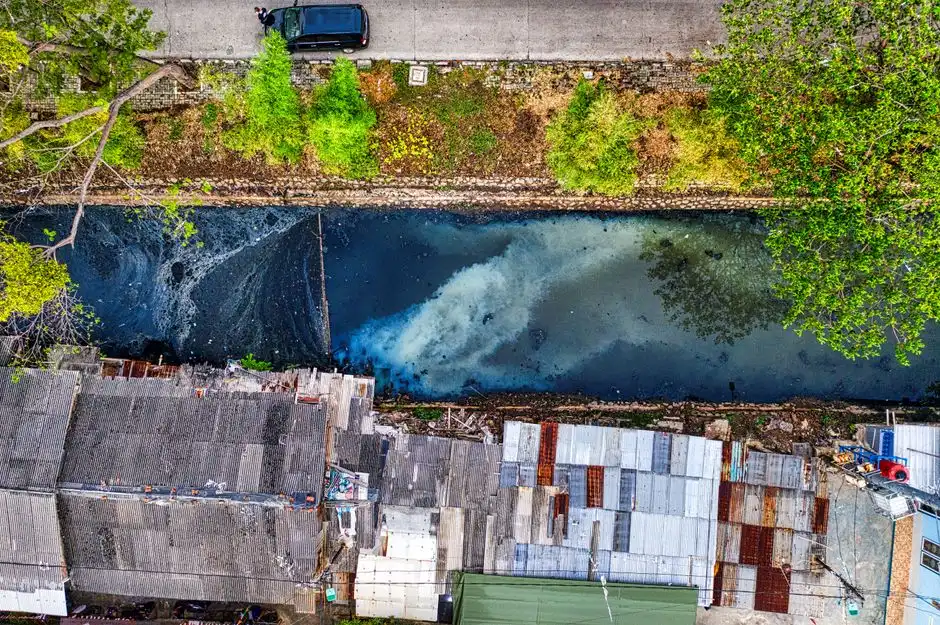
Four process families dominate residential STP quotations in Coimbatore, and the right pick depends on footprint, reuse end-use, and operator availability.
The conventional civil STP is the workhorse for large townships: primary settling, activated sludge, secondary clarifier, and chlorination in civil concrete tanks. It needs daily operator attention and a substantial above-ground footprint, but at very large flows it is the lowest per-m³ cost option.
The underground package STP combines anoxic/aerobic biological contact oxidation with sedimentation and disinfection inside a single buried skid, runs fully automatically with no operator, and is suited to residential communities, hotels, hospitals, factories, and rural sites. The HydropureWater WSZ underground package STP covers 1–80 m³/h in this format and can be installed below grade with landscaping above, or trailer-mounted for phased projects (HydropureWater product catalog).
The MBR (membrane bioreactor) integrates submerged PVDF membranes with activated sludge, delivering near-reuse effluent in a smaller footprint. The HydropureWater MBR integrated system covers 10–2,000 m³/day in this configuration (HydropureWater product catalog). Flat-sheet MBR modules offer a modular, replaceable-element path for smaller reuse-grade plants.
SBR (sequencing batch reactor) and MBBR (moving bed biofilm reactor) are intermediate choices. SBR suits small communities with batch-flow tolerance; MBBR is a robust retrofit where biofilm carrier media are added to existing aeration tanks. Vermifiltration is an emerging low-expertise, decentralized option relevant to semi-arid regions (IntechOpen, 2022) but is not yet mainstream for gated-community STPs.
| Technology family | Typical scope | Operator needs | Reuse suitability | Reference |
|---|---|---|---|---|
| Conventional civil (ASP + clarifier + chlorination) | Large townships | Daily operator | Gardening / toilet flush after polish | Engineering convention |
| Underground package (A/O contact oxidation) | 1–80 m³/h, residential, hotel, hospital, rural | Fully automatic, no operator | Gardening / toilet flush | HydropureWater WSZ product catalog |
| MBR (submerged PVDF membranes) | 10–2,000 m³/day | Low; periodic membrane maintenance | Near-reuse quality | HydropureWater MBR product catalog |
| SBR | Small communities, batch tolerance | Moderate; PLC + periodic checks | Gardening / toilet flush | Engineering convention |
| MBBR | Retrofit of existing tanks | Low–moderate | Gardening / toilet flush | Engineering convention |
| Vermifiltration | Decentralised, low-cost | Low expertise | Limited; research-stage for residential scale | IntechOpen vermifiltration study, 2022 |
Anatomy of a Residential STP: The Process Train You Should Insist On
Reject any quotation that does not include every one of these stages, as an under-scoped bid is the most common residential STP failure mode.
- Headworks screening. A rotary mechanical bar screen such as the HydropureWater GX series protects downstream pumps and biological stages from rags, plastics, and fibrous debris (HydropureWater product catalog).
- Primary treatment and equalisation. A buffer tank smooths hydraulic and organic shocks before the biological stage, which is critical for residential complexes with morning and evening peaks.
- Biological treatment. An anoxic zone for denitrification followed by an aerobic zone for BOD removal and nitrification. MBR or secondary clarification follows, depending on the chosen process family.
- Disinfection. Specify the method in writing. Two options dominate: chlorine dioxide generation (HydropureWater ClO₂ generator range with EPA/EU/WHO-aligned dosage control) or UV sterilisation (HydropureWater UV steriliser range).
- Sludge handling. A plate-and-frame filter press (HydropureWater range 1–500 m² filtration area) is the standard for dewatering waste activated sludge from a residential STP (HydropureWater product catalog).
- Reuse polish. Multi-media filtration or ultrafiltration can lift STP effluent to gardening, toilet-flushing, or car-wash quality without going to full reverse osmosis.
Underground Package STP vs Conventional Civil STP — Picking the Right Fit
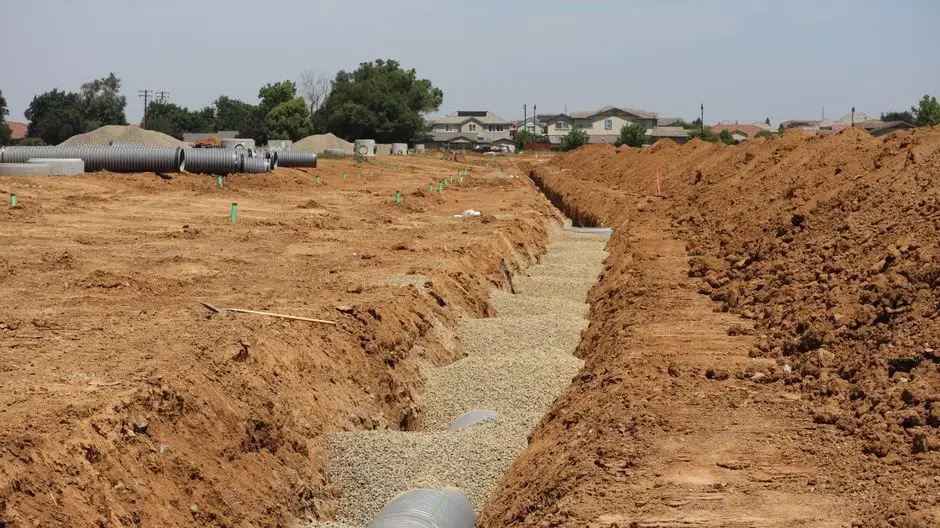
For most gated-community and apartment work in Coimbatore, the choice collapses to two delivery models. Underground package STPs win on zero visible footprint, landscaping possible above the buried unit, factory-tested skid delivery, and full automation with no on-site operator (HydropureWater WSZ underground package STP, 1–80 m³/h, HydropureWater product catalog). They are suited to residential communities, hotels, hospitals, factories, and rural sites, and the same skid can be trailer-mounted for temporary or phased deployments.
Conventional civil STPs win at very large flows, where civil concrete tanks plus an activated sludge process deliver a lower per-m³ cost, and where influent variation is high enough that the simpler membrane-free operation is preferred. For Coimbatore gated communities in the typical 50–500 m³/day range, underground package STPs are the default choice because they compress screening through disinfection into one factory-tested skid.
A third option now common in Coimbatore is the hybrid: civil concrete tanks fitted with package MBR cassettes, where land is constrained but flow sits in the mid-to-high band. This lets the buyer keep civil cost low while producing reuse-grade effluent. Mobile and trailer-mounted package units remain a niche option for temporary sites or phased developments (HydropureWater product catalog).
Sizing and Reuse: What to Ask Any Coimbatore STP Supplier
Use this as a vendor-interrogation checklist. If a supplier cannot answer every one in writing, treat the quotation as incomplete.
- Design flow and peak factor. Demand the figure in m³/day or m³/h, with the peak factor stated, not implied.
- Design BOD/COD load and guaranteed outlet values. For any reuse end-use, request a reuse-water quality certificate alongside the design number.
- Reuse end-use first. Toilet flushing and gardening need only STP-grade water. Car wash, cooling tower make-up, or laundry need a filtered or UF polish. Potable reuse is not a residential-STP scope.
- Automation level. Ask whether control is PLC-based, whether remote telemetry is included, and what the operator's actual daily tasks are.
- AMC, membrane life, sludge disposal. Request annual maintenance contract scope, membrane replacement interval, and sludge disposal route in writing.
- TNPCB consent support. Confirm that the supplier will support Tamil Nadu Pollution Control Board consent paperwork and ongoing compliance reporting (VPPL service scope includes compliance support).
- Phased deployment. If the project will be built in phases, ask whether a mobile or trailer-mounted option is available to bridge commissioning (HydropureWater product catalog).
For deeper operational guidance, the MBR Plant Operation and Maintenance Guide (2026 Engineering Manual) walks through the membrane care routine any reuse-grade plant will require. For comparable engineering framing in another Indian city, the Domestic Sewage Treatment in Ahmedabad: 2026 Engineering Guide covers the same supplier-evaluation logic in a different water-stress context.
Frequently Asked Questions
What is the typical cost of a domestic sewage treatment plant in Coimbatore for a residential complex?
Pricing for residential STPs in Coimbatore depends on design flow (m³/day), reuse end-use, civil versus package delivery, and whether an MBR polish is included. Any vendor quotation must be benchmarked against a written design basis. Insist the supplier provides design flow, BOD load, outlet quality, and automation scope in the same document as the price so the comparison is apples-to-apples.
How do I select the right STP supplier in Coimbatore?
Shortlist suppliers who can show a written design basis (flow, BOD load, guaranteed outlet), a clear annual maintenance contract scope, TNPCB consent support, and a reference list of installed residential STPs. The Coimbatore supplier VPPL Engineering publishes a service scope covering design, installation, commissioning, AMC, performance monitoring, and system upgrades (VPPL service scope), which is the minimum service set a residential buyer should require.
What is the difference between an underground package STP and a conventional civil STP for a gated community?
An underground package STP such as the HydropureWater WSZ series (1–80 m³/h) delivers screening, anoxic/aerobic biological treatment, sedimentation, and disinfection in one buried, fully automatic skid with no on-site operator (HydropureWater product catalog). A conventional civil STP uses concrete tanks, an activated sludge process, and a secondary clarifier,