Start With the Cooling Architecture, Not a Treatment Recipe
An Edmonton data centre needs treatment matched to its cooling architecture, wastewater composition, discharge route, and peak water demand. A closed-loop glycol system may require no water for routine cooling, but it can still produce concentrated blowdown, while power-generation, fire-protection, domestic, and maintenance streams require separate evaluation. Because three-quarters of 38 proposed Alberta data-centre campuses were in high or extremely high water-stress areas, compare systems using peak demand, not annual consumption alone.
Begin by deciding whether the facility uses closed-loop, evaporative, hybrid, or once-through cooling. Then map every water-using and water-discharging stream before specifying treatment. The relevant data-centre cooling blowdown recycling specifications provide a technical starting point, but they do not establish the correct flow or recovery rate for an Edmonton project.
CBC and City News reported on July 9, 2026 that Meta’s planned Sturgeon County facility uses closed-loop cooling and expects regular cooling to use no water; on-site use is limited to domestic uses, fire protection, and some equipment maintenance. That is a project-specific example, not a design rule for every Edmonton data centre. The selected heat-rejection method, Edmonton summer design condition, and auxiliary systems still determine the water balance.
Closed-loop cooling does not necessarily mean zero discharge. Glycol concentration, water lost through carryover, maintenance, and contaminated residuals can create a stream requiring management. Define each residual by origin, concentration, destination, and responsible operator before treating it.
| Stream or architecture | Question to resolve first | Treatment decision |
|---|---|---|
| Closed-loop glycol cooling | Does blowdown contain glycol, corrosion products, or process contamination? | Characterize separately; size treatment only after the residual and destination are known. |
| Evaporative cooling | What are the solids, scaling ions, biological load, and blowdown volume? | Evaluate side-stream control, reuse, and disposal as one system. |
| Hybrid cooling | Which equipment operates at peak load, and which stream is produced then? | Model the worst operating case rather than an average blend. |
| Once-through cooling | Is water withdrawn, treated, and discharged once, or partially recovered? | Define the receiving-route requirements before selecting equipment. |
| Domestic, fire-protection, maintenance, and power-generation streams | Are these connected to the cooling loop or independent? | Keep separate balances unless a validated reuse route connects them. |
Build a Peak-Demand Water Balance for Edmonton
Annual water consumption cannot show whether a facility remains operable during a hot, dry period or when municipal supply is restricted. The procurement basis should be a daily, monthly, peak-day, and peak-hour balance, supported by the data-centre wastewater treatment guide for Ottawa for a broader engineering comparison.
Request a water balance that identifies makeup water, process losses, evaporation, blowdown, reclaimed-water demand, domestic discharge, fire water, and power-generation demand. Keep each source and destination visible. The designer must state the Edmonton summer heat and drought conditions selected for the design; the supplied research does not establish a universal consumption rate for an Edmonton facility.
National Observer reported on March 23, 2026 that the Beacon Indus campus was estimated to draw up to 1.5 million litres each day, including 750,000 litres for its power plant’s steam generators and fire-safety systems. This was a project-specific case, not an Edmonton benchmark. The same report stated that a proposed 1,500-cubic-metre-per-day potable-water supply represents about 547 million litres annually.
The report also noted that Alberta’s First in Time, First in Right system gives earlier licence holders priority during shortages. It cited experts who argued that annual reporting can be misleading because demand varies with design and location. For procurement, require the supplier to show water demand under both the ordinary operating case and the governing peak case, including any cooling and power-generation constraints during supply restrictions.
| Water-balance line | Required information | Procurement test |
|---|---|---|
| Freshwater and alternate supply | Monthly, peak-day, and peak-hour demand by use | Does the proposal remain compliant and operable under the selected restriction case? |
| Cooling makeup and losses | Evaporation, drift, blowdown, and reclaimed-water contribution | Are seasonal losses and concentration cycles visible? |
| Power generation | Steam-generator, cooling, and fire-safety demand | Has this auxiliary load been separated from data-centre cooling? |
| Domestic and maintenance | Potable demand, discharge, and contamination risk | Can these flows be segregated from the cooling residual? |
| Discharge and supply risk | Rejection, interruption, and drought response | Does the proposal identify the lawful, resilient source for each demand? |
Characterize the Wastewater Before Choosing Equipment
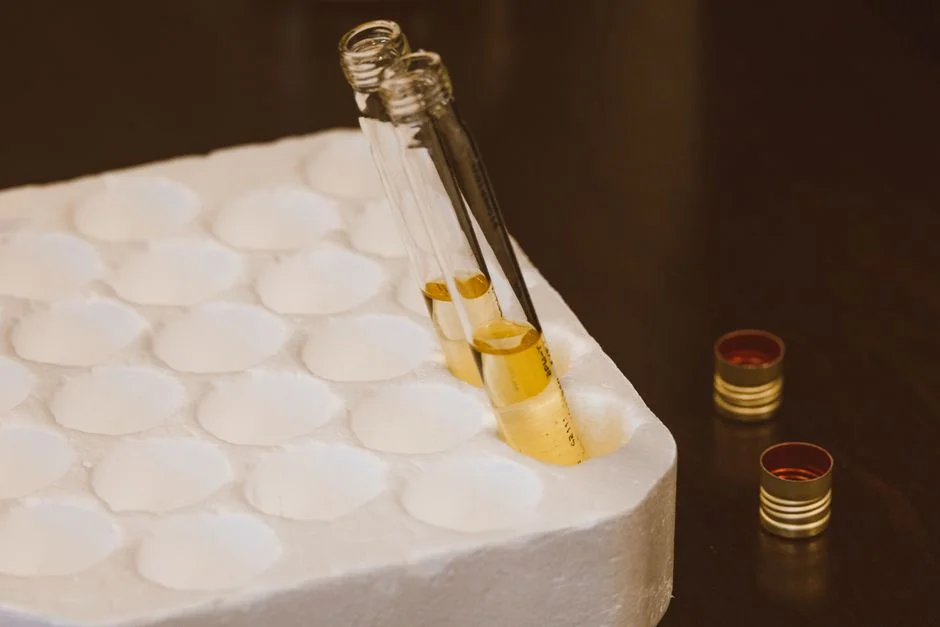
Cooling-loop makeup and blowdown require separate sampling plans because source-water quality, concentration cycles, chemicals, corrosion products, and process contamination can change the required treatment. A generic “cooling-water” analysis cannot support equipment sizing.
For evaporative systems, investigate suspended solids, colloids, scaling-forming ions, microbiological activity, corrosion indicators, and organics that can foul equipment or support biological growth. For closed-loop glycol systems, establish whether the residual is mainly concentrated glycol and corrosion products or has received process contamination. Include conductivity, pH, suspended solids, glycol concentration, and contaminant-specific analyses.
Confirm whether the ultimate destination is sanitary sewer, industrial sewer, stormwater, a reuse loop, or another approved route. Obtain the receiving authority’s applicable requirements; general water-reuse guidance is not a discharge authorization. The dissolved-air flotation machine and ozone generator for water-tank sterilization illustrate treatment options, but neither should be selected from a stream label alone.
- Sample each cooling-water source, residual, and reuse stream under representative operating conditions.
- Measure constituents that drive fouling, scaling, corrosion, biological growth, or discharge acceptance.
- Record cycles of concentration, chemical additions, temperature, and any process leakage.
- Require removal claims to be tied to representative matrices and the expected backwash and blowdown streams.
| Decision factor | Closed-loop glycol residual | Evaporative cooling or blowdown |
|---|---|---|
| Primary analytical focus | Glycol concentration, conductivity, pH, suspended solids, corrosion products, and process contaminants | Suspended solids, colloids, hardness, alkalinity, scaling ions, organics, microbiological indicators, and corrosion indicators |
| Treatment driver | Destination, glycol recovery or disposal requirements, and downstream contamination | Fouling, scaling, biological control, heat-transfer performance, and discharge acceptance |
| Required evidence | Representative residual analysis and defined cycles of concentration | Makeup analysis, cycles-of-concentration data, and cooling-tower operating history |
Compare Closed-Loop, Evaporative, and Hybrid Treatment Routes
The appropriate route depends on summer heat rejection, water availability, electricity demand, glycol inventory, contamination risk, make-up demand, and the downstream waste stream. No treatment train can correct an unsuitable cooling architecture or an unaccepted discharge route.
CBC and City News reported on July 9, 2026 that a closed-loop approach can work well in Alberta’s cooler climate, while Edmonton summer conditions still require explicit design consideration. The same source reported that Nvidia’s example coolant was three-quarters water and one-quarter propylene glycol, and that cooling had historically accounted for up to 40 per cent of data-centre electricity consumption. These examples do not specify a universal Edmonton design.
The 2026 Open Engineering preprint found that reclaimed-water ultrafiltration plus reverse osmosis consumed more than five times the energy of its freshwater case. Higher cycles of concentration could reduce blowdown and chemical consumption, however, making this a life-cycle trade-off rather than a universal ranking. Its depth-filtration, granular-activated-carbon, and chlorination train also accounted for roughly 80 per cent of the wastewater scenario’s higher global warming potential. Electrical and chemical footprints therefore belong in the business case.
The University of the Witwatersrand’s 2015 study found lower approach temperatures, less scaling, lower makeup-water use, and lower heat-exchanger corrosion in the ozone-treated system it examined. Its reported four-year saving of R425,991 was site-specific and cannot be transferred to Edmonton without a local energy and water model. A hollow-fiber ultrafiltration system and an industrial water softener address different barriers and should be evaluated within the complete train.
| Route | Principal advantage | Principal exposure | Treatment focus |
|---|---|---|---|
| Closed-loop glycol | Low routine cooling-water use | Glycol handling, heat rejection at peak load, and concentrated residual management | Residual characterization, glycol recovery or disposal, and heat-transfer performance |
| Evaporative | Uses water-side heat rejection where compatible with the design | Peak make-up demand, evaporation, blowdown, scaling, and microbiological control | Makeup treatment, side-stream control, blowdown reuse, and discharge |
| Hybrid | Can allocate cooling duty between technologies | More complex control, water balance, and treatment interfaces | Scenario-based treatment sizing and peak-case residual management |
| Once-through | Simple separation between cooling and residual flow | Withdrawal and discharge exposure | Route-specific pretreatment and discharge compliance |
Design the Treatment Train Around the Final Water Use
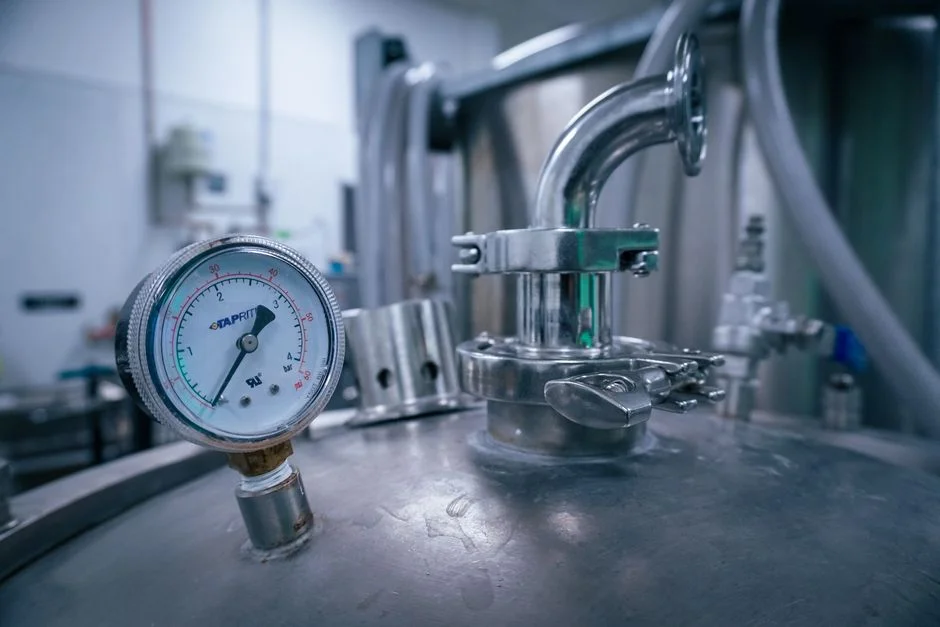
Treatment should remove what the final use cannot tolerate, and the final use must be defined before equipment is selected. For a reclaimed-water cooling feed, the Open Engineering study evaluated depth filtration, granular activated carbon, and chlorination. Review that sequence against the actual cooling equipment, source water, and permit requirements rather than copying it automatically.
Where suspended solids and colloids threaten membranes or heat-transfer equipment, evaluate ultrafiltration as pretreatment or a polishing barrier. HydropureWater’s hollow-fiber ultrafiltration systems are rated from 2,000 to 40,000 litres per hour, use 0.03-micron PVDF membranes, accept turbidity up to 300 ppm, and use automatic backwash and air scour. Applicability still requires supplier design against the actual water analysis.
Where softening is needed to control scaling, use conductivity, hardness, alkalinity, and concentration-cycle data to define the industrial softener duty rather than selecting capacity by flow alone. Where microbial control is needed in a recirculating loop, assess whether a chemical oxidant or ultraviolet system is appropriate. HydropureWater’s chlorine-dioxide generators are offered from 50 to 20,000 grams per hour and identified for industrial cooling loops, but dose and configuration depend on water chemistry, contact conditions, and regulatory acceptance. The automatic chemical dosing system and UV sterilizer for water treatment should be evaluated against those same conditions.
Backwash, regenerant, membrane-cleaning waste, spent media, and concentrated brine require destinations. A reuse system that transfers a pollutant from cooling water into another wastewater stream has not solved the problem.
| Final use or barrier | Potential treatment step | Design input required |
|---|---|---|
| Reclaimed cooling feed | Depth filtration, activated carbon, chlorination, or an alternative train | Source analysis, cooling chemistry, treatment objectives, and permit conditions |
| Heat-transfer equipment or membrane protection | Ultrafiltration | Flow, turbidity, solids, membrane compatibility, backwash waste, and duty cycle |
| Scaling control | Softening or another source-control measure | Hardness, alkalinity, conductivity, concentration cycle, and residual destination |
| Recirculating-loop microbial control | Chemical oxidant or ultraviolet treatment | Water chemistry, contact conditions, target control objective, and regulatory acceptance |
Evaluate Recovery Against Energy, Chemicals, and Residual Risk
A recovery percentage is incomplete unless the proposal also shows freshwater displaced, blowdown diverted, concentrate generated, electricity consumed, chemicals used, waste produced, and maintenance downtime. The comparison should include the consequences of failure and restriction, not only nominal operation.
The Open Engineering 2026 preprint provides a clear caution: wastewater-reuse energy in its UF-plus-RO scenario grew to more than five times the freshwater case, even though improved cycles of concentration reduced blowdown and chemical consumption. The preprint estimated an indirect water penalty of approximately 0.93 litres per cubic metre for that reuse train, less than 0.1 per cent of the direct displacement benefit. These are study-specific results and must be checked against the selected process.
Include peak freshwater restrictions, discharge acceptance, glycol purchase and disposal, membrane or media replacement, operator labour, and heat-transfer performance. A system that saves freshwater but raises compressor energy, fouls exchangers, or creates an unacceptable residual may not be the lowest-risk solution. The data-centre cooling-blowdown treatment framework provides a useful structure for comparing complete consequences, but its site assumptions must be replaced with Edmonton data.
| Metric every proposal must state | Calculation or evidence required | Comparison purpose |
|---|---|---|
| Freshwater displacement | Volume avoided by reuse under the selected operating cases | Quantifies the primary supply benefit. |
| Recovery and residual | Recovered water and rejected water by destination | Tests whether the residual has an accepted route. |
| Energy | Connected load, operating demand, and peak contribution | Compares treatment against cooling-performance effects. |
| Chemicals and consumables | Consumption by operating case, including cleaning and replacement | Supports total-cost comparison. |
| Residual waste | Backwash, regenerant, sludge, spent media, glycol, and concentrate | Exposes costs transferred to another stream. |
| Reliability | Maintenance intervals, bypass implications, and redundancy | Tests performance during peak demand and permit excursions. |
Confirm the Local Permit and Water-Supply Position
Identify the municipality, sewer or drainage authority, watershed authority, and any applicable provincial approvals before the treatment design is frozen. Requirements vary with the receiving route and project configuration, so the responsible authorities must confirm the applicable route rather than relying on a generic water-reuse standard.
Submit the proposed water balance, treatment narrative, anticipated residuals, sampling plan, and monitoring commitments for written confirmation. A treatment supplier’s performance claim is not a discharge authorization. The wastewater-requirements framework for a changing industrial operation illustrates why ownership or operating changes should prompt review, although the Alberta authorities remain the deciding bodies.
Check whether the site depends on an existing water licence, a new licence, municipal supply, reclaimed water, or another arrangement. National Observer reported on March 23, 2026 that Alberta’s senior licence holders can receive priority during shortages, making the lawful water source a project-risk item rather than a procurement detail.
Separate regular cooling from auxiliary power-generation and fire-protection demand. CBC and City News reported on July 9, 2026 that Meta’s Sturgeon County announcement limits routine on-site water use to domestic, fire-protection, and maintenance applications, but the adjacent power plant may have an independent water profile. Record permit conditions in the vendor specification so sampling points, alarms, bypasses, controls, and reporting are designed in rather than added later.
Issue a Proposal Package That Makes Suppliers Comparable
Comparable bids require a common engineering basis, not a common sales format. Provide the design flow, peak-hour and peak-day demand, annual water balance, complete source-water analyses, cooling chemistry, glycol type and concentration, operating temperature, heat-transfer specification, and residual destination.
Require each proposal to include a process flow diagram, mass balance, equipment-sizing basis, recovery calculation, water-quality guarantees, reject-water destination, utility demand, chemical inventory, control narrative, and maintenance plan. Suppliers must identify assumptions and permit-dependent items, including bypasses, pretreatment, backwash, regenerant, membrane cleaning, sludge, spent media, and concentrate handling.
Compare total cost of ownership, not equipment price alone. Separate freshwater, sewer or disposal, electricity, chemicals, labour, replacement media, downtime, and heat-exchanger performance. Reference cases must retain their boundaries: the Witwatersrand’s R425,991 four-year saving applies to the system studied, and the 2026 Open Engineering results apply to its evaluated treatment cases.
| Supplier deliverable | Information that makes bids comparable | Buyer review question |
|---|---|---|
| Design basis | Flow cases, water analyses, cooling chemistry, temperatures, and destination | Was the same project basis used? |
| Process and mass balance | Every unit, stream, bypass, and residual destination | Are water and contaminant balances closed? |
| Performance guarantee | Defined feed conditions, output targets, and acceptance tests | Can the guarantee be tested at this site? |
| Operating cost | Utilities, chemicals, labour, media, waste, and downtime | Are hidden residual costs included? |
| Permit interface | Permit-dependent equipment, controls, monitoring, and reporting | Which items remain conditional on authority approval? |
Frequently Asked Questions
Does an Edmonton data centre need a wastewater treatment train if it uses closed-loop cooling?
Not necessarily for routine cooling, but the residual and auxiliary streams still require a defined route. CBC and City News reported on July 9, 2026 that Meta’s Sturgeon County facility expects no water for regular cooling and limits on-site use to domestic, fire-protection, and maintenance applications. That project-specific statement does not establish a universal requirement. Characterize any blowdown, glycol-bearing waste, domestic discharge, fire water, and power-generation wastewater separately before deciding whether treatment is needed.
Which water source should an Edmonton data centre compare: freshwater, municipal supply, or reclaimed water?
Compare them on peak reliability, lawful availability, quality, energy, treatment, residual acceptance, and cost—not just annual volume. National Observer reported on March 23, 2026 that earlier Alberta water licence holders can receive priority during shortages, so source security must be checked in writing. The project-specific Beacon Indus potable-water proposal cannot be used as an Edmonton supply benchmark.
How should a supplier size treatment equipment for cooling blowdown?
Size it from the representative residual analysis, peak-hour and peak-day flows, cycles of concentration, required recovery, and final discharge or reuse route. For closed-loop systems, include glycol and corrosion products; for evaporative systems, include solids, colloids, scaling ions, and biological indicators. Request removal claims tied to those matrices and operating conditions, along with the fate of backwash, regenerant, and concentrate. The supplied research does not establish a universal Edmonton flow, chemical dose, or recovery rate.
What should a buyer check when selecting a wastewater-treatment supplier?
Check the quality of the sizing basis, completeness of the mass balance, operating-cost transparency, residual-stream handling, guarantee testability, and local acceptance. Require every assumption to be stated and every permit-dependent item to be identified. Compare the industrial cooling-loop disinfection system or any other proposed process against the actual water chemistry and regulatory position rather than selecting on equipment capacity alone.
Should treatment design or permit confirmation come first?
Start both in parallel. Early authority discussions establish what the discharge or reuse route can accept, while engineering analysis defines what must be removed and what residuals remain. Submit the water balance, treatment narrative, sampling plan, and monitoring commitments for written confirmation. Then incorporate the resulting conditions into bids; a supplier’s treatment claim is not authorization to discharge.