Where a Decanter Centrifuge Fits in Detergent Wastewater Treatment
A decanter centrifuge is a continuous solid–liquid separation machine, not a substitute for source control, equalization, oil removal or solids conditioning. In detergent manufacturing wastewater, its role is to separate suspended solids from the liquid stream after the feed has been made sufficiently stable for separation. It does not remove dissolved detergent, soluble surfactant or soluble COD, and its performance can be undermined by emulsified oil, foaming, grit or highly variable solids loading.
A decanter uses a rotating bowl and a differential-speed screw conveyor. In the separation sequence described by Alfa Laval, denser solid particles migrate toward the rotating bowl wall, the less-dense liquid forms an inner layer, and the screw transports solids through the conical beach for discharge. Alfa Laval states that the centrifugal effect can reach up to 4,000 times gravitational force, although that is a machine description rather than a detergent-specific performance guarantee.
The practical treatment train is:
- Segregate concentrated cleaning dumps, product losses and other high-strength streams where possible.
- Equalize flow, solids and chemical composition before treatment.
- Apply pH control or chemical conditioning as required by the wastewater chemistry.
- Remove free and emulsified oil and destabilize or capture unstable solids. A DAF system for detergent wastewater pretreatment may be evaluated for this stage.
- Use the decanter centrifuge for continuous sludge dewatering, thickening or solids recovery.
- Polish the clarified liquid and treat the separated solids through the required downstream route.
Specify the centrifuge only after the upstream treatment train has been defined. A machine selected from nominal flow alone may be technically correct in principle but commercially wrong for the actual feed envelope.
Characterize the Detergent Wastewater Before Selecting Equipment
Detergent manufacturing wastewater must be characterized over production, product-change and batch-cleaning cycles because a single composite sample can conceal the peaks that govern centrifuge loading. The buyer should distinguish the intended result before testing: thickening, dewatering, recovery of valuable solids, clarified liquid, or a combination of these outcomes.
Representative samples should include routine composite flows and event-based samples from cleaning, dumping and high-solids production periods. The data request should cover average and peak flow, total and suspended solids, oil and grease, COD, BOD, pH, temperature, and whether oil is free or emulsified. Particle-size distribution, settleability, slurry rheology, grit content and the presence of stringy or fibrous material also affect separation and feed handling.
Chemical inventory matters because surfactants can promote foam or stabilize emulsions, builders can alter precipitation behavior, fillers can increase abrasive solids loading, and cleaning chemicals can change pH, viscosity and corrosion conditions. The designer should also identify the production schedule and the operating consequences of product changes.
Particle size and polydispersity materially affect separation in adjacent scientific work. The European Journal of Lipid Science and Technology study on model fat–oil separation, published in 2024, evaluated particle size, polydispersity, pool depth, flow rate, differential speed and centripetal acceleration. This is evidence about a model oil–fat system, not a detergent-wastewater performance result, so it supports the need for particle characterization and pilot testing rather than a guaranteed capture rate.
| Parameter | Why it matters | Test method or source | Information required by the supplier |
|---|---|---|---|
| Average and peak flow | Sets hydraulic loading and peak feed demand. | Continuous flow records plus event-based sampling. | Normal flow, peak flow, cleaning dumps and operating hours. |
| TSS and total solids | Drives dry-solids loading and the separation duty. | Representative composite and time-series samples. | Average, peak and variability by production cycle. |
| Oil and grease | Free oil may separate; emulsified oil can impair capture and promote foaming. | Oil-and-grease analysis with observation of free and emulsified fractions. | Oil type, concentration and treatment history. |
| Particle-size distribution and settleability | Indicates whether the solids are suitable for centrifugal capture. | Particle-size analysis and settling tests on representative feed. | Size profile, polydispersity and settling behavior. |
| Rheology and temperature | Affects pumping, floc behavior and separation conditions. | Viscosity measurements at process temperature. | Temperature range and viscosity at normal and peak conditions. |
| pH and chemical constituents | Influences conditioning, corrosion and material compatibility. | Full chemical analysis and process inventory. | Surfactants, builders, fragrances, dyes, preservatives, fillers and cleaning chemicals. |
| Desired separation result | Defines whether thickening, dewatering or solids recovery is the objective. | Process design brief approved by operations and procurement. | Target centrate quality, capture, recovered-solids form and cake dryness. |
The automatic chemical dosing system should be selected from the conditioning strategy and confirmed during trials; chemical addition cannot be prescribed from a generic wastewater label.
Select Pretreatment for Oil, Surfactants and Unstable Solids

Free oil, emulsified oil, foaming surfactants and unstable suspended solids must be evaluated before the decanter is tested. If the objective is to remove suspended solids, oil and grease, and colloidal material, dissolved air flotation is a relevant upstream option. The referenced DAF system for detergent wastewater pretreatment covers 4–300 m³/h across 13 standard models, but that manufacturer range does not establish suitability for a particular detergent stream.
Chemical conditioning can improve floc formation before flotation or centrifugation, but polymer type and dosage affect the resulting dewatering and thickening performance. ANDRITZ states that its decanter can achieve a high solid/liquid separation rate in many applications without slurry pre-conditioning, while also stating that conditioning process design, including polymer type and dosage, affects performance. The correct conclusion is not that conditioning is optional; it is that its necessity and value must be demonstrated on the actual feed.
Use this decision rule:
- If free oil is present, inspect the source segregation and DAF duty before relying on centrifugal capture.
- If surfactant is producing persistent foam or stable emulsions, test chemical compatibility and flotation performance before the centrifuge trial.
- If grit, fillers or fibrous material are significant, evaluate wear protection, feed-zone design and the consequences of abrasive solids.
Do not guarantee centrifuge capture or cake dryness until the proposed feed has passed source control, equalization and representative pilot testing. Routine equipment data and site-specific process guarantees are separate requirements: a supplier may document a machine range, but only the selected feed can establish the separation result.
Where chemical dosing is required, define the target condition rather than a fixed dose. The automatic chemical dosing system should be coordinated with equalization, pretreatment and the centrifuge controls, with the polymer or chemical consumption recorded during the trial.
Match Decanter Variables to the Separation Objective
Feed flow, bowl speed, scroll differential speed, pond depth and solids concentration determine whether the machine prioritizes clarified liquid, solids recovery, thickening or dewatering. These variables interact, so a single operating point should not be copied from another plant without representative testing.
Alfa Laval describes automatic adjustment of conveyor speed as solids loading changes: differential speed can be reduced under lighter loads to limit wear and energy use, while torque control can reduce or otherwise adjust the speed to prevent overload at heavier loads. This is a control concept, not a substitute for setting safe hydraulic and solids limits.
Increasing pond depth generally gives solids more residence time for separation, but the appropriate setting must be established against the required liquid quality and cake dryness. The 2024 European Journal of Lipid Science and Technology model fat–oil study evaluated pool depth, flow rate, differential speed and centripetal acceleration, keeping its original oil/fat-separation scope.
| Operating variable | Design effect | Operating control | Main risk | Field verification |
|---|---|---|---|---|
| Feed flow | Sets hydraulic residence and solids transport rate. | Flow control and high-flow protection. | Overload and reduced clarification. | Trend flow against centrate quality and torque. |
| Bowl speed | Changes centrifugal separation intensity. | Fixed or adjustable speed within supplier limits. | Excess energy, vibration or wear. | Measure quality, current and vibration during the trial. |
| Scroll differential speed | Controls solids transport and compaction. | Torque-based automatic adjustment where offered. | Plugging, unstable cake or torque overload. | Record torque, differential speed and cake discharge. |
| Pond depth | Changes effective separation volume and liquid discharge level. | Dam or outlet adjustment. | Poor clarification or carryover. | Test across proposed settings and measure centrate solids. |
| Solids concentration | Changes load, residence time and torque demand. | Equalization and feed-forward control. | Intermittent overload. | Log solids loading against machine response. |
| Feed consistency | Affects rheology, separation and chemical demand. | Source control, equalization and conditioning control. | Foaming, plugging and changing performance. | Test normal and worst-case representative feeds. |
Material selection should follow the actual detergent chemistry and abrasiveness. Alfa Laval identifies stainless-steel construction, abrasion-resistant wear protection, power-recovery outlets and replaceable conveyor protection as options to evaluate. The water-treatment valves and media reference should not be used to assume a universal material or wear package; require the supplier to identify every wetted component and its intended service.
Size the Centrifuge from Verified Feed and Performance Data
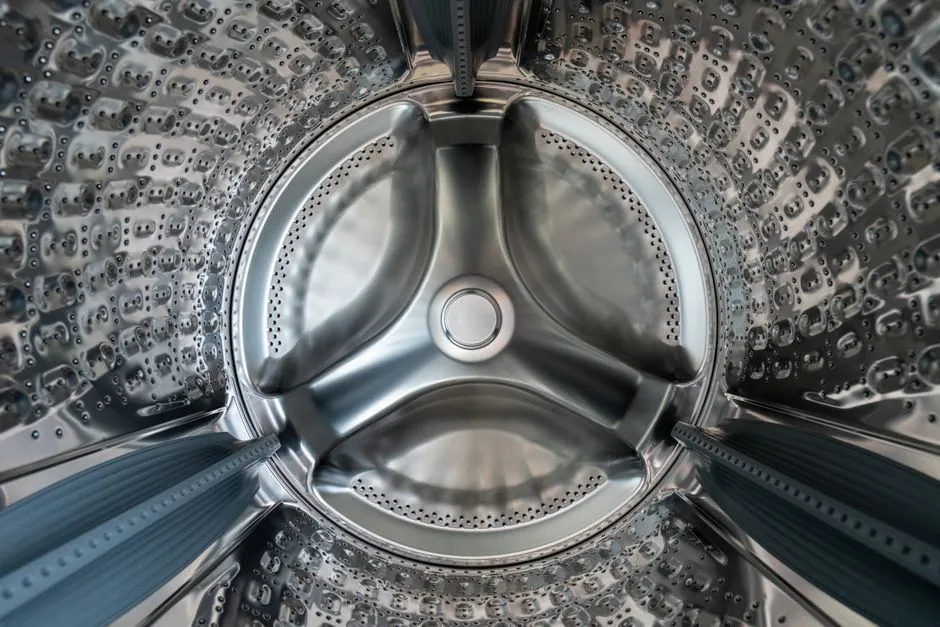
Size a decanter from dry-solids loading and peak hydraulic demand, then check that the selected machine can remain within its stable operating envelope as feed composition changes. ANDRITZ publishes a portfolio capacity range of 0.1–500 m³/h depending on the application and operating conditions. That is a manufacturer portfolio reference, not a universal selection range for detergent wastewater and not a performance guarantee for this feed.
Build the design envelope around normal flow, peak flow, cleaning dumps, solids variability and the acceptable operating-load range. The supplier should calculate the solids and hydraulic duties independently and show how the proposed machine responds when solids loading increases.
| Sizing input | Required information | Why it is necessary | Acceptance evidence |
|---|---|---|---|
| Average and peak flow | Validated flow history and cleaning-event profile. | Defines hydraulic capacity and overload protection. | Stated normal and maximum operating limits. |
| TSS concentration | Representative solids data across the feed cycle. | Converts flow into dry-solids loading. | Calculated solids mass balance. |
| Maximum solids load | Peak concentration and sustained-duration data. | Tests whether peak events can be sustained safely. | Trial data and torque-response record. |
| Required capture and centrate quality | Define the metric, sampling point and test method. | Prevents ambiguous guarantees. | Witnessed test with raw and treated samples. |
| Required cake dryness | Define whether the value means total or dry-solids basis. | Separates thickening from dewatering objectives. | Representative cake sampling and laboratory result. |
| Site constraints | Floor area, utilities, operating hours and waste-disposal route. | Checks that the selected configuration is installable and operable. | Vendor layout, utility schedule and operating plan. |
No reliable detergent-specific cake-dryness or clarified-liquid guarantee can be derived from the supplied research. Require a pilot trial or another validated design basis using representative feed. Foaming, high grit, stringy or fibrous material, temperature variation and chemical incompatibility can invalidate nominal sizing; each should be addressed in the design or carried as an explicit operating risk. The high-efficiency sedimentation tank is relevant only where clarification is part of the selected treatment route, not as a substitute for feed verification.
Compare Decanter Centrifuges with Alternative Separation Routes
No separation technology should be selected from nominal capacity alone; the operating pattern and required result determine which route is most credible. A decanter is generally suited to continuous thickening or dewatering, while a plate-and-frame filter press performs batch separation. Lamella clarification belongs in a solids-capture process that depends on sludge recirculation, flocculation and inclined plates.
| Decision factor | Decanter centrifuge | Plate-and-frame filter press | Lamella clarification |
|---|---|---|---|
| Operating pattern | Continuous. | Batch cycle with plate opening, cake removal and cloth washing. | Continuous clarification-oriented operation. |
| Primary result | Thickening, dewatering or solids recovery from a prepared slurry. | Batch dewatering with a cake discharge. | Solids capture and clarified liquid. |
| Feed fit | Requires a controlled feed and suitable solids characteristics. | Can suit batch feeds where cycle time and cake handling are acceptable. | Requires a flocculation and recirculation process. |
| Operational attention | Continuous controls, wear management and feed monitoring. | Labor for cycles, cloth maintenance and cake handling. | Recirculation, floc control and sludge handling. |
| Key procurement risk | Hydraulic and solids overload outside the verified envelope. | Batch cycle time, labor, cloth condition and filtrate handling. | Clarification performance and sludge-management requirements. |
The referenced plate-and-frame filter press range of 1–500 m² is a product-area reference only. It is not directly comparable with a flow-based decanter range. For the lamella route, the referenced system states a surface-loading rate of 20–40 m/h and chemical-consumption reduction of up to 30%. Those figures describe that equipment proposition, not a universal comparison for detergent wastewater.
Choose based on variability, required recovery, labor availability, automation, footprint, utilities and lifecycle cost. The filter press advantages and disadvantages analysis is useful when deciding whether batch operation is acceptable, while the plate-and-frame filter press for sludge dewatering should be compared on verified feed duty and total operating burden.
Commission, Monitor and Maintain the Centrifuge

Commissioning should test the complete feed train, not only the centrifuge. Before startup, confirm feed availability, instrument calibration, material compatibility, local controls, interlocks, guarding and the operating procedure. Follow the DAF installation and commissioning protocol where DAF is part of the upstream train, and ensure its acceptance conditions are linked to centrifuge feed quality.
Use a phased sequence:
- Run with water or an approved test medium to verify rotation, feed, discharge, controls and interlocks.
- Stabilize with clean feed and verify the baseline operating points.
- Introduce representative wastewater and record the untreated feed condition.
- Apply the proposed conditioning gradually and assess its effect.
- Verify centrate quality, solids capture, cake dryness, utilities, torque and stability against agreed criteria.
| Symptom | Immediate checks | Likely action |
|---|---|---|
| High torque | Solids loading, feed flow, differential speed and feed composition. | Reduce loading within approved limits, inspect for obstruction and review conditioning. |
| Rising centrate solids | Feed solids, pond depth, bowl and scroll settings, foam and sampling error. | Return to the verified setting range and investigate upstream instability. |
| Unstable cake | Differential speed, feed consistency, polymer response and discharge zone. | Stabilize feed and tune conveyor speed; inspect wear and cake transport. |
| Excessive vibration | Alignment, bearings, speed, feed imbalance and foreign material. | Stop if the supplier limit is exceeded; inspect drive and bowl assembly. |
| Excessive foam | Surfactant concentration, equalization, DAF performance and feed entry. | Reduce or remove entrained air and correct upstream foam conditions. |
| Plugging | Stringy solids, grit, feed rate, differential speed and discharge-zone condition. | Reduce feed, restore settings, clear the obstruction and investigate pretreatment. |
| Abnormal wear | Solids abrasiveness, flow excursions and protection condition. | Inspect liners and wear parts and revise the pretreatment or operating envelope. |
Monitor feed flow, bowl and scroll speeds, pond depth, torque, motor current, vibration, temperature, centrate quality and cake discharge. Alfa Laval describes torque-controlled differential-speed adjustment, while ANDRITZ describes automatic shutdown in the event of malfunction. These features should be verified in the controls narrative and witnessed during commissioning.
Maintain a spares strategy for wear parts, seals, feed-zone liners, scroll or conveyor protection, drive components and sensors. Alarms without a defined response, a named responsible operator and an available critical spare are operational gaps, not acceptable commissioning items.
Build a Supplier Enquiry and Performance-Guarantee Checklist
A comparable supplier proposal must state the feed and operating limits that support each performance claim. Generic references to high separation efficiency, continuous operation or low maintenance are not enough for a detergent-manufacturing wastewater purchase.
- State the design feed, feed variability, full-flow and high-solids operating limits, material selections and expected maintenance intervals.
- Provide a mass balance covering clarified liquid, recovered solids, entrained liquid, concentrate or filtrate, and treatment of any off-spec stream.
- Define capture, clarification, cake dryness and centrate quality, including sampling locations, test methods and the basis of each calculation.
- List utility demand, installed power, control philosophy, hazardous-area requirements, local service support, spare-parts lead times and warranty scope.
- Identify the conditions behind every performance and energy claim and whether the claim applies to the proposed configuration.
- Define acceptance tests, tolerances, remedies, feed-change review procedures and operator training.
Use the ANDRITZ energy figures as verification questions, not as guaranteed savings for the proposed machine. The manufacturer states up to 15% reduction for HHP, up to 30% for TurboJet as a stand-alone feature, another 5% for direct drive and up to 2% for TurboWISE. These values must not be added together or presented as a total saving without a validated configuration and feed basis.
The contract should also identify what constitutes a feed change and when retesting is required. A product shift, cleaning regime change, surfactant formulation change or increase in grit may alter the verified operating envelope. Require written acceptance criteria, witnessed sampling, approved test methods, training records and a remedy for failure to meet the agreed result.
Frequently Asked Questions
What data are needed to size a decanter centrifuge for detergent wastewater?
Request average and peak flow, total and suspended solids, maximum dry-solids loading, oil and grease, particle-size distribution, rheology, temperature, pH, chemical constituents and the full variability envelope, including cleaning and product-change cycles. Also define the required result: thickening, dewatering, recovered solids, clarified liquid or a combination. ANDRITZ’s 0.1–500 m³/h portfolio range is application-dependent and cannot replace site-specific sizing.
Is DAF or chemical conditioning required before the centrifuge?
Neither is universally required, but free oil, emulsified oil, foaming surfactants and unstable solids should be evaluated before the trial. A DAF system for detergent wastewater pretreatment may be appropriate where suspended solids, oil, grease and colloidal material must be removed. Chemical conditioning may improve floc formation, but polymer type and dosage can change centrifuge performance and operating cost.
How much does a decanter centrifuge installation cost?
The supplied research contains no quotation, so a defensible price cannot be stated. Ask suppliers for a complete commercial offer covering the machine, pretreatment, chemical dosing, foundations, utilities, controls, installation, commissioning, training and spares. The most important operating-cost inputs are chemical consumption, power, wear-part replacement, operator attention and the value or disposal cost of the separated liquid and solids.
Which criteria should buyers use to select a supplier and avoid commercial risk?
Require each supplier to define its design feed, operating limits, material package, mass balance, sampling methods, acceptance criteria, warranty scope, service support and spare-parts availability. Check that proposed guarantees are tied to representative detergent wastewater rather than generic sludge data. Do not accept supplier-published capacity, efficiency or energy figures as substitutes for a witnessed test on the site feed; a supplier unable to define those terms creates measurement and acceptance risk.