Why a Pikine data center cannot copy a U.S. or European cooling-water playbook
Cooling still drives 80–90% of facility water demand in any data center, per the Genesis treated-wastewater guide (genesiswatertech.com, 2025), so the cooling loop is the single largest stream to optimize before construction. In Pikine, that optimization starts from a different baseline than Phoenix, Northern Virginia or Frankfurt: the Dakar-Pikine corridor sits in the Sahel, where ambient wet-bulb temperatures, intermittent public supply and grid instability all push PUE and WUE upward at the same time that water is scarcest. A facility that copies a Western evaporative design without local adjustment will either run short of makeup water, oversize its blowdown stream, or both.
The arithmetic of blowdown is fixed by the cycles of concentration (CoC) equation. At the common 4 CoC operating point, blowdown equals 25% of makeup volume, calculated as 1/(CoC−1); moving to 6 CoC only drops blowdown to 20%, a 5-percentage-point gain, and the Genesis treated-wastewater guide (genesiswatertech.com, 2025) is explicit that biological and scaling risk rises sharply above 5–6 CoC without advanced treatment. For a Pikine 5 MW site, that ceiling is the most important single number in the water strategy: it sets the volumetric floor on blowdown that the recovery skid must process, and it sets the chemistry ceiling that the dosing system must hold.
Two Pikine-specific constraints make a Western playbook fail. First, the SDE municipal network is intermittent and there is no municipal recycled-water distribution system, unlike Phoenix, which the Genesis case study cites as operating a dedicated recycled loop for data centers. Every liter that enters the cooling loop has to be lifted, stored and polished on site. Second, SENELEC grid reliability in the Dakar region pushes operators toward partial air-side relief to keep IT load online during outages; the same blowdown skid therefore has to ride out load swings between 100% evaporative and partial air-side without fouling, which means the chemistry program and the media filters must be designed for the lowest flow condition, not the nameplate.
The three realistic water streams for a Pikine data center in 2026
The supply menu for a 2–10 MW colocation site in the Pikine corridor narrows to three streams, each with a defined quality profile and a defined role. Borehole groundwater from the Dakar-Pikine aquifer typically shows moderate-to-high total dissolved solids with elevated hardness and iron; it meets volumetric demand reliably but sits at the upper end of the Genesis benchmark of TDS 500–1,500 mg/L and hardness <200–400 mg/L as CaCO₃ (genesiswatertech.com, 2025), so it always needs polishing. Municipal SDE supply, when it flows, is the cleanest source but the least reliable, which means it must be paired with storage sized for at least 24 hours of peak makeup so the cooling loop never starves during a supply interruption. Tanker-truck makeup has the highest marginal cost in Pikine and the most variable quality; it belongs only in the buffer layer and must be routed through the same polishing train so the chemistry on the cooling loop does not see a step change every time a truck arrives.
Treated domestic sewage from the nearby Pikine National Hospital or the ONAS sewer network is a future option, not a current plug-and-play source. The Genesis treated-wastewater guide (genesiswatertech.com, 2025) notes that municipal wastewater reuse typically requires permitting, conveyance and tertiary polishing, and that approval timelines in other jurisdictions run 6–18 months. For a 2026 build, the right move is to leave footprint and permit headroom for an MBR sidestream on the site plan, rather than to retrofit one after commissioning.
| Source | Typical quality (Pikine) | Reliability | Cost posture | Role in the train |
|---|---|---|---|---|
| Borehole groundwater | Moderate–high TDS, elevated hardness and iron; turbidity variable | High when pump is running | Lowest marginal cost; capex on borehole + storage | Primary base-load makeup; always polished |
| SDE municipal supply | Potable standard, low turbidity | Intermittent in Pikine | Low volumetric price, high risk of interruption | Supplemental; sized with ≥24 h storage |
| Tanker-truck supply | Variable; no guarantee of chemistry | Available on call | Highest marginal cost in Pikine | Buffer only; routed through same polishing train |
| Treated domestic sewage (future) | Site- and season-specific; tertiary polishing required | Not yet a delivered utility | Capex-heavy, permit-dependent | Reserve footprint for an MBR sidestream on the 2026 site plan |
A practical input that a buyer should request from the civil consultant before sizing the train: a recent borehole water analysis with TDS, hardness, iron, manganese, silica and turbidity from the specific lot, not regional averages. Without that, no responsible sizing of the spiral filter or softener is possible.
Cooling water quality targets and what each parameter means for Pikine
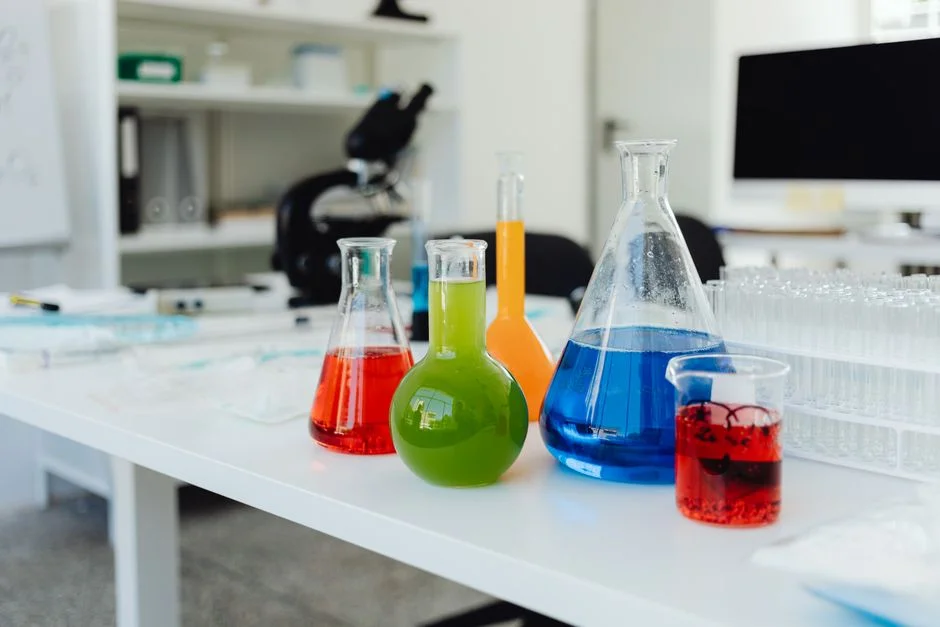
Each parameter in the cooling-water specification has a direct failure mode when it is missed in a Sahel ambient. The targets below are taken from the Genesis treated-wastewater guide (genesiswatertech.com, 2025), and they apply to any data center cooling loop regardless of source water. In Pikine, the higher ambient temperature and the warm, dust-loaded intake air mean that a parameter drifting into the "fail" band will foul heat exchangers faster than it would in a cooler climate, so the targets should be held at the lower (more conservative) end of each band wherever source chemistry allows.
TDS at 500–1,500 mg/L is the master setpoint because it sets CoC. A Pikine borehole already at 1,200 mg/L TDS has very little headroom before scale and corrosion accelerate, which is why the train needs both softening and a chemical program rather than relying on blowdown alone to control the loop. Hardness below 200–400 mg/L as CaCO₃ is the scale ceiling; anything above it demands softening or scale-inhibitor chemistry, and the Genesis case study of a 10 MW facility (genesiswatertech.com, 2025) cut hardness from 350 mg/L to 120 mg/L with nanofiltration to meet the same band. Suspended solids below 10–25 mg/L protect heat exchangers and reduce biofouling, which is critical in warm Pikine ambient conditions where biofilm growth rates roughly double for every 10 °C rise. Biological control targets heterotrophic plate counts below 10,000 CFU/mL, with pH 6.5–8.5 and alkalinity 50–200 mg/L as CaCO₃ providing buffering without driving scale potential.
| Parameter | Target band | Failure mode if missed in Pikine | Primary control |
|---|---|---|---|
| Total dissolved solids (TDS) | 500–1,500 mg/L | Scale and corrosion acceleration; CoC collapses | Blowdown ratio + side-stream softening |
| Hardness (as CaCO₃) | <200–400 mg/L | Calcium carbonate scale on heat exchangers | Softener or scale-inhibitor chemistry |
| Suspended solids | <10–25 mg/L | Heat-exchanger fouling, biofilm seeding | Filtration upstream of the cooling loop |
| Heterotrophic plate count | <10,000 CFU/mL | Biofilm, microbiologically influenced corrosion, Legionella risk | Disinfection program, biodispersant |
| pH | 6.5–8.5 | Outside band: corrosion (low) or scale (high) | Dosing control |
| Alkalinity (as CaCO₃) | 50–200 mg/L | Loss of buffering (low) or scale drive (high) | Source blending, dosing |
A modular 2026 treatment train for a 2–10 MW Pikine facility
The recommended train for a 2–10 MW Pikine colocation site is a five-stage modular skid, sized to facility scale rather than to hyperscale economics. The Genesis treated-wastewater guide (genesiswatertech.com, 2025) is direct on this point: a 5 MW facility attempting hyperscale treatment infrastructure ends up with capital cost per gallon 3–4× higher and operational complexity that the available staff cannot run. The right answer is right-sized modular hardware, each stage doing one job, with monitoring and PLC control that does not require a dedicated treatment chemist on site.
Stage 1 is self-cleaning spiral filtration on the raw borehole or municipal supply, sized to drop turbidity from variable influent into the band that protects downstream membranes. The same spiral technology the Genesis case study describes (genesiswatertech.com, 2025) handles the suspended-solids spikes that an intermittent SDE connection or a tanker arrival will deliver without operator intervention. Stage 2 is a hollow-fiber ultrafiltration system with 0.03 μm PVDF membranes, acting as an absolute barrier against bacteria, colloids and suspended solids; the unit runs automatic backwash and air scour so the on-site team is not babysitting it. Stage 3 is a twin-tank industrial water softener, or an antiscalant injection point if the borehole chemistry allows, sized to keep calcium and magnesium below the 200–400 mg/L as CaCO₃ ceiling while the loop runs at 4–5 CoC. Stage 4 is a PLC-controlled chemical dosing skid delivering corrosion inhibitor and biodispersant, with the chemistry tuned for the higher ambient temperature and humidity that amplify biofilm risk in Pikine. Stage 5 is blowdown recovery: multi-media filtration plus targeted polishing on the bleed stream, recovering 15–25% of makeup demand — the most economical single intervention for a sub-hyperscale site, per the Genesis treated-wastewater guide (genesiswatertech.com, 2025).
| Stage | Unit operation | Primary removal target | Why it matters for Pikine |
|---|---|---|---|
| 1 | Self-cleaning spiral filtration | Turbidity, large suspended solids | Handles variable SDE / tanker / borehole blends |
| 2 | Hollow-fiber UF (0.03 μm PVDF) | Bacteria, colloids, fine TSS | Protects downstream softener and loop; cuts biofouling |
| 3 | Softener or antiscalant dosing | Hardness (Ca²⁺, Mg²⁺) | Holds the 200–400 mg/L as CaCO₃ ceiling at 4–5 CoC |
| 4 | Corrosion inhibitor + biodispersant dosing | MIC, biofilm, scale precursors | Sahel ambient amplifies biofilm; chemistry must match |
| 5 | Media filtration + polishing on blowdown | Recovered blowdown for reuse | 15–25% makeup reduction at sub-hyperscale capex |
One practical point that belongs in the commissioning plan: the skid must be sized and programmed for the lowest expected blowdown flow, not the nameplate. A Pikine site running partial air-side relief during SENELEC outages will see blowdown swing well below design, and a media filter that stalls at low flow fouls the loop the moment grid power returns. Ask the skid supplier to provide a turndown curve before signing.
Sizing the train: a 5 MW Pikine colocation case study

Working from the Genesis reference points (genesiswatertech.com, 2025), a 5 MW facility using evaporative cooling at 4 CoC with a 25% blowdown ratio (from 1/(CoC−1)) yields a recoverable blowdown stream worth roughly 40% of monthly makeup volume once two-stage polishing is applied. The Genesis case study of a 10 MW Texas hyperscale recovering 2.5 million gallons monthly and cutting municipal intake 35% sets the realistic ceiling: two-stage polishing is the right intervention, not a hyperscale RO retrofit. At the same 10 MW example of 15 million gallons monthly intake and 3.75 million gallons of blowdown, a Pikine 5 MW build should plan for a polishing sidestream in the low tens of m³/day, not a 100+ GPM RO train sized for a 100 MW campus.
The compact equipment class that fits this envelope is well established. A packaged MBR system producing near-reuse-quality effluent at <1 μm in the 10–2,000 m³/day range covers the blowdown polishing duty, and a high-efficiency sedimentation tank upstream of the MBR cuts solids loading and protects the membranes. A plate-frame filter press handles the resulting sludge so the site does not pay ongoing hauling costs for a wet cake. None of this requires hyperscale capex, and every unit runs on standard three-phase power at the SENELEC tariff — important because the train has to ride out SENELEC outages on generator, and oversized three-phase loads complicate the UPS sizing.
An input a buyer should obtain from the design engineer before locking the skid size: a peak-day and average-day makeup projection, not just an annual figure. The skid and the borehole pumps must both be sized to the peak day, and the storage tank must bridge the SDE outage that will sit on top of that peak.
Compliance, costs and backup power for a Pikine build
Discharge to sewer or surface water in Senegal must meet the limits set by NS 05-061 for conventional parameters (BOD, TSS, pH) and any applicable metals, and the modular train's effluent quality must be validated during commissioning to secure the discharge permit. The Genesis treated-wastewater guide (genesiswatertech.com, 2025) notes that discharge permits typically address conventional parameters and may include specific metals, nutrients or other constituents, and that approval timelines run 6–18 months in comparable regulatory environments; the Pikine project plan should budget the same. Validation is not a side task: the permit signing depends on the commissioning data sheet, and the data sheet depends on having the sampling plan written before the skid arrives.
On economics, the Genesis cooling-blowdown guide (genesiswatertech.com, 2025) shows a 15 MW water-stressed case recovering 60% of blowdown (3 million gallons/year) at roughly $200,000 capital, with a stated simple payback of 3–5 years once total cost of water — not just the utility line — is included. A 5 MW Pikine build should be sized downward from that benchmark but will follow the same payback curve, because the dominant savings are the same: avoided tanker deliveries, avoided SDE peak-demand penalties and avoided discharge fees. The actual 2026 capital figure is something the buyer must obtain from a Pikine-located supplier quote; do not assume the $200,000 headline scales linearly to a different site, a different influent or a different discharge regime.
Generator and UPS sizing must include the entire treatment train — pumps, blowers, control PLC and chemical dosing — because cooling cannot survive a multi-hour SENELEC outage without water circulation and chemistry control. A practical split: the dosing pumps, the control PLC and any instrumentation that must not lose setpoints run on UPS; the recirculation pumps, blowers and the MBR aeration run on generator. A chlorine dioxide generator sized for the cooling loop can be backed by the same generator circuit and protects the loop during a sustained outage. Spare-parts planning should stock RO and UF membrane elements plus filter media, valves and dosing parts in country, since the supply chain into Dakar is long and a missing cartridge can idle the entire facility. For comparison, the Matola data center blowdown treatment guide and the Dhanbad data center blowdown treatment guide both flag the same in-country spares problem in their regional contexts, and the Arequipa data center blowdown treatment guide arrives at the same UPS-versus-generator split for the same reason.
Frequently Asked Questions
What 2026 CAPEX should we plan for a 5 MW modular cooling-water treatment skid in Pikine?
Anchor the budget on the Genesis cooling-blowdown benchmark of roughly $200,000 capital for a 15 MW water-stressed site achieving 60% blowdown recovery, with a 3–5 year payback once total cost of water is included (genesiswatertech.com, 2025). A 5 MW Pikine build will be sized downward from that figure but the payback curve is the same, because the savings are driven by avoided tanker deliveries, SDE peak penalties and discharge fees rather than by raw throughput. The actual 2026 figure is something the buyer must obtain from a Pikine-located supplier quote — request a written breakdown that separates equipment, instrumentation, installation, commissioning and one year of spares, and that holds the price against a defined borehole water analysis.
How do we pick between a packaged ultrafiltration skid and a packaged integrated purifier for a 2–10 MW colocation?
Use the source-water TDS as the decision line. If borehole TDS is at the lower end of the Genesis 500–1,500 mg/L band and the hardness ceiling can be met with a softener, a hollow-fiber ultrafiltration system in front of a softener and dosing skid is the leaner and cheaper answer. If TDS is at the upper end or the site has variable industrial wastewater in its supply mix, the packaged purifier with pre-filtration, UF and dosing integrated gives a smaller footprint and a single control panel, at a modest cost premium. A practical check: ask the supplier to guarantee the hardness ceiling of 200–400 mg/L as CaCO₃ at the specific borehole analysis, not at a generic influent.
What is a realistic lead time for delivery of a packaged UF or MBR skid into Dakar?
No public source provides a 2026 lead-time figure for packaged water-treatment skids into Dakar, and any number quoted without a named supplier and a defined shipping term should be treated as indicative only. The buyer should request a written lead time that includes manufacturing, factory acceptance testing, ocean freight, customs clearance into Dakar, inland transport to Pikine and on-site commissioning, and that defines what triggers a delay penalty. Hold the commissioning milestone against the data center energization date so the cooling loop and the treatment skid are accepted in the same turn.
How do we align the train with Senegalese NS 05-061 discharge limits from day one?
Write the discharge permit conditions into the skid specification before purchase, not after commissioning. The train's effluent must meet NS 05-061 limits for BOD, TSS, pH and any applicable metals, and that requirement flows back into the unit operations selected: a compact MBR ahead of discharge covers BOD and TSS robustly, while a DAF system handles fats, oils and any metals precipitated upstream. A practical check: ask the supplier to provide a process guarantee tied to a defined influent, and to commit in writing that the commissioning data sheet will be formatted to the format the Senegalese permitting authority requires for sign-off.