Why Matola is a Special Case for Data-Center Water
A 100 MW data center can demand up to roughly 2 million liters of water per day, so any Matola build sits on a meaningful share of the local municipal supply (IDE Technologies, 2026). Matola's hot, humid coastal climate on Maputo Bay increases the cooling load on evaporative systems and concentrates the blowdown chemistry that downstream equipment must handle. Mozambique does not have a municipal reclaimed-water distribution network comparable to Phoenix's, so on-site treatment of cooling-tower blowdown is the realistic reuse path rather than a piped alternative source (Genesis Water Technologies, 2026).
Maputo Bay is a sensitive receiving environment, and the global trend of stricter industrial TDS limits (below 1,500 mg/L in some jurisdictions) should be assumed as the planning floor for the discharge permit envelope, not a worst case (Genesis Water Technologies, 2026). Together these three local conditions — humid ambient load, saline make-up, and an unprotected receiving water — force the design toward a side-stream filtration + UF + RO spine rather than the air-cooled or air-side-economics playbook used in colder markets.
Source-Water Audit: What Comes Out of the Matola Tap
The source-water audit should cover turbidity, total dissolved solids (TDS), hardness as CaCO₃, alkalinity, silica, chloride, sulfate, iron/manganese, and free chlorine so the design basis is defensible in front of a Mozambican regulator. Cooling-tower blowdown is typically 4–8× more concentrated than the make-up water, so even a moderate-salinity municipal source pushes CTBD TDS into the global reported range of 1,200–6,000 mg/L (Genesis Water Technologies, 2026). For the engineer's design specification, the treated wastewater reuse targets published for cooling make-up — TDS 500–1,500 mg/L, hardness below 200–400 mg/L as CaCO₃, suspended solids below 10–25 mg/L, pH 6.5–8.5 — should anchor the spec, not the raw municipal supply numbers (Genesis Water Technologies, 2026). The single most important request to the local utility is a 12-month rolling analysis of conductivity, chloride, sulfate, and silica; salinity creep across Maputo's dry season is the biggest swing factor in CTBD chemistry for this region. Where raw supply exceeds the cooling-tower make-up spec on hardness or silica, an industrial softening pretreatment step is the cheapest way to protect downstream membranes.
| Parameter | Audit target range | Cooling-tower make-up spec | Why it matters in Matola |
|---|---|---|---|
| TDS (mg/L) | Report 12-month rolling | 500–1,500 | Drives blowdown TDS at 4–8× cycles |
| Hardness as CaCO₃ (mg/L) | Report 12-month rolling | < 200–400 | Sets scale risk on heat exchangers and RO |
| Silica (mg/L as SiO₂) | Report 12-month rolling | Site-specific, RO permeate ≤ ~10 | Limits RO recovery before silica scale |
| Chloride (mg/L) | Report 12-month rolling | No fixed spec; corrosion driver | Coastal supply is high; rises in dry season |
| Sulfate (mg/L) | Report 12-month rolling | No fixed spec; scaling driver with Ca | Combines with Ca to form CaSO₄ scale |
| Turbidity (NTU) | Site-specific | Feeds UF at < ~10–15 micron equivalent | Protects membrane life |
| Free chlorine (mg/L) | Site-specific | Dechlorinated before RO | Municipal chlorination damages RO membranes |
| Iron / manganese (mg/L) | Site-specific | Low; fouls membranes | Common in older Maputo distribution lines |
What Cooling-Tower Blowdown Actually Contains
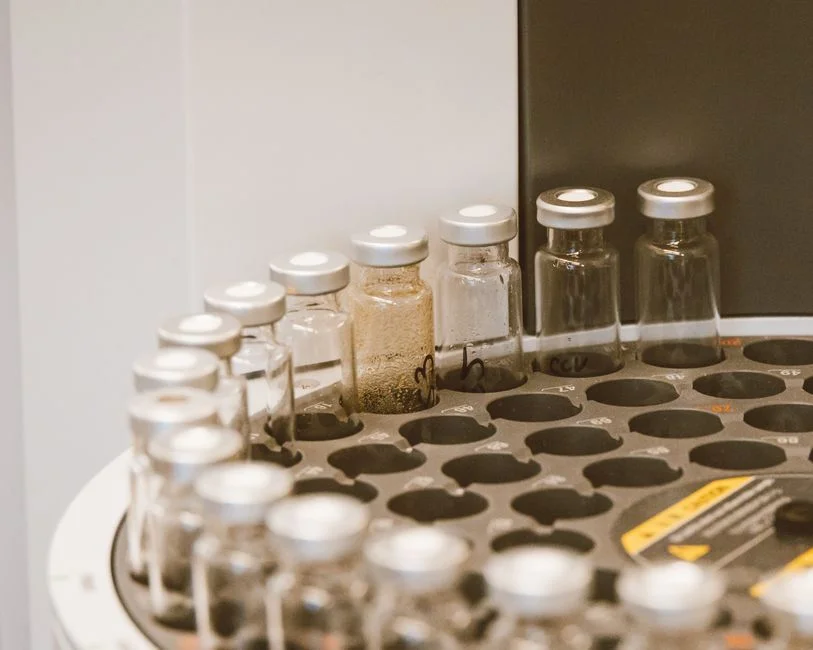
CTBD total dissolved solids typically fall in the 1,200–6,000 mg/L range, driven by cycles of concentration and make-up water quality (Genesis Water Technologies, 2026). Scaling minerals — calcium, magnesium, silica, and alkalinity — concentrate proportionally and set the antiscalant dose and the RO recovery ceiling the engineer can defend. Treatment chemicals, including biocides, corrosion and scale inhibitors, and dispersants, accumulate in the blowdown stream; legacy chromate or high-phosphate chemistry is a particular reuse liability and should be checked against the existing cooling-water treatment program before designing the recovery side. Suspended solids of 10–50 mg/L (corrosion products, biofilm fragments, airborne particulates) and biological content must be controlled before any membrane step, which is why side-stream filtration and integrated pretreatment sit ahead of UF. The biological load matters more in Matola's humid ambient air than in arid data-center markets, because biofilm precursors and airborne particulates are continuously fed into the basin.
| CTBD parameter | Typical range | Driver | Design implication |
|---|---|---|---|
| TDS | 1,200–6,000 mg/L | Cycles of concentration × make-up TDS | RO at 50–85% recovery; antiscalant required |
| Hardness as CaCO₃ | Scales with make-up | Ca²⁺ + Mg²⁺ concentration | Softener or NF pre-pass if make-up is hard |
| Silica (SiO₂) | Scales with make-up | Cycles of concentration | Caps RO recovery; MVC needed above ~85% recovery |
| Suspended solids | 10–50 mg/L | Corrosion products, biofilm, airborne dust | Side-stream filtration + UF pretreatment |
| Alkalinity | Scales with make-up | CO₂ stripping in tower; cycles | Acid or antiscalant to control LSI on RO |
| Treatment chemicals | Site-specific | Biocide, inhibitor, dispersant carryover | Tablet program (e.g. Genclean-S) reduces RO fouling load |
| Biological content | Variable, CFU counts | Humid ambient; tower basin growth | UF absolute barrier; non-oxidizing biocide program |
Treatment Train Spine: Side-Stream Filtration, UF, NF and RO
Side-stream filtration sized at 1–5% of total circulation flow keeps suspended solids low enough for downstream membranes and lets the cooling tower push to higher cycles; CAPEX is reported at US$50,000–200,000 for typical data-center installations, with minimal recurring OPEX beyond solids disposal (Genesis Water Technologies, 2026). A multi-media pretreatment filter ahead of UF is the conventional pairing, though self-cleaning spiral filters are gaining ground for sites with variable raw-water quality. Ultrafiltration at 0.01–0.1 μm removes suspended solids, bacteria, viruses, and high-molecular-weight organics at 90–95% recovery and only 10–30 psi, making it the workhorse ultrafiltration (UF) pretreatment step ahead of RO (Genesis Water Technologies, 2026). RO does the heavy lifting on dissolved solids — 95–99% rejection, permeate 10–50 mg/L TDS, recovery 50–85% on CTBD at 150–400 psi — and a properly specified industrial RO system is realistically capped at 75–80% recovery before scaling forces design changes, matching the BWRO ceiling reported for CTBD streams (Genesis Water Technologies, 2026; IDE Technologies, 2026). Nanofiltration at 75–150 psi with 70–85% recovery and permeate TDS roughly 30–50% of feed is the lower-energy option when the limit is hardness and sulfate rather than total TDS (Genesis Water Technologies, 2026). A practical 50,000 GPD RO block for Matola should be specified with conservative local recovery (≈70%) plus interstage boosting if higher overall recovery is needed, rather than pushed to its absolute ceiling on day one.
| Stage | Function | Operating envelope | Where it fits in Matola design |
|---|---|---|---|
| Side-stream filtration | Suspended-solids control on circulating water | 1–5% of circulation; 10–25 μm | Allows higher cycles; protects basin and RO |
| Multi-media filter | Turbidity and TSS reduction | Site-specific; ~5–15 μm effluent | UF feed protection |
| UF | Bacteria, virus, suspended solids barrier | 0.01–0.1 μm; 90–95% recovery; 10–30 psi | RO feed protection; standalone reuse if TDS is acceptable |
| NF | Hardness, sulfate, partial TDS reduction | 75–150 psi; 70–85% recovery; permeate TDS ~30–50% of feed | Use when hardness is the limit, not total TDS |
| BWRO | Full dissolved-solids removal | 150–400 psi; 50–85% recovery on CTBD; 95–99% rejection; permeate 10–50 mg/L TDS | Spine of the reuse train; ~75–80% recovery ceiling without special design |
Concentrate Management: MVC, Brine Concentrators, and the ZLD Question
Mechanical vapor compression achieves 95–98% recovery on RO concentrate, produces distillate with TDS below 10 mg/L, and is sized at 15–25 kWh per 1,000 US gallons of distillate; CAPEX is reported at US$1–3 million for systems processing 10,000–30,000 GPD (Genesis Water Technologies, 2026). An RO + MVC train (RO at 50–75% recovery, MVC at 95% recovery of the concentrate) reaches 85–95% overall system recovery, which is the realistic "high-reuse" target before full ZLD. Full zero liquid discharge reaches 95–99% overall recovery but costs US$3–8 million in CAPEX and US$5–15 per 1,000 gallons in OPEX — a decision to be deferred unless Maputo Bay discharge is fully restricted (Genesis Water Technologies, 2026). Partial ZLD that concentrates blowdown to reduce liquid volume by 80–90% is the most defensible Phase 3 step when the trigger is a tightening permit rather than a complete discharge ban. Automatic antiscalant and biocide dosing is the low-cost control that keeps the RO–MVC train inside its scaling envelope.
Costing a 50,000 GPD Block for Matola
A 50,000 GPD RO system treating CTBD is reported at US$250,000–500,000 installed, with OPEX of US$1.50–3.00 per 1,000 gallons including energy, chemicals, membrane replacement, and maintenance (Genesis Water Technologies, 2026). Side-stream filtration adds a low-five-figure CAPEX slice (US$50,000–200,000 band) with minimal recurring OPEX beyond solids disposal. An MVC retrofit on the RO concentrate is a step-change in CAPEX (US$1–3 million for 10,000–30,000 GPD) and energy (15–25 kWh per 1,000 gallons of distillate) and should be justified against avoided discharge fees, not water savings alone. Treated wastewater is reported at 30–50% lower unit cost than potable water in most markets, so the OPEX side of the business case depends on the Matola potable tariff and any planned discharge levy; the local tariff is the input the buyer must obtain from the Matola water utility before the business case can be closed (Genesis Water Technologies, 2026).
| Item | Capacity basis | CAPEX envelope (US$) | OPEX envelope | Decision driver |
|---|---|---|---|---|
| Side-stream filtration | 1–5% of circulation | 50,000–200,000 | Solids disposal only | Higher cycles; protects downstream |
| 50,000 GPD RO block (CTBD) | 50,000 GPD | 250,000–500,000 | US$1.50–3.00 / 1,000 gal | Reuse vs. discharge; permit compliance |
| MVC retrofit | 10,000–30,000 GPD concentrate | 1,000,000–3,000,000 | 15–25 kWh / 1,000 gal distillate | Avoided discharge fees; permit ceiling |
| Full ZLD (RO + MVC + crystallizer) | Site-specific | 3,000,000–8,000,000 | US$5–15 / 1,000 gal | Only when discharge is fully restricted |
Phased Roadmap: From Day-One Compliance to ZLD
Phase 1 (commissioning) delivers side-stream filtration plus RO concentrate management sized to meet a Maputo Bay TDS target, with the global TDS discharge benchmark of below 1,500 mg/L as the design floor (Genesis Water Technologies, 2026). Phase 2 (typically 2–3 years in) blends RO permeate into the cooling-tower make-up to push cycles of concentration higher, with 60–85% blowdown recovery as the realistic operating range (Genesis Water Technologies, 2026). Phase 3 (hyperscale load or permit trigger) adds MVC or commits to ZLD at 95–99% overall recovery, with the OPEX envelope of US$5–15 per 1,000 gallons used in the business case (Genesis Water Technologies, 2026). Each phase should leave the downstream step pre-plumbed and pre-permitted so the hyperscaler does not face a retrofit in a live data hall; a high-efficiency sedimentation step is one option for keeping the front end of Phase 2 ready for a future MVC tie-in. The roadmap, not the day-one design, is what gives a Maputo design basis its defensibility.
Frequently Asked Questions
What TDS, hardness, and suspended-solids targets should cooling-tower make-up water meet?
Treated wastewater reuse targets published for cooling make-up are TDS 500–1,500 mg/L, hardness below 200–400 mg/L as CaCO₃, suspended solids below 10–25 mg/L, and pH 6.5–8.5 (Genesis Water Technologies, 2026). These are the design specifications the engineer should write into the make-up line, not the raw municipal supply numbers.
How much does a 50,000 GPD RO block for CTBD reuse cost in 2026 CAPEX and OPEX?
A 50,000 GPD RO system treating cooling-tower blowdown is reported at US$250,000–500,000 installed, with OPEX of US$1.50–3.00 per 1,000 gallons treated including energy, chemicals, membrane replacement, and maintenance (Genesis Water Technologies, 2026). Buyers should also request the local Matola potable tariff and any planned discharge levy from the utility, because the OPEX case depends on the avoided potable cost line.
Is zero liquid discharge (ZLD) required for a data center discharging to Maputo Bay, and what is the cost premium?
Full ZLD reaches 95–99% overall recovery at US$3–8 million CAPEX and US$5–15 per 1,000 gallons OPEX, and is reported as justified only when discharge is fully restricted (Genesis Water Technologies, 2026). For Maputo Bay in 2026 the defensible move is a partial-ZLD step that reduces blowdown volume by 80–90%, leaving full ZLD as a Phase 3 option if the permit tightens. The buyer must obtain the current Maputo Bay discharge permit limits and any pending tightening schedule from the regulator before committing the spend.
What is the realistic blowdown recovery rate from a UF + RO train on saline make-up water, and when is MVC needed?
UF runs at 90–95% recovery and RO at 50–85% on CTBD, with conventional BWRO realistically capped at 75–80% recovery before scaling forces design changes (Genesis Water Technologies, 2026; IDE Technologies, 2026). MVC becomes the right addition when the project needs overall system recovery above 85–95% or when the Maputo Bay permit no longer accepts the RO concentrate volume, not as a day-one block.