Why Arequipa is a different design problem from Lima or Callao
Arequipa sits at roughly 2,300 m on the Chili River basin with no coastal access, so the freshwater lever that Lima and Callao engineers reach for first is not available here. Seawater-assisted free cooling and seawater blending are physically out of scope, which means freshwater draw reduction runs entirely through pushing cycles of concentration (COC) higher, not through intake substitution (HydropureWater, 2026). That single constraint changes the unit-operation train: the RO block is sized to recover from a freshwater-only loop at 4–6 COC, not from a seawater-blended loop at 5–7 COC as on the Costa Verde.
Ambient wet-bulb at 2,300 m is lower than on the coast, which lets the same cooling tower reject more heat per kilogram of water, but it does not change the dissolved-solids concentration logic in the recirculating loop. Engineers who copy a coastal mass balance and forget the lower evaporation-to-blowdown ratio end up with a softener and RO sized to a feed concentration that never actually arrives at the membrane skid.
The Chili River allocation regime is administered by the Autoridad Nacional del Agua (ANA), and in dry-year cycles ANA has imposed caps that shape new industrial water-rights licenses in the same way the Rímac/Chillón caps do in Lima (HydropureWater, 2026). The structural difference is that Arequipa has no seawater backstop to fall back on once ANA tightens the cap, so the permit pathway is more sensitive to a quantified WUE target than a Lima equivalent would be.
Discharge does not go to a coastal sewer under a marine ECA overlay; it goes to EPS SEDAPAR's inland network under DIGESA's LMP/ECA national floor plus Arequipa-specific receiving-water overlays. For a FEED-grade scope, that means the hydraulic model has to account for the Chili River's lower dilution capacity relative to the Pacific outfalls that coastal designs assume.
Arequipa regulatory stack: ANA, DIGESA, SUNASS and the EPS SEDAPAR tariff
Four regulators shape an Arequipa FEED package, and the submission order matters because their calendars do not align. ANA issues water-use licenses on the Chili River basin; in dry years ANA applies allocation caps that effectively shut new freshwater allocations to large industrial users and push them toward reclaimed or higher-efficiency makeup (HydropureWater, 2026). A hyperscale applicant who wants freshwater rights on the Chili must commit to a quantified WUE number before the licence is issued, not after construction starts.
DIGESA administers the national Environmental Quality Standards (ECA) and Límites Máximos Permisibles (LMP) for discharge; the sewer floor is pH 5–9, BOD ≤120 mg/L, oils and greases ≤50 mg/L, with Arequipa receiving-water overlays that are tighter than the national floor (HydropureWater, 2026). For the Chili River corridor that overlay is the binding number, not the national LMP, and the engineer should request the actual receiving-body resolution from DIGESA before sizing equalization or polishing.
SUNASS sets the industrial sewer tariff that EPS SEDAPAR charges Arequipa's industrial users; once the per-m³ rate clears the RO-reuse breakeven, RO CAPEX pays back in under three years (HydropureWater, 2026). The engineer should pull the current EPS SEDAPAR industrial tariff schedule for the relevant district and plug the volume-weighted number into the FEED model, not carry a Lima SEDAPAL assumption into a southern site.
Tax incentives under the Peruvian hyperscale and data-center framework (D.Leg. 1262 and successor instruments) are conditional on a quantified Water Usage Effectiveness (L/MWh) target; WUE is a design constraint, not a reporting afterthought (HydropureWater, 2026). Missing the threshold by even 15–25% of the freshwater-draw gap shifts the OPEX line enough to change the finance memo, so the WUE number has to be set in FEED and protected through commissioning.
Two effluent streams, one discharge point: how to split the train
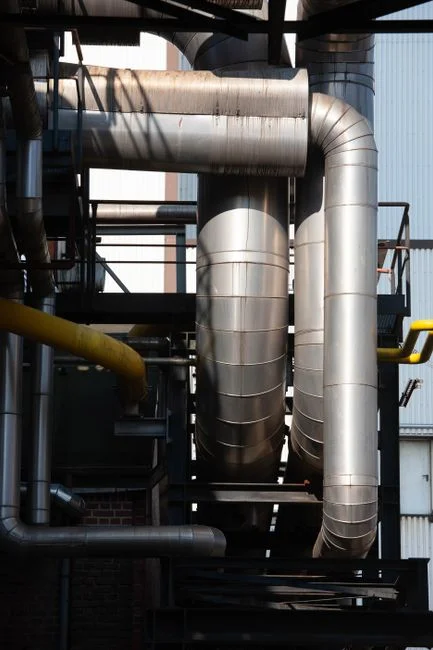
Arequipa generates two fundamentally different effluent streams that converge at the discharge point but cannot share a single equalization basin. Stream 1 is cooling-tower blowdown, sized by the relationship Blowdown = Makeup ÷ (COC − 1); for a typical Arequipa campus on a freshwater-only loop at 4–6 COC, blowdown runs 0.3–0.8% of makeup volume (HydropureWater field data, 2026). Stream 2 is domestic sanitary wastewater at 50–100 L/person/day for a hyperscale staffing profile; biology, chemistry and downstream unit operations differ from blowdown, so the two streams must stay on parallel trains.
Cross-contamination is the design risk that drives the split. Phosphonate and biocide residuals in blowdown toxify the biological stage of any sanitary plant, and BOD swings in sanitary disrupt the chemistry-controlled softening and RO train. Putting them on a common equalization basin is the single most common Arequipa design error in early scopes, and it usually surfaces only after biocide carryover kills the MBR biomass.
Blowdown in Arequipa has no seawater-influenced bromide residual, so biocide selection is not forced toward chlorine dioxide for DBP reasons as it is on the Costa Verde and Callao coast; standard oxidizing biocide programs remain workable (HydropureWater field data, 2026). That simplifies the permeate-side disinfection block, but the engineer still needs a residual oxidant to control biological carryover back into the cooling loop.
The sanitary train can run on a packaged buried STP for flows under 80 m³/d with no reuse intent, or on a submerged PVDF MBR with under 1 µm pore when reuse of treated sanitary to cooling-tower makeup or toilet flush is in scope (HydropureWater, 2026). The MBR delivers BOD under 5 mg/L and TSS under 1 mg/L without tertiary polishing, which is the cleanest way to push reuse without doubling the unit-operation count.
The 2026 treatment train, unit operation by unit operation
For a 50,000 GPD RO-led reuse train with side-stream filtration and ultrafiltration pretreatment, the membrane block alone plans at $300,000–700,000 installed before Arequipa civil works, containerization and import duties on membranes, per the Genesis 2026-09 bands of $50,000–200,000 for side-stream filtration and $250,000–500,000 for a 50,000 GPD RO system. The pretreatment block is a self-cleaning side-stream filter at 10–25 µm, sized to 1–5% of circulation flow, followed by automatic chemical dosing for pH correction and antiscalant, then a multi-media filter polishing to an SDI suitable for RO membrane protection (Genesis 2026-09). The membrane block is an PVDF ultrafiltration system at 0.01–0.1 µm ahead of an industrial reverse osmosis system sized for 50–85% recovery, with RO permeate returning to the cooling tower and concentrate feeding the next stage. The concentrate block is an optional mechanical vapor compression unit for 95–98% recovery of distillate at under 10 mg/L TDS, with the remaining 20–30% brine sent to a crystallizer (full ZLD) or hauled to a licensed disposal facility (partial ZLD).
Disinfection and polishing sit on the permeate side as a chlorine dioxide generator to control biological carryover back into the cooling loop, with chemical compatibility with the cooling-water program verified at design. Operation and monitoring run through a PLC-controlled chemical dosing skid tied to online conductivity and ORP, with daily CIP-on-demand triggered by differential pressure or normalized permeate flow decay. The same block diagram applies whether the plant is 5 MW or 50 MW; the equipment count scales, not the process logic.
| Unit operation | Key parameter | Design band | Source |
|---|---|---|---|
| Self-cleaning side-stream filter | Pore size; circulation-flow fraction | 10–25 µm; 1–5% of circulation flow | Genesis 2026-09 |
| DAF system | Flow range; outlet TSS | 4–300 m³/h; under 20 mg/L TSS | Genesis 2026-09 |
| Industrial water softener | Brine tank size; service mode | 60–2,000 L KJ-WT; alternating twin vessels | Genesis 2026-09 |
| PVDF ultrafiltration system | Pore size; pressure; recovery; CIP interval | 0.01–0.1 µm; 10–30 psi; 90–95% recovery; CIP every 1–3 months | Genesis 2026-09 |
| Industrial reverse osmosis system | Pressure; recovery; permeate TDS | 150–400 psi; 50–85% recovery; 10–50 mg/L TDS permeate | Genesis 2026-09 |
| Optional MVC | Recovery; distillate TDS; energy | 95–98% recovery; under 10 mg/L TDS distillate; 15–25 kWh/1,000 gal | Genesis 2026-09 |
| Chlorine dioxide generator | Capacity range; residual target | 50 g/h to 20,000 g/h; 0.1–0.3 mg/L residual | Genesis 2026-09 |
| PLC-controlled chemical dosing skid | Controlled streams | Antiscalant, sulfuric acid, ClO₂ precursor | Genesis 2026-09 |
| Multi-media filter | Role | SDI polishing ahead of RO | Genesis 2026-09 |
Arequipa CAPEX, OPEX and the EPS SEDAPAR payback math
For a 50,000 GPD RO-led reuse train with side-stream filtration and ultrafiltration pretreatment, plan on $300,000–700,000 installed for the membrane block alone, before Arequipa civil works, containerization and import duties on membranes, sourced from the Genesis 2026-09 bands of $50,000–200,000 for side-stream filtration and $250,000–500,000 for a 50,000 GPD RO system. The pretreatment block alone, including a self-cleaning side-stream filter sized to 1–5% of circulation flow, plans at $50,000–200,000, with low ongoing OPEX beyond solids disposal and routine maintenance (Genesis 2026-09). The RO block plans at $250,000–500,000 installed, with OPEX of $1.50–3.00 per 1,000 gallons treated including energy, chemicals, membrane replacement, and maintenance (Genesis 2026-09). Add a 20–40% uplift for Arequipa-specific civil works, containerization over the southern road network, and import duties on membranes and chemicals before the figure goes into a board memo.
A partial ZLD step (RO + MVC) raises the envelope into the $1.3–3.7 million range; full ZLD lands at $3–8 million CAPEX and $5–15 per 1,000 gal OPEX at 95–99% overall recovery (Genesis 2026-09). The MVC unit itself runs $1–3 million CAPEX for 10,000–30,000 GPD, with energy at 15–25 kWh per 1,000 gallons of distillate produced (Genesis 2026-09). Full ZLD is reserved for sites where basin TDS exceeds the threshold or where DIGESA imposes a discharge prohibition, not for default Arequipa campuses where the Chili River allocation is the binding constraint.
RO reuse CAPEX pays back in under three years once SUNASS/EPS SEDAPAR industrial tariffs exceed the Lima-comparable breakeven, a threshold Arequipa's industrial districts have already crossed (HydropureWater, 2026). Avoided direct-discharge fees in water-stressed regions already run $5–15 per 1,000 gallons (Genesis 2026-09), so even before the freshwater savings the OPEX delta is real. The combined effect is a payback window finance will sign off on, but only if the EPS SEDAPAR industrial tariff schedule for the specific district is plugged into the model, not a Lima SEDAPAL average.
| Tier | Scope | CAPEX band | OPEX band | Recovery | Source |
|---|---|---|---|---|---|
| Membrane block (side-stream + UF + 50,000 GPD RO) | Cooling-tower makeup reuse | $300,000–700,000 pre-uplift | $1.50–3.00 per 1,000 gal | 50–85% on RO | Genesis 2026-09 |
| Partial ZLD (RO + MVC) | Reduced liquid discharge | $1.3–3.7M | — | 85–95% overall | Genesis 2026-09 |
| Full ZLD (RO + MVC + crystallizer) | No liquid discharge | $3–8M | $5–15 per 1,000 gal | 95–99% overall | Genesis 2026-09 |
| Arequipa civil-works, containerization, import-duty uplift | Applied to base membrane block | 20–40% adder | — | — | Genesis 2026-09 |
12-week influent checklist before any cost band is locked
Before any cost band becomes a fixed budget line, request a 12-week representative water analysis covering TDS, conductivity, calcium, magnesium, silica, alkalinity, chloride, sulfate, free and total chlorine, biocide residuals (especially phosphonates and isothiazolinones), total suspended solids, total organic carbon, and plate-count bacteria. Without these, the 1,200–6,000 mg/L TDS band from the Genesis 2026-09 planning envelope is a planning envelope, not a design point.
Lock the RO recovery target only after silica and barium saturation indices are in hand; that single decision moves RO recovery between 50% and 85% and is the most common reason Arequipa RO designs end up over- or under-sized. A 5% swing in design recovery on a 50,000 GPD block is a six-figure OPEX delta over the asset life, so the saturation index check has to happen before the RFQ goes out, not after the bid comes back.
Ask each bidder for three items in writing: (1) a guaranteed permeate TDS at the design cycles of concentration, (2) a normalized permeate flow decay curve with the membrane replacement schedule priced in, and (3) a reference list of at least one operating site with feed TDS above 2,000 mg/L (Genesis 2026-09). A supplier who cannot produce a high-TDS reference is the wrong supplier for an Arequipa feed, even if their domestic Lima track record looks strong.
The DIGESA filing should include a process flow diagram with every dosing point, an influent and effluent characterization table, a mass balance for the cooling loop, and the operating log format the SCADA will produce. For a comparative view of the same selection logic in another constrained hydrology, the Meerut data center blowdown guide walks through an analogous inland basin; the Callao data center blowdown treatment guide covers the coastal Peruvian contrast, and the Tangier ETP buyer's guide shows the same permit-sequencing logic on a Mediterranean inland site.
Frequently Asked Questions
What CAPEX should a finance lead budget for an Arequipa data center blowdown reuse train in 2026?
Plan on $300,000–700,000 installed for the membrane block (side-stream filter + UF + 50,000 GPD RO) before Arequipa-specific civil works, containerization and import duties, then add a 20–40% uplift before the figure goes into a board memo (Genesis 2026-09). A partial ZLD step (RO + MVC) raises the envelope into the $1.3–3.7M range, and full ZLD lands at $3–8M CAPEX and $5–15 per 1,000 gal OPEX (Genesis 2026-09). Request the current EPS SEDAPAR industrial sewer tariff for the specific district and the confirmed ANA water-rights allocation before locking a budget number, because both directly shift the payback calculation.
How do I pick a supplier for an Arequipa cooling-tower blowdown reuse train?
Demand three items in writing before signing: a guaranteed permeate TDS at the design cycles of concentration, a normalized permeate flow decay curve with membrane replacement priced in, and a reference list of at least one operating site with feed TDS above 2,000 mg/L (Genesis 2026-09). A supplier who cannot produce a high-TDS reference is the wrong supplier for an Arequipa feed. Verify that the reference site runs on freshwater chemistry, not seawater blending, since the biocide and pretreatment programs diverge between the two feeds.
How do I size the blowdown stream for a 40 MW class Arequipa campus?
Blowdown equals makeup divided by (COC − 1), so a freshwater-only loop at 4–6 COC on a 40 MW campus at PUE 1.4 produces 0.3–0.8% of makeup volume as blowdown (HydropureWater field data, 2026). The absolute freshwater draw is the figure that triggers ANA allocation scrutiny, not the relative blowdown percentage, so the FEED model has to carry both the percentage and the daily m³. Sanitary flow is a separate 50–100 L/person/day line and must stay on a parallel train.
What compliance risk should an Arequipa FEED package address in 2026?
Three risks dominate. First, ANA dry-year allocation caps on the Chili River can shut new freshwater allocations to large industrial users, so the FEED has to commit to a quantified WUE target. Second, DIGESA receiving-water overlays on the Chili are tighter than the national LMP floor; the engineer needs the actual receiving-body resolution before sizing equalization or polishing. Third, SUNASS/EPS SEDAPAR sets the industrial sewer tariff that drives reuse payback, so the per-m³ rate for the relevant district must be plugged into the FEED tariff model rather than carried as an assumption (HydropureWater, 2026).