Why N'Djamena's Climate Changes the Blowdown Problem
N'Djamena sits in the Sahel with mean daily temperatures of roughly 28–33°C and dry-season peaks above 40°C, confirmed by thermal-behavior research at the National Research Centre for Development in Chad, so evaporative cooling carries an unusually high load for most of the year (S1, Jana Publication and Research LLP). That load drives a fast concentration of dissolved solids in the recirculating water: a cooling tower at 4 cycles of concentration loses approximately 25–30% of its makeup water to blowdown, and a N'Djamena facility pulling significant makeup will therefore produce a large, continuous blowdown stream rather than a marginal bleed (S2, genesiswatertech.com). The Harmattan adds a second penalty in the form of airborne dust and sand, which lifts suspended solids in the basin water toward the upper end of the typical 10–50 mg/L range and introduces colloidal fouling risk for any downstream membrane (S2).
Globally, about 57% of data centers draw from potable water supplies, and 75–90% of facilities rely on water-based cooling, so a N'Djamena site is most likely tapping a stressed municipal or aquifer source rather than an industrial reuse line (S5, University of Georgia CAES Field Report 2026; Mytton 2021). A 100 MW data center can use up to 2 million liters of water per day — on the same order as the municipal supply competing for that water in a Sahel capital — which means blowdown has to be designed as a recoverable internal resource from day one, not an afterthought (S4, IDE Technologies 2026). The combination of high evaporation, dust loading, scarce freshwater, and weak municipal discharge options is what makes a generic "blowdown treatment" article inadequate for this site.
What Cooling-Tower Blowdown in N'Djamena Actually Looks Like
CTBD in N'Djamena runs 4–8× concentrated versus makeup, which puts Total Dissolved Solids in the 1,200–6,000 mg/L range depending on cycles of concentration and source water — that single number is the design basis for every downstream unit operation (S2). Scaling minerals (calcium, magnesium, silica, alkalinity) concentrate alongside the TDS and are the limiting factor for any membrane stage; brackish-water reverse osmosis on CTBD typically plateaus at 75–80% recovery before silica, calcium carbonate, and calcium sulfate scaling dominate (S2; S4). Treatment chemicals accumulate with the same multiplier: biocides, corrosion inhibitors, scale inhibitors and dispersants all end up in the blowdown, and any legacy chromate or high-phosphate chemistry will create reuse and discharge complications (S2).
Suspended solids at 10–50 mg/L come from corrosion products, biofilm fragments and airborne dust; in N'Djamena's Harmattan season that range trends to the upper bound and must be specified as such on the P&ID (S2). Even well-maintained systems carry planktonic bacteria, algae and biofilm organisms that have to be removed or neutralized before the water is reused as makeup or sent to a municipal outfall (S2). The design basis the engineer carries into the next sections therefore has to be the high end of these ranges, not a generic global average.
| Parameter | Typical CTBD range | Design driver for N'Djamena |
|---|---|---|
| TDS | 1,200–6,000 mg/L | Upper end during dry-season high cycles |
| Suspended solids | 10–50 mg/L | Upper end during Harmattan dust events |
| Hardness (Ca/Mg) | Scaled with cycles | Limits RO recovery; antiscalant required |
| Silica | Scaled with cycles | Sets RO recovery ceiling, favors RO over NF |
| Biocides / inhibitors | Accumulated | Membrane compatibility and discharge constraints |
| Biological content | Planktonic + biofilm | Must be addressed before RO and reuse |
Pretreatment: Side-Stream Filtration and Ultrafiltration
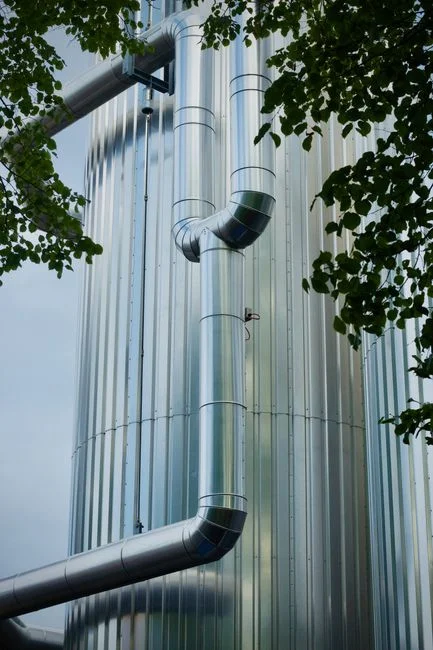
Self-cleaning spiral side-stream filters at 10–25 μm, sized at 1–5% of total circulation flow, are the right first defense because they cut suspended solids continuously without backwash downtime; typical capital is $50,000–$200,000 for data-center installations with minimal ongoing OPEX (S2). Side-stream filtration also lets the operator push cycles of concentration higher, which shrinks the blowdown stream but makes the remaining blowdown more aggressive — a tradeoff that has to be priced into the design rather than discovered in commissioning (S2). For sites where dust and biofilm dominate over raw TDS, this stage does most of the work and limits how much the downstream RO has to handle.
Ultrafiltration at 0.01–0.1 μm pore size, 10–30 psi, then removes suspended solids, bacteria, viruses and high-molecular-weight organics, recovering 90–95% of the feed with chemical cleaning every 1–3 months and concentrate routed back to the blowdown stream (S2). UF is the right pretreatment in front of BWRO when biological and particulate control — not full desalination — is the binding constraint, which is the typical N'Djamena case (S2). For a local build, specify a PVDF hollow-fiber ultrafiltration system with automatic backwash and air scour so Harmattan dust pulses do not require an operator, and pair it with a multi-media filter ahead of the spiral side-stream unit to extend backwash intervals.
Reverse Osmosis and Nanofiltration for Reuse as Cooling-Tower Makeup
Brackish-water reverse osmosis at 150–400 psi removes 95–99% of dissolved solids, hardness, silica and most treatment chemicals, producing 10–50 mg/L TDS permeate that is directly usable as high-quality cooling-tower makeup or as a blend stream (S2). Recovery on CTBD is constrained to 50–85% by scaling; antiscalant injection and periodic cleaning allow operation toward the upper end. A 50,000 GPD blowdown RO system costs $250,000–$500,000 installed, with OPEX of $1.50–$3.00 per 1,000 gallons including energy, chemicals, membranes and maintenance (S2). An industrial reverse osmosis system built around quality RO and UF membrane elements is the workhorse of the reuse train for a N'Djamena facility.
Nanofiltration at 75–150 psi, 70–85% recovery, with permeate TDS at 30–50% of feed, is a better fit when hardness rather than total TDS is the discharge or reuse driver and when feedwater is relatively low in silica (S2). For silica-rich N'Djamena makeup — typical of groundwater in the Sahel sedimentary basin — RO is preferred over NF because of RO's complete silica removal; NF is reserved for a polishing or partial-softening role where the influent is known to be low in silica (S2). The conventional 75–80% recovery ceiling on BWRO is the binding constraint, and chemistry-aware designs such as IDE's MAXH₂O push beyond it by precipitating silica, calcium carbonate and other sparingly soluble salts as dense pellets in a fluidized-bed reactor, then using dynamic RO cycling — directly applicable to a brackish, hot CTBD like N'Djamena's (S4).
Reuse as cooling-tower makeup is the highest-value end use: 60–85% recovery from CTBD, directly cutting freshwater draw and discharge volumes and aligning with global guidance to move data centers off potable sources (S2; S5). The RO permeate returns to the cooling tower as ultra-pure makeup, which also creates an opportunity to right-size the cooling-water chemistry program around a known feed quality rather than a variable municipal source (S2).
| Stage | Pressure | Recovery | Permeate quality | CAPEX (50,000 GPD) | OPEX |
|---|---|---|---|---|---|
| UF (pretreatment) | 10–30 psi | 90–95% | Solids/bacteria reduced, salts pass | Included in train | Cleaning 1–3 months |
| BWRO | 150–400 psi | 50–85% | 10–50 mg/L TDS | $250,000–$500,000 installed | $1.50–$3.00/kgal |
| NF (where applicable) | 75–150 psi | 70–85% | 30–50% of feed TDS | Lower than RO | Lower than RO |
| High-recovery CTBD (e.g., MAXH₂O) | Process-specific | Beyond 75–80% | Silica-stripped permeate, ~1 mg/L Si in published case | Higher than conventional RO | Reduced chemical intensity |
Evaporative Concentration and ZLD Options for Water-Scarce Sites
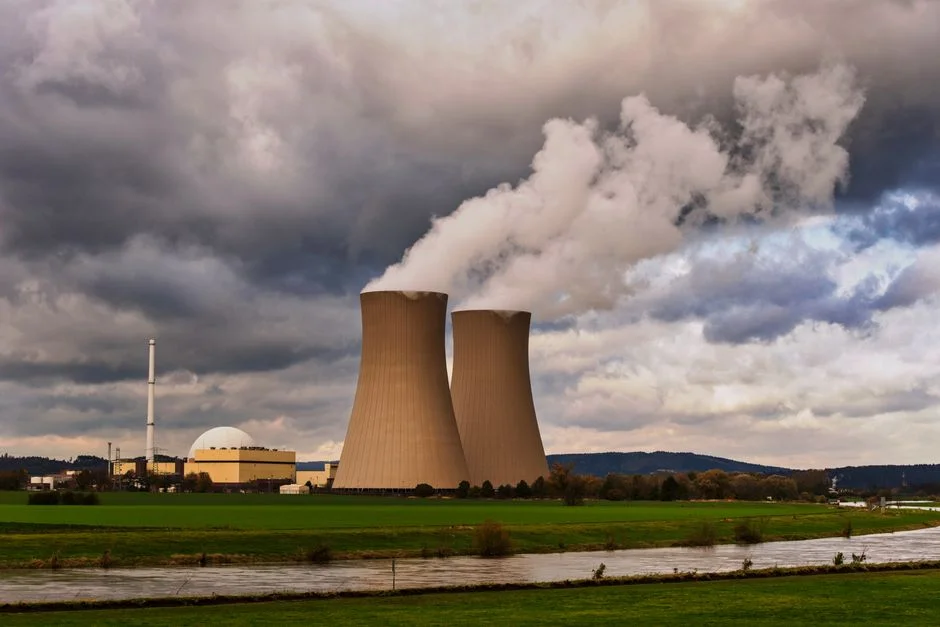
Mechanical Vapor Compression achieves 95–98% water recovery from concentrate, producing distillate below 10 mg/L TDS at 15–25 kWh per 1,000 US gallons; a 10,000–30,000 GPD MVC system costs $1–3 million (S2). Brine concentrators using steam or waste heat can lower OPEX where a data center has waste heat available; in N'Djamena, generator waste heat should be evaluated as a partial offset during the design phase (S2). Solar evaporation ponds are a low-cost option for arid climates like N'Djamena's, but they only handle the final RO concentrate and require land area plus a solids-removal plan (S2).
A full ZLD train (RO at 70–80% → evaporative concentration → crystallizer) reaches 95–99% overall water recovery, converts liquid waste to solid salt cake, and costs $3–8 million in CAPEX with $5–15 per 1,000 gallons OPEX for data-center-scale flows (S2). Partial ZLD concentrating blowdown to reduce discharge volume by 80–90% captures most of the water benefit at lower cost; the remaining brine can be deep-well injected or hauled to an approved facility (S2). In Chad, where municipal discharge limits below 1,500 mg/L TDS and fees of $5–15 per 1,000 gallons are the kind of regulatory pressure seen in water-stressed regions, ZLD economics are increasingly defensible for hyperscale builds (S2). A pulse-jet baghouse dust collector ahead of the evaporative stage also helps contain the salt-aerosol and dust load that a Sahel site generates around blowdown storage.
Matching the Treatment Train to N'Djamena's Site Conditions
If the site has a permitted municipal or industrial discharge route, the recommended train is side-stream spiral filtration → UF → BWRO with 60–85% reuse as cooling-tower makeup, sized so RO operates at or below the 75–80% scaling ceiling (S2; S4). If discharge is restricted or the operator is targeting a water-positive posture, add MVC concentration of the RO brine, giving 85–95% overall recovery and a manageable small-volume concentrate (S2). If the site has no safe discharge at all, or sits in a declared water-stress zone, specify a full ZLD (RO + MVC/brine concentrator + crystallizer) at 95–99% recovery and plan for $3–8M CAPEX with $5–15/kgal OPEX (S2). For a cross-check on the local design philosophy, the Konya data center blowdown treatment reference applies a similar hot-arid train.
For all N'Djamena trains, integrate non-phosphate, low-toxicity cooling-water chemistry to keep the blowdown compatible with membrane treatment and any future discharge permit, and specify PLC-controlled antiscalant and biocide dosing so the system can run through Harmattan dust events and dry-season heat without constant operator attention. A UV sterilizer downstream of UF is a low-fouling way to control planktonic bacteria before the RO membranes without adding oxidizing biocide that would damage polyamide elements. For broader context on reducing potable demand at the site level, see this overview of data center cooling water sustainability options.
| Site condition | Recommended train | Overall recovery | Indicative CAPEX |
|---|---|---|---|
| Permitted municipal/industrial discharge | Side-stream → UF → BWRO | 60–85% | $250,000–$500,000 (50,000 GPD RO) |
| Restricted discharge, water-positive target | Side-stream → UF → BWRO → MVC | 85–95% | RO CAPEX + $1–3M MVC |
| No safe discharge / declared water-stress | Side-stream → UF → BWRO → MVC/brine concentrator → crystallizer (ZLD) | 95–99% | $3–8M |
Frequently Asked Questions
What does a 50,000 GPD cooling-tower blowdown RO train cost for a N'Djamena site?
The installed CAPEX range for a 50,000 GPD blowdown RO system is $250,000–$500,000, with OPEX of $1.50–$3.00 per 1,000 gallons treated including energy, chemicals, membrane replacement and maintenance; for a full ZLD at data-center scale, plan on $3–8 million CAPEX and $5–15 per 1,000 gallons OPEX (S2).
How should the RO and MVC stages be sized relative to makeup and blowdown?
Size the train around the rule that about 25–30% of makeup water becomes blowdown at 4 cycles of concentration; then size RO at 50–85% recovery on that blowdown and an MVC downstream at 95–98% recovery on the RO concentrate (S2).
Are there proven high-recovery designs that beat the 75–80% BWRO ceiling on scale-prone CTBD?
Chemistry-aware high-recovery CTBD designs such as IDE's MAXH₂O exist specifically to push past the conventional 75–80% BWRO ceiling for brackish, scale-prone CTBD by precipitating silica, calcium carbonate and other sparingly soluble salts as dense pellets in a fluidized-bed reactor and using dynamic RO cycling (S4).
When does ZLD become economically defensible in a water-stressed jurisdiction like Chad?
Where municipalities enforce discharge TDS limits below 1,500 mg/L and apply fees of $5–15 per 1,000 gallons, partial or full ZLD stops being only an environmental choice and starts paying back through avoided discharge costs, reduced freshwater draw, and a defensible license to operate (S2).