
Why a Hue data center needs a dedicated water and blowdown strategy
Cooling dominates data-center water demand: cooling systems account for 80–90% of total facility water use in typical U.S. data centers, per Genesis Water Technologies. The same thermodynamic logic applies in Central Vietnam, where a 5–15 MW enterprise or colocation hall in Hue would sit on the lower end of the same envelope. IDE Tech notes that a 100 MW facility can require up to 2 million liters of water per day; a Hue 5–15 MW hall operates at a proportional share that, multiplied across a campus, is no longer trivial when set against municipal, agricultural, and tourism demand during the dry season.
Hue's tropical climate reshapes that math. High humidity compresses cooling-tower approach, so the cycle must work harder to reject the same heat, and blowdown frequency rises. Regional climate normals put dry-season wet-bulb in the 26–28 °C range and monsoon months at 28–32 °C, which is workable for evaporative cooling but unforgiving once cycles of concentration (CoC) climb. A 10 MW facility running evaporative cooling at 4 CoC, using Genesis's reference scale, can intake on the order of 15 million gallons monthly — a Hue facility of the same class would draw a comparable volume, and the recoverable blowdown fraction is the single largest water-management lever on site.
Thua Thien Hue provincial water-security planning treats Huong River abstractions and groundwater as constrained resources, which reinforces the practical case: in a constrained basin, blowdown is no longer a disposal problem but a deferred freshwater withdrawal. The 5-stage maturity model that Genesis publishes — measure, optimize, upgrade chemistry, deploy blowdown treatment, integrate advanced reuse — applies directly, and the Hue facility should plan to enter Stage 4 in the first phase rather than retrofit later.
Water sources available to a Hue data center — strengths and limits
Three feed-water options are realistic for a Central Vietnam data center, and a fourth is technically possible but rarely economic at this scale. Each has to be benchmarked against cooling-tower makeup specifications before selection.
| Source | Typical quality | Key risk | Pretreatment implication |
|---|---|---|---|
| Hue city municipal potable (Hue C&WSC) | ~200–500 mg/L TDS (qualitative — request a Hue C&WSC analysis) | Dry-season allocation limits, rising tariffs | Softening or NF if hardness is at the upper end; standard media filtration |
| Huong River surface water | Turbidity spikes >1,000 NTU after typhoon events (qualitative) | Seasonal turbidity, organic loading, microbial load | Coagulation, sedimentation, multi-media filtration, UF, plus a DAF pre-clarification unit for high-turbidity events |
| Treated municipal wastewater (Hue city WWTP) | 600–1,200 mg/L TDS per Genesis range | Permit lead time, cross-connection control, public-acceptance | UF/NF as a minimum, RO for closed-loop makeup, dedicated non-potable distribution |
| Brackish coastal groundwater (Thua Thien Hue aquifer) | High TDS, variable chloride | Concentrate management, aquifer consent | High-recovery RO with brine precipitation stage |
Cooling-tower makeup must hit the targets Genesis publishes: TDS 500–1,500 mg/L, hardness <200–400 mg/L as CaCO₃, TSS <10–25 mg/L, heterotrophic plate count <10,000 CFU/mL, pH 6.5–8.5, and alkalinity 50–200 mg/L as CaCO₃. Treated municipal wastewater sits inside that envelope on TDS but typically requires polishing on hardness and biology. Huong River surface water is the opposite problem — it is dilute and microbiologically active, so the design should over-invest in pretreatment rather than over-pump chemicals. The two simplest paths for a Hue developer are: (1) a Huong River intake with full pretreatment, or (2) a Hue C&WSC potable blend topped up with treated WWTP effluent during the dry season. Request a project-specific feed-water analysis before locking either.
Cooling-tower water balance and cycles of concentration in Hue conditions
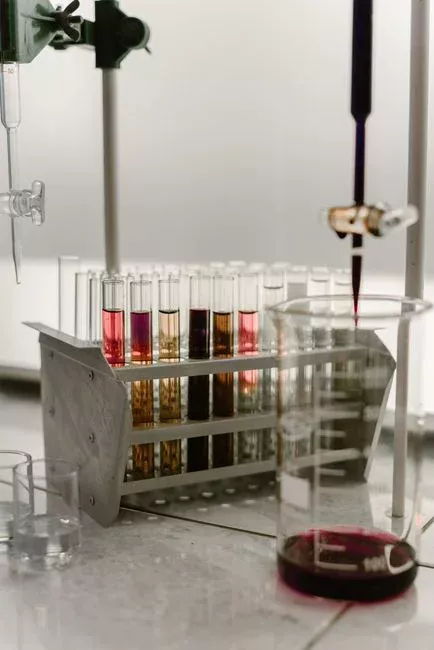
Cycles of concentration (CoC) compare dissolved solids in the circulating water to the makeup water; the blowdown ratio is 1/(CoC−1). At 4 CoC, blowdown is about 25% of makeup; at 5 CoC, about 20%; at 6 CoC, about 17%. The actual operating blowdown typically runs 15–30% above the theoretical number because of leaks, drift, and emergency dumps, per Genesis.
| Target CoC | Theoretical blowdown (% of makeup) | Risk profile (Genesis) | Recommended for Hue 5–15 MW |
|---|---|---|---|
| 3 | 50% | Low scale, low biology, high water cost | Not recommended — too much freshwater |
| 4 | 25% | Manageable; baseline operation | Phase 1 target |
| 5 | 20% | Scale and biological risk rising | Phase 2 once blowdown treatment is online |
| 6 | 17% | Risk increases exponentially without advanced treatment | Phase 3 — only with non-oxidizing biology control and side-stream filtration |
The non-intuitive lesson, which Genesis flags explicitly, is that moving from 4 to 6 CoC is a 5 percentage-point reduction in blowdown volume, not the 50% figure that surfaces in many sustainability decks. Above 5–6 CoC, scaling, microbiologically influenced corrosion, and asset damage force operators to back the cycle down. For a Hue facility, the recommended posture is a baseline of 4–5 CoC, a chemistry program built around non-oxidizing biological control so the cycle can hold, and a roadmap to 6 once the blowdown treatment train is operating. Metering must be split: evaporation, drift, and blowdown on separate instruments. Reporting WUE without that split produces the false-equivalence that Genesis warns about, where a facility recycling 70% of its blowdown shows the same WUE as one dumping it all to sewer.
Cooling-tower blowdown chemistry — what makes Hue blowdown hard to reuse
Cooling-tower blowdown (CTBD) is a brackish, heated stream enriched in silica, calcium carbonate, and calcium sulfate — the same sparingly soluble salts that limit conventional brackish-water RO, per IDE Tech. Conventional BWRO plateaus at 75–80% recovery on CTBD before those salts hit scaling thresholds. Beyond that, designers stack additional stages, booster pumps, and recirculation loops, and complexity climbs faster than recovery does.
Residual treatment chemicals complicate the reuse case. Phosphonates, dispersants, corrosion inhibitors, and biocides are added to keep the cooling loop itself functional; they increase the dissolved-solids load on the recovery train and they can carry over as persistent organics. Hue's warmer intake temperatures compress cooling-tower approach, which means the cycle reaches the same scaling thresholds with a smaller evaporation fraction, and the blowdown stream concentrates faster than it would in a temperate climate. Biological fouling, including Legionella, must be controlled with non-oxidizing or solid-phase programs (such as zinc-silver ionic tablets) to keep oxidizer byproducts out of the reuse loop. Together, these constraints explain why a "simple" blowdown RO rarely performs to nameplate and why a Hue facility should plan chemistry first and membrane recovery second.
Recommended treatment train for a Hue data center
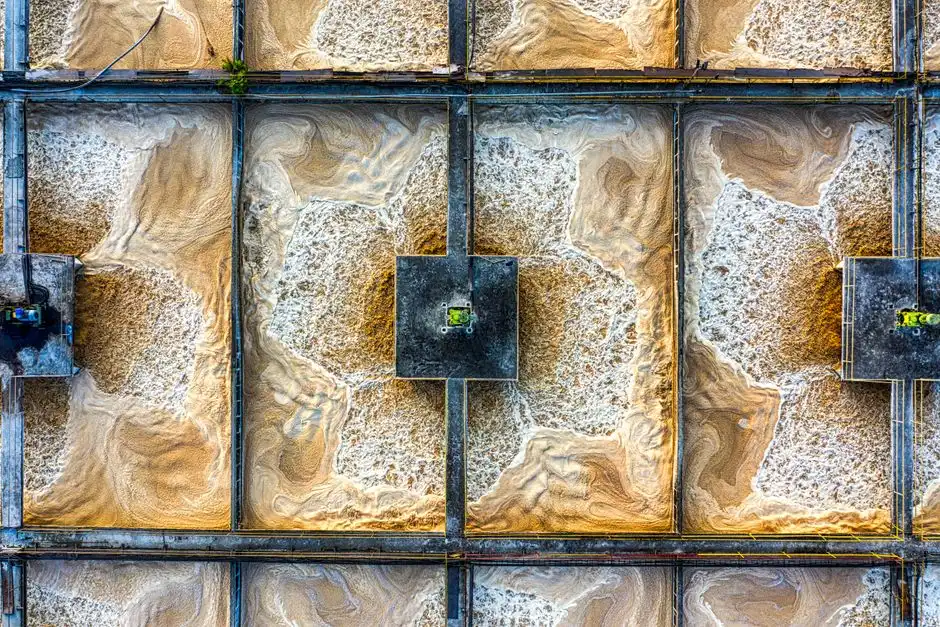
The end-to-end train below is what an RFQ-ready specification for a 5–15 MW Hue hall should look like. Each step ties to a measurable performance outcome, and the architecture lines up with the Konya data-center blowdown engineering guide for cross-checking.
| Stage | Unit operation | Design point / target | Vendor-neutral function |
|---|---|---|---|
| 1 | Intake screening + multi-media filtration | TSS to <10–25 mg/L ahead of membranes | Protect downstream UF and RO from Huong River turbidity swings |
| 2 | Hollow-fiber UF pretreatment | 0.03 µm PVDF; designed to 300 ppm turbidity feed with automatic backwash (Genesis) | Absolute barrier for particulates, bacteria, and most viruses |
| 3 | Softening or nanofiltration | Hardness 350 → 120 mg/L as CaCO₃ at 150 GPM (Genesis 10 MW reference) | Match cooling-tower hardness target without ion-exchange regeneration |
| 4 | Side-stream filtration on the cooling loop | TSS <10–25 mg/L continuously; reduced blowdown-for-clarity events | Hold CoC without emergency dumps |
| 5 | Blowdown recovery train (media → UF → high-recovery RO) | 60–80% recovery (Genesis); 95% in MAXH₂O-class configurations (IDE Tech) | Convert blowdown into cooling makeup, irrigation, or toilet flushing |
| 6 | Polishing disinfection (UV or chlorine dioxide) | HPC <1,000–10,000 CFU/mL on reuse loop | Protect downstream piping and meet non-potable reuse quality |
| 7 | Concentrate management | RO reject routed to a small brine-handling step, side-stream into the cooling tower, or evaporation pond if footprint allows | Avoid direct QCVN 40 discharge of high-TDS brine |
The right anchoring equipment is a multi-media filter vessel ahead of a hollow-fiber UF pretreatment skid, followed by softening or NF, and a high-recovery industrial RO unit for the blowdown recovery step. The RFQ should require recovery curves, cleaning frequency, and energy per cubic meter at the design CoC, not at a generic freshwater condition. Sequencing matters: chemistry first, side-stream filtration second, blowdown recovery last, because each step assumes the prior one is performing to spec.
Vietnam discharge and reuse compliance — what the Hue plant must meet
Industrial wastewater discharge in Vietnam is governed by QCVN 40:2011/BTNMT, the national technical regulation on industrial wastewater. Column A applies where the receiving body is used (or may be used) for domestic water supply; Column B applies to other receiving bodies. Cooling-tower blowdown parameters — pH, TSS, BOD/COD, temperature, oil and grease, and the heavy-metal and TDS limits set out in the regulation — must be confirmed against the current revision of QCVN 40 and against any provincial overlay Thua Thien Hue has published. Reuse end uses carry their own quality bar, and treated wastewater reuse for cooling makeup in Vietnam sits in an evolving regulatory area; the safe posture is a Title-22-style cross-connection control program, continuous monitoring, and a dedicated non-potable distribution loop, per the model Genesis references.
Permit lead times for non-potable reuse projects realistically run 6–18 months, per Genesis. Early engagement with the Hue Department of Natural Resources and Environment (DONRE) is therefore part of the engineering schedule, not a late-stage task. Discharge to the Hue City municipal sewer requires a separate connection agreement and proof of pre-treatment compliance. The Vietnam pharmaceutical wastewater process guide covers related QCVN-anchored compliance work for a different stream, but the permit mechanics and the cross-connection control discipline transfer directly.
Sizing the blowdown system and building the business case
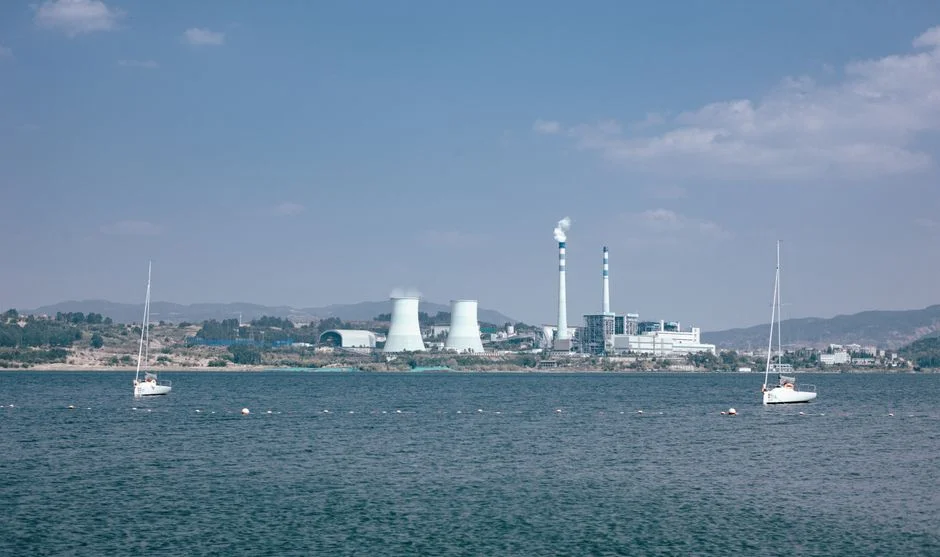
For enterprise and colocation facilities, Genesis recommends a modular 100–300 GPM blowdown treatment system, which is the right scale for a Hue 5–15 MW hall. Two order-of-magnitude references help anchor a budget: a 10 MW facility treated at 150 GPM with UF/NF in a Genesis reference, and a hyperscale site in Texas processed 2.5 million gallons per month on-site, reducing municipal intake by 35% — both are reasonable proxies for a Hue facility of the same class. The first phase should not be designed to hyperscale recovery rates; it should be designed to a 60–80% recovery, modular, and built so a second module can be added when utilization justifies it.
| Cost / performance lever | Reference figure | Source | What to request from a Hue supplier |
|---|---|---|---|
| Blowdown reuse as % of makeup offset | 15–25% | Genesis 2024 | Project-specific mass balance at design CoC |
| Treated wastewater vs potable cost | 30–50% cheaper | Genesis | Hue C&WSC tariff + WWTP agreement letter |
| Modular treatment scale | 100–300 GPM | Genesis | Skid footprint, containerized vs indoor, kWh/m³ |
| Simple payback with avoided costs | 3–5 years | Genesis worked example | Total cost of water: capex, opex, avoided discharge, avoided carbon |
The RFQ checklist should lock down: feed-water analysis, target CoC, recovery target, reuse end-use, footprint, Vietnam certification needs, and remote-monitoring scope. The right comparison for a finance committee is total cost of water, not the utility tariff alone — payback of 3–5 years is achievable when avoided discharge fees, avoided carbon, and tariff escalation are included, per the Genesis worked example. Treated wastewater at 30–50% below potable cost (Genesis) is meaningful in Hue where municipal tariffs are rising, and that single line often decides the finance case.
Frequently Asked Questions
How much does a data-center blowdown treatment system cost in Hue?
Public price lists for Vietnam-built blowdown trains are not available; budgets depend on recovery target, feed-water quality, and reuse end-use. The right first step is a vendor RFQ that includes a project-specific feed-water analysis, a target CoC, a recovery percentage, and the local tariff for Hue C&WSC potable water and WWTP discharge. Genesis's 2024 framework treats 30–50% savings on treated wastewater versus potable as a planning anchor, with 3–5 year simple payback when avoided discharge and carbon are included — but those are project-dependent, not quoted figures.
Which supplier should we select for a Hue data-center water treatment project?
Shortlist suppliers that can show three things: a reference installation at 100–300 GPM with UF/NF or RO on cooling-tower blowdown, documented compliance with QCVN 40:2011/BTNMT and any provincial Thua Thien Hue overlay, and a remote-monitoring package sized for a Vietnam site. Ask each bidder for the recovery curve, cleaning frequency, and specific energy at the design CoC, not at a generic freshwater condition. For broader context, cross-check the supplier against the broader data-center cooling sustainability comparison and the Konya data-center blowdown engineering guide before issuing the award.
What feed-water source should a Hue data center prioritize?
Huong River surface water and Hue city potable are the two lowest-risk starting points, with treated municipal wastewater as the most drought-resilient long-term option once permits are in place. Match the source against Genesis's published cooling-tower specifications — TDS 500–1,500 mg/L, hardness <200–400 mg/L as CaCO₃, TSS <10–25 mg/L, HPC <10,000 CFU/mL, pH 6.5–8.5 — and request a Hue C&WSC analysis before committing to one source. Brackish coastal groundwater is feasible but pushes the design toward higher-recovery RO and concentrate management, so it is rarely the first choice at 5–15 MW.
What cycles of concentration can a Hue facility realistically target?
Plan a Phase 1 baseline of 4–5 CoC and a Phase 2 target of 6 once the blowdown treatment train is operating, per Genesis. Above 5–6 CoC, scale, microbiologically influenced corrosion, and asset damage rise sharply without advanced treatment. Non-oxidizing biological control, side-stream filtration, and a metered blowdown line are the three enablers that let a Hue facility hold a higher CoC without emergency dumps, and the operations team should treat them as the gating items, not the membrane skid.