Why West Memphis Chemical Factories Are Re-asking the DAF-vs-Clarifier Question in 2026
Chemical-plant wastewater in West Memphis rarely matches a textbook profile. A typical batch reactor drains can carry process-water organics in the morning, an emulsified oil phase after a separator upset at noon, and precipitated metal-bearing solids from an acid-wash step by mid-afternoon. That mixed pollutant envelope — organics, occasional FOG, suspended catalyst fines, and pH-driven metal precipitates — is the reason a one-technology answer keeps failing in 2026 capital reviews.
Local discharge is controlled by the receiving POTW's industrial pretreatment program and ADEQ Regulation 22, and exact numeric limits are site-specific; figures are not stated in the supplied research, so each plant must pull its current permit limits before specifying. That regulatory reality is the second reason the question is being re-asked: pretreatment officers increasingly expect conservative removals upstream of the sewer rather than relying on POTW equalization, especially for plants draining to the Mississippi River basin.
The hardware side of the choice has also matured. Dissolved air flotation units from HydropureWater now cover 4–300 m³/h across 13 standard models, so almost any chemical-plant flow can be matched to an off-the-shelf skid rather than a custom build (product catalog). For the alternative path, the HydropureWater lamella clarifier line combines sludge recirculation, flocculation, and inclined-plate separation with a published surface-loading range of 20–40 m/h. DAF = micro-bubble flotation, lamella = gravity settling on inclined plates — that is the working definition the rest of this article uses.
For background on how these two technologies fit into a new plant's overall treatment train, the framework for planning a new industrial wastewater treatment station is a useful starting point.
How a DAF Clarifier Works on Chemical Process Water
DAF is a flotation clarifier, not a settling tank. Clean water is pressurized and saturated with air in a side-stream saturation circuit, then depressurized into the main flotation tank. The pressure drop releases micro-bubbles sized 30–50 µm (Clearwater/SigmaDAF, 2026-04-27 and 2023-09-20) that attach to flocs, oil droplets, and low-specific-gravity particles and lift them to the surface within seconds.
That bubble contact only works if the influent is chemically conditioned first. Coagulant is dosed for charge neutralization, pH is adjusted into the operating window, and a polymer flocculant is added to build a floc that the bubbles can attach to. Clearwater documents a flash-mix residence time of 15–45 seconds in serpentine flocculation tubes, with discrete dosing points for coagulant, pH adjustment, and flocculant (Clearwater/SigmaDAF, 2023-09-20). Without that conditioning train, the DAF underperforms and the float blanket becomes thin and watery.
Chemical-plant streams also generate settleable solids — catalyst fines, precipitated metal sludges — and a DAF tank accounts for them. Heavier particles drop to a bottom collection zone and are removed by auger, so the same unit handles both floatables and a portion of settleables (Clearwater/SigmaDAF, 2026-04-27). The floated sludge is scraped by paddle skimmers into a trough and sent to sludge dewatering; downstream filter presses convert it to a drier cake (Kemco Systems). For an off-the-shelf package, the HydropureWater DAF system is the relevant reference design.
One operational detail matters for batch chemical plants: a DAF must be filled with clean water first to charge the saturation circuit, and only then is wastewater introduced. Pulling the saturation loop against raw wastewater risks damaging the recirculation pump and produces dirty effluent for an extended start-up window (Clearwater/SigmaDAF, 2023-09-20).
How a Lamella Clarifier Works on Chemical Process Water
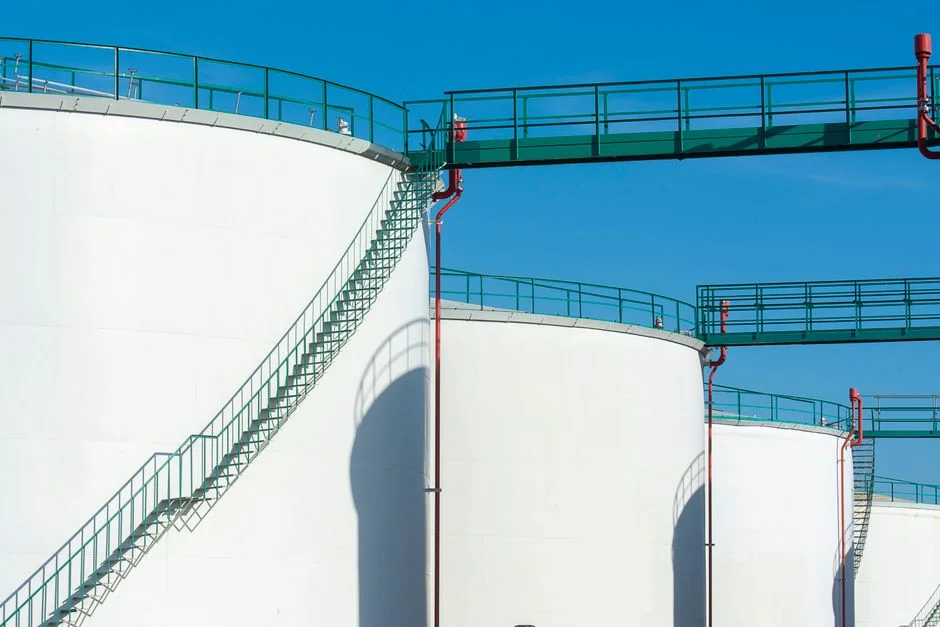
A lamella clarifier is a high-rate sedimentation tank. Wastewater flows upward through a pack of inclined plates set at roughly 55–60°, and the plates multiply the effective settling area inside a small footprint. Solids slide down the plate faces under gravity and consolidate into a sludge hopper at the bottom, while clarified water exits over a weir at the top.
HydropureWater's lamella units combine sludge recirculation, flocculation, and inclined-plate separation in a single packaged tank, with a published surface-loading range of 20–40 m/h and up to ~30% lower chemical consumption than a conventional clarifier (product catalog). That chemical saving is real because a lamella only needs a light flocculation stage to drop heavy, already-formed floc — it does not need the full coagulant + pH + polymer chain that a DAF demands.
For chemical-industry streams dominated by heavy, fast-settling solids — precipitated metal hydroxides from acid-wash neutralization, lime-softening sludges, catalyst fines — a lamella is the right primary. Bulk solids drop quickly, the underflow is dense, and the unit tolerates feed surges better than a DAF tank of equivalent flow. The trade-off is just as concrete: a lamella does not capture free oil, light flocs, or surfactants, so if the same plant also generates an oily phase it needs a DAF or a CPI downstream of the lamella. The packaged reference design is the HydropureWater lamella clarifier.
DAF vs Clarifier: Head-to-Head Comparison for Chemical Plants
The honest comparison is mechanism-by-mechanism, because the two technologies solve different parts of the same wastewater envelope. The matrix below is built from the supplied research — Clearwater/SigmaDAF 2026-04-27 and 2023-09-20 for DAF, the HydropureWater catalog for lamella, and Kemco for the conditioning and dewatering block — and is the table to bring into a 2026 vendor meeting.
| Parameter | DAF (Dissolved Air Flotation) | Lamella / Gravity Clarifier |
|---|---|---|
| Primary mechanism | Micro-bubble flotation, bubble size 30–50 µm (Clearwater/SigmaDAF, 2026-04-27) | Gravity settling on inclined plates, 20–40 m/h surface loading (HydropureWater catalog) |
| Target pollutants | Free/emulsified oils, FOG, light flocs, surfactants, low-specific-gravity particles | Heavy suspended solids, precipitated metal hydroxides, settleable sludges, catalyst fines |
| Footprint vs flow | Larger per m³/h; skidded for installation | Compact — inclined plates multiply effective settling area |
| Flow envelope | 4–300 m³/h across 13 standard models (HydropureWater catalog) | Single packaged tank, scaled by plate area |
| Chemical conditioning | Coagulant + pH adjustment + flocculant; 15–45 s flash-mix in floc tubes (Clearwater/SigmaDAF, 2023-09-20) | Light flocculation; up to ~30% chemical savings vs conventional clarifier (HydropureWater catalog) |
| Sludge character | Float is thicker, easier to dewater (Clearwater/SigmaDAF, 2023-09-20) | Underflow is wetter, lifts dewatering/haul cost (Kemco) |
| Skid configuration | ≤66 GPM single skid; >66 GPM modular two-skid (Clearwater/SigmaDAF, 2026-04-27) | Typically single packaged tank |
| Start-up requirement | Clean-water fill to charge the saturation circuit before wastewater is introduced (Clearwater/SigmaDAF, 2023-09-20) | No clean-water charge; can take feed immediately |
| Dewatering block | Filter press sized to float sludge; cake haul cost lower (Kemco) | Filter press sized to wetter underflow; haul cost higher (Kemco) |
| Limit in chemical service | Underperforms on heavy settleables without chemistry; needs lamella polish | Does not capture free oil or light flocs; needs DAF polish |
The single most useful sentence in that table is the last row: each technology has a known weak side, and on most chemical-plant streams the 2026 answer is to combine them rather than pick one.
Matching Technology to Chemical-Industry Effluent Archetypes
The matrix only earns its keep when a West Memphis engineer can drop their own stream onto a row. The four archetypes below cover the chemical-industry effluent profiles seen most often in capital reviews, and each one maps to a specific configuration rather than a generic recommendation. For plants with a heavy floatables load, the FPAC and FPHF DAF model families from Clearwater/SigmaDAF (2026-04-27) are the relevant specifications to write into a 2026 RFQ — FPAC for small-to-medium flow with very high solids, FPHF for high flow with cross + counter-current plate separation.
| Effluent archetype | Dominant pollutants | Recommended 2026 configuration |
|---|---|---|
| Aromatic / solvent-bearing process water with trace oil | Trace free oil, light organics, occasional entrained catalyst fines | DAF primary (30–50 µm bubbles, Clearwater/SigmaDAF 2026-04-27), optional lamella polish for fines |
| Acid/alkaline wash water with heavy metal precipitates | Metal hydroxides, suspended catalyst fines, high TSS | Lamella primary to drop bulk precipitate; DAF only if FOG or surfactant load is present |
| Polymer / resin manufacturing wastewater | Light flocs, surfactants, residual monomers | DAF primary with full coagulant + pH + flocculant conditioning in flash-mix tubes (Clearwater/SigmaDAF 2023-09-20) |
| Mixed batch reactions with shifting chemistry | Variable mix of organics, metals, FOG, pH swings | Lamella + DAF in series; neither unit alone covers the full envelope |
Two practical notes on the table. First, pH adjustment is its own piece of equipment and almost never lives inside the clarifier — for both DAF and lamella service the conditioning train should be specified around a packaged chemical dosing skid such as the HydropureWater automatic chemical dosing skid. Second, the FOG/surfactant row is where DAF earns its keep; the heavy-metal row is where lamella earns its keep; the mixed batch row is where most 2026 chemical-plant capex actually lands.
West Memphis and ADEQ Realities That Change the Spec
A technology matrix written for a generic chemical plant will miss the local constraints. West Memphis plants discharge to the local POTW, and the 2026 controlling instruments are the POTW's industrial pretreatment program and ADEQ Regulation 22; exact numeric limits are site-specific and must be pulled from the current permit, because the supplied research does not state them.
Two regional realities tend to push the design toward conservative upstream removal. The Mississippi River basin location raises the bar on dissolved metals, oil & grease, and pH excursions, so designing for the worst-case feed shift upstream of the sewer is more defensible than relying on POTW equalization. And because West Memphis sits inside a heavy chemical corridor, slug loads from batch reactor dumps are routine — that argues for an equalization tank ahead of either clarifier and a DAF or lamella sized to the peak hourly flow rather than the daily average.
For pH trim ahead of either technology, automatic acid/caustic dosing with an in-tank sensor and metering pumps is the standard block (Kemco). Coarse screening via hydrocyclone or shaker screen is also recommended upstream to protect pumps, plates, and the saturation circuit on a DAF (Kemco); a rotary mechanical bar screen is the typical packaged choice, and the relevant reference is the HydropureWater rotary mechanical bar screen.
Sizing and Decision Framework for a 2026 Capital Project
The comparison above is most useful as input to a five-step sizing flow. Each step is something a West Memphis engineer can put on a single page of a capital memo.
Step 1 — Characterize the influent. Build a pollutant pie chart for a representative week: floatables vs settleables, FOG, metals, pH swing, surfactant load. Match the dominant slice to the DAF vs lamella rows in the comparison table above. If floatables dominate, the DAF column is the starting point; if heavy settleables dominate, the lamella column is.
Step 2 — Pick the flow envelope. For ≤66 GPM, a single-skid DAF or a small lamella is the standard 2026 configuration (Clearwater/SigmaDAF, 2026-04-27). Above 66 GPM, the standard DAF answer is a modular two-skid layout, and the lamella answer is a parallel plate train sized at 20–40 m/h surface loading (HydropureWater catalog). The 4–300 m³/h DAF envelope (HydropureWater catalog) covers virtually all chemical-plant flow rates off the shelf.
Step 3 — Lock the chemical conditioning train. DAF needs a full coagulant + flocculant + pH adjustment chain with 15–45 s flash-mix in flocculation tubes (Clearwater/SigmaDAF, 2023-09-20). Lamella tolerates minimal conditioning if floc is already formed, which is where the ~30% chemical savings comes from (HydropureWater catalog).
Step 4 — Add the dewatering block. Both clarifier types need a filter press downstream, and the press should be sized to the combined sludge stream rather than either stream alone. The reference design is the HydropureWater plate and frame filter press. DAF float cake is thicker and reduces hauling cost (Clearwater/SigmaDAF, 2023-09-20); lamella underflow is wetter and lifts dewatering and haul cost (Kemco).
Step 5 — Build the capex/opex envelope. DAF float lowers sludge haul cost; lamella lowers chemistry cost. The dominant line in the opex stack is whichever sludge stream is larger. For a mixed batch plant, a lamella + DAF train in series is the most robust 2026 answer and the most defensible in a pretreatment review.
The simple rule of thumb to carry into the meeting: heavy settleables → start with lamella; light floatables or oils → start with DAF; mixed batch streams → lamella + DAF in series. A textile-plant parallel to this decision is laid out in the DAF vs clarifier decision for textile wastewater guide, which uses the same head-to-head structure for a different effluent profile.
Frequently Asked Questions
What is the typical 2026 capex range for a DAF vs a lamella clarifier for a chemical plant in West Memphis?
Exact dollar figures are not in the supplied research, so a buyer should request a per-skid quote tied to three concrete inputs: flow envelope, material of construction, and the dewatering scope. On the DAF side, the relevant envelope is 4–300 m³/h across 13 standard models with 304SS standard and 316SS or polypropylene available (Clearwater/SigmaDAF, 2026-04-27; HydropureWater catalog); a COMPACT DAF is supplied as a pre-assembled turnkey skid with chemical conditioning and PLC controls (Clearwater/SigmaDAF, 2026-04-27). On the lamella side, the unit is typically a single packaged tank, and the line item to compare is plate area, surface-loading target, and material. Bundling the filter press and chemical dosing skid into the same RFQ is the only way to make the two quotes comparable.
How do I size a DAF for a 100 GPM chemical wastewater stream?
100 GPM is above the 66 GPM single-skid threshold, so the standard 2026 configuration is a modular two-skid layout rather than a single skid (Clearwater/SigmaDAF, 2026-04-27 and 2023-09-20). At that flow, the FPAC and FPHF model families are the relevant references — FPHF in particular is designed for high wastewater flows and combines cross-flow with counter-current plate separation for optimized performance on medium-to-large solids loads (Clearwater/SigmaDAF, 2026-04-27). A two-skid DAF also gives the operator a redundancy path: one skid stays in service while the other is taken down for maintenance, which matters on a continuous-shift chemical line.
Will a lamella clarifier alone meet West Memphis / ADEQ chemical wastewater discharge limits in 2026?
For most chemical-industry streams, no. A lamella handles heavy settleables — precipitated metals, catalyst fines, lime-softened sludges — but does not capture free oil, light flocs, or surfactants, so a lamella-only train will underperform on the FOG and surfactant parameters that typically drive ADEQ Regulation 22 and POTW pretreatment limits. The defensible 2026 answer for a mixed chemical-plant effluent is a lamella primary paired with a DAF polish; exact numeric discharge limits must be confirmed with the local POTW and ADEQ, because the supplied research does not state them.
Should a West Memphis chemical plant buy a DAF system from a US manufacturer or import it in 2026?
Clearwater/SigmaDAF USA manufactures DAF systems in-house in Brown Deer, WI, with standard 304SS construction and optional 316SS or polypropylene, and supports clients throughout the USA and Canada (Clearwater/SigmaDAF, 2026-04-27). A US-built skid typically shortens lead time, simplifies spare-parts logistics, and avoids the customs and CE/UL documentation friction that imported units carry. For a 2026 capex project on a tight construction schedule, that is usually enough to tip the supplier choice; for a custom 316SS or polypropylene build, the same vendor should still be the benchmark quote to compare against.