What Industrial Water Reuse Solutions Providers Actually Deliver
An industrial water reuse solutions provider in 2026 is a vertically capable engineering-and-equipment partner that takes a facility from raw wastewater characterization through treatment-train design, equipment supply, commissioning, and ongoing O&M support. The role is broader than a skid supplier and broader than a generalist EPC that has not engineered a closed-loop water system before. WateReuse, founded in 1990, remains the only U.S. trade association solely dedicated to advancing reuse policy and funding (watereuse.org, About WateReuse page), and remains a useful industry reference even when the buyer selects a non-U.S. manufacturer.
A qualified provider must engineer against a defined end-use envelope. WateReuse's state-level summaries and the National Academies Phase II scope together list the end uses a competent provider should be able to design for: irrigation, dust control, cooling, industrial processes, flushing, ponds and fountains, street sweeping, car washing, groundwater recharge, and environmental restoration. The end use drives the treatment train, not the other way around.
Three provider archetypes show up in 2026 RFPs, and each carries a different risk profile. Municipal reclaimed-water suppliers — the utilities documented on the DOE FEMP Reclaimed Wastewater Map (energy.gov/cmei/femp/reclaimed-wastewater-map) — are an off-take option where they exist, but the underlying data covers only six states (California, Florida, Texas, Arizona, Colorado, Nevada) and is dated to the 2012 survey cycle, so coverage outside those states must be confirmed directly. Turnkey EPC firms carry design, supply, and commissioning under one contract but may resell membranes and dosing skids rather than own the IP. Equipment-only OEMs control their own technology but may not have the process engineers to integrate the full train on a greenfield site. The archetype you pick sets where the performance risk lands.
The Industrial Reuse Treatment Train: Stages and What Each Stage Must Achieve
A defensible reuse treatment train is a sequence of stages, each justified by a measurable output against the target end use. The National Academies reuse study frames technology comparison on four criteria — treatment performance, cost, energy use, and environmental impacts — and that four-criteria lens should be applied to every stage, not just the headline technology.
| Stage | Typical Unit Operations | Performance Function | Failure Mode if Undersized |
|---|---|---|---|
| 1. Source control / pretreatment | Screening, grit removal, equalization, FOG removal | Protect downstream biological and membrane units; stabilize flow and load | Rag fouling, shock loading, membrane failure |
| 2. Biological treatment | Activated sludge, SBR, or MBR | Reduce organic load and nutrients; set whether RO is required downstream | High COD/TSS breakthrough, RO fouling, permit exceedance |
| 3. Membrane separation | UF, MBR side-stream, RO | Polish to reuse specification; control pathogens, colloids, dissolved solids | Scale, biofouling, silica breakthrough, shortened membrane life |
| 4. Disinfection | UV, chlorine, chlorine dioxide | Deliver residual or dose required by the target end use | Pathogen exceedance, non-compliance with state reuse code |
Stage 1 is screening and equalization — removal of rags, grit, and FOG before any biological or membrane unit. Stage 2 is biological treatment; the quality of this stage determines whether downstream RO is needed at all, which is the single largest cost and energy decision in the train. An MBR membrane bioreactor system for near-reuse-quality effluent collapses Stage 2 and a large part of Stage 3 into one skid, which is why MBR is the most common anchor for closed-loop water systems in food, textile, and metal finishing. Stage 3 is membrane separation — UF for suspended-solid and pathogen polish, RO for dissolved-solid control when the end use demands it, sized using an industrial RO system for process-water reuse. Pore size and membrane material (PVDF is the default for chemical and mechanical robustness) determine colloidal and pathogen control. Stage 4 is disinfection, and a UV sterilizer for reuse-disinfection duty is the standard answer where chlorine-resistant organisms are a concern; chlorine and chlorine dioxide remain valid where a residual is required by the state code. For a deeper treatment-train read, the UV disinfection engineering guide for industrial reuse walks through dose and hydraulics for reuse duty.
Matching the Treatment Train to Your Reuse Application
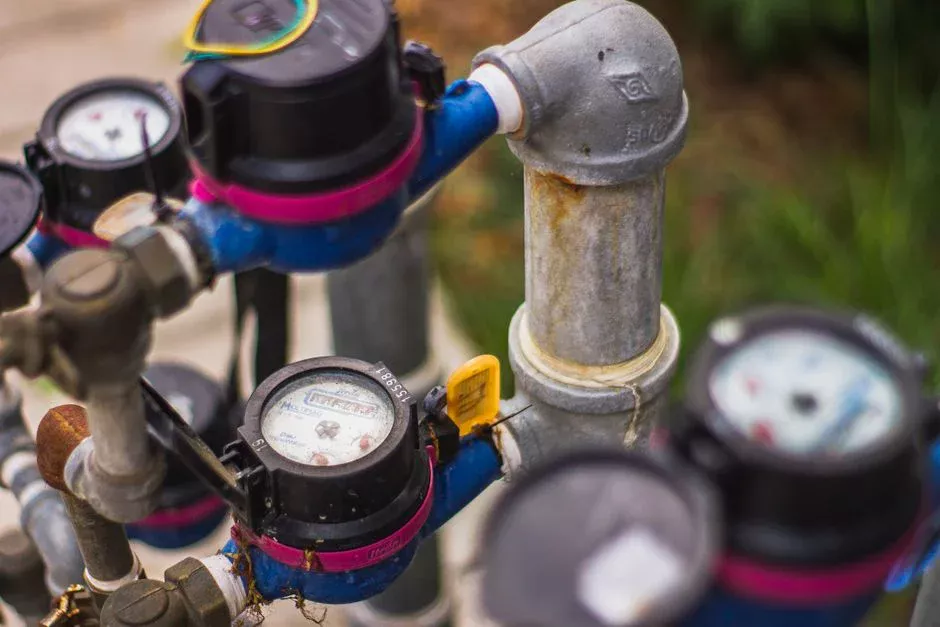
The end use sets the train, not the technology preference of the vendor. Cooling-tower makeup and industrial process water typically require RO or at minimum UF plus disinfection to control scale, silica, and microbial fouling, and the National Academies industrial-process-water scope treats this as a fit-for-purpose water category rather than a discharge-quality category. A practitioner-focused RO system energy reduction guide for reuse plants is the right reference when energy use is the deciding variable in RO selection.
Landscape irrigation and dust control can be served by lower-grade reclaimed water but still require pathogen reduction to meet state reuse codes; WateReuse state-level summaries show this category is the most permissive across jurisdictions. Cooling and industrial process reuse should always include a recycle loop and a blending strategy to prevent dissolved-solids buildup, and the provider must model mass balance — not just supply equipment. The UF water treatment system is the workhorse for the pre-RO polishing step in these trains, and a high-efficiency sedimentation tank is typically the right Stage 1/Stage 2 boundary unit when suspended solids are high.
Groundwater recharge for indirect potable reuse is the most demanding end use on the list. It requires a multi-barrier train — typically MBR plus RO plus advanced oxidation plus disinfection — and should only be designed by providers with documented potable-reuse references. Sector-specific applications follow the same logic: a RO process guide for textile-industry reuse documents the dye and salt mass-balance constraints that distinguish textile reuse from generic process reuse, and a data center cooling sustainability water solutions brief covers the silica and conductivity limits specific to hyperscale cooling loops.
Provider Capability Matrix: Comparing Industrial Water Reuse Solutions Providers
Vendor proposals are easier to compare when scored on the same five dimensions. The matrix below is the framework to apply to any shortlist; populate the right-hand columns from the proposal documents before you sit in a vendor meeting.
| Evaluation Dimension | What to Look For in the Proposal | Red Flag |
|---|---|---|
| Influent-to-reuse engineering depth | Documented characterization, mass balance, and pilot data for your influent class | Generic flowsheet copied from a brochure |
| In-house equipment vs. reseller status | OEM status for the membranes, pumps, and dosing skids in the train | Resold third-party membranes with no lifecycle commitment |
| Commissioning and operator training | Named commissioning engineer, SAT/FAT plan, operator competency sign-off | "Commissioning included" with no named resource |
| Lifecycle O&M and spare-parts supply | Defined membrane replacement interval, spares list, regional service footprint | No spares commitment beyond commissioning |
| Regulatory familiarity | Named state code, recent permit references in the buyer's jurisdiction | No permit references in the buyer's state or country |
Two contextual points sharpen the matrix. First, where municipal reclaimed water is not available — i.e., outside the six states documented on the DOE FEMP Reclaimed Wastewater Map (energy.gov/cmei/femp/reclaimed-wastewater-map) — on-site reuse is the only path and provider self-sufficiency matters more, because there is no utility off-take to fall back on. Second, the National Academies framing that technology must be compared on treatment performance, cost, energy use, and environmental impacts extends to the vendor's track record on each: a low-CAPEX proposal with no energy figure is incomplete, and a high-recovery proposal with no environmental-impact summary is a hidden liability. The most common failure mode in 2025–2026 procurement is providers who quote on capacity alone without binding reuse-quality guarantees — that exposes the buyer to compliance and operating-cost risk that the headline price does not reflect.
Vetting Checklist: 10 Questions to Put to Every Industrial Water Reuse Provider in 2026
- Will you commit to a binding reuse-quality guarantee tied to our target end use (cooling, process, irrigation, etc.), not a generic discharge spec?
- What is the specific energy use in kWh per m³ of reused water, and what energy unit cost did you assume?
- Provide a documented environmental-impact summary — the two criteria the National Academies reuse study treats as first-class alongside cost and performance.
- For every membrane, pump, and dosing system in the train, are you the OEM or a reseller? Resellers cannot guarantee lifecycle support for RO and UF membrane replacements compatible with multi-vendor plants.
- Who supplies the spare parts, and what is the regional lead time for critical spares such as water-treatment parts, valves, and media?
- Provide the last three reference projects at equal or greater flow, with named contacts. Absence of comparable references is a disqualifier.
- Provide a full lifecycle cost: CAPEX plus 5-year OPEX plus membrane replacement, on a single comparable page.
- Which state or national reuse code is the design certified against? WateReuse state summaries show the regulatory landscape varies materially by jurisdiction.
- Who is the named commissioning engineer, and what operator training is included post-handover?
- What monitoring and control systems are specified, and how do they interface with our existing plant DCS or SCADA?
If a vendor cannot answer questions 1, 4, 6, and 8 with documents rather than verbal assurance, the proposal is not yet comparable to a serious competitor's.
Frequently Asked Questions
How should a B2B buyer frame a reuse-project budget request in 2026 without a misleading price range?
Frame the budget request as a request for a feasibility study, not as a request for a turnkey price. The National Academies reuse study and the WateReuse state summaries both treat cost as a function of end use, influent quality, and discharge standard — three variables the buyer must specify before any price is meaningful. Ask the shortlisted providers for a Phase 1 engineering study priced on a defined influent and a defined end use, and use those study fees to anchor the CAPEX envelope. A budget request that skips this step will produce numbers that are not comparable across vendors.
What should a buyer verify about a reuse provider's compliance risk before signing?
Verify that the provider has documented permit references in the buyer's specific state or jurisdiction within the last 36 months. WateReuse state summaries show that reuse codes vary materially — North Carolina codifies reuse in Title 15A Subchapter 2T.0900, Nevada recognizes six categories of reclaimed water, and Texas carries the third-highest reclaimed water flows in the country behind California and Florida (watereuse.org, About WateReuse). A provider with no recent permit in the buyer's jurisdiction is a compliance risk regardless of technical capability.
How long does a typical industrial reuse project take from feasibility to commissioning?
The National Academies Phase II study scope ran 33 months from planning to final report, and that is a useful proxy for the multi-year horizon a serious reuse project demands. A 2026 industrial reuse project should be planned against a feasibility → pilot → detailed design → procurement → commissioning sequence measured in quarters, not weeks, and the buyer should expect a pilot phase unless the influent and end use are already proven in the provider's reference base.
What is the difference between a turnkey EPC reuse provider and an equipment-only OEM?
A turnkey EPC owns the design, procurement, commissioning, and performance risk across the whole train and will integrate third-party equipment under one contract. An equipment-only OEM owns its own skid (an MBR, an RO unit, a UV system) but may not have the process engineers to integrate the full train on a greenfield site. The archetype choice is a risk-allocation decision: EPC concentrates risk on one party at a higher fee; OEM-plus-integrator splits it and usually lowers fee but raises the buyer's coordination burden.