What a data center in Karaj actually discharges and reuses
The primary reclaimable stream at a Karaj data center is cooling-tower blowdown: the controlled purge of recirculating water used to keep dissolved solids below scaling and corrosion thresholds. In an evaporative cooling system, a tower operating at 4 cycles of concentration loses roughly 25–30% of its makeup water to blowdown, according to Genesis Water Technologies' blowdown treatment brief (S1, genesiswatertech.com).
Pushing cycles higher reduces that volume but concentrates the contaminants proportionally, which is the central trade-off in any Karaj design. At Karaj's ambient temperatures and low humidity, evaporative loss is high and consistent year-round; the data center's demand is essentially constant, which Matthias Sprenger at NC State (CNR, 2026-09) describes as an "inflexible demand" on the watershed (S5). Makeup source in Karaj is typically treated municipal water from the Karaj Water & Wastewater Authority (Abfa), with seasonal swings in TDS, hardness and silica depending on Karaj Dam and Amir Kabir reservoir allocations; this directly sets blowdown chemistry. Secondary streams the same plant must handle include humidification bleed-off, chiller blowdown, occasional generator and washdown waste, and any on-site domestic sewage; only the cooling-tower blowdown justifies a permanent treatment train in most Karaj sites (S3, valicor.com).
Karaj blowdown water quality: the numbers that drive the design
Blowdown quality varies with cycles of concentration and source water, but the range the design has to cover is well documented. Genesis Water Technologies (S1) lists the typical parameters a Karaj designer should map their own influent against before specifying equipment. TDS in blowdown runs 4–8× the makeup TDS, commonly 1,200–6,000 mg/L. Scaling species — calcium, magnesium, alkalinity, silica — are concentrated proportionally, and Karaj-source silica is the design-limiting parameter for any RO train. Treatment chemicals accumulate: biocides, corrosion inhibitors, scale inhibitors and dispersants all concentrate in the blowdown, and legacy chromate or high-phosphate programs are a particular reuse hazard. Suspended solids sit at 10–50 mg/L from corrosion products, biofilm fragments and airborne dust, a significant load in Karaj's dry, dusty summers and a direct driver for side-stream filtration. Biological load — planktonic bacteria, algae and biofilm — persists even in well-maintained systems and must be neutralized before RO membranes.
| Parameter | Typical blowdown range | Source |
|---|---|---|
| TDS | 1,200–6,000 mg/L (4–8× makeup) | S1, genesiswatertech.com |
| Scaling species (Ca, Mg, alkalinity, silica) | Concentrated proportionally to cycles | S1 |
| Suspended solids | 10–50 mg/L | S1 |
| Treatment chemicals | Biocides, inhibitors, dispersants (legacy chromate/phosphate flagged) | S1 |
| Biological content | Planktonic bacteria, algae, biofilm | S1 |
Side-stream filtration and ultrafiltration: pretreatment that protects everything downstream
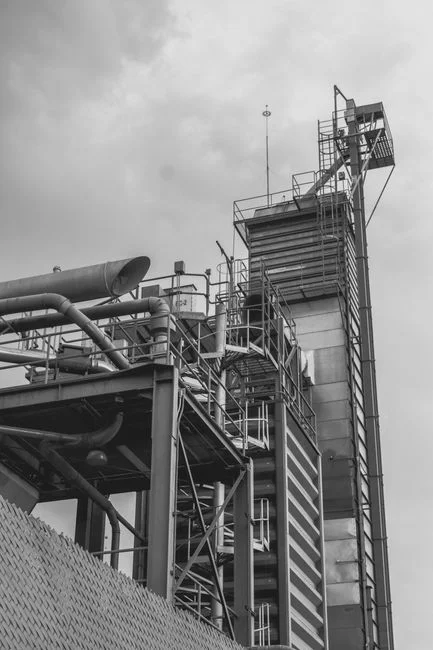
Side-stream filtration and UF are not optional on a Karaj blowdown stream. Self-cleaning spiral side-stream filters at 10–25 μm drop blowdown suspended solids to levels an RO can tolerate without backwash downtime, sized at 1–5% of total circulation flow (S1). A multi-media filter ahead of UF provides a consistent feed quality and protects the UF membranes from episodic dust and corrosion-product spikes. When paired with a bio-organic flocculant, colloidal and biofilm-bound solids are aggregated and removed, which is critical when the operator is pushing cycles of concentration higher to save Karaj makeup water (S1). A hollow-fiber UF system as RO guard operates at 0.01–0.1 μm pore size, removes suspended solids, bacteria, viruses and high-MW organics, runs at 10–30 psi, recovers 90–95%, and tolerates Karaj-feed solids spikes without extensive pretreatment (S1). UF permeate quality is what allows downstream RO to run at 50–85% recovery on blowdown instead of being shut down by fouling within weeks. Chemical cleaning of UF membranes every 1–3 months is the realistic O&M cadence; design must allow CIP without taking the whole train offline.
Reverse osmosis and nanofiltration on Karaj blowdown: the reuse workhorse
RO removes 95–99% of dissolved solids, with permeate typically 10–50 mg/L TDS — suitable as direct cooling-tower makeup or as a blend stream that lets the operator raise cycles of concentration further (S1). On Karaj-type blowdown, conventional BWRO is limited to 75–80% recovery before silica, CaCO₃ or CaSO₄ scaling forces a shutdown; IDE Tech's blowdown analysis (S2, ide-tech.com) confirms this is the operational ceiling for a standard train. Operating pressure sits at 150–400 psi, antiscalant injection is mandatory, and periodic chemical cleaning is expected. The S1 baseline CAPEX for a high-recovery industrial RO skid for cooling-tower makeup is $250,000–$500,000 for a 50,000 GPD unit, with OPEX of $1.50–$3.00 per 1,000 gal treated — the realistic 2026 envelope for a single-digit-MW Karaj site. NF, at 75–150 psi and 70–85% recovery, is the right answer when hardness is the limiting species rather than total TDS; permeate runs ~30–50% of feed TDS and it is the lowest-energy reuse option (S1). For high-recovery trains, IDE's MAXH₂O approach combines RO with a fluidized-bed reactor that precipitates silica and CaCO₃ as pellets, plus dynamic-flush RO operation, reaching ~95% overall recovery with ~1 mg/L silica in permeate (S2) — a directly applicable pattern for Karaj's high-silica feed. An EDI polishing stage downstream of RO is appropriate if the reuse target includes humidification or low-conductivity boiler makeup. Selection rule: if makeup silica is the design limit, plan RO (not NF); if hardness alone triggers the discharge limit and silica is moderate, NF is the cheaper, lower-energy choice. Membrane replacement spares, valves and media should be specified up front through the water-treatment parts and consumables package to keep the train maintainable in-country.
Partial- and full-ZLD: when evaporation and crystallization become mandatory in Karaj
When the discharge-cost-plus-makeup-cost math no longer favors reuse-only, thermal concentration enters the train. MVC compresses water vapor to provide the heat for evaporation, reaching 95–98% recovery on RO concentrate with distillate under 10 mg/L TDS; energy demand 15–25 kWh per 1,000 gal; CAPEX $1–3M for 10,000–30,000 GPD (S1). A combined RO (50–75% recovery) plus MVC on RO concentrate (95% recovery of concentrate) gives 85–95% overall system recovery with minimal liquid discharge — the realistic "partial ZLD" target for a Karaj hyperscale site (S1). Full ZLD adds a crystallizer that produces solid salt cake for disposal, with overall recovery 95–99%, CAPEX $3–8M, and OPEX $5–15 per 1,000 gal — economically justified only where alternative water is unavailable or discharge is prohibited (S1). In Iran, deep-well injection and off-site brine hauling are constrained; solar evaporation ponds are a viable low-cost final-concentrate step in arid Alborz-front summers but require footprint and lined-basin CAPEX (S1). Decision trigger: when the avoided discharge cost plus the avoided Karaj-municipal makeup cost together exceed $5–15 per 1,000 gal of concentrate, MVC/partial-ZLD stops being optional (S1). An ozone or UV step on the reuse loop keeps the biological load under control as cycles of concentration climb.
Matching the train to the site: a 2026 decision matrix for Karaj
The single variable that drives the choice is the combination of cycles of concentration, blowdown TDS, and discharge cost. At 3–4 cycles, blowdown is 25–30% of makeup and reuse (UF→RO) pays back fastest; at 5–7 cycles, blowdown volume drops but TDS rises, and high-recovery RO or partial ZLD becomes the right answer (S1). At $0–5 per 1,000 gal of discharge, reuse-only is enough; at $5–15 per 1,000 gal — the band S1 calls "water-stressed regions" — partial ZLD starts to win (S1). Reuse-only is the 2026 baseline for a typical 1–5 MW Karaj colocation site where Abfa will accept RO concentrate to sewer; full ZLD is reserved for hyperscale or where local discharge is closed. For a 100 MW Iranian hyperscale reference case, water demand is up to ~2 million liters per day (S2, IDE Tech); at 25–30% blowdown this is hundreds of thousands of liters per day of recoverable water, which is what justifies the CAPEX of a partial-ZLD train. Roughly two-thirds of new-build data centers since 2022 are in water-stressed regions (S4, Bloomberg via Lincoln Institute) — Karaj sits in this band, and the trend is toward stricter discharge rules, not looser.
| Site condition | Recommended 2026 train | Expected recovery | Source |
|---|---|---|---|
| 3–4 cycles, discharge $0–5/1,000 gal, Abfa sewer open | Side-stream filtration + UF + RO (reuse-only) | 60–85% | S1 |
| 5–7 cycles, blowdown TDS > ~3,000 mg/L, discharge $5–15/1,000 gal | UF + RO + MVC (partial ZLD) | 85–95% | S1, S2 |
| Hyperscale, discharge effectively closed, makeup alternatives > $15/1,000 gal | RO + MVC + crystallizer (full ZLD) | 95–99% | S1 |
CAPEX, OPEX and compliance: the buyer's envelope for a Karaj project
The numbers a vendor should be benchmarking against are well documented. Reuse-only train (UF + RO) CAPEX band sits at roughly $250,000–$500,000 for a 50,000 GPD RO system on blowdown plus pretreatment, with OPEX of $1.50–$3.00 per 1,000 gal treated (S1). Partial-ZLD (RO + MVC) adds $1–3M of CAPEX for 10,000–30,000 GPD of MVC capacity and lifts OPEX to $5–15 per 1,000 gal of concentrate handled (S1). Full ZLD adds a crystallizer stage with CAPEX of $3–8M and OPEX at the upper end of that band (S1). Compliance framework in Iran is the DOE national effluent limits together with the relevant provincial environmental office (in Alborz Province, the Department of Environment) plus local Abfa sewer-acceptance rules; this article does not invent specific TDS limits and the reader must confirm current values with the local authority. OPEX in Iran is sensitive to electricity cost (the MVC OPEX band assumes moderate grid tariffs) and to chemical logistics for antiscalant, CIP chemicals and biocide neutralization — confirm supply continuity before sizing the train. An antiscalant and CIP dosing skid plus UV sterilization on the reuse loop are standard inclusions for a Karaj build. The buyer checklist before any vendor meeting is: (1) actual makeup water analysis with seasonal silica and sulfate, (2) target cycles of concentration, (3) blowdown flow expected at that cycles target, (4) local discharge limits and fees, (5) target reuse percentage, (6) footprint and noise constraints (Karaj residential adjacency is common).
| Train configuration | Indicative CAPEX | Indicative OPEX | Source |
|---|---|---|---|
| Reuse-only (UF + RO, 50,000 GPD) | $250,000–$500,000 | $1.50–$3.00 per 1,000 gal | S1 |
| Partial ZLD (RO + MVC, 10,000–30,000 GPD) | + $1–3M | $5–15 per 1,000 gal of concentrate | S1 |
| Full ZLD (add crystallizer) | $3–8M total | Upper end of $5–15 per 1,000 gal band | S1 |
Frequently Asked Questions
What blowdown volume should a Karaj data center plan for?
At 4 cycles of concentration, expect roughly 25–30% of makeup water to leave the cooling tower as blowdown (S1, genesiswatertech.com). For a 100 MW hyperscale reference case, IDE Tech (S2) cites water demand of up to ~2 million liters per day, which translates to hundreds of thousands of liters per day of recoverable blowdown. The exact number for a given site is a function of facility MW load, makeup source and target cycles — request the designer's heat-balance and cycles-of-concentration assumption before sizing equipment.
Is RO alone enough to reuse Karaj cooling-tower blowdown?
It depends on makeup silica and sulfate. Conventional brackish-water RO tops out at 75–80% recovery on this stream (S2, IDE Tech), and Karaj-source silica typically sits on the scaling cliff. A high-silica site needs either a chemistry-aware high-recovery design (the IDE MAXH₂O approach, with ~95% overall recovery and ~1 mg/L permeate silica) or a partial-ZLD MVC stage. The right input to request from the vendor is a saturation index for silica and CaSO₄ on your specific feed analysis at the target recovery.
What is the realistic CAPEX envelope for a 1–5 MW reuse-only train in Iran?
A 50,000 GPD-class RO blowdown skid plus pretreatment sits in the $250,000–$500,000 installed band (S1, genesiswatertech.com). OPEX is $1.50–$3.00 per 1,000 gal treated, and scaling is roughly linear in flow within this size class. The number to ask a supplier for, rather than rely on this band, is an installed-cost quote with the actual feed analysis, target recovery, and Iranian import duty on membrane elements — those three inputs move the number more than the equipment selection itself.
When should a Karaj site choose full ZLD over partial ZLD?
Only where local discharge is effectively closed or makeup alternatives are more expensive than $5–15 per 1,000 gal of concentrate treatment (S1, genesiswatertech.com). Full ZLD adds a crystallizer, pushes CAPEX to $3–8M, and is rarely justified at 1–5 MW scale in Iran. Partial ZLD (RO + MVC) covers the 85–95% recovery case at $1–3M of incremental CAPEX and is the right answer for most hyperscale Karaj sites that need to minimize liquid discharge.
What is the lead time and supply risk for RO membranes in Iran?
Membrane elements are consumables with a typical 1–3 year replacement cadence (S1, genesiswatertech.com), so supply continuity is a procurement and storage question, not just an upfront-spec question. Confirm the supplier can hold spares in-country or via a regional warehouse, and check that the antiscalant and CIP chemistry used is not on a restricted-imports list. For supplier selection, ask for a written commitment on element lead time, replacement-cycle cost, and a CIP chemical logistics plan before signing.
Related Equipment
- hollow-fiber UF system as RO guard — specifications, capacity range, and technical data
- high-recovery industrial RO skid for cooling-tower makeup — specifications, capacity range, and technical data
- multi-media filter ahead of UF — specifications, capacity range, and technical data
- antiscalant and CIP dosing skid — specifications, capacity range, and technical data
- UV disinfection on the reuse loop — specifications, capacity range, and technical data