Why the DAF vs Clarifier Question Matters for Chemicals Plants
A batch specialty chemicals plant in Marysville, Ohio will rarely discharge a stream that looks the same for two days running — reaction changeovers push emulsified oils, solvents, resin wash water, and dense inorganic salts through the same header within a single shift. The Marysville industrial corridor hosts polymer, coatings, and fine-chemicals operations that discharge to a local pretreatment program with tight FOG, TSS, and metals limits, so a primary clarifier that misreads the influent profile triggers permit excursions and rework.
Picking the wrong technology locks the plant into one of two failure modes: a conventional clarifier on a FOG-rich stream lets light fractions escape with the effluent and forces the operator to over-dose coagulant downstream, while a DAF on a heavy, settleable inorganic stream burns compressed air and polymer on solids that gravity could have removed cheaply. Once the civil works and skids are set, retrofitting the other technology means re-pouring pads, re-routing header piping, and re-sizing the chemical room. Selecting the correct system requires evaluating the actual Marysville flow envelope and the specific pollutant mix rather than relying on a generic textbook comparison.
How a DAF Clarifier Actually Treats Chemicals Wastewater
A DAF clarifier physically separates contaminants by floating them rather than relying on gravity settling. A recirculation pump takes a side-stream of clarified water, pressurizes it, and dissolves air into it; when the saturated stream is depressurized inside the flotation tank, 30–50 micron micro-bubbles nucleate and attach to flocculated particles and oil droplets (Clearwater Industries, 2026-04-27). The bubble-particle agglomerate has a bulk specific gravity below that of water, so it rises to the surface, where a paddle skimmer scrapes the float into a collection trough. A bottom auger still removes heavier settleable solids that escape the float layer, so the unit does not entirely forfeit the gravity function (Clearwater Industries, 2026-04-27).
DAF only works well if the influent is chemically conditioned first. Coagulation and flocculation enlarge the colloidal fraction so the micro-bubbles can contact and lift it; this conditioning is delivered through serpentine flocculator mix tubes for short contact time (15–45 seconds per Clearwater Industries, 2026-04-27) or through chemical mix tanks with impeller agitators when longer contact time is required. Jar testing on each recipe is what sets the coagulant, pH adjustment, and polymer dose.
The pollutant menu a DAF targets — FOG, TSS, BOD, COD, oils, greases, and colloidal suspended solids — is the same menu a chemicals plant pretreatment permit tests for. The COMPACT DAF product line packages the chemical conditioning equipment, DAF clarifier, sensors, instruments, and PLC control panel on a single skid for flows of 66 GPM or less, with a modular two-skid layout above that flow (Clearwater Industries, 2026-04-27). SigmaDAF USA, the supplier Clearwater Industries partners with, is headquartered in Brown Deer, WI, and supports clients throughout the USA and Canada; Clearwater has manufactured industrial wastewater equipment since 1996.
How a Conventional Clarifier Treats the Same Stream
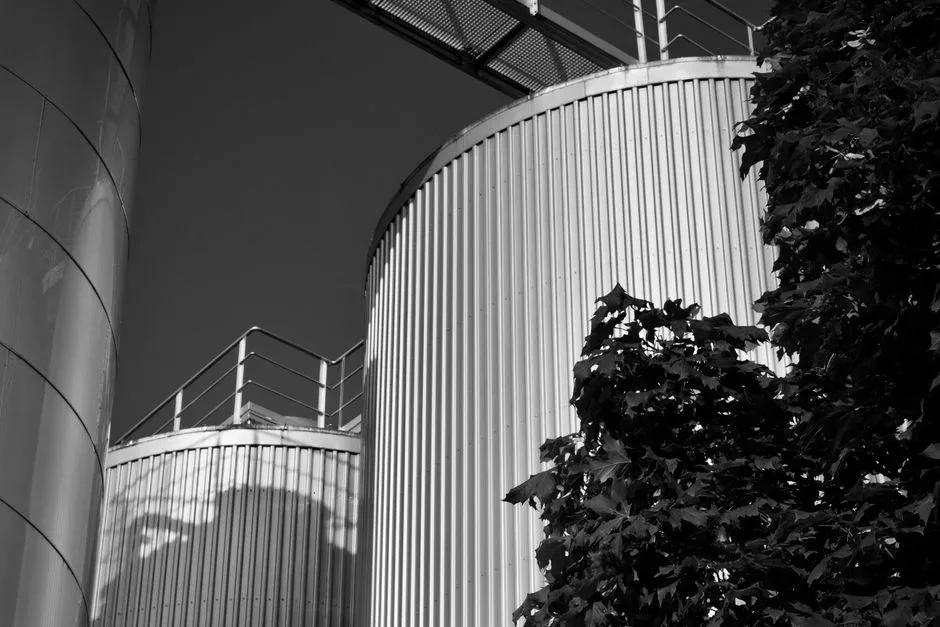
A conventional clarifier — including lamella and inclined-plate designs — relies on gravity settling, quiescent flow, and sludge recirculation rather than on a flotation mechanism. Lamella plates increase the effective surface-loading rate inside a small footprint by giving particles a short inclined path to slide down. HydropureWater describes its lamella clarifier as a high-efficiency sedimentation tank paired with sludge recirculation and flocculation and engineered to reduce chemical consumption.
The fundamental limitation is the physics: gravity settling works for particles whose specific gravity exceeds water by enough to overcome hydraulic turbulence. Emulsified oils, surfactants, solvents, and low-specific-gravity polymer residues violate that condition, and a chemicals plant rarely has a shift where none of those fractions are present. The HydropureWater lamella clarifier is therefore a reasonable match only for the narrow case where the influent is dominated by heavy inorganic precipitates — metal hydroxides, sulfate salts, silica floc — and FOG is negligible.
Where a conventional clarifier does outperform DAF is in sludge dewatering downstream. A quiescent settler produces a denser, more dewaterable sludge blanket when the influent is heavy and settleable, which lowers polymer demand on the press or belt filter that follows. That is a real economic factor, but it is conditional on the influent actually being heavy and settleable, which a batch chemicals plant cannot guarantee across recipes.
DAF vs Clarifier: Parameter-by-Parameter Comparison
The table below captures the engineering differences a Marysville plant engineer will be asked to defend in a vendor meeting. Flow envelope numbers reflect the HydropureWater DAF system range and the lamella clarifier product literature; bubble size and removal targets reflect the Clearwater Industries / SigmaDAF USA DAF specification (Clearwater Industries, 2026-04-27).
| Parameter | DAF Clarifier | Conventional Lamella Clarifier |
|---|---|---|
| Separation mechanism | 30–50 micron micro-bubble flotation + bottom auger for heavy solids | Gravity settling on inclined plates; no flotation step |
| Best-fit influent | FOG, oils, emulsions, light suspended solids, colloidal TSS | Dense inorganic precipitates with negligible FOG |
| Flow envelope | 4–300 m³/h across 13 standard models (HydropureWater DAF) | 20–40 m/h surface loading documented; footprint grows with flow |
| Upstream chemistry | Coagulation + flocculation via serpentine mix tubes or chemical mix tanks | Coagulation + flocculation; sludge recirculation can reduce polymer dose |
| Skid philosophy | Single skid ≤ 66 GPM; modular two-skid above 66 GPM (Clearwater Industries, 2026-04-27) | Typically a tank-based build with separate flocculation basin |
| Sludge character | Float layer of FOG + floc; bottom auger handles settleable fraction | Dense, well-thickened sludge blanket when influent suits it |
| Removal targets | FOG, TSS, BOD, COD, oils, greases, colloidal suspended solids | TSS, settleable solids; weaker on FOG and colloidal fractions |
| Footprint / civil works | Compact skid; less basin volume | Larger basin area at high flow to maintain surface-loading target |
The skid philosophy matters for a Marysville retrofit: a DAF packaged as a single skid up to 66 GPM (≈ 15 m³/h) can often be dropped into an existing bay with minimal civil rework, while a lamella clarifier at the same flow usually needs a poured basin and a separate flocculation tank.
Which One Fits Your Marysville Chemicals Plant?
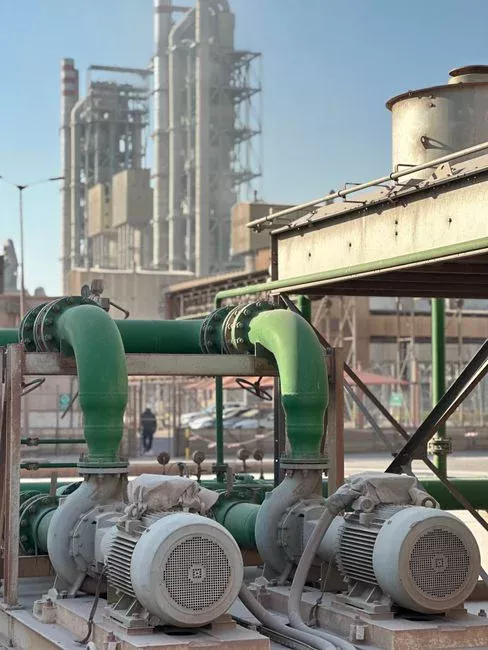
Run the influent profile before you run the equipment list. If the stream contains emulsified oils, surfactants, solvents, or low-specific-gravity polymer residues — in other words, anything that floats or stays in suspension rather than sinking — a DAF is the only one of the two technologies whose primary mechanism actually captures those fractions. The 30–50 micron micro-bubbles attach to flocculated oil droplets and float them, while a lamella clarifier lets light fractions escape over the plate pack.
If the influent is dominated by dense inorganic precipitates (metal hydroxides, sulfate salts, silica floc) with negligible FOG and the flow is small enough that basin area is not a constraint, a lamella clarifier still earns its place: it avoids the saturator, compressor, and air-side OPEX of a DAF, and the sludge it produces dewaters more readily on a belt press or centrifuge. That is a narrow niche in a batch chemicals plant, but it is a real one.
For most Marysville specialty chemicals operations with batch swings between recipes, the default 2026 recommendation is a DAF skid paired with an automatic chemical dosing skid, with the polymer program set by jar testing on each product. The HydropureWater DAF system covers 4–300 m³/h, which spans the typical Marysville plant envelope without forcing a fully custom build. Before signing a PO, confirm the chosen skid against the local POTW sewer use ordinance and the plant's NPDES/pretreatment permit limits — FOG and metals ceilings in particular will dictate whether the DAF alone is sufficient or whether a downstream polishing step is also required. Engineers weighing a parallel case in a different chemicals corridor can compare the same logic applied to DAF vs clarifier for chemicals wastewater in Midland.
Frequently Asked Questions
How do I size a DAF for a given flow in a Marysville chemicals plant?
Match the candidate DAF model's flow rating to your peak hourly flow, not your daily average, and confirm hydraulic residence time against the FOG and TSS load from jar testing. The HydropureWater DAF line covers 4–300 m³/h across standard models; request the manufacturer's flow-loading curve at your design TSS so the unit is not selected on flow alone.
Which pretreatment limits actually drive the DAF vs clarifier choice?
FOG and oil-and-grease ceilings are the decisive parameters, because a lamella clarifier will not reliably hit a tight FOG limit on a stream that contains emulsified oils or solvents. TSS, metals, and pH limits can usually be met by either technology with the right chemical program, but FOG is the line that pushes a Marysville plant toward DAF. Confirm the local sewer use ordinance numbers before selecting, since the discharge limits vary by POTW and dictate whether DAF alone is sufficient or whether a downstream polishing step is also required.
What should I ask a DAF vendor before signing a 2026 PO?
Ask for the model's documented flow range, materials of construction (304SS standard, 316SS or polypropylene available for corrosive chemicals streams per Clearwater Industries, 2026-04-27), the saturator and air-saturation system sizing, the chemical conditioning package included, and the PLC scope. Ask for a reference installation on a comparable chemicals wastewater stream and request the operating data — influent and effluent TSS and FOG — not just a brochure. Confirm whether the proposal is a single skid or a modular two-skid layout, because that decision drives rigging, shipping, and installation cost.
What is a realistic delivery window for a skid-mounted DAF in the US?
Skid-mounted DAF units are typically built-to-order rather than shelf stock, so lead time is driven by tank fabrication, PLC panel build, and shop acceptance testing rather than by a catalog ship date. Request a written ship date tied to approved drawings and clarify whether the chemical dosing skid and the DAF skid ship together or separately, since site work depends on both. Plan on permit review and POTW coordination running in parallel, because those are usually the schedule items that extend a 2026 installation calendar.