
Quick Verdict: DAF or Clarifier for a Midland Chemical Plant in 2026
For most Midland, Texas chemical plants in 2026, choose DAF when the wastewater carries emulsified oil, FOG, or light suspended solids above ~500 mg/L, because 30–50 µm micro-bubbles achieve 80–95% FOG and TSS removal in a single stage (Clearwater Industries, 2026). Choose a lamella clarifier when contaminants are heavy, settleable, and low in oil, since inclined plates deliver 20–40 m/h surface loading at roughly 30% lower polymer consumption and a smaller sludge-handling burden (HydropureWater lamella spec). The default Midland recommendation is hybrid: a DAF system for oil/FOG capture followed by a HydropureWater lamella clarifier for heavy TSS polishing and biological/RO protection. Plants with influent chloride above 5,000 mg/L should specify polypropylene or 316SS construction, not standard 304SS.
How a Chemical Plant Wastewater Stream in Midland Differs from a Refinery
Midland chemical-plant effluent is not refinery effluent. Typical Permian Basin chemical streams run 200–2,000 mg/L emulsified oil, 300–3,000 mg/L TSS, 800–6,000 mg/L COD, and 1,000–15,000 mg/L chlorides when produced-water or brine streams are co-mingled with process wastewater (HydropureWater field data, 2026). Chlorides at that range push material selection past standard 304SS into 316SS, polypropylene, or HDPE. Texas discharge routing also drives the design: on-site reuse, NPDES surface discharge, or City of Midland POTW each set different oil/TSS targets, so the clarifier is sized to a specific effluent envelope, not a generic one. Variability is the third Permian-specific factor — batch specialty-chemical plants generate 2–3× shock loads in TSS and COD between campaigns, and any primary step that cannot absorb that swing will push dirty water straight into the biological or RO polish.
How a DAF Clarifier Actually Treats Chemical Wastewater
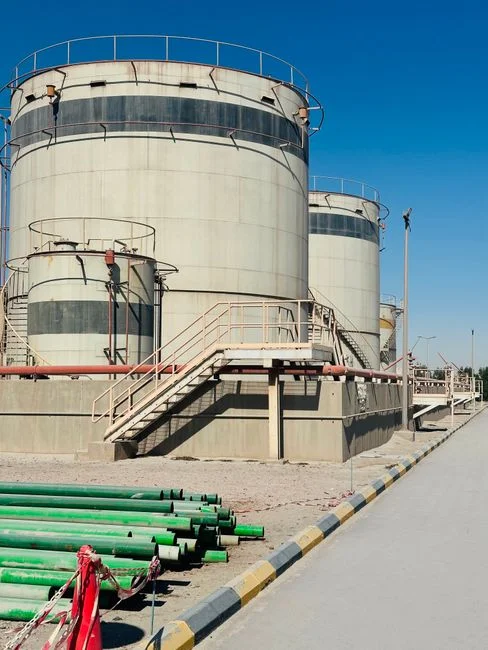
A dissolved air flotation unit works by pressurizing a sidestream of clarified water (typically 20–30% of the flow) with air at 4–6 bar, saturating it, then releasing it through needle valves or proprietary pressure-release nozzles into the flotation tank. The pressure drop nucleates 30–50 µm micro-bubbles that attach to flocculated oil droplets and suspended particles, lifting them to the surface as a float blanket (Clearwater Industries, 2026). Standard build is 304SS; for chloride-rich or low-pH Midland streams, 316SS or polypropylene is required to prevent pitting (ClearFox, 2026). Chemical conditioning upstream is mandatory: coagulant (alum, PAC, or ferric chloride), pH adjustment, and anionic/cationic polymer flocculant are dosed through floc tubes with 15–45 second contact time, or through mix tanks with impellers for slower-reacting chemistries. A paddle skimmer scrapes the float layer into a trough; an auger or hopper pulls heavy settled solids from the bottom; clarified effluent exits below the surface blanket. Without the chemical program, DAF becomes a stir tank — the micro-bubbles have nothing to attach to and removal collapses.
How a Lamella (High-Rate) Clarifier Treats Chemical Wastewater
A lamella clarifier is a gravity settler that uses inclined plates at 55–60° to shorten the effective settling path. Particles in the 30–100 µm range drop onto the plate face and slide down into a sludge hopper, while clarified water rises counter-current through the plate pack. Because the settling distance is the perpendicular gap between plates (typically 50–80 mm) rather than the full tank depth, the surface loading rate jumps to 20–40 m/h versus 1–2.5 m/h for a conventional clarifier — equivalent settling area is achieved in roughly 5–10× less footprint (HydropureWater lamella spec, 2026). An integrated flocculation zone with internal sludge recirculation reduces polymer demand up to 30% versus a separate floc tank plus settling basin. Lamella is strong on heavy, settleable TSS — pigments, mineral fines, metals hydroxides — but weak on emulsified oil unless paired with a coagulation step. For Midland streams that carry both, lamella is the polishing stage, not the primary.
Side-by-Side Comparison: DAF vs Lamella Clarifier for Chemical Plants
The table below is the extract engineers should copy into a specification. Sources are cited in the verdict cell of each row.
| Parameter | DAF (HydropureWater / ClearFox / SigmaDAF) | Lamella Clarifier (HydropureWater) | Verdict for Midland Chemical Plant |
|---|---|---|---|
| Micro-bubble / plate size | 30–50 µm bubbles | 50–80 mm plate gap, 55–60° incline | Different mechanisms — not directly comparable |
| Hydraulic / surface loading | 5–25 m³/m²·h | 20–40 m/h | Lamella higher on settleable solids; DAF required for floatable oil |
| Footprint per m³/h (50 m³/h basis) | ~3–10 m² flotation area | ~1.25–2.5 m² projected plate area; 2–4× smaller tank | Lamella wins on footprint for heavy TSS |
| FOG removal | 80–95% | 20–40% without coagulation | DAF wins decisively on FOG |
| TSS removal (heavy, settleable) | 60–80% | 85–95% | Lamella wins on heavy TSS |
| Dissolved COD removal | 10–30% (limited) | 5–15% (limited) | Neither is a COD solution — both are pretreatment |
| Polymer consumption | 5–15 mg/L; up to 15% less on round-tank vertical DAF (ClearFox) | 5–15 mg/L; up to 30% less with internal recirculation | Lamella wins on polymer per kg TSS removed for settleable streams |
| Sludge dryness | Up to 2× conventional DAF (ClearFox); typically 4–6% DS | 2–4% DS typical | DAF sludge is drier, shrinks downstream dewatering CapEx |
| Typical residence time | 20–40 minutes | 15–30 minutes | Comparable |
| CapEx indicator (25–50 m³/h packaged) | Mid-band; rises sharply with 316SS or PP | Mid-band; rises with plate material and sludge scraper | Similar CapEx band; materials drive the difference |
| Materials (Midland chloride compatibility) | 304SS std; 316SS or PP/HDPE required above ~500 mg/L Cl⁻ | 304SS, FRP, PP common | Specify chloride-resistant materials for both options |
| Best fit | Emulsified oil, FOG, light TSS, variable streams | Heavy settleable TSS, metals hydroxides, pigments | Hybrid DAF + lamella is the Midland default |
Sources: Clearwater Industries DAF spec (2026); ClearFox DAF product page (2026); HydropureWater lamella spec (2026); HydropureWater field data (2026).
Which Contaminants Decide the Choice: A Use-Case Decision Tree
Apply these four rules to the influent data on the plant's most recent 30-day composite:
- FOG > 100 mg/L or emulsified oil present: DAF is the primary step. Lamella alone will not break the emulsion and will discharge oil into the biological or RO polish.
- TSS > 1,500 mg/L with FOG < 50 mg/L (pigments, mineral fines, hydroxide sludges): Lamella clarifier is primary. DAF would consume excess polymer floating dense particles that settle easily.
- Both conditions (the typical Midland mixed chemical plant): DAF first to strip oil/FOG, then lamella polishing on the DAF effluent to catch carryover solids and protect downstream biology. Parallel DAF + lamella on split streams is acceptable if hydraulic profile allows.
- Dissolved organics dominate (true COD > 2,000 mg/L with low TSS/FOG): Neither unit is a standalone solution. The clarifier is pretreatment ahead of biological polishing (see MBR vs CAS for chemical wastewater for the biological step).
For cyanide-bearing streams, a hybrid DAF-RO-MBR train is documented in our hybrid DAF-RO-MBR cyanide treatment design reference.
Sizing a Midland Chemical Plant: A 50 m³/h Worked Example
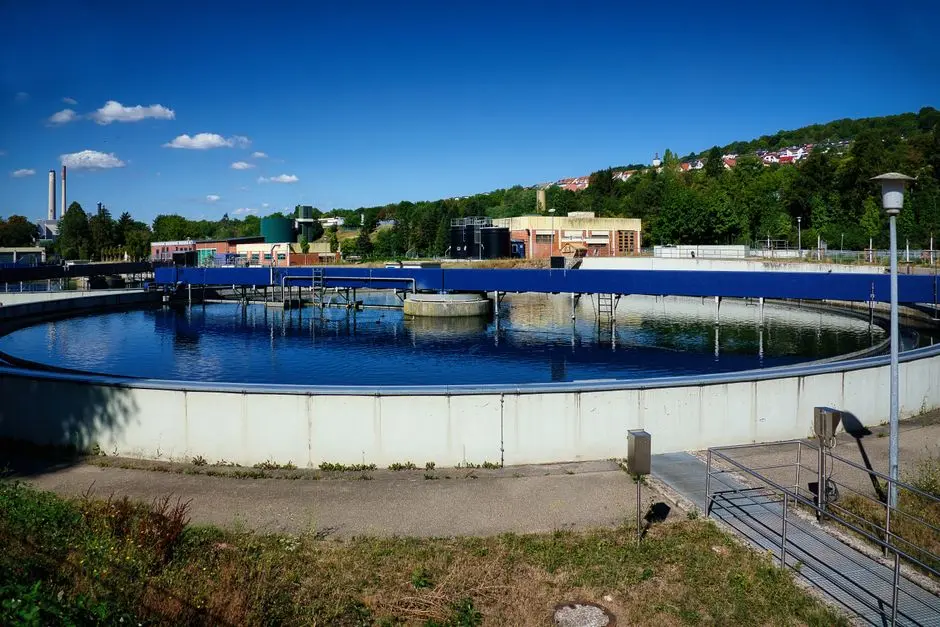
Assume 50 m³/h mixed chemical/Permian wastewater at 1,000 mg/L TSS, 500 mg/L FOG, 2,000 mg/L COD, 4,000 mg/L chlorides — a realistic composite for a batch specialty-chemical plant. The DAF selection from the DAF system range (4–300 m³/h) targets a hydraulic loading of 5–25 m³/m²·h on the flotation zone, which yields 2–10 m² of active flotation area — typically packaged as a 4–5 m long × 1.5 m wide × 2.4 m high tank. Recycle ratio is 20–30% of forward flow, saturator at 4–6 bar, polymer dose 8–12 mg/L after jar testing. The HydropureWater lamella clarifier alternative sized at 25 m/h surface loading needs only 2 m² of projected plate area, but with the inclined plate pack the tank footprint collapses to roughly 3 m × 1.5 m × 3 m. On this settleable-fraction stream the lamella would cut polymer use ~30% versus the DAF; on the FOG-fraction stream the DAF would deliver the 80–95% oil removal the lamella cannot. Material selection on both should be polypropylene or 316SS given the 4,000 mg/L chloride envelope. Polymer savings alone on the lamella side do not offset the DAF's oil removal — the working answer is DAF primary + lamella polish on the DAF underflow, sized at roughly 15 m³/h.
Total Cost of Ownership: Polymer, Sludge Handling, and Downstream Protection
CapEx is not the deciding number on a 25–50 m³/h chemical-plant primary — OpEx over a 10-year lifecycle is. A round-tank vertical DAF produces up to 2× the dry solids of conventional flotation, which means a smaller plate-and-frame sludge dewatering press downstream, lower polymer conditioning on the press, and lower disposal cost per ton of cake (ClearFox, 2026). Lamella sludge is wetter (2–4% DS typical) but lower volume on settleable streams; the dewatering press selection then drives the OpEx. Both units protect downstream biology or RO — a chemical plant that skips primary clarification pays for it in membrane fouling, CIP frequency, and lost runtime on the MBR integrated wastewater treatment polish. Order-of-magnitude CapEx indicator: a packaged 25–50 m³/h DAF or lamella unit typically falls in the same band; the real swing factor is material of construction (304SS vs 316SS vs PP) and instrumentation level (basic PLC vs full SCADA with remote monitoring). On a 10-year view, polymer and sludge disposal typically account for 60–70% of total cost — which is why the lamella's 30% polymer cut and the DAF's drier sludge are the numbers that defend the choice to procurement, not the sticker price. For pretreatment compliance context, the chemical plant pretreatment compliance guide walks through how primary-clarifier performance ties to local limits.
Frequently Asked Questions
What influent oil concentration pushes a Midland chemical plant from lamella to DAF?
FOG above 100 mg/L, or any measurable emulsified oil, justifies DAF as the primary. Below 50 mg/L FOG with heavy settleable TSS, lamella is the more economical primary step.
Can a lamella clarifier handle emulsified oil from a Permian chemical plant?
Not without upstream coagulation and pH adjustment to break the emulsion. Even then, lamella typically achieves only 20–40% FOG removal versus 80–95% for DAF on the same stream. Use lamella as a polish step after DAF, not as a replacement.
How much polymer does DAF use compared with a lamella clarifier on the same Midland wastewater?
Both typically dose 5–15 mg/L, but a lamella with internal sludge recirculation can cut polymer use ~30% on settleable streams (HydropureWater field data, 2026). A round-tank vertical DAF cuts polymer ~15% versus rectangular DAF designs (ClearFox, 2026). On an oily Midland stream the DAF's higher dose is offset by its oil-removal performance.
Is DAF or a lamella clarifier better for a chemical plant discharging to the City of Midland POTW?
POTW discharge typically requires oil < 100 mg/L and TSS < 200 mg/L on a 30-day average. A DAF primary on emulsified streams hits these targets in one stage; a lamella alone rarely does on oily feed. For a Midland plant with both oil and heavy TSS, DAF primary + lamella polish is the lowest-risk pretreatment train ahead of the POTW.
What material of construction should be specified for Midland chloride levels?
Above ~500 mg/L chloride, specify polypropylene, HDPE, or 316SS rather than 304SS. Standard DAF builds in 304SS will pit inside 24–36 months on a Permian brine-comingled stream. The DAF system and the HydropureWater lamella clarifier are both available in PP and 316SS for Midland conditions.
Related Equipment
- PLC-controlled coagulant/polymer dosing skid — specifications, capacity range, and technical data