Why Vegetable Processing Sludge Is a Different Filter-Press Problem
Vegetable processing wastewater is generated by cutting, blanching, washing, peeling, juice pressing, and starch recovery, so the solids reaching the dewatering stage are biological, fibrous, and seasonal rather than mineral. The filter press itself was first commercialised in the mid-19th century to extract vegetable oil, and modern food-industry filter presses are documented by IWT Remont and ChemREADY as still being descendants of that original agricultural application.
What has changed is the duty: a 2026 vegetable plant is treating activated sludge rich in pectin, cellulose fines, and starch granules, not crushing seed meal. Filter presses operate by pressure filtration across a filter cloth — slurry is pumped in, solids build a cake on the cloth, and filtrate exits through the plates (ChemREADY). The mechanism is identical to a mining or chemical plant, but the cake is compressible and organic, which is why two design consequences follow. First, cloth choice and the pressure programme matter more than for mineral slurries. Second, a feed-thickening step is almost always required, because filter presses work best at 50–60% feed solids (ChemREADY, IWT Remont) while raw biological sludge from a vegetable line typically arrives at 1–4% total suspended solids, the same range modelled in the BRIN plate-frame study as 1–4% w/w CaCO3.
How a Plate-and-Frame Filter Press Works in a Vegetable Wastewater Train
The four fundamental parts of a filter press are the frame, the filter plates, the manifold, and the filter cloth (ChemREADY, IWT Remont). The frame carries the hydraulic load; the plates form the chambers and hold the cloth; the manifold handles slurry in and filtrate out; the cloth is the actual separation surface. During a cycle, slurry is pumped in and distributed evenly, solids accumulate on the cloth, clean filtrate exits through the plate ports, and once the chambers are full the cake is released (ChemREADY). Plate construction is typically polypropylene for chemical and food-industry duty, with metal plates used where temperature or pressure demand it, and the support frame can be overhead (easier cloth change, suits high-pressure cloth washing) or side-beam (smaller footprint, suits lower-pressure wash) (IWT Remont). Four common configurations exist: plate-and-frame, recessed plate and frame, membrane, and fully automatic; plate-and-frame is the most common in industrial dewatering (IWT Remont). For fibrous biological sludge, high-pressure membrane presses operating at 21–30 bar improve performance on difficult slurries and are the modern default for food-industry biological duty (ChemREADY). A plate-and-frame filter press for sludge dewatering is the right starting point for most vegetable lines, with the membrane option added once the cake-solids target justifies the extra cost.
Step 1 — Characterise the Vegetable Sludge Before Sizing the Press
The design driver is feed solids concentration: filter presses perform best at 50–60% feed solids (ChemREADY, IWT Remont), while raw biological sludge from a vegetable line typically arrives at 1–4% total suspended solids, the same envelope modelled in the BRIN plate-frame study as 1–4% w/w CaCO3. Before any plate count is written into a datasheet, the engineer should request or run: total and volatile suspended solids, fibre and starch fraction, pH, temperature, and either capillary suction time (CST) or specific resistance to filtration (SRF) — SRF is the standard measure of how "hard" the sludge is to dewater. Slurries below the 50–60% solids window must first pass through a clarifier (vertical deep cone or horizontal rake) to concentrate solids by gravity and polymer flocculation (ChemREADY). Vegetable lines are seasonal, so the engineer should capture peak-shift data: campaign start, mid-run wash-down, and end-of-run clean-up, because BOD-bound water in the cake and the resulting cake dryness will track the loading profile. A dissolved air flotation (DAF) system or a HydropureWater lamella clarifier placed upstream is the standard way to lift feed solids into the press's optimal window.
Step 2 — Sludge Conditioning and Polymer Selection
Chemical programmes must be evaluated against the sludge's water chemistry; flocculants and coagulants are typically paired with a pH balancer to make the floc strong enough to survive the press cycle (ChemREADY). For biological vegetable sludge, cationic polyacrylamide is the usual starting point, with dose optimised by jar test on the actual plant slurry rather than on a generic sample. Skid-mounted, PLC-controlled automatic dosing units are the standard delivery form for reliable, repeatable injection of coagulant, flocculant, and pH adjuster at the press feed tank, and the HydropureWater automatic chemical dosing system is one example of this delivery form. The objective of conditioning is not just to pass the 50–60% feed-solids window but to give the cake enough shear strength that the press can build a uniform cake across all chambers. If the floc is weak, the press will deliver wetter cake, longer cycle times, and cloth blinding — each of which directly hurts the OPEX case versus a belt press or centrifuge.
Step 3 — Choose Cloth, Plate Type, and Pressure Programme
Cloth is the actual separation surface and must be matched to the slurry (ChemREADY); for compressible, organic vegetable sludge, a smooth-surface multifilament cloth gives a clear filtrate but a wetter cake, while a textured or calendered cloth gives a drier cake at the cost of faster blinding. In the only direct cloth-comparison study in the research, cotton cloth outperformed drill cloth in the plate-frame press, reaching 56.00% solute removal efficiency at 4% w/w CaCO3 feed (BRIN, ejournal.brin.go.id) — a useful directional signal for fibre-rich, organic feeds even though the test slurry was a mineral surrogate. Plate type decision: plate-and-frame is the workhorse and most common; recessed plates give higher solids per chamber; membrane plates add a secondary squeeze at 21–30 bar and are preferred for biological sludge where a drier cake reduces hauling cost (ChemREADY, IWT Remont). The operating pressure programme is a three-stage profile: fill and low-pressure filtration (~7 bar) until filtrate clears, then ramp to full pump pressure, then a final membrane squeeze or air-dry blow on membrane presses. High-pressure systems in the 21–30 bar range improve performance on difficult slurries and are the modern default for food-industry biological sludge (ChemREADY).
| Parameter | Plate-and-frame | Recessed plate | Membrane (high-pressure) |
|---|---|---|---|
| Typical operating pressure | Up to ~7 bar feed | Up to ~7 bar feed | 21–30 bar squeeze (ChemREADY) |
| Best fit for vegetable sludge | General duty, lower capex | Higher solids per chamber | Biological, compressible feeds |
| Cloth directional signal | Cotton: 56.00% solute removal at 4% w/w CaCO3 (BRIN) | Same cloth options as plate-and-frame | Same cloth options, plus calendered for drier cake |
| Filtrate clarity vs cake dryness trade-off | Clearer filtrate, wetter cake | Clearer filtrate, wetter cake | Slightly less clear filtrate, drier cake |
| Footprint and capex | Smallest | Mid | Largest (membrane plates + high-pressure hydraulics) |
Step 4 — Size the Press: Area, Chamber Volume, and Cycle Time
The design and size of a filter press depend on the volume and type of slurry being treated (ChemREADY); standard industrial plate-and-frame units span 1 m² to 500 m² of filtration area, as documented for the HydropureWater plate-and-frame filter press catalogue. Calculate the dry solids to be captured per shift from the line's flow and the upstream thickened-solids concentration, then divide by the cake-solids target to get wet cake volume, then by the chamber cake volume per plate to get plate count. Cycle time is set by the filling time, filtration time, and cake-discharge time; modern automatic plate shifters and PLC controls allow fully automated 24-hour operation, even in harsh environments (ChemREADY). The engineer must leave headroom: vegetable lines swing with the crop, so the press should be sized for peak-shift loading with cycle-time slack, not annual average — a press that cannot finish its cycle on a peak day will create a feed-tank overflow upstream. Where the research does not supply a specific vegetable-sector cake-solids percentage, the buyer should request a site-specific cake-solids test from the supplier on the conditioned slurry, not accept a generic datasheet figure.
Filter Press vs Belt Press vs Centrifuge for Vegetable Plants
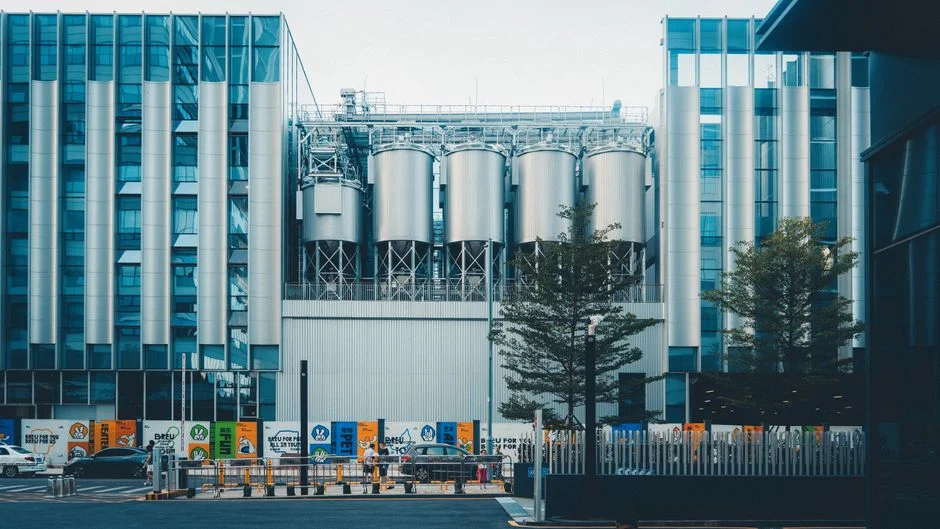
Modern filter presses consume less energy and are more cost-efficient than other production equipment; operating cost is approximately 1/6 that of a belt press or rotary drum (ChemREADY, IWT Remont). Belt filter presses are an alternative dewatering route, formally documented for biosolids duty in the US EPA fact sheet Belt Filter Press (EPA 832-F-00-057, September 2000); they are cheaper to buy but expose the plant to lower cake solids and higher polymer consumption on fibrous feeds. Settling ponds and lagoons need large footprints, lose effectiveness as solids accumulate, and require dredging — a useful baseline but rarely acceptable for a regulated vegetable plant in 2026 (ChemREADY). For vegetable plants with steady seasonal loading, biological (not mineral) sludge, and a real cost pressure on cake haulage, the filter press is normally the lowest-lifetime-cost option, with the trade-off being higher capex and a larger footprint than a belt press. A filter press for food processing wastewater design guide gives the broader food-sector context for this comparison.
| Equipment | Indicative OPEX vs filter press | Capex direction | Footprint | Source |
|---|---|---|---|---|
| Filter press (plate-and-frame / membrane) | Baseline (1x) | Higher upfront | Larger | ChemREADY; IWT Remont |
| Belt filter press | ~6x (≈ 1/6 of filter press OPEX figure stated inversely by ChemREADY / IWT Remont) | Lower upfront | Smaller | EPA 832-F-00-057 (September 2000); ChemREADY |
| Centrifuge / rotary drum | ~6x | Mid-to-high | Compact | ChemREADY; IWT Remont |
| Settling pond / lagoon | Low OPEX, high land cost | Low capex | Very large, loses effectiveness as solids build | ChemREADY |
Integrating the Filter Press into a Vegetable Wastewater Treatment Train
A typical 2026 train is rotary bar screen → DAF or lamella clarifier (or biological step such as MBR) → sludge buffer tank → filter press, with filtrate either returned to the head of the plant or polished for reuse. A dissolved air flotation (DAF) system, a HydropureWater lamella clarifier, or an MBR biological step is the standard upstream thickener. When a clarifier or DAF is placed before the press to lift feed solids, the combined train can recover 90–95% of process water (IWT Remont) / up to 95% (ChemREADY), which is the design basis for any reuse or Zero Liquid Discharge food plant scheme. Recovered filtrate is reused in washing or non-product contact loops; the filter cake, with its much-reduced volume compared to raw slurry, is hauled off-site or sent to composting / biogas depending on local regulation (ChemREADY). Filtrate clarity is governed by cloth condition; the engineer should plan cloth inspection and rotation into the operating schedule, not as an emergency. A filter press for fruit juice wastewater design reference illustrates the same train architecture in a juice-specific context.
Frequently Asked Questions
What feed-solids range does a filter press for vegetable processing wastewater need?
Filter presses work best at 50–60% feed solids (ChemREADY, IWT Remont). Raw biological sludge from a vegetable line typically arrives at 1–4% total suspended solids — the same range the BRIN plate-frame study modelled as 1–4% w/w CaCO3 — so a clarifier or DAF upstream is normally required to lift the stream into the press's optimal feed window.
What cake solids percent should a buyer expect from a vegetable-sludge filter press?
The research does not supply a specific vegetable-sector cake-solids percentage. The buyer should request a site-specific cake-solids test from the supplier on the conditioned slurry, not accept a generic datasheet figure, and should confirm the test is run at the press's actual operating pressure (including the 21–30 bar membrane squeeze if fitted).
What polymer conditioning programme is standard for vegetable biological sludge?
Cationic polyacrylamide is the usual starting flocculant, paired with a coagulant and pH balancer, with dose optimised by jar test on the actual plant slurry (ChemREADY). Delivery is via skid-mounted, PLC-controlled automatic dosing, and the objective is a floc strong enough to build a uniform cake across all chambers, not just to pass the 50–60% feed-solids window.
How should a buyer select a filter press supplier for a 2026 vegetable-plant capex project?
Compare suppliers on three verifiable inputs: (1) a guaranteed cake-solids figure from a bench test on the buyer's conditioned slurry, (2) a quoted OPEX benchmark against the 1/6 cost ratio relative to a belt press or rotary drum documented by ChemREADY and IWT Remont, and (3) a lead time that fits the 2026 capex window, plus confirmed after-sales cloth supply. Where the supplier cannot provide a site-specific cake-solids test, treat the capex quotation as a budgetary figure only.