What a Beaver Dam Food & Beverage Plant Is Actually Treating
Food and beverage plants around Beaver Dam, Wisconsin — anchored by the dairy, cheese, meat, and snack processors in the Dodge County cluster — typically generate a single wastewater stream that carries floatable FOG, high BOD, ammonia, and suspended solids together. Aries Chemical's profile of a Midwestern chicken processing plant at ~2.0 MGD with high BOD, oil and grease, and ammonia is the closest published reference point for what "mid-sized Wisconsin food wastewater" looks like in practice. Floatable FOG, settleable TSS, and colloidal organics respond to different removal mechanisms, so the DAF vs lamella clarifier decision reduces to which fraction dominates the Beaver Dam plant's stream.
Before talking to a supplier, collect a basic influent characterization: design and peak flow (m³/h), FOG (mg/L), TSS (mg/L), BOD and COD, pH, and temperature. None of these numbers should be assumed — temperature alone swings FOG density and floatability, and a one-shot sample will understate peak FOG from a clean-in-place dump. The table below is the minimum data set the buyer must hand to any vendor before a serious quote, and it is also the same data set a pilot or jar test will be judged against.
| Parameter | Units | Why it matters for DAF vs lamella |
|---|---|---|
| Design flow | m³/h | Sets tank/footprint size; lamella scales with surface loading, DAF scales with hydraulic and solids loading |
| Peak flow | m³/h | Drives equalization and whether a single skid or modular DAF is required |
| FOG | mg/L | Floatable fraction — DAF's primary target; lamella cannot remove light FOG effectively |
| TSS | mg/L | Settleable vs colloidal split decides whether lamella polish is worthwhile |
| BOD / COD | mg/L | Defines load on the downstream biological stage after pretreatment |
| pH | — | Coagulant and flocculant performance is pH-dependent for both DAF and lamella |
| Temperature | °C | Hot CIP streams change FOG density and floatability; affects DAF air-saturation setpoints |
Beaver Dam-area processors can compare this data against how food and beverage plants meet 2026 pretreatment limits in similar U.S. small-town settings.
How a DAF System Removes FOG and Suspended Solids
DAF clarification is built around micro-bubbles in the 30–50 micron range that attach to flocculated particles and lift them to the surface (Clearwater Industries, S2). A skimmer then pulls the floating sludge into a collection trough, and clarified water is recovered from below the float blanket. The bubbles are made in a recirculation loop: clarified water is pulled by a recirculation pump, pressurized, mixed with pressurized air, and then returned to the flotation tank. When the pressure is released inside the tank, the dissolved air comes out of solution as micro-bubbles that nucleate on the particles (Clearwater Industries, S2).
Most DAF units are not pure flotation tanks. Clearwater notes that "most DAF systems account for some sedimentation and settled sludge removal," and most manufacturers include a sediment compartment or basin with a sludge extraction system so heavier settleables drop out below the float blanket (Clearwater Industries, S2). That dual-compartment design is why a DAF can cover both floatable FOG and a meaningful fraction of settleable TSS in a single unit, and why food plants with mixed streams favor DAF over a single-mechanism clarifier.
Start-up and chemical conditioning are the two practical traps. Clearwater warns that the DAF unit must be filled with clean water at start-up — filling it with wastewater will pass dirty water through for an extended period and can damage the recirculation pump and air saturation system (Clearwater Industries, S2). Coagulants, flocculants, and pH adjustment are standard upstream of a DAF; flocculation tubes deliver 15–45 seconds of flash mixing, while mix tanks with impeller agitators are used when a chemical needs longer contact time, with jar testing required to set dose and mixing (Clearwater Industries, S2). Buyers evaluating HydropureWater DAF systems (4–300 m³/h across 13 standard models) should size on hydraulic plus solids loading, not flow alone, and confirm the chemical conditioning train is included in the quote.
How a Lamella Clarifier Removes Suspended Solids
A lamella clarifier is an inclined-plate sedimentation tank. Wastewater flows upward between a stack of inclined plates; settleable solids drop onto the plate surface and slide down into a sludge hopper, while clarified water rises to the launder weir at the top. The plates multiply the effective settling area inside a small footprint, which is the technology's main economic argument in a space-constrained Beaver Dam plant.
For sizing, the relevant parameter is surface loading rate. HydropureWater high-efficiency sedimentation tanks (lamella clarifiers) list surface loading rates of 20–40 m³/m²·h, which is the band an engineer should check the vendor against for a food stream. The same product family cites up to 30% lower chemical consumption compared with conventional settling tanks, which matters when coagulant and flocculant volumes would otherwise dominate OPEX.
The mechanical weakness of the technology is floatable FOG and light colloidal matter. Particles that do not settle leave with the overflow, so a lamella clarifier is the wrong primary unit on a stream dominated by floatables but a sensible polish or backup stage after a DAF. In food plants, that is exactly how it is most often deployed — as a downstream polishing step on clarified water from a DAF, not as the first FOG/TSS stage on raw influent.
DAF vs Lamella Clarifier: 2026 Comparison for Food & Beverage
The trade-off below is what a Beaver Dam food engineer is actually choosing between. DAF targets FOG, oils, light colloids, and fine TSS using micro-bubbles; a lamella clarifier targets settleable TSS and heavier colloids using inclined plates. Neither technology is "better" — they remove different fractions of the same stream, and the right pick depends on which fraction dominates the plant's influent.
| Parameter | DAF system | Lamella clarifier |
|---|---|---|
| Primary target | FOG, oils, light colloids, fine TSS | Settleable TSS, heavier colloids |
| Micro-bubble / plate mechanism | 30–50 µm micro-bubbles attach to flocculated particles (Clearwater Industries, S2) | Inclined plates, surface loading 20–40 m³/m²·h |
| Typical flow band | Packaged skids for small flow (e.g. Clearwater COMPACT ≤66 GPM single skid, modular above that) up to engineered units for large plants (Clearwater Industries, S2) | Sized by plate area and surface loading rate; modular plate packs scale to large flow |
| Footprint | Larger per m³ of flow because of flotation area, skimmer, and chemical train | Compact per m³ of flow because inclined plates multiply effective settling area |
| Chemical demand | Coagulant + flocculant + pH adjustment standard; doses set by jar test (Clearwater Industries, S2) | Lower chemical demand; up to 30% reduction vs conventional settling (HydropureWater product literature) |
| OPEX tendency | Higher per m³ from air, recirculation pump, and chemical conditioning | Lower energy per m³; chemical use is the main variable cost |
| Sludge character | Float sludge is typically thicker and easier to dewater (Clearwater Industries, S2) | Settled sludge is more dilute; downstream dewatering is normally required |
| Best fit | Floatable FOG dominant, tight POTW FOG cap, mixed FOG + TSS | Settleable TSS dominant, low FOG, polish after a DAF |
For a side-by-side treatment of the same decision in a different industry, see this DAF vs clarifier decision framework for chemicals plants in Florence, US. The decision logic is the same; the influent fractions are different.
2026 Compliance and Pretreatment Considerations in Beaver Dam
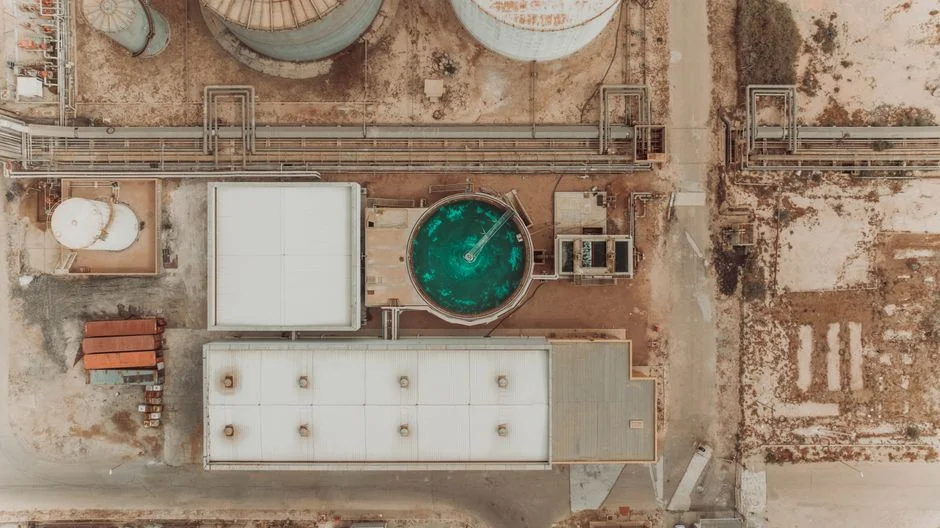
U.S. food plants discharge under 40 CFR 403 General Pretreatment Standards, with the actual numeric limits set by the receiving POTW. In the Beaver Dam area, the City of Beaver Dam Wastewater Treatment Plant enforces site-specific FOG, BOD, TSS, and pH limits, and those limits are what determines whether a DAF, a lamella, or both are required. The federal program is the legal umbrella; the local POTW's 2026 limits are the binding numbers in the discharge permit.
FOG limits are typically the binding constraint for food and dairy plants, and a DAF is usually the only practical way to meet a tight FOG cap without diluting the stream with clean water — dilution is not a compliance strategy and can trigger additional enforcement. BOD and TSS limits often drive downstream biological treatment, but a well-run DAF or lamella stage moves a large step toward compliance and reduces the load on the biological stage. Aries Chemical's example of a Midwestern chicken plant at ~2.0 MGD with high BOD, oil/grease, and ammonia illustrates why multi-stage treatment is the norm rather than the exception for processors of that scale (Aries Chemical).
Before signing a PO, obtain the local POTW's 2026 limits in writing, including the FOG cap, BOD/TSS daily maximums, sampling protocol, and any surcharges or mass-based fees. Pass those numbers to the supplier as guaranteed-performance targets — most DAF and lamella vendors will warrant effluent quality only against documented influent and discharge limits.
Choosing Between DAF, Clarifier, or Both: A 2026 Decision Framework
The decision reduces to three cases for a Beaver Dam food or dairy plant in 2026.
- Choose DAF when FOG dominates the load — when FOG is a meaningful fraction of the influent load, when TSS includes light or low-specific-gravity particles, or when the local POTW has a tight FOG cap. A DAF is the only single-stage technology that consistently removes floatable FOG, oils, and fine TSS together, and the 30–50 µm micro-bubbles Clearwater describes are the mechanism that does it (Clearwater Industries, S2).
- Choose a lamella clarifier when settleable TSS dominates and FOG is low — when the plant needs a compact, low-chemical polish step, especially as a downstream stage after a DAF. Surface loading rates of 20–40 m³/m²·h and up to 30% lower chemical use versus conventional settling (HydropureWater product literature) make the lamella the right tool for polishing clarified water, not for raw FOG streams.
- Choose both (DAF primary + lamella polish) when the plant needs very low TSS in the clarified water for reuse, when batch CIP discharges create shock loads that the DAF can ride through with the lamella as a safety net, or when capacity expansion is planned and the lamella gives incremental hydraulic margin.
The decision inputs a buyer must collect before requesting a quote are: design and peak flow (m³/h), influent FOG, TSS, BOD, COD, pH, and temperature; the local POTW's 2026 discharge limits; site footprint and available head; and the operator skill level that will run the system. Aries Chemical's own service model is built around "laboratory and pilot studies leading to full scale processes and systems" (Aries Chemical), and the same de-risking logic applies to a DAF or lamella purchase — on-site jar testing and a short pilot are the cheapest insurance a buyer can buy against a full-scale unit that misses its performance target. For plants evaluating reuse or zero-liquid-discharge downstream, the broader context is covered in a ZLD process technologies buyer's guide.
Frequently Asked Questions
How much does a DAF system cost for a small-to-mid-sized Beaver Dam food plant?
No published 2026 price band for packaged or engineered DAF units covering the Beaver Dam food-plant flow range was available in the supplied research. Buyers should request itemized quotes covering the DAF skid, the chemical conditioning train, the recirculation pump, and the sludge handling — quote lines bundled into a single "DAF system" line are the most common source of cost surprises. Include the local POTW's 2026 discharge limits in the RFQ so vendors warrant performance against documented targets rather than generic food-industry numbers.
What supplier information should a Beaver Dam food plant request before signing a DAF or clarifier PO?
Ask the supplier for documented influent and effluent data from at least one operating food or dairy reference site at comparable flow and FOG load, the model-specific surface loading rate or hydraulic loading rate used to size the unit, and a written performance warranty against the Beaver Dam POTW's 2026 FOG/BOD/TSS limits. Confirm whether the chemical conditioning train and the PLC control panel are in the quoted scope, and request a commissioning plan with jar-test and pilot-test deliverables before the unit ships.
When is a lamella clarifier the right primary unit instead of a DAF?
A lamella clarifier is the right primary unit when the influent is dominated by settleable TSS, FOG is consistently low (typically well under the local POTW FOG cap), and the plant needs a compact, low-chemical step on a stream that does not contain floatable oils. On any stream with meaningful FOG — typical of dairy, meat, and snack lines in the Dodge County cluster — a DAF is the more defensible primary, with the lamella as a polish stage.
Do Beaver Dam food plants need a pilot before buying a DAF or lamella clarifier?
Yes. The 2026 pretreatment envelope in Beaver Dam is tight enough, and food-plant FOG/TSS swings are wide enough, that a jar test plus a short on-site pilot is the standard way to de-risk full-scale selection. Aries Chemical's published service model explicitly includes "laboratory and pilot studies leading to full scale processes and systems" for exactly this reason, and the same de-risking step applies to any DAF or lamella supplier the buyer is evaluating.
Related Equipment
- HydropureWater automatic chemical dosing systems — specifications, capacity range, and technical data
- HydropureWater plate and frame filter press — specifications, capacity range, and technical data