
The 2026 Regulatory Stack for Chemical Plants Discharging Near West Burlington
Chemical plants near West Burlington, Iowa, meet pretreatment limits before sewer discharge by stacking three regulatory layers: federal categorical standards under 40 CFR (e.g., Part 414 for organic chemicals, Part 415 for inorganic chemicals), applicable new-source performance standards, and site-specific local limits developed through a headworks analysis by the receiving wastewater treatment plant. A facility becomes a "significant industrial user" once it discharges a daily average of 25,000 gallons of process wastewater or contributes 5% or more of the POTW's design capacity, which triggers a 5-year discharge permit with self-monitoring, reporting, and inspection obligations. Because the EPA's proposed federal industrial PFAS pretreatment rule was withdrawn in January 2025, Iowa plants currently face enforceable limits on conventional and metals pollutants, with PFAS governed by state-level action and permit-by-permit review.
Every chemical plant must satisfy the Clean Water Act §307(b) prohibited-discharge prohibitions: no corrosive waste, no fire or explosion hazards, no obstructions to sewer flow, no slug loads that upset biological treatment, no discharge that pushes the receiving plant's influent above 104°F (40°C), and nothing that causes the POTW's effluent to violate its own NPDES permit (City of Burlington, NC, 2024). The third layer is local limits, which the receiving POTW sets through a headworks analysis to cap metals, solids, ammonia, and other pollutants based on the plant's treatment capacity and sludge-handling options.
Iowa's program runs through the Iowa Department of Natural Resources, which administers the NPDES pretreatment delegation statewide, with EPA Region 7 retaining oversight. The practical consequence for a West Burlington-area plant is that the categorical standards, prohibited-discharge rules, and headworks-analysis local limits are enforced in parallel. A compliance strategy that addresses only one layer will fail at permit renewal. Statewide PFAS surface-water monitoring data published in 2026 explains why plants are layering voluntary source control on top of these three legal floors.
Who Qualifies as a Significant Industrial User in Iowa
Four SIU triggers used in delegated pretreatment programs nationally, mirroring the City of Burlington, NC framework, are: (1) discharge of a daily average of 25,000 gallons of process wastewater, (2) classification as a categorical industry under federal regulations, (3) contribution of 5% or more of any design capacity of the receiving POTW, or (4) a determination that the discharge adversely impacts the treatment plant, the receiving stream, or the POTW's sludge disposal options (City of Burlington, NC, 2024). Categorical status is automatic; a chemical plant that performs any of the regulated processes in 40 CFR Parts 414–417 is in the program regardless of flow volume.
Plants that fall outside the SIU definition still get regulated under a minor industrial user permit with fewer self-monitoring requirements and a permit term that often tracks the POTW's NPDES cycle. Engineers should self-classify before talking to a supplier, because the SIU determination drives both equipment sizing (especially equalization volume and monitoring instrumentation) and lead time for permit issuance. Under the Burlington, NC framework that delegated programs mirror, the permit-issuance sequence runs application → facility inspection → draft permit → state approval → 30-day public comment → final permit, with categorical-process submittals required 180 days prior to discharge (City of Burlington, NC, 2024).
| SIU Trigger | Threshold | Source of Authority | Permit Term |
|---|---|---|---|
| Process wastewater flow | ≥25,000 gpd daily average | 40 CFR §403.3 / delegated program | 5 years |
| Categorical industry | Any facility subject to 40 CFR Parts 414–417 | 40 CFR categorical rules | 5 years |
| POTW capacity share | ≥5% of any POTW design parameter | 40 CFR §403.3 / delegated program | 5 years |
| Impairment determination | Adverse impact on treatment, stream, or sludge | 40 CFR §403.3 / delegated program | 5 years |
Permits must be renewed 180 days before expiration, and any process change that alters wastewater composition triggers a permit modification. This regulatory requirement forces a periodic re-run of the headworks analysis, which is the next section.
Map Your Pollutants to the Right Treatment Stage
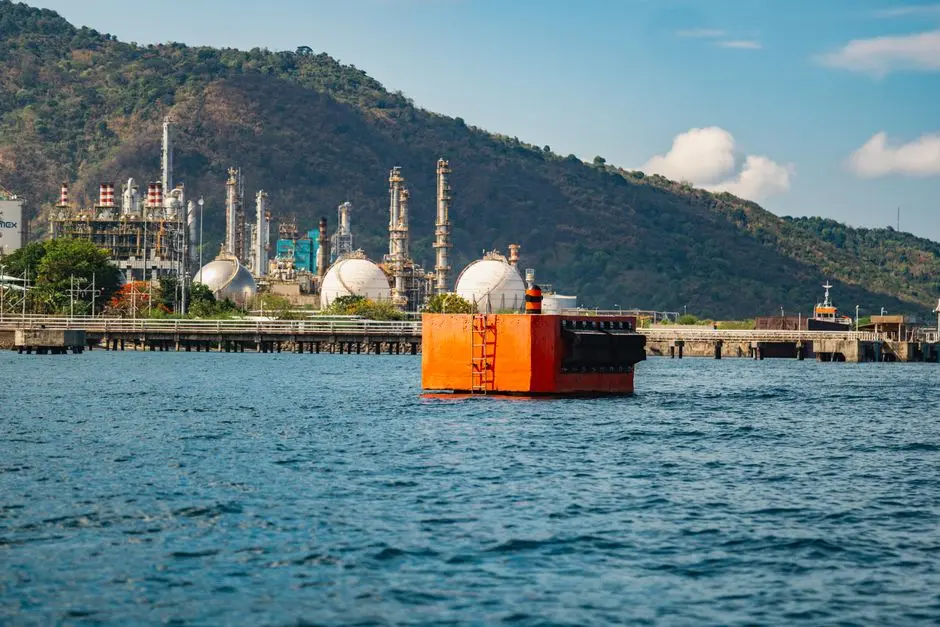
Chemical plant engineers require a specific pollutant-to-stage map to effectively design pretreatment systems. The mapping below pairs common pollutant categories at a chemical plant with the unit operation that removes them, grounded in the tannery-industry reference, which establishes the scale of loadings a chemical manufacturer can present: roughly 300 kg of chemicals per 1,000 kg of raw material, dominated by refractory organics, ammonia, sulfides, and chromium (Recycling/MDPI, 2022). The PFAS reminder at the end of this section comes from the Waterkeeper Alliance 2024 study, which found that of 22 plants surveyed, only 1 had PFAS limits in its discharge permit, and none had PFAS removal technology, causing these compounds to pass through to the receiving stream and into biosolids (Earth Island Journal, 2024).
| Pollutant Category | Primary Treatment Stage | Notes |
|---|---|---|
| FOG, free and emulsified oils | DAF systems for oil and FOG removal | Many POTWs set a 100 mg/L oil-and-grease ceiling; DAF with coagulant feed handles emulsified streams. |
| Heavy metals (Cr, Cu, Ni, Zn, Pb), hexavalent chromium | PLC-controlled chemical dosing for pH and coagulant feed + lamella clarifier for metals precipitation | Chromium is a target pollutant in heavy-industry effluent; hydroxide precipitation at controlled pH is the standard removal route. |
| Refractory COD, sulfides, ammonia | Equalization basin + biological treatment (MBR or activated sludge) | Raw discharge from chemical processes resists biological degradation; equalization dampens load swings before the aeration basin. |
| Suspended solids | headworks bar screen for chemical plant wastewater + multimedia filter | Bar screen protects downstream equipment; multimedia filter controls SDI ahead of any RO or polishing step. |
| PFAS, organics of emerging concern | GAC or ion-exchange polishing (currently optional) | Without polishing, PFAS passes through the POTW to the receiving stream; advanced filtration reduces PFAS by more than 99% (Earth Island Journal, 2024). |
| Sludge volume reduction | filter press for pretreatment sludge dewatering | Reduces off-site disposal mass and addresses the PFAS-in-biosolids pathway. |
Engineers should order a treatment train as a response to a pollutant inventory rather than a generic list of equipment. A proper 2026 specification starts with a 12-month composite of the process wastewater by stream, then sizes each stage to the 95th-percentile loading. For a quick orientation on screening, see this mechanical screening design guide.
How Local Limits Get Set: A Headworks Analysis Walkthrough
A POTW performs a headworks analysis whenever a new significant industrial user applies, an existing SIU changes processes, or the POTW's own NPDES permit is up for renewal. The document sets the maximum allowable headworks loadings for metals, solids, ammonia, and any other pollutant the analysis covers, and the SIU's permit limits are derived by allocating a share of those headworks caps to each industrial user. The complete headworks analysis contains an industrial user inventory, flow and load projections, unit-process removal credits for each POTW treatment stage, sludge-management constraints, and a safety factor for inhibition and bioconcentration.
Engineers should request a copy of the most recent headworks analysis at the start of the permit-renewal cycle to understand the derivation of local limits. The 40 CFR §403.5(b) prohibition on pass-through and interference means that even a pollutant without a numerical local limit can cause a violation if it slips through the POTW; this is the legal hook a permit writer will use if biosolids or effluent quality drifts. Understanding these constraints early prevents surprises during the draft permit phase. For comparison, the covington chemical-plant pretreatment playbook and the springdale chemical plant pretreatment approach use the same headworks framework; engineers working on multi-site permitting can borrow the calculation template across plants.
PFAS, the EPA Rule Withdrawal, and What Iowa Plants Should Plan For in 2026
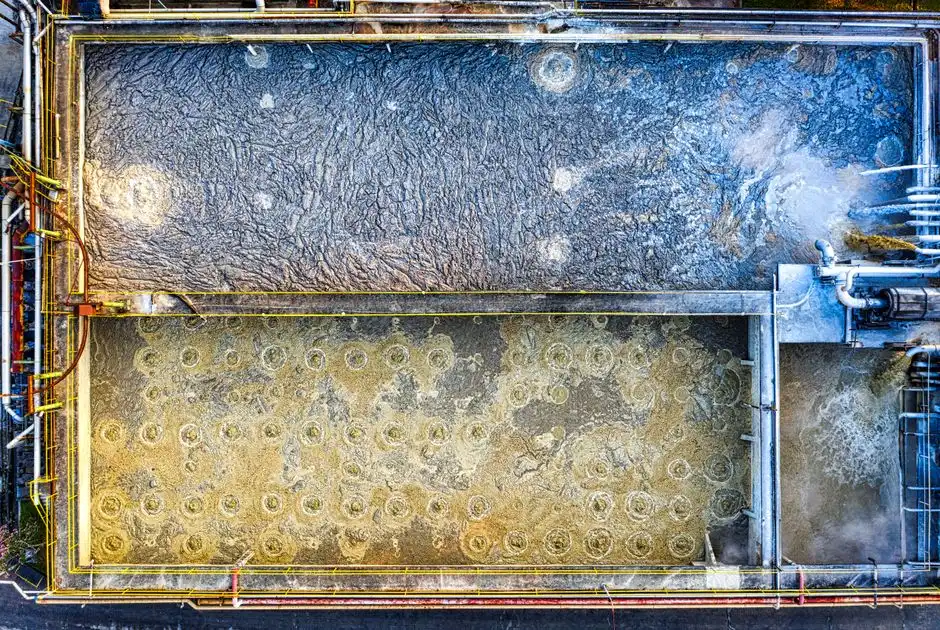
The EPA withdrew the proposed federal industrial PFAS pretreatment rule in January 2025, leaving PFAS pretreatment regulation largely to individual states (Earth Island Journal, 2024). For an Iowa chemical plant, that means no federal numerical PFAS discharge cap is in force, but Iowa DNR retains authority under the Clean Water Act to add PFAS limits at permit renewal, and individual POTWs can require PFAS monitoring or best-management-practice conditions in their discharge permits.
The scale of the problem is documented. At Sumter, South Carolina, the Waterkeeper Alliance found that PFAS rose from 118 parts per trillion upstream of the POTW to 228 parts per trillion downstream, a 107% increase, with downstream testing at the Black River confluence logging 7,600 parts per trillion (Earth Island Journal, 2024). Health-effect benchmarks put the practical floor much lower: adverse PFAS effects have been documented at doses as low as 2 parts per trillion (Earth Island Journal, 2024). Reverse osmosis and other advanced filtration systems have been shown to reduce PFAS levels in water by more than 99% (Earth Island Journal, 2024), so the technology exists to manage these compounds.
A prudent Iowa plant in 2026 should: (1) segregate PFAS-containing waste streams at the source, (2) characterize its own PFAS loading with a representative sampling program, (3) specify GAC or ion-exchange polishing skid space into any new treatment train, and (4) monitor Iowa DNR's NPDES permit-renewal notices for any PFAS local-limit addition. Equipment ordered today should be sized for a future PFAS polishing step, even if that step is not yet installed.
Frequently Asked Questions
What does a pretreatment permit actually cover for a chemical plant near West Burlington?
A pretreatment permit covers the categorical effluent limits from 40 CFR Parts 414–417, the prohibited-discharge prohibitions from Clean Water Act §307(b), and the site-specific local limits from the receiving POTW's headworks analysis. The permit term is 5 years under the delegated program framework, with renewal required 180 days before expiration (City of Burlington, NC, 2024). Engineers should ask the receiving POTW for the most recent headworks analysis, the draft permit, and the state approval letter before specifying equipment.
What does a compliant 2026 treatment train cost and how long does it take to install?
Cost and lead time depend on the categorical subcategory, the local limits in the receiving POTW's headworks analysis, and the SIU's monitoring requirements. A buyer should request a written budgetary quote tied to the specific categorical standard, the local-limit numbers from the headworks analysis, and the SIU's self-monitoring schedule, as these documents dictate the equipment list and installation sequence. Lead time for the headworks analysis and permit issuance is typically the primary constraint; equipment delivery is usually shorter once those are settled.
How does a chemical plant pick the right pretreatment equipment supplier?
Look for a supplier that provides, in writing, a pollutant-to-stage map for the specific categorical subcategory, a sizing basis that references the headworks-analysis local limits, and a monitoring plan that satisfies the SIU
