
How Cairo's Sewerage System Actually Works in 2026
The Greater Cairo Wastewater project covers 875 km² of the capital area, making it one of the largest wastewater system rehabilitation and construction programs in the world (Black & Veatch project record). The East Bank works delivered roughly 50 km of sewer tunnels, three major sewage pumping stations, and a new wastewater treatment plant at Gabal El Asfar, together with rehabilitation of the existing system (Black & Veatch project record). The Gabal El Asfar treatment plant is the main facility for the eastern half of Greater Cairo, with an ultimate capacity of 3,000 ML/day (Black & Veatch project record).
Historically, large parts of developed Cairo were never sewered, and householders were individually responsible for domestic waste disposal — the reason the project paired major new capital works with rehabilitation of overloaded legacy facilities (Black & Veatch project record). The program was funded by USAID and the UK Overseas Development Administration, with the AMBRIC consortium (Black & Veatch and Binnie & Partners, now both Black & Veatch) acting as engineering consultants covering master planning, design, contract management, and construction supervision (Black & Veatch project record).
For an engineer, developer, or municipal procurement officer in 2026, that 3,000 ML/day backbone is the benchmark but rarely the design case. The off-grid buyer designing a compound, hotel, hospital, factory, or small community plant needs a different reference set: Decree 44 / Law 48 effluent limits, decentralized process options, and a procurement checklist that survives local climatic and operational realities.
Why Decentralized Plants Still Matter in Greater Cairo
Centralized coverage over 875 km² does not equal 100% connection: peri-urban, rural, and informal extensions of Greater Cairo sit outside the trunk network and require on-site treatment. The typical 2026 end user is a residential compound, a hotel, a hospital, a factory, a school, or a rural community — the same use cases served by the WSZ underground A/O package plant (HydropureWater verified product catalog).
Egypt treats domestic wastewater as an irrigation resource, and the government is planning wastewater reuse in land reclamation on the Eastern and Western fringes of the Nile Valley and Delta (Research Institute for Groundwater, via Water Science & Technology, 1995). RIGW's preliminary survey of the Gabal el Asfar wastewater-irrigated area already documents the agricultural reuse pathway, so a decentralized plant sized to Decree 44 / Law 48 quality can plug directly into that reuse stream (RIGW, 1995).
For these off-grid sites, influent is essentially septic-tank-strength — low flow, variable concentration — which is why decentralized biological treatment, not trunk-sewer extension, is the engineering default in 2026. The same logic applies to a hotel retrofit on the desert fringe or a hospital expansion outside the 875 km² envelope.
Process Options for a Cairo Domestic Sewage Plant

The A/O (anoxic + aerobic) biological contact-oxidation process is the conventional workhorse for decentralized Cairo sites: it combines denitrification and BOD removal in a single buried package and forms the basis of the WSZ underground A/O package sewage plant, rated for 1–80 m³/h and suited to residential communities, hotels, hospitals, factories, and rural areas (HydropureWater verified product catalog). Submerged MBR (activated sludge coupled with PVDF ultrafiltration membranes) produces near-reuse-quality permeate and typically cuts the plant footprint substantially versus conventional activated sludge, and is the basis of the HydropureWater MBR membrane bioreactor (product catalog).
Vermifiltration — filtration combined with earthworm activity — is described in peer-reviewed work as efficient, low-expertise, and decentralizable for domestic septic-tank effluent, particularly where trained operators are scarce (IntechOpen, 2022). Constructed-wetland + microbial fuel cell hybrids have been studied as an integrated domestic-wastewater plus electricity route (IntechOpen chapter on constructed wetlands with MFC) and are referenced here as a research-stage option rather than a 2026 procurement default.
Disinfection is mandatory downstream of all three options: chlorine dioxide or UV are the standard 2026 finishing steps for Cairo plants targeting reuse.
| Process train | Typical flow band | Operator skill needed | Effluent quality for reuse | 2026 status for Cairo |
|---|---|---|---|---|
| A/O biological contact oxidation (WSZ package) | 1–80 m³/h (catalog) | Low — fully automated | Decree 44 / Law 48 compliant with disinfection | Procurement default for compounds, hotels, small communities |
| Submerged MBR (PVDF UF) | 10–2,000 m³/day range (catalog) | Medium — membrane cleaning | Near-reuse, <1 μm permeate | Default for sites with reuse intent on the Nile fringes |
| Vermifiltration | Low-flow, single-building scale (peer-reviewed) | Low (IntechOpen, 2022) | Site-specific, requires downstream polishing | Research-grade for Cairo, not a 2026 procurement default |
| Constructed wetland + MFC | Pilot scale (IntechOpen chapter) | Research-grade | Variable | Research-stage, not a 2026 commercial default |
Effluent Targets and the Egyptian Reuse Framework
The reference regulatory frame for wastewater discharge and reuse in Egypt is Law 48/1982 and its implementing Decree 44. The current 2026 revision should be requested from the client or the EEAA before final sizing, because Decree values and reuse end-use tables are updated periodically and the only national numbers an Egyptian engineer can rely on across governorates are the Decree 44 / Law 48 limits.
Because treated domestic wastewater is being pushed into irrigation on the Eastern and Western fringes of the Nile Valley and Delta (RIGW, 1995), the practical 2026 design target for most Cairo decentralized plants is reuse quality, not just sewer-discharge quality. A site that intends to discharge to a stream or drain rather than reuse should still be sized to meet the Decree 44 limits to stay defensible under any future end-use change.
MBR plants are the easiest route to reuse-grade effluent because the submerged membrane already removes most suspended solids and a large fraction of bacteria, which reduces the chlorine or UV dose needed at the disinfection step. The 2026 design decision is therefore not whether to meet Decree 44, but whether the reuse pathway on the Nile fringes is the contractual end-use — that single choice drives whether the MBR route is justified over the A/O package.
| Design parameter | What 2026 sizing depends on | What the buyer must obtain |
|---|---|---|
| Effluent BOD / COD | Decree 44 / Law 48 limit and reuse end-use | Current Decree 44 revision from EEAA (2026) |
| Total suspended solids | Reuse pathway (irrigation vs. stream discharge) | Confirmation of irrigation end-use from agriculture authority |
| Total nitrogen / ammonia | A/O or MBR nitrification / denitrification | Decree 44 nitrogen limit and reuse crop tolerance |
| Fecal coliforms | UV or chlorine dioxide dose | Decree 44 / reuse-pathway microbial limit |
| Reuse total dissolved salts | Soil and crop tolerance on the Nile fringes | Agriculture authority guidance, not Decree 44 alone |
Sizing a Package or MBR Plant for a Cairo Site
Step 1 — Establish the design flow. Combine peak daily flow per capita for Cairo residential compounds with hotel bedload, hospital bedload, or factory shift load, then apply a peaking factor. The latest EEAA or local-authority peaking factor for 2026 should be requested, because no single Cairo-specific peaking factor is given in the research and a developer working without a current local figure is guessing.
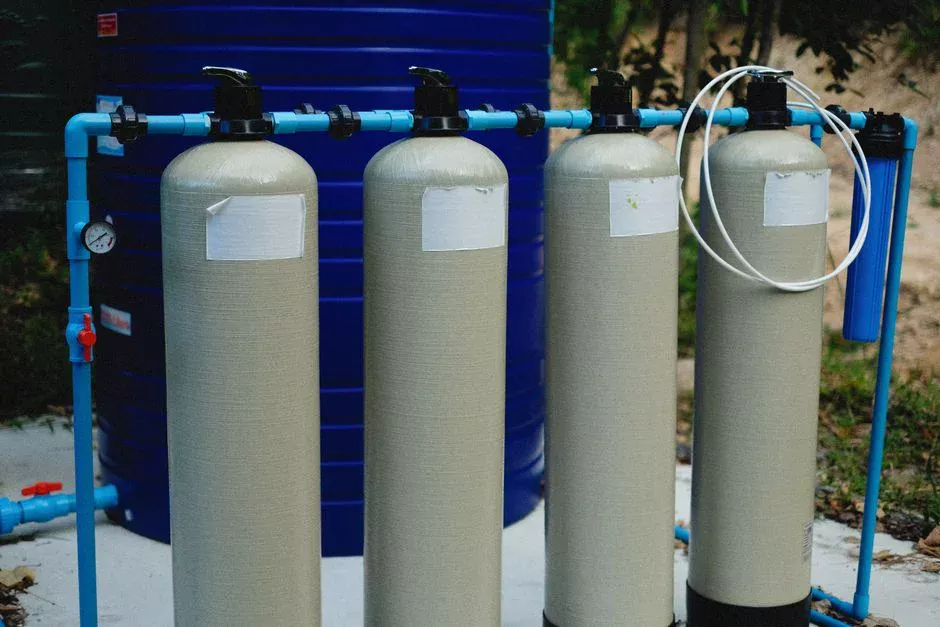
Step 2 — Pick the process train. Flows up to 80 m³/h suit the WSZ underground A/O package sewage plant (HydropureWater verified product catalog). Flows in the 10–2,000 m³/day range with explicit reuse intent suit the HydropureWater MBR membrane bioreactor (product catalog).
Step 3 — Pretreatment first. A GX rotary mechanical bar screen sized to peak flow protects downstream pumps and membranes from rags, plastics, and fibrous debris — a common failure mode in compounds with mixed domestic and landscaping waste (product catalog).
Step 4 — Sludge handling. Specify a plate-and-frame filter press for sludge dewatering so the plant can meet sludge-disposal rules under the same Decree 44 framework (product catalog).
Step 5 — Disinfection. Choose UV sterilizer units for chemical-free reuse, or chlorine dioxide where a residual is needed in the distribution network. A worked numerical sizing for a 200 m³/day Cairo compound should be requested from the supplier with local climatic adjustment, because the research does not provide a default sizing number for Cairo and a developer should not extrapolate from non-Cairo defaults.
Equipment Selection Checklist for 2026
The procurement-ready list below mirrors what a Cairo engineer should paste into an RFQ. The process train — A/O package, MBR, or vermifiltration — should be matched to flow, footprint, and reuse intent; a rotary mechanical bar screen sized to peak flow with dual overload protection goes at the headworks. The biological reactor should carry PLC-controlled aeration and automatic sludge return, and the membrane stage (if MBR is selected) should use individually replaceable PVDF modules. Disinfection is a UV sterilizer or a chlorine dioxide generator sized to the reuse or discharge target. Sludge dewatering is a plate-and-frame filter press with PAC/PAM dosing. The control panel should support remote telemetry for sites without 24/7 operators, and the documentation pack must include a Decree 44 / Law 48 conformity matrix and an Arabic-English operating manual.
| RFQ line | Specification input the buyer must define |
|---|---|
| Process train | Flow, footprint, reuse vs. discharge intent |
| Headworks screening | Peak flow and dual overload protection |
| Biological reactor | PLC-controlled aeration, automatic sludge return |
| Membrane stage (if MBR) | PVDF, individually replaceable modules |
| Disinfection | UV or chlorine dioxide, sized to Decree 44 / reuse target |
| Sludge dewatering | Plate-and-frame filter press with PAC/PAM dosing |
| Control panel | Remote telemetry for unattended sites |
| Compliance pack | Decree 44 / Law 48 conformity matrix, Arabic-English manual |
Cost Levers, Lead Time, and 2026 Risk Notes
Capital cost is driven mainly by process choice — A/O package is the lowest-cost route, MBR is higher, and constructed-wetland + MFC remains a research-stage option (IntechOpen chapter on constructed wetlands with MFC). Operating cost is dominated by aeration energy and membrane cleaning for MBRs, and by chemical consumption for sludge dewatering; a 2026 procurement officer should request a current energy and chemical quote from the supplier, and consult the PAC and PAM dosing cost optimization playbook before fixing the dewatering line. Lead time is dominated by membrane modules and control panels rather than civil works, so an MBR plant in Cairo is typically shipped several weeks from order; the precise 2026 lead time should be requested from the supplier, because no specific Cairo lead time is given in the research.
Risk note: 47% of South Africa's wastewater systems were reported critical in October 2026, and civil-society reporting on tailings dam registration (October 2026) underlines that under-investment in O&M is the dominant failure mode across emerging markets. Apply that lesson to Cairo's decentralized estate — a 2026 procurement decision that ignores O&M cost is a 2030 failure. For Egyptian reuse, align early with the local EEAA office and the agriculture authority on irrigation end-use: the reuse pathway on the Nile fringes is a permit, not a market (RIGW, 1995). For broader process context, the UAE 2026 domestic sewage treatment guide covers a comparable arid-climate neighbor with a similar Decree-style framework.
Frequently Asked Questions
What is the realistic 2026 cost range for a package or MBR domestic sewage plant in Cairo?
Capital cost scales with process choice and reuse intent: an A/O package plant is the lowest-cost route, MBR is higher, and vermifiltration or constructed-wetland + MFC options remain research-stage. Because no 2026 Cairo unit price is given in the research, the buyer must request a current itemized quote from a local supplier covering process train, pretreatment, disinfection, sludge dewatering, and control panel — a 2026 quote that does not separate these lines is not procurement-grade.
How do I pick between an A/O package plant and a submerged MBR for a Cairo site?
Use A/O when flow is within the WSZ 1–80 m³/h band and discharge to sewer is acceptable, and switch to MBR when the design flow sits in the 10–2,000 m³/day range and the end-use is irrigation on the Nile Valley or Delta fringes (HydropureWater verified product catalog; RIGW, 1995). The single decision driver is whether the Decree 44 / Law 48 limit and the reuse-pathway microbial limit require membrane-grade solids removal.
What influent and load data should a Cairo engineer collect before sizing a package plant?
Collect design flow (peak daily flow per capita for residential compounds, plus hotel bedload, hospital bedload, or factory shift load), current influent BOD, COD, TSS, total nitrogen, ammonia, and temperature, plus the 2026 EEAA peaking factor. Because the research does not provide a default Cairo sizing number, the worked sizing for any given flow band — for example a 200 m³/day compound — must be requested from the supplier with local climatic adjustment.
What compliance and permit risk should a 2026 Cairo buyer plan for?
Plan for two layers: the Decree 44 / Law 48 conformity matrix covering effluent quality, and an early alignment with the local EEAA office and the agriculture authority on irrigation end-use, because the reuse pathway on the Nile fringes is a permit, not a market (RIGW, 1995). A 2026 procurement decision without a Decree 44 conformity matrix in the documentation pack is exposed to permit risk on the reuse side.
