Why Microplastics Removal Is Now a Plant-Level Decision
Microplastics are defined as polymer particles less than 5 mm in size, but the science around their occurrence, transport pathways, and human-health effects is still being built (Vahvaselkä & Winquist, Sweden Water Research, 2021). Standardised analysis methods are still under development, which is one reason cross-study comparisons of removal efficiency are difficult to interpret at face value (Vahvaselkä & Winquist, Sweden Water Research, 2021).
In 2026, two pressures have converged on plant managers: tightening wastewater discharge scrutiny and growing public and regulatory attention to plastic pollution, so removal performance has shifted from a research curiosity to a procurement criterion. Microplastics can be addressed either by upstream measures that prevent release, or by removal technologies once the particles are already in the wastewater, and most operational plants will need both layers (Vahvaselkä & Winquist, Sweden Water Research, 2021). For an engineer justifying an upgrade, the practical question is no longer whether to act, but which removal stage to add to a specific influent.
The vendor meeting that follows this article's selection framework will be won or lost on how well the influent has been characterised before the meeting. The Sweden Water Research brief concludes that microplastics size, shape, and surface properties "significantly affect the behavior of MP particles in various MP removal technologies, and therefore, determine the removal efficiency" (Vahvaselkä & Winquist, Sweden Water Research, 2021). That statement reframes microplastics control from a generic "treatment upgrade" into a particle-specific design problem, similar to specifying a sieve cut for grit or a flux for a membrane.
Three Families of Microplastics Removal Methods
Microplastics removal methods fall into three families: physical, chemical, and biological/nature-based. The Sweden Water Research 2021 brief (Vahvaselkä & Winquist) groups membrane bioreactor (MBR), rapid sand filtration (RSF), disc filtration (DF), and dissolved air flotation (DAF) as physical methods, all with measured performance on real wastewater. Coagulation and flocculation, electrocoagulation, and sol-gel induced agglomeration sit in the chemical family, with reported MP removal efficiencies between 88% and 99.9% (Sun et al. cited in Vahvaselkä & Winquist, Sweden Water Research, 2021).
Biological and nature-based methods, including microorganisms, higher marine organisms, plants, bioretention cells, and constructed wetlands, are categorised by the same brief under "future potential" rather than proven design practice (Vahvaselkä & Winquist, Sweden Water Research, 2021). A useful benchmark for what conventional plants already achieve without a dedicated microplastics stage: an average microplastics removal efficiency of 93% was estimated for WWTPs in the Baltic Sea Region (Baresel & Olshammar 2019, cited in Vahvaselkä & Winquist, Sweden Water Research, 2021). That 93% figure is the baseline a vendor must beat to justify new equipment.
Placing a vendor proposal into one of these three families before reading the datasheet is the fastest way to filter marketing claims. Physical methods dominate the evidence base today; chemical methods are attractive retrofits where coagulant infrastructure already exists; biological methods belong on a watch list, not in a 2026 procurement line item, unless the plant is co-located with a constructed wetland that can be instrumented as a research asset.
Head-to-Head Efficiency: What the 2021 Sweden Water Research Brief Actually Reports
The 2021 Sweden Water Research policy brief (Vahvaselkä & Winquist) is the most direct practitioner-oriented summary of removal efficiencies to date, and its numbers anchor any serious 2026 comparison. MBR provided the highest reported removal efficiency at 99.9% and also delivered the lowest microplastic concentration in the final effluent (Talvitie et al. cited in Vahvaselkä & Winquist, Sweden Water Research, 2021). Rapid sand filtration achieved 97% microplastics removal from secondary effluent, and DAF achieved 95% from secondary effluent (Vahvaselkä & Winquist, Sweden Water Research, 2021). Disc filtration showed a wide range of 40%–98.5% on secondary effluent, a flag that DF performance is design- and influent-dependent rather than a single specifiable number (Vahvaselkä & Winquist, Sweden Water Research, 2021). Tertiary treatment further reduced microplastics concentration in the effluent to 0.2%–2% of the influent concentration (Vahvaselkä & Winquist, Sweden Water Research, 2021), so the design question is often what to add downstream of an existing secondary stage, not what to rebuild.
| Technology | Reported MP removal | Feed stream in source data | Source |
|---|---|---|---|
| Membrane bioreactor (MBR) | 99.9% | Primary effluent | Talvitie et al. cited in Sweden Water Research, 2021 |
| Rapid sand filtration (RSF) | 97% | Secondary effluent | Sweden Water Research, 2021 |
| Dissolved air flotation (DAF) | 95% | Secondary effluent | Sweden Water Research, 2021 |
| Disc filtration (DF) | 40%–98.5% | Secondary effluent | Sweden Water Research, 2021 |
| Tertiary polishing (combined) | Effluent 0.2%–2% of influent | Following secondary stage | Sweden Water Research, 2021 |
The brief is explicit about a caveat engineers cannot ignore: "the comparison of literature data on MPs concentrations and removal efficiencies by various technologies can be problematic mainly because sampling methods differ, different analytical approaches have been used for quantification of MPs and because the lower size limit of detection and quantification varies between studies" (Vahvaselkä & Winquist, Sweden Water Research, 2021). Any single efficiency figure presented in isolation is study-specific, and a vendor that quotes MBR at 99.9% without naming the influent, the size fraction, and the analytical method is selling a number, not a process.
Matching the Technology to the Influent
For municipal or industrial secondary effluent where the goal is polishing, DAF and rapid sand filtration both offer 95–97% removal per the Sweden Water Research 2021 data, and DAF adds the benefit of removing FOG and colloids relevant to many industrial streams (Vahvaselkä & Winquist, Sweden Water Research, 2021). A DAF system for secondary-effluent polishing slots into a tight footprint and feeds cleanly into a downstream filtration or reuse stage. For primary effluent or higher-strength streams where the existing activated-sludge stage is being upgraded, MBR is the evidence leader at 99.9% (Talvitie et al. cited in Vahvaselkä & Winquist, Sweden Water Research, 2021) and replaces a separate clarifier, shrinking the overall footprint. An MBR membrane bioreactor system is therefore the right starting point when a plant is rebuilding the biological stage rather than adding onto a working clarifier.
Where stormwater is in scope, retention ponds, infiltration basins, constructed wetlands, and filtration systems are the existing options, but the Sweden Water Research brief states that data on their MP removal efficiency is limited (Vahvaselkä & Winquist, Sweden Water Research, 2021). A Canadian two-year bioretention cell study (Smyth et al. cited in Vahvaselkä & Winquist, Sweden Water Research, 2021) reported an 84% decrease in median microplastics concentration in the 100–5000 μm range for parking-lot runoff, which is the strongest single stormwater data point currently available. Where chemical dosing is already in place, coagulation/flocculation, electrocoagulation, and sol-gel induced agglomeration can be retrofitted into existing basins and have reported 88–99.9% removal (Sun et al. cited in Vahvaselkä & Winquist, Sweden Water Research, 2021), but they generate an MP-laden sludge stream that needs downstream handling rather than disposal as conventional biosolids.
| Influent scenario | Recommended technology | Evidence-base efficiency | Residual stream to plan for |
|---|---|---|---|
| Primary effluent / high-strength rebuild | MBR | 99.9% (Talvitie et al. via Sweden Water Research, 2021) | Membrane retentate, waste-activated sludge |
| Secondary effluent polishing | DAF or RSF | DAF 95%, RSF 97% (Sweden Water Research, 2021) | Float/scum layer, sand-filter backwash |
| Stormwater (parking-lot, urban runoff) | Bioretention / constructed wetland / filtration | 84% median reduction, 100–5000 μm (Smyth et al. via Sweden Water Research, 2021) | Sediment, plant biomass |
| Existing chemical dosing infrastructure | Coagulation / electrocoagulation / sol-gel | 88–99.9% (Sun et al. via Sweden Water Research, 2021) | MP-laden chemical sludge |
Selection Framework: Choosing a Microplastics Removal Train in 2026
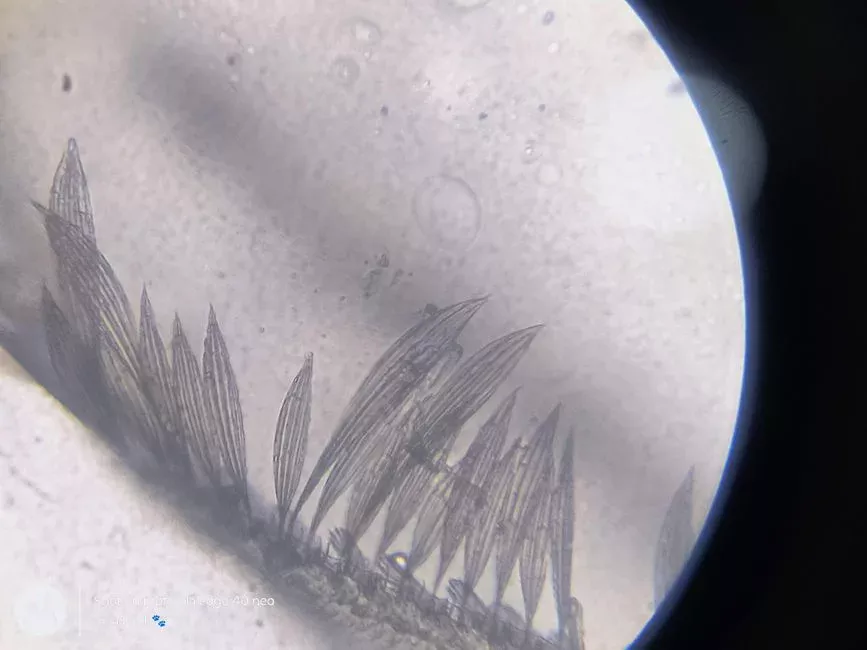
Step 1 is to characterise the influent microplastics by size, shape, and surface properties. The Sweden Water Research 2021 brief concludes that these characteristics "significantly affect the behavior of MP particles in various MP removal technologies, and therefore, determine the removal efficiency" (Vahvaselkä & Winquist, Sweden Water Research, 2021). A buyer who cannot answer "what is the size distribution of MPs in our influent" is not yet ready to choose between MBR, DAF, and RSF, and any vendor quotation that does not request this input is selling a default.
Step 2 is to decide whether the target is reuse or discharge. MBR and DAF both feed well into UF polishing after a biological stage for water-reuse schemes, while RSF and DF are typically the final polishing step for discharge compliance only. Step 3 is to plan for the MP-laden residuals. The Sweden Water Research brief flags that treatment methods for sewage sludge, pond sediment, sand, plant biomass, and membrane retentate enriched with MPs are not yet standardised, so procurement must include a residual-handling line, not just a removal line (Vahvaselkä & Winquist, Sweden Water Research, 2021). Where handling MP-laden membrane retentate in a ZLD train is in scope, that residual question becomes a process-design question rather than a sludge-disposal question. Step 4 is to specify that vendors report both particle-count and mass-basis concentrations, because the Sweden Water Research brief recommends both metrics since particle counts alone can overstate or understate risk for different polymer types (Vahvaselkä & Winquist, Sweden Water Research, 2021). Chemical-based retrofits should be paired with automated chemical dosing for coagulation-based microplastics removal so dose control can be tied to influent variability rather than set-and-forget. MBR vs conventional activated sludge for industrial wastewater is the right comparison to weigh when the biological stage is being replaced anyway.
Limitations and Open Questions Buyers Should Pressure-Test
The Sweden Water Research 2021 brief explicitly warns that comparison of literature data on MP removal efficiencies is "problematic mainly because sampling methods differ, different analytical approaches have been used for quantification of MPs and because the lower size limit of detection and quantification varies between studies" (Vahvaselkä & Winquist, Sweden Water Research, 2021). A vendor who quotes a single efficiency figure without naming the size fraction, the polymer types, and the analytical method is not answering the question.
Techno-economic analysis and life cycle assessment for emerging technologies compared with existing ones are described as "essential" but not yet settled in the same brief (Vahvaselkä & Winquist, Sweden Water Research, 2021), which means CAPEX and OPEX numbers in vendor proposals are currently model-dependent rather than benchmarked. Most wastewater data is on municipal or secondary effluent, and data on the efficiency of existing stormwater management options for microplastics removal is "limited" per the same source. The risk of simply shifting microplastics to another environmental compartment (sludge, pond sediment, membrane retentate) is flagged, so a removal specification must include a fate-of-residuals plan or it has only moved the problem downstream. For a plant already adding mechanical screening as a front-end microplastics step, the next open question is what mass-balance accounting the regulator will accept across the screening, biological, and tertiary stages.
Frequently Asked Questions
Which microplastics removal technology has the strongest evidence base in 2026?
Membrane bioreactor (MBR) has the strongest evidence base, with a reported 99.9% removal from primary effluent and the lowest microplastic concentration in the final effluent per Talvitie et al. cited in the Sweden Water Research 2021 brief (Vahvaselkä & Winquist, Sweden Water Research, 2021). For plants polishing an existing secondary stage without rebuilding the biological train, rapid sand filtration at 97% and DAF at 95% on secondary effluent are the next-strongest data points (Vahvaselkä & Winquist, Sweden Water Research, 2021).
Are stormwater and wastewater microplastics treated with the same technologies?
No, and the data quality is unequal. Wastewater technologies (MBR, RSF, DAF, DF) have measured removal efficiencies in the Sweden Water Research 2021 brief, while the brief states that data on the efficiency of existing stormwater management options (retention ponds, infiltration basins, constructed wetlands, filtration systems) is "limited" (Vahvaselkä & Winquist, Sweden Water Research, 2021). The strongest available stormwater data point is a Canadian two-year bioretention cell study reporting an 84% decrease in median microplastics concentration in the 100–5000 μm range for parking-lot runoff (Smyth et al. cited in Vahvaselkä & Winquist, Sweden Water Research, 2021).
How should a buyer pressure-test a microplastics removal efficiency quoted by a vendor?
Request the influent characterisation, the size fraction the figure was measured on, the polymer types detected, and whether the result is reported on a particle-count or mass basis. The Sweden Water Research 2021 brief recommends both particle-count and mass-basis reporting and warns that cross-study comparison is problematic because sampling, quantification, and lower size detection limits differ (Vahvaselkä & Winquist, Sweden Water Research, 2021). Also require a residual-handling line for the MP-laden sludge, backwash, or membrane retentate, since the same brief flags that treatment methods for these enriched matrices are not yet standardised (Vahvaselkä & Winquist, Sweden Water Research, 2021).
What budget and supplier-selection inputs should a plant manager request before signing a microplastics removal contract?
Request a techno-economic analysis and a life cycle assessment comparing the proposed technology against the existing train, because the Sweden Water Research 2021 brief lists both as "essential" but not yet settled in the public literature (Vahvaselkä & Winquist, Sweden Water Research, 2021). For supplier selection, confirm that the vendor has supplied an MBR membrane bioreactor system or a DAF system for secondary-effluent polishing on a comparable influent, and ask for a reference site with at least 12 months of operating data including membrane-fouling or polymer-dose history. For residual handling, request a mass balance across the biological, tertiary, and sludge-handling stages, since the brief warns against simply shifting microplastics to sludge or membrane retentate (Vahvaselkä & Winquist, Sweden Water Research, 2021). Front-end mechanical screening and downstream filter-press dewatering of the MP-laden sludge should both appear in the mass balance.