
The Regulatory Chain a Chatsworth Fabricator Has to Walk
A fabricated metals plant near Chatsworth meets sewer pretreatment limits by working under a federal floor of 40 CFR Part 433, the EPA Metal Finishing Effluent Guidelines, which is triggered whenever a facility performs any of six core operations and which typically applies to SIC Major Group 34 (fabricated metals). On top of that floor, the local Control Authority (POTW) issues a discharge permit, sets local limits, and classifies the facility as a Significant or Nonsignificant Industrial User. In 2026, an additional rulemaking under docket EPA-HQ-OW-2022-0869 is targeting PFAS from chrome finishing facilities that use PFAS-based chemistries to suppress hexavalent chromium, a known carcinogen. Operationally, the treatment train that consistently gets plants under their limits is source control and good housekeeping, pH/oxidation-state adjustment, hydroxide precipitation of dissolved metals, dissolved air flotation to capture the metal hydroxide floc, and plate-and-frame dewatering of the resulting sludge.
The federal floor is 40 CFR Part 433, the Metal Finishing Effluent Guidelines. The rule is defined by manufacturing process, not by industrial sector, but the EPA notes that facilities regulated by the Metal Finishing Effluent Guidelines are often included in SIC Major Groups 34 through 39, which includes fabricated metals (SIC 34), industrial and commercial machinery, electronic and electrical equipment, transportation equipment, instruments, and miscellaneous manufacturing (EPA, Metal Finishing Effluent Guidelines, www.epa.gov/eg/metal-finishing-effluent-guidelines).
The local Control Authority adds another layer of oversight by managing the pretreatment program. The POTW is delegated by EPA to run the pretreatment program, write local limits, classify the facility as Significant or Nonsignificant Industrial User (SIU/NSIU), require periodic compliance reports from SIUs, and publish Significant Noncompliance annually. The practical implication is straightforward: a fabricated metals plant near Chatsworth should expect to have a nondomestic waste survey or discharge permit application on file with its Control Authority before any process water can be sewered, and the local limits on the permit — not the federal numbers — are usually what bind day-to-day operations. Engineers should map the EPA → POTW Control Authority → SIU permit chain up front so the design team and the EHS team are working from the same document set.
Why 2026 Is Different: PFAS, Hexavalent Chromium, and the New Rulemaking
The EPA is conducting a rulemaking to address per- and polyfluoroalkyl substances (PFAS) discharges from a subset of facilities in the Metal Finishing and Electroplating point source categories, following the Preliminary Effluent Guidelines Program Plan 15 (EPA, www.epa.gov/eg/metal-finishing-effluent-guidelines). This is the 2026-specific reason a Chatsworth job shop serving aerospace and defense cannot treat pretreatment as a static compliance problem.
The EPA's Multi-Industry PFAS Study showed that PFAS are used by some metal finishing and electroplating facilities to control hexavalent chromium emissions, which EPA classifies as a known human carcinogen and inhalation hazard. The targeted subset is "chrome finishing facilities" — those performing chromium plating, chromium anodizing, chromic acid etching, and chromate conversion coating operations. All of those operations are common in Chatsworth-area job shops that plate, anodize, etch, or apply conversion coatings to aluminum, steel, and high-nickel alloys.
All rulemaking materials are in EPA docket EPA-HQ-OW-2022-0869. The technical contact for the PFAS rulemaking is Phillip Flanders ([email protected], 202-566-8323); the general Metal Finishing contact is Ahmar Siddiqui ([email protected], 202-566-1044). The actionable step is to assign someone on the engineering team to subscribe to that docket so scope changes — especially any pretreatment implications — are caught before the permit renewal cycle.
What Triggers Coverage: The Six Core Operations Under Part 433
Part 433 is process-defined: performing any one of six core operations pulls the facility into the rule, and once in scope, discharges from all 46 operations listed in 40 CFR 433.10(a) are covered by the Part 433 numerical and best-management-practice standards (EPA, www.epa.gov/eg/metal-finishing-effluent-guidelines). The first question a plant manager always asks — "are we covered?" — is a process-mapping question rather than a sector question.
The six core operations serve as the trigger, while the 46 operations in 40 CFR 433.10(a) define the full list of finishing-line steps that fall under the standards once any single core operation is performed. For a fabricated metals plant, this typically means cleaning, machining, plating, anodizing, etching, conversion coating, and the rinse lines that feed them.
SIC Major Groups 34–39 are the typical sectors that include fabricated metals (SIC Major Group 34), industrial and commercial machinery, electronic and electrical equipment, transportation equipment, instruments, and miscellaneous manufacturing. A Chatsworth plant should map every process step in its finishing line to the 40 CFR 433.10(a) list, including rinse lines, before assuming it is out of scope.
| Coverage Element | What It Means for a Chatsworth Fabricator |
|---|---|
| Trigger | Performing any of the six core operations under 40 CFR Part 433 |
| Scope once triggered | All 46 operations listed in 40 CFR 433.10(a) |
| Sector overlap | SIC Major Groups 34–39, including fabricated metals (SIC 34) |
| Definition basis | Manufacturing process, not industrial sector |
| Action | Map every finishing-line step (including rinses) to the 40 CFR 433.10(a) list |
Source Control First: The Cheapest mg/L You'll Ever Remove
Pretreatment involves removing, reducing, or altering harmful pollutants in industrial wastewater before they are discharged to the public sanitary sewer system and requires controlling pollutants at the source (Clean Water Services, cleanwaterservices.org/industry/pretreatment/). The cheapest mg/L any plant will ever remove is the one that never enters the waste stream in the first place.
Drag-out recovery, counter-current rinsing, and segregation of concentrated versus dilute streams are the lowest-cost ways to drop mass loading. Less mass at the head of the train means smaller downstream equipment, smaller chemical dose, and a smaller sludge-haul bill. Source control also preserves metals for recovery — Control Authorities explicitly cite the recovery of industrial byproducts, chemicals, and metals at the source as a pretreatment program benefit (Clean Water Services).
Where chemistry substitution is feasible, eliminating hexavalent chromium — for example, by moving to trivalent chromium plating or to non-chrome conversion coatings — sidesteps both the inhalation-hazard profile of Cr(VI) and the PFAS-suppression chemistries now under EPA review in docket EPA-HQ-OW-2022-0869. That substitution is a process-engineering decision, not a wastewater decision, but it is the move that most compresses both compliance risk and downstream CAPEX for any plant that is still running hex-chrome lines.
The Treatment Train That Gets Plants Under Their Limits
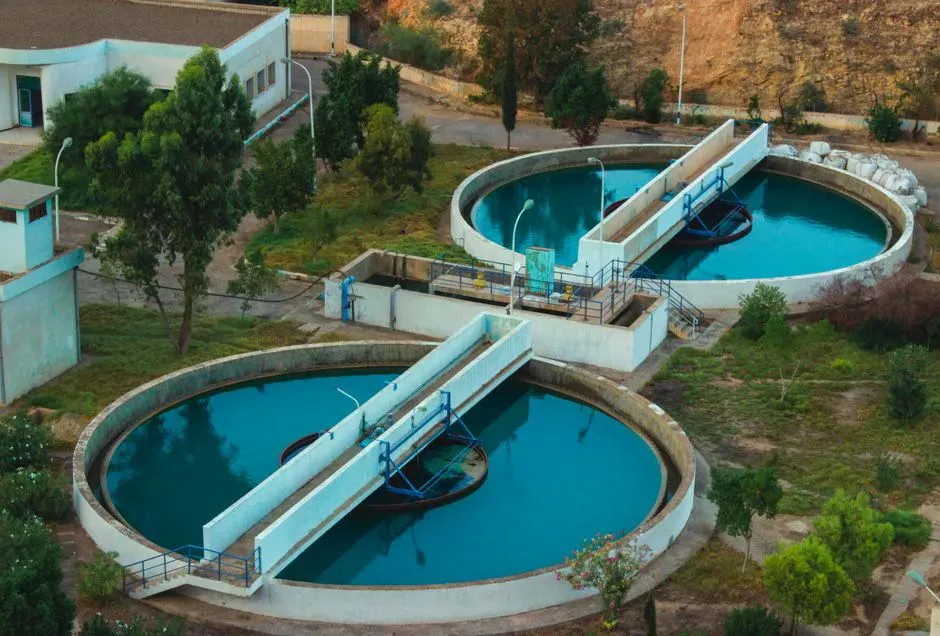
The standard equipment chain that consistently brings a fabricated metals plant under its local limits runs in five steps: equalization, pH and ORP adjustment, hydroxide precipitation, dissolved air flotation, and sludge dewatering. Each step has a specific function, and skipping one almost always results in a permit excursion or a sludge-handling problem downstream.
- Equalization/Neutralization. Batch or flow-equalization tanks stabilize pH and flow so downstream chemistry works as designed and peak rinsewater events do not slam the precipitation stage.
- pH and Oxidation-Reduction Adjustment. Automatic chemical dosing of acid, caustic, and (where required) a reducing agent sets the pH window for precipitation and reduces Cr(VI) to Cr(III) when hex-chrome lines are still in service.
- Hydroxide Precipitation. Raising pH into the metal-specific window converts dissolved heavy metals to low-solubility hydroxide floc that the next stage can physically remove.
- Dissolved Air Flotation (DAF). Micro-bubble flotation captures the metal-hydroxide floc, suspended solids, and entrained oil and grease in a floated sludge blanket that is skimmed automatically. This is the workhorse solids-removal step in metalworking wastewater. A dissolved air flotation (DAF) system for metal hydroxide sludge sized to the design flow carries most of the TSS load.
- Sludge Dewatering. A plate and frame filter press for metal-bearing sludge drops the moisture content of the floated sludge so the resulting cake is cheaper to haul and easier to dispose of as a metal-bearing waste.
Across the train, an automatic chemical dosing system for pH and flocculant control keeps the precipitation step on setpoint when flow and concentration drift over a shift, and a rotary mechanical bar screen at headworks protects the equalization tank, transfer pumps, and DAF from rags and debris that frequently come off finishing-line floor drains. Engineers writing a process datasheet should treat source control, equalization, dosing, DAF, and dewatering as one matched system, not five separate purchases.
Specifying the Equipment: Key Parameters and Sizing Inputs
Specifying a pretreatment train is mostly a matter of turning plant-side numbers into equipment-side parameters. The procurement datasheet should be built from the inputs below so that vendor quotes can be compared on the same basis.
| Equipment | Sizing Inputs the Buyer Must Provide |
|---|---|
| Rotary mechanical bar screen | Peak instantaneous flow, bar spacing, channel dimensions, debris loading |
| Equalization / neutralization tank | Average and peak hourly flow, pH range, residence time target |
| Automatic chemical dosing system | Coagulant and flocculant type and dose (kg/d), number of injection points, pH setpoint range, whether ORP control is required for chromium reduction |
| Hydroxide precipitation reactor | Target pH window, reaction time, mixing energy |
| Dissolved air flotation (DAF) | Design flow (m³/h), peak hourly flow, influent TSS and oil/grease, target effluent TSS, hydraulic residence time in flocculation and contact zones |
| Plate and frame filter press | Solids loading rate (kg DS/h), target cake dryness, cycle time, manual versus hydraulic versus fully automatic PLC control |
| Polishing (where local limits demand) | Target effluent TSS/total metals, downstream multi-media filtration or low-pressure membrane selection, backwash handling |
Upstream protection matters as much as sizing. A rotary mechanical bar screen at the headworks prevents rags, wipe material, and floor-drain debris from fouling the equalization tank, plugging transfer pumps, or accumulating in the DAF contact zone. Polishing downstream of the DAF — for example, a high-efficiency sedimentation tank followed by multi-media filtration — is the move when the POTW's local limits are tighter than what DAF alone can deliver, which is increasingly common where POTWs are tightening metals or TSS to protect reuse or biosolids quality.
Working With Your Control Authority: Permits, Reporting, and SNCR
Facilities discharging anything other than sanitary or domestic wastewater may need a nondomestic discharge permit from the Control Authority. The Clean Water Services model used by other POTWs requires a Nondomestic Waste Discharge Application submitted at least 90 days before discharging wastewater (Clean Water Services, cleanwaterservices.org/industry/pretreatment/). Chatsworth-area plants should expect the same 90-day clock from their own Control Authority and should plan equipment delivery and startup around that window, not around construction completion.
Significant Industrial Users, and some Nonsignificant Users, are required to submit periodic compliance reports, and the permit term sets the reporting cadence. Control Authorities are required to report each year the facility names and types of Significant Noncompliance committed by violators, and enforcement ranges from a warning letter to an administrative penalty to a potential order to stop discharging. Pretreatment recognition programs — for example, the Clean Water Services Industrial Partners Pretreatment Recognition Program, which highlights industrial customers that act as responsible stewards and have achieved 100% permit compliance within the last reporting year — give corporate EHS a defensible public record.
Frequently Asked Questions
What
Frequently Asked Questions
Does 40 CFR Part 433 apply to a fabricated metals job shop near Chatsworth?
Yes, if the facility performs any of the six core operations—electroplating, electroless plating, anodizing, coating, chemical etching and milling, or printed circuit board manufacturing—it is subject to the Metal Finishing Point Source Category under 40 CFR Part 433. Facilities located in the Chatsworth area discharging to a Publicly Owned Treatment Works (POTW) must comply with federal categorical pretreatment standards regardless of the shop's size or total daily flow volume.
What flow rate DAF do I need for a small fabricated metals plant?
For a typical small job shop, Dissolved Air Flotation (DAF) units are generally sized between 5 and 50 gallons per minute (GPM) to handle intermittent batch processing. Proper sizing depends on the hydraulic loading rate, typically designed for 1.5 to 3.0 GPM per square foot of surface area, and the specific concentration of Total Suspended Solids (TSS) and oil and grease found in your wastewater stream.
How do I pick a wastewater pretreatment equipment supplier for a metal finishing shop?
Select a supplier who provides a comprehensive treatability study, which involves analyzing a representative sample of your effluent to determine the optimal coagulant and flocculant dosing rates. Ensure the vendor offers equipment capable of meeting local discharge limits for regulated metals like copper, nickel, and zinc, and verify they have experience integrating automated pH adjustment and real-time monitoring systems required for compliance reporting.
How long does it take to install a DAF and filter press pretreatment train, and what drives the cost?
Installation typically requires 12 to 20 weeks, encompassing engineering design, permitting, equipment fabrication, and on-site mechanical and electrical commissioning. Primary cost drivers include the volume of wastewater processed, the complexity of the chemical precipitation stage, the degree of automation required for sludge handling, and the site-specific requirements for secondary containment and industrial plumbing upgrades.
If I run a chrome plating or chromate conversion coating line, what is the 2026 PFAS exposure?
Under the EPA’s final rule for the Metal Finishing Point Source Category, facilities using chromium electroplating or chromate conversion coating must eliminate the use of PFAS-based fume suppressants by September 2026. If a facility cannot demonstrate the absence of PFAS, it must transition to non-PFAS alternatives or implement stringent emission controls, as discharge limits for specific per- and polyfluoroalkyl substances (PFAS) are being strictly regulated under updated National Pollutant Discharge Elimination System (NPDES) permits.