
Why Quetta Changes the Cooling-Blowdown Equation
Quetta sits in an arid Balochistan basin where freshwater supply and disposal capacity are physically constrained, and the regional electrical grid is intermittent enough that any treatment train's kiloWatt draw is a siting constraint. IDE Tech (2026) lists arid and water-stressed regions of the Middle East and parts of Asia as priority zones for cooling-tower blowdown (CTBD) reuse; where the upstream basin is over-allocated, the only defensible strategy is to push more of the blowdown stream back into the cooling loop rather than to a dry wash or municipal outfall.
High ambient temperature and very low rainfall increase natural evaporative water loss from cooling towers, raising cycles of concentration and pushing blowdown TDS toward the upper end of the 1,200–6,000 mg/L band reported by Genesis Water Tech (2026). At the same time, grid instability in Quetta means the 15–25 kWh per 1,000 US gallons distillate load of mechanical vapor compression (MVC) reported by Genesis Water Tech (2026) is a real constraint, which makes a power-availability audit a prerequisite to specifying MVC or a brine crystallizer. Finally, Pak-EPA National Environmental Quality Standards (NEQS) for industrial effluent, plus any site-specific Balochistan EPA consent, define the legal discharge envelope; the design engineer must request the latest NEQS schedule from Pak-EPA before final equipment selection.
What Cooling-Tower Blowdown Actually Looks Like in Quetta
Genesis Water Tech (2026) places CTBD at 1,200–6,000 mg/L TDS, scaling calcium, magnesium and silica, plus accumulated biocides, corrosion inhibitors, scale inhibitors and dispersants; suspended solids 10–50 mg/L; and biological content including planktonic bacteria and biofilm fragments. Understanding these constituents allows the engineer to tailor the treatment train to specific site requirements. At 4 cycles of concentration, a typical data center loses approximately 25–30% of its makeup water to blowdown, and Genesis Water Tech (2026) cites 2.5–3 million gallons per month for a 10 million gal/month facility; the Quetta design engineer should re-derive this for the site's actual m³/day makeup rather than back-fitting a US-gal figure into a PKR cost line. IDE Tech (2026) highlights that conventional BWRO plateaus at 75–80% recovery on CTBD because of silica, CaCO₃ and CaSO₄ scaling, which is the specific chemistry that drives pretreatment and antiscalant selection for any Quetta reuse train. The request-for-information list the engineer should send to the client before any vendor is contacted: a 12-month averaged inlet water analysis, blowdown sample log, current cycles of concentration, biocide and inhibitor identity, blowdown flow meter data, and any Balochistan EPA correspondence on prior discharge limits.
| Parameter | Genesis Water Tech (2026) range | Implication for Quetta design |
|---|---|---|
| TDS | 1,200–6,000 mg/L (4–8× makeup) | Pushes RO recovery toward the lower end without antiscalant staging |
| Silica, calcium, magnesium | Scaling-risk minerals, accumulated with cycles | Drives pretreatment, antiscalant selection and any ZLD salt-precipitation step |
| Suspended solids | 10–50 mg/L | Side-stream filtration ahead of UF required to stay below 10–15 µm feed spec |
| Biological content | Planktonic bacteria, biofilm fragments | UV or chlorine dioxide on recycled permeate loop; non-oxidizing program preferred where RO follows |
| Cooling chemicals | Biocides, scale/corrosion inhibitors, dispersants; legacy chromates or high-phosphate programs flagged | Legacy programs must be reformulated before blowdown is reused or membrane performance collapses |
Three Treatment Trains That Make Sense for Quetta
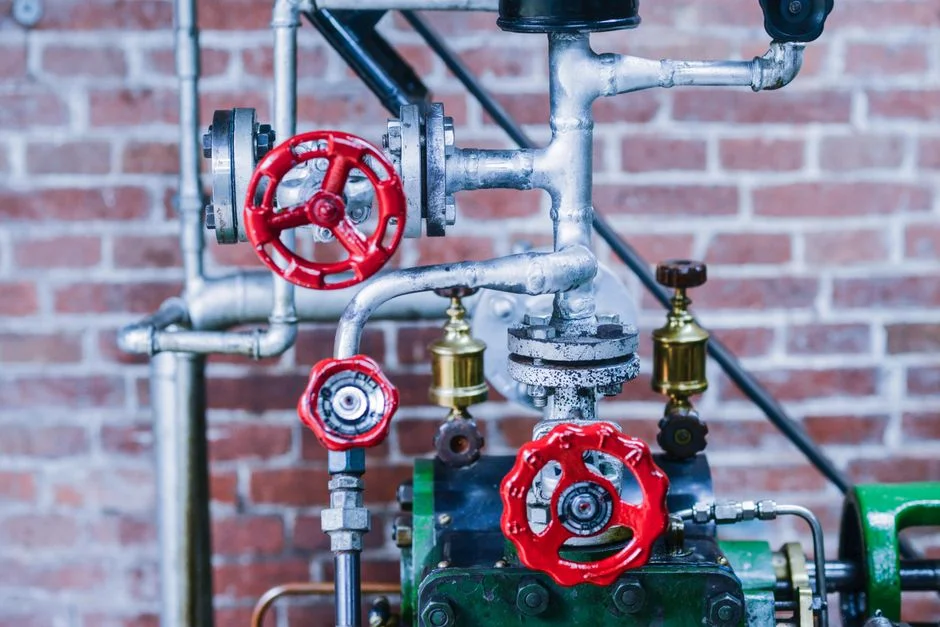
Three reuse-and-discharge strategies are defensible for a Quetta site, with the choice driven by recovery target, grid quality, land availability and the discharge envelope set by Pak-EPA NEQS. Train A is RO reuse with periodic brine disposal: side-stream filtration feeds a UF pretreatment skid operating at 10–30 psi, followed by an industrial reverse osmosis system at 50–85% recovery that produces 10–50 mg/L TDS permeate for cooling-tower makeup, with RO concentrate periodically discharged under NEQS (Genesis Water Tech, 2026). Train B adds brine concentration: RO at 50–75% recovery with concentrate fed to MVC at 95–98% recovery producing <10 mg/L TDS distillate, or routed to lined solar evaporation ponds in Quetta's high-evaporation climate; overall system recovery sits in the 85–95% band (Genesis Water Tech, 2026). Train C is full ZLD: RO + evaporative concentration + crystallizer at 95–99% overall recovery, with capex US$3–8 million and opex US$5–15 per 1,000 gallons (Genesis Water Tech, 2026), and is only justified in Quetta if NEQS or site conditions absolutely prohibit liquid discharge and waste heat is available to offset MVC's 15–25 kWh per 1,000 US gallons load. IDE Tech's (2026) brine-desalter case study demonstrates ~95% recovery with ~1 mg/L silica permeate when salt precipitation is built into the train, which is directly relevant to a Quetta high-silica makeup source.
| Parameter | Train A: RO reuse with brine disposal | Train B: RO + MVC or evaporation pond | Train C: Full ZLD with crystallizer |
|---|---|---|---|
| Overall recovery | 50–85% (Genesis Water Tech, 2026) | 85–95% (Genesis Water Tech, 2026) | 95–99% (Genesis Water Tech, 2026) |
| Permeate / distillate quality | 10–50 mg/L TDS (Genesis Water Tech, 2026) | <10 mg/L TDS MVC distillate (Genesis Water Tech, 2026) | <10 mg/L TDS distillate + solid salt cake (Genesis Water Tech, 2026) |
| Liquid discharge | Periodic brine under NEQS | Minimal / pond-fed | None (ZLD) |
| Land / footprint | Compact | Pond area or MVC skid + auxiliaries | Crystallizer hall plus salt handling |
| Capex (USD reference) | RO US$250,000–500,000 installed at 50,000 GPD (Genesis Water Tech, 2026) | Add MVC US$1–3 M at 10,000–30,000 GPD (Genesis Water Tech, 2026) | US$3–8 M system-level (Genesis Water Tech, 2026) |
| Electrical load driver | RO pumps (modest) | MVC 15–25 kWh per 1,000 US gallons of distillate (Genesis Water Tech, 2026) | MVC + crystallizer, same 15–25 kWh band (Genesis Water Tech, 2026) |
| Best fit in Quetta | Smaller sites, NEQS-compliant discharge path exists | Mid-size sites with land for ponds or grid headroom for MVC | Only when liquid discharge is prohibited and waste heat offsets MVC load |
Pretreatment, Antiscalant and Cooling-Chemical Compatibility
Genesis Water Tech (2026) recommends feed filtration to less than 10–15 microns plus pH adjustment and antiscalant injection ahead of any RO or NF membrane, and flags that legacy high-phosphate cooling programs must be changed before blowdown is reused, because phosphate carryover will foul RO membranes and breach phosphorus-related discharge limits. Proper chemical selection ensures long-term membrane integrity and compliance. Tablet-based, low-toxicity, non-phosphate cooling-water treatment such as the Genclean-S program described by Genesis Water Tech (2026) keeps biocide and inhibitor residuals in blowdown low enough to avoid membrane fouling or NEQS-related discharge breaches, and is a relevant upgrade for legacy Quetta sites still running chromate- or phosphate-heavy chemistry. Chlorine dioxide or UV sterilization of the recycled permeate loop controls biological regrowth, and the selection between them depends on whether the existing cooling program is oxidizing (chlorine or bromine) or non-oxidizing; pairing a chlorine dioxide generator with a UV sterilizer on the permeate line, fed by an automatic chemical dosing system for antiscalant and pH trim, is the standard configuration for a Quetta reuse train.
Sizing Checklist and CAPEX Sanity Check for a Quetta Project
Design engineers must collect specific inputs before vendor selection: makeup water analysis, blowdown flow in m³/day, target recovery percentage, target permeate quality, available footprint, available electrical capacity in kW, waste-heat sources, and any Balochistan EPA correspondence on prior discharge. Systematic data gathering prevents costly design errors. The order-of-magnitude CAPEX bands from Genesis Water Tech (2026) are side-stream filtration at US$50,000–200,000 for typical data center installations; 50,000 GPD RO at US$250,000–500,000 installed; MVC for 10,000–30,000 GPD at US$1–3 million; and full ZLD at US$3–8 million, all of which are USD reference points that must be re-quoted in PKR by a regional system integrator after accounting for containerization, transport overland to Quetta, and the local duty regime on membranes and pressure vessels. The MVC electrical load of 15–25 kWh per 1,000 US gallons of distillate (Genesis Water Tech, 2026) is the single largest opex driver, so the train selection must be paired with a Quetta-specific power-availability and tariff analysis before any commitment is made; pairing the upstream train with a multi-media filter sized to 1–5% of circulation flow keeps downstream membrane loading in spec. For a comparable regional benchmark, the comparable South Asian data-center blowdown guide walks through an Indian site's similar reuse logic, and the ZLD plant buyer's guide covers the salt-precipitation and crystallizer questions a Train C selection raises.
Frequently Asked Questions
What CAPEX and OPEX should we budget for a CTBD reuse train in Quetta, in PKR?
Anchor the budget to the Genesis Water Tech (2026) USD reference bands — side-stream filtration US$50,000–200,000, 50,000 GPD RO US$250,000–500,000 installed, MVC US$1–3 million, full ZLD US$3–8 million — and request PKR bids from a regional system integrator that itemizes containerization, inland transport to Quetta, and the duty treatment on membranes and pressure vessels.
How do we select a supplier who can actually deliver and commission in Quetta?
Ask each bidder for documented experience commissioning RO or RO+MVC trains at sites above 1,500 m elevation, evidence of in-country service coverage, and a list of imported skids versus locally assembled skids so that the duty treatment is transparent; require a single point of accountability from container arrival in Karachi through commissioning, and a written warranty path that does not require shipping a failed pressure vessel overseas.
How do Pak-EPA NEQS and Balochistan EPA consent apply to RO permeate, RO concentrate and MVC distillate?
RO permeate and MVC distillate that are returned to the cooling loop as makeup are not discharged effluent, so they fall outside NEQS effluent limits, but RO concentrate and any pond or MVC blowdown that is released to a dry wash or municipal sewer must meet the Pak-EPA NEQS