
Why Philadelphia Data Centers Need a Dedicated CTBD Strategy
Philadelphia-area data centers operate within the Delaware River basin, where the PA DEP, the Delaware River Basin Commission (DRBC), and EPA Region 3 review every meaningful withdrawal and discharge. A new or expanded campus must clear DRBC dockets that weigh project size, receiving-water quality, and consumptive loss against basin balance; this procedural requirement rules out a generic "RO skid and NPDES permit" approach.
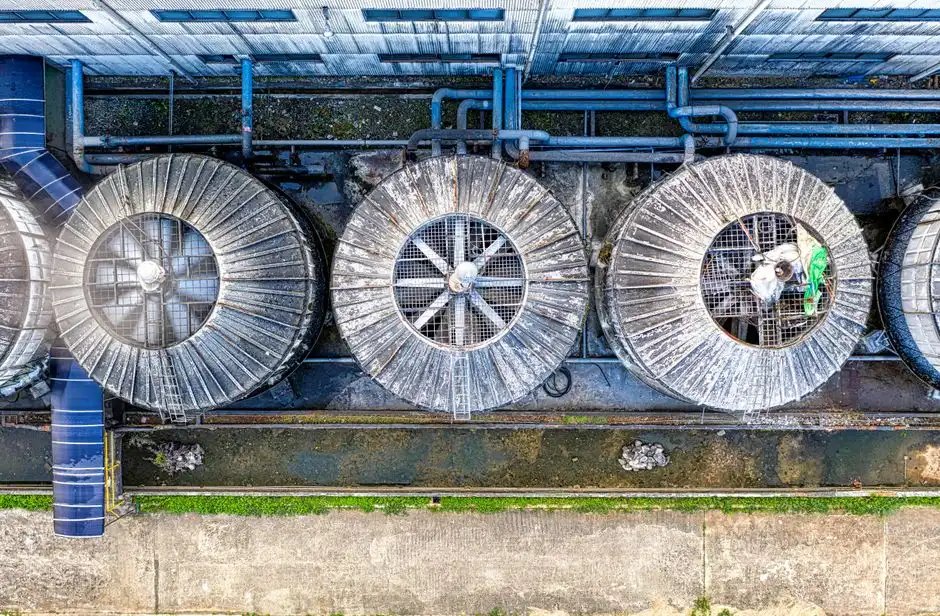
Cooling tower blowdown (CTBD) dominates the liquid side of that balance: at four cycles of concentration, a typical data center cooling tower loses 25–30% of makeup water to blowdown (S4), and a 100 MW facility can use up to 2 million liters of water per day (S5). U.S. thermoelectric and industrial cooling accounted for roughly 129 Bgal/d of withdrawal in 2010 according to USGS SIR 2014-5184, a load that data centers now represent a growing share of in Pennsylvania.
Philadelphia-specific planning variables do not appear on standard blowdown datasheets. The city's source water is a Delaware–Schuylkill blend that is moderately hard, which concentrates calcium, silica, and alkalinity inside the cooling loop faster than softer makeup supplies. PFAS is the second variable. The U.S. surface-water report found PFAS in 83% of river and lake tests, a baseline that frames community and permit risk for any PA discharge or reuse path. EPA's April 2024 PFAS National Primary Drinking Water Rule applies whenever a data center utilizes a potable reuse or surface-discharge route, so PFAS removal belongs in the early train evaluation rather than as a retrofit. For more on the national PFAS signal, see the U.S. PFAS surface-water report.
What CTBD Actually Contains: Water-Quality Envelope
Cooling tower blowdown is a brackish stream rather than dilute wastewater. Total dissolved solids run 4–8× the makeup TDS, meaning a 300 mg/L municipal source becomes 1,200–2,400 mg/L in the blowdown at four cycles of concentration, and a harder Delaware/Schuylkill blend can push that envelope toward 6,000 mg/L at higher cycles (S4). Suspended solids land at 10–50 mg/L, consisting mostly of corrosion products, biofilm fragments, and airborne particulates that pass basin filtration (S4). Scaling minerals—calcium, magnesium, silica, and alkalinity—concentrate proportionally and present the primary membrane and heat-exchanger risk; treatment chemicals (biocides, corrosion and scale inhibitors, dispersants) accumulate alongside them, and legacy chromate or high-phosphate chemistry complicates both discharge and reuse (S4). Biological content is unavoidable; planktonic bacteria, algae, and biofilm-forming organisms must be controlled ahead of any membrane step (S4). The table below summarizes the design envelope a Philadelphia engineer should use as a starting basis (S4):
| Parameter | Typical CTBD range | Design implication |
|---|---|---|
| TDS | 1,200–6,000 mg/L | Sets RO feed osmotic pressure and concentrate disposal volume |
| Suspended solids | 10–50 mg/L | Drives side-stream and UF pretreatment sizing |
| Hardness (Ca, Mg) | Concentrated 4–8× makeup | Defines antiscalant dose and NF vs. RO choice |
| Silica | Concentrated 4–8× makeup | Limits conventional RO recovery at 75–80% |
| Alkalinity | Concentrated 4–8× makeup | Controls acid feed and LSI on the cooling loop |
| Treatment chemicals | Biocides, inhibitors, dispersants | Drives compatibility check with membranes and reuse chemistry |
| Biological content | Planktonic and biofilm organisms | Requires biocide control upstream of membranes |
Treatment Train Options, From Side-Stream Filtration to ZLD
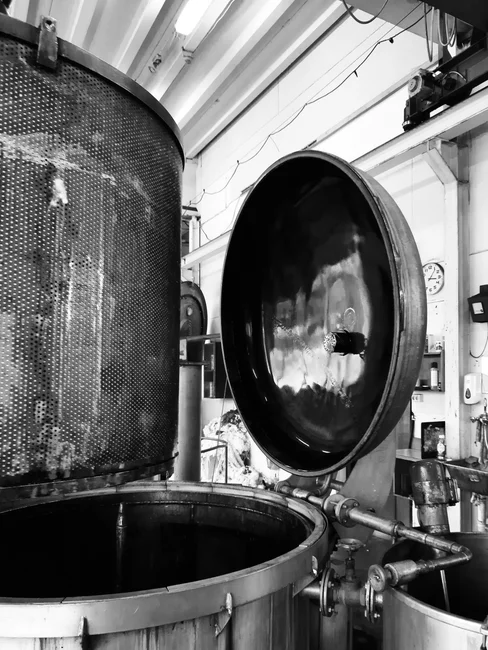
Side-stream filtration serves as the first lever for system management. Treating 1–5% of circulation flow through self-cleaning spiral units at a 10–25 µm cut keeps suspended solids, biological loading, and corrosion products in check, dropping blowdown TSS to a level downstream membranes can accept without rapid fouling (S4). Ultrafiltration (UF) at 0.01–0.1 µm runs at 10–30 psi with 90–95% recovery, removes bacteria and high-MW organics, and acts as the standard pretreatment ahead of RO or NF (S4); an ultrafiltration pretreatment skid is the typical unit operation at this stage. Reverse osmosis is the reuse workhorse, providing 95–99% salt rejection, permeate TDS of 10–50 mg/L, and operating pressure of 150–400 psi at 50–85% recovery on CTBD with antiscalant dosing (S4). A packaged industrial RO system sized at 50,000 GPD sits in the $250K–$500K installed range with $1.50–3.00/1,000 gal OPEX (S4).
Nanofiltration at 75–150 psi with 70–85% recovery and partial softening fits when hardness is the limiting discharge parameter rather than total TDS (S4). A multi-media filter ahead of either RO or NF keeps the silt density index in the membrane-friendly range. Conventional brackish RO on CTBD typically plateaus at 75–80% recovery because silica, calcium carbonate, and calcium sulfate reach scaling thresholds; exceeding that ceiling without chemistry control is a common design error. Mechanical vapor compression at the back end reaches 95–98% recovery with distillate TDS under 10 mg/L but requires $1–3M CAPEX for 10,000–30,000 GPD and 15–25 kWh per 1,000 gallons (S4). A full ZLD stack—RO concentrate plus MVC plus crystallizer—reaches 95–99% overall recovery at $3–8M CAPEX and $5–15/1,000 gal OPEX, reserved for sites where no liquid discharge is acceptable (S4). For a detailed review of ZLD hardware, the ZLD plant buyer's guide covers crystallizer selection and energy tradeoffs.
Discharge-only paths still require treatment to meet local TDS, metals, and biocide limits, and to avoid direct discharge fees of $5–15 per 1,000 gallons in water-stressed regions (S4). The matrix below maps each technology to a PA-relevant objective:
| Technology | Operating envelope | Best-fit PA objective | Cost band (S4) |
|---|---|---|---|
| Side-stream filtration | 1–5% of circulation, 10–25 µm | Loop stability for any path | $50K–$200K installed |
| Ultrafiltration | 0.01–0.1 µm, 10–30 psi, 90–95% recovery | RO/NF pretreatment on reuse and NPDES | Sized with RO train |
| Reverse osmosis | 150–400 psi, 50–85% recovery, 10–50 mg/L permeate TDS | Cooling-tower makeup reuse | 50,000 GPD at $250K–$500K, $1.50–3.00/1,000 gal OPEX |
| Nanofiltration | 75–150 psi, 70–85% recovery | Partial softening for NPDES or blending | Lower than RO at similar flow |
| Mechanical vapor compression | 95–98% recovery, <10 mg/L distillate TDS | Concentrate minimization, near-ZLD | $1–3M for 10,000–30,000 GPD, 15–25 kWh/1,000 gal |
| ZLD (RO + MVC + crystallizer) | 95–99% overall recovery | Sites prohibiting any liquid discharge | $3–8M, $5–15/1,000 gal OPEX |
Philadelphia-Specific Compliance Map
PA DEP Chapter 92a (NPDES) and Chapter 95 (water-quality standards) govern point-source discharges, and effluent limits in a Philadelphia-area permit are usually tighter than the technology floor; site-specific metals, TDS, phosphorus, and biocide residuals must be confirmed against the issued permit. Delaware River Basin Commission review is required for projects exceeding DRBC review thresholds, and the docket covers both withdrawal volume and receiving-water quality, necessitating a DRBC lens on reuse-versus-discharge decisions from the start. Philadelphia Water Department pretreatment rules apply if the data center sends waste to the municipal sewer rather than to surface water, adding a local industrial-waste layer to state and basin rules. EPA's April 2024 PFAS NPDWR applies to any drinking-water reuse path, so high-pressure RO, GAC, or AOP should be evaluated inside the train rather than bolted on later. The October 2026 industry reporting—showing 83% detection in U.S. rivers and lakes—is the baseline that PA permit reviewers increasingly reference for surface-discharge applications.
Cost and Decision Framework
The following installed-cost bands are generic industry figures from S4 and S5; site flow, feed water, and discharge limits shift every number, and any vendor proposal should be benchmarked against an actual pilot or treatability test:
- 50,000 GPD RO skid: $250K–$500K installed, $1.50–3.00 per 1,000 gal OPEX (S4).
- UF/RO/NF pretreatment train: sized to match the RO skid; budget for multimedia filtration and an antiscalant dosing system ahead of the membranes.
- Mechanical vapor compression: $1–3M at 10,000–30,000 GPD, 15–25 kWh per 1,000 gallons (S4).
- Full ZLD: $3–8M CAPEX, $5–15 per 1,000 gal OPEX (S4).
- Avoided discharge fees of $5–15 per 1,000 gallons in stressed regions (S4) shorten the payback for any reuse train at meaningful flow.
- 100 MW sizing reference: up to about 2 million liters per day (S5); smaller edge sites scale the same train down with similar unit OPEX.
The decision tree for a Philadelphia engineer is straightforward. If the site has a DRBC-approved surface discharge and PFAS is controlled, an NPDES polishing path fits. If freshwater supply is constrained or the basin balance is closed, a UF + RO reuse train with concentrate management fits. If no liquid discharge is permitted at all, ZLD is the only compliant option. PFAS remains a parallel variable in every branch, as even an NPDES-only design may require GAC or AOP polishing to satisfy evolving state expectations. Use this framework to approach vendors with a shortlist and a populated flow/feed-water data sheet, asking for pricing on all three branches. For a peer-region contrast, the Ludhiana data center blowdown guide walks through the same technology train under a different regulatory envelope.
Frequently Asked Questions
What capex range should a Philadelphia data center budget for a CTBD reuse train at a 50,000 GPD scale?
Use the S4 industry band of $250K–$500K installed for a 50,000 GPD RO skid plus pretreatment, with $1.50–3.00 per 1,000 gal OPEX; for a full ZLD at the same scale, budget $3–8M CAPEX and
Frequently Asked Questions
What cooling tower blowdown treatment train does a Philadelphia data center actually need in 2026?
In 2026, a standard treatment train for a Philadelphia data center requires a multi-stage approach to manage the high alkalinity and hardness typical of the Delaware River basin water source. The process must include automated side-stream filtration (typically 5-10 micron) to manage suspended solids, followed by a high-efficiency Reverse Osmosis (RO) system to reduce total dissolved solids (TDS) and alkalinity. This is typically paired with advanced electrochemical or non-chemical water treatment (NCWT) to manage scaling without excessive chemical discharge.
Due to stringent local discharge limits, the train often concludes with a pH adjustment and monitoring station to ensure compliance with Philadelphia Water Department (PWD) sewer standards. Systems are increasingly incorporating real-time conductivity-based blowdown controllers to minimize water wastage while maintaining cycles of concentration (CoC) between 5.0 and 8.0, depending on the specific water chemistry of the facility's intake.
How much does it cost to install an RO-based CTBD reuse system for a 10–50 MW data center?
For a data center in the 10–50 MW capacity range, the capital expenditure (CAPEX) for a skid-mounted Reverse Osmosis-based blowdown reuse system typically ranges from $450,000 to $1.2 million. This cost variance is driven by the required permeate capacity, which for these facility sizes generally falls between 20 and 100 gallons per minute (GPM), and the level of automation integration required for the facility’s Building Management System (BMS).
Installation costs include the RO unit, pre-treatment media filters, chemical dosing skids, and the necessary piping modifications to integrate the permeate back into the cooling loop. Operational expenditure (OPEX) should be budgeted at an additional $0.05 to $0.12 per 1,000 gallons of treated water to account for membrane cleaning, power consumption, and replacement of pre-treatment cartridges.
Does a Philadelphia data center need zero liquid discharge, or is an NPDES discharge permit enough?
Most Philadelphia data centers do not require full Zero Liquid Discharge (ZLD) systems unless the facility is located in a specific zone with extreme water scarcity or unique local sewer moratoriums. For the majority of sites, securing an industrial wastewater discharge permit from the Philadelphia Water Department, which governs compliance with the Clean Water Act via the NPDES framework, is sufficient for legal operation.
While ZLD is the gold standard for sustainability, it involves high-energy processes like thermal evaporation or crystallizers that are rarely justified by current regional water pricing. Operators typically opt for a "Minimal Liquid Discharge" (MLD) approach, utilizing RO to concentrate waste streams while discharging the remaining brine to the municipal sewer system, provided the discharge meets PWD’s specific heavy metal and TDS concentration limits.
How does EPA's PFAS rule affect cooling tower blowdown reuse for a Pennsylvania data center?
The EPA’s final rule designating PFOA and PFOS as hazardous substances under CERCLA significantly impacts cooling tower blowdown management, as these chemicals can concentrate in the cooling loop during the evaporation process. If a data center's source water or chemical additives contain PFAS, the blowdown may now exceed regulatory thresholds for discharge, necessitating the installation of Granular Activated Carbon (GAC) or Ion Exchange (IX) resin polishing stages within the treatment train.
Pennsylvania’s adoption of stringent Maximum Contaminant Levels (MCLs) means that operators must perform baseline PFAS sampling of their cooling water. If PFAS is detected, the cooling tower blowdown can no longer be treated as simple wastewater; it may require specialized handling or secondary treatment to remove PFAS before it can be discharged into the municipal sewer or reused in non-potable applications like irrigation or facility greywater systems.
What is the typical ROI of reusing cooling tower blowdown versus paying discharge fees in the Delaware River basin?
The ROI for cooling tower blowdown reuse in the Delaware River basin is highly sensitive to the rising cost of water and sewer throughput fees in Philadelphia, which have seen consistent annual increases. For a 20 MW facility, a well-engineered reuse system typically achieves a simple payback period of 3.5 to 6 years, depending on the local utility's tiered pricing structure and the reduction in freshwater makeup demand.
Beyond direct utility savings, the ROI is bolstered by reduced sewer discharge volume charges, which often account for 60-70% of the total water utility bill. As the Delaware River Basin Commission (DRBC) continues to tighten water withdrawal regulations, the ability to recycle blowdown effectively acts as a hedge against potential future water consumption surcharges and regulatory fines associated with effluent quality non-compliance.