What a Polymer Makedown System Does in a Wastewater Plant
A polymer makedown system is engineered equipment that automatically wets, mixes, and ages dry or liquid polymer flocculant into a homogeneous, fully activated solution at the concentration and flow rate required for wastewater flocculation or sludge dewatering. The dominant design is a three-chamber skid (hydraulic shear → mechanical mix → pump-out), constructed in 304 or 316 stainless steel, with the polymer diluted, agitated, and held for the maturation time the polymer chain needs to uncoil before dosing. Choosing the right system means matching chamber count, capacity, and control philosophy to the downstream dewatering device.
Polymer flocculant is a yield-control reagent, not a mixing-tank consumable. An under-wetted dry polymer carries fish-eyes that pass through to the sludge and never participate in flocculation; an over-sheared chain is mechanically scissored into fragments that cannot bridge fines. The makedown unit keeps the polymer inside the narrow window where its long chains are fully extended and able to bridge particles. In a documented field case, switching from a poorly performing mixer to a hydraulic polymer blender dropped polymer feed from 20–21 mL/min to 18.2 mL/min while improving clarified water turbidity from sub-8 to sub-4 — a chemical savings of over 10% on the polymer line alone (ProMinent, prominent.us).
This economic efficiency ensures the unit pays for itself in polymer reduction rather than capital amortization. The skid acts as the bridge between the polymer drum or silo and the downstream dosing pump that feeds a dissolved air flotation unit, a clarifier, or a plate and frame filter press. The downstream device requires a feed at the right concentration, at the right age, and at a stable flow rate, all of which the makedown skid guarantees.
How the Three-Chamber Activation Sequence Works
The reference architecture for dry polymer activation is three chambers in a single tank, with each chamber doing one job in series: hydraulic shear first, mechanical mix second, pump-out third (Clearwater Industries, clearwaterind.com, 2025-08). The chamber sequence mirrors the physical transitions the polymer must undergo to become effective.
Chamber 1 — hydraulic shear. Dry polymer arrives as granules or powder that clump when wetted. If the first water contact is delivered through a high-RPM impeller, dry agglomerates get buried inside wet polymer shells and never dissolve. The first chamber uses controlled hydraulic energy from the dilution water itself to break up those agglomerates without mechanically scissoring the long-chain molecules before they uncoil. The ProMix H variant from ProMinent has no moving parts in the mixing zone, trading mechanical flexibility for a lower-maintenance, hydraulic-only activation train (ProMinent, prominent.us).
Chamber 2 — low-shear mechanical mix. Once the dry polymer is fully wetted, it needs time for the chain to hydrate and reach its active conformation. The BioResources review of retention-aid polyelectrolytes notes that high-mass polyelectrolytes — on the order of 10 million g/mol molecular mass, roughly 100,000 monomer units per chain — undergo conformation change over time and under shear (Hubbe et al., BioResources, doi.org/10.15376/biores.4.2.850-906). Chamber 2 holds the wetted polymer in a low-shear mechanical mixer long enough for that conformation to develop. High-shear impellers here would shorten the chain and destroy the bridging function.
Chamber 3 — quiescent aging and pump-out. The third chamber smooths concentration swings before the dosing pump draws. Feed accuracy at the dosing pump is only as good as the homogeneity of what it sees on suction, so chamber 3 acts as a buffer between the batch-style upstream mixing and the continuous downstream draw. For dry polymer, chambers 2 and 3 together deliver the "maturation" or "aging" time specified by the supplier, typically tens of minutes.
Sizing a Polymer Makedown Skid: The Parameters That Drive Selection
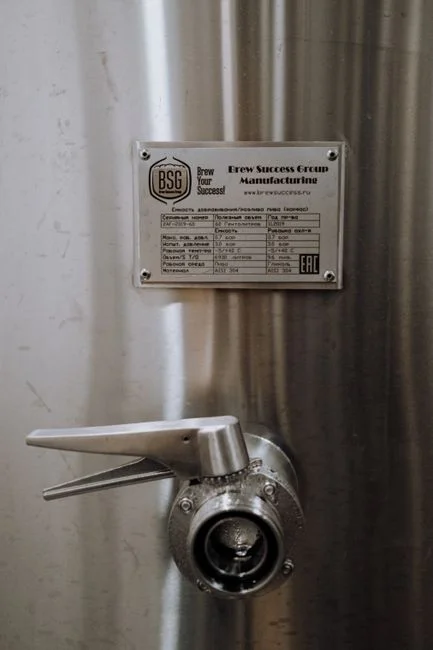
A datasheet-ready parameter list is the fastest way to make vendor quotes comparable. Mainstream industrial prep equipment spans a published envelope from about 132 GPH at the low end to 2,642 GPH at the high end: ProMinent's DULCODOS ULFb is rated 132–2,642 GPH (500–10,000 L/h), and the ProMix primary-dilution unit is rated up to 1,500 GPH (5,678 L/h) (ProMinent, prominent.us). Buyers should treat hundreds to thousands of GPH as the expected bracket from any credible supplier.
The following table lists the engineering parameters necessary for a request-for-quote sheet.
| Parameter | Typical range or option | Selection driver |
|---|---|---|
| Feed form | Dry granular / powder or liquid emulsion | Drives chamber count, footprint, and downstream aging time |
| Chamber count | 3 chambers (dry reference); single-pass hydraulic (clean water, low dose) | Dry polymer needs wetting, mixing, and aging stages |
| Preparation capacity | 132–2,642 GPH (500–10,000 L/h) industrial envelope; 20–1,500 GPH at the prep unit outlet | Peak downstream demand plus 20–30% margin |
| Active concentration | 0.01–0.4% active polymer for retention-aid-class applications (BioResources review); dry-polymer prep typically 0.05–0.5% | Confirm exact working window with the polymer supplier |
| Maturation / aging time | Set by chamber 2 + chamber 3 retention; supplier data sheet value | Drives tank volume and batch frequency |
| Material of construction | 304 SS standard; 316 SS for chloride or aggressive water | Chemistry of dilution water and ambient conditions |
| Control philosophy | PLC automatic batching (level switches, maturing timer) or manual | Operator coverage; PLC is standard for unattended service (Clearwater, 2025-08) |
| Configuration | Skid-mounted, factory wet-tested; containerized for outdoor / remote sites | Site climate, footprint, and installation labor |
Two design points are negotiable but should not be left open. First, specify material of construction up front: 304 stainless steel is standard, but 316 stainless steel should be required where chloride exposure or aggressive water chemistry is expected. Second, ensure every credible skid is factory wet-tested, not dry-assembled, to avoid piping leaks during commissioning.
Dry Polymer Makedown vs Liquid Emulsion Dosing
The dry-versus-liquid feed decision locks in chamber count, footprint, and operating cost, so it should be finalized before the vendor quote process begins. These systems are not interchangeable, and selecting the wrong configuration leads to either excessive chemical costs or inadequate activation hardware.
| Decision axis | Dry polymer makedown | Liquid emulsion dosing |
|---|---|---|
| Feed form | Granular or powder flocculant | Pre-made emulsion flocculant or coagulant |
| Activation hardware | Three-chamber skid (shear → mix → age) | Often in-line static mixer plus aging tank |
| Active concentration window | Low-percent range, prepared on site | Fixed by emulsion supplier, diluted down |
| Chemical cost per pound of active | Lower — no water shipped | Higher — emulsion is mostly water |
| Handling burden | Dry feeder, dust control, humidity-sensitive | Drum handling, spill risk, viscosity shift in storage |
| Maturation requirement | Built into chambers 2 and 3 | Often a separate aging tank plus transfer pump |
| Best fit | Sites with high dose demand and a year of stable sludge | Sites with low dose demand or limited operator attention for dry handling |
The economic argument for dry systems is straightforward. Because dry polymer is shipped without water weight, it is cheaper per pound of active material, and the additional capital cost of the three-chamber activation skid is recovered through recurring chemical savings (Clearwater, clearwaterind.com, 2025-08). For dose-efficiency, retention-aid-class applications run in the 0.01–0.4% active range, and a 10% improvement in efficiency multiplies across every pound of dry polymer consumed annually (BioResources; ProMinent, prominent.us). A properly designed dry makedown unlocks this efficiency, whereas a passive mix tank cannot.
Liquid emulsion systems offer a different trade-off. For sites with limited operator attention, automatic dry polymer makedown removes the drum-handling and viscosity-shift risks associated with emulsions, while the closed dry feeder is easier to climate-control than a drum staging area.
Integrating the Makedown Skid With Downstream Dewatering Equipment
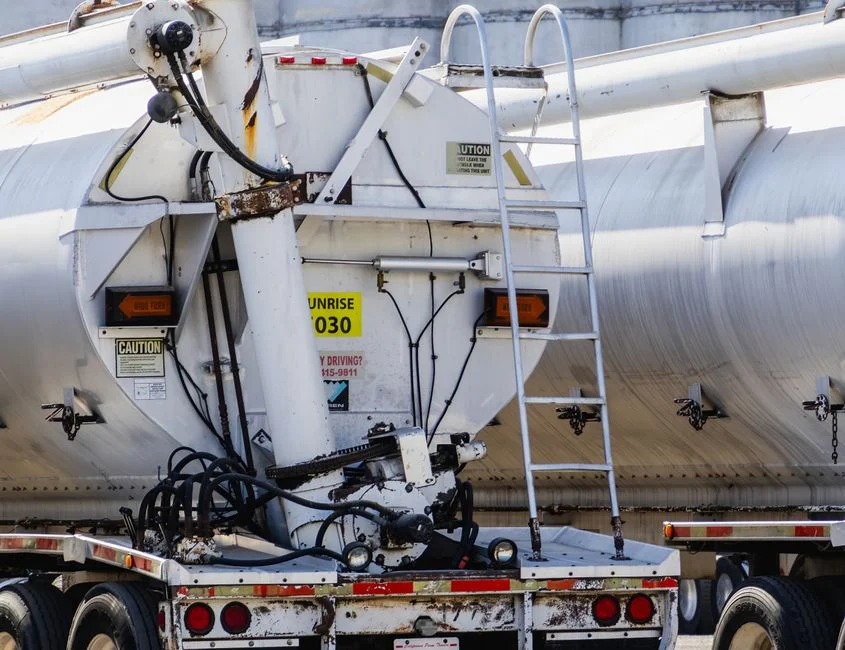
The makedown skid and the dewatering device must be specified together on the same P&ID to ensure system performance. The makedown skid delivers polymer at a fixed concentration and maturation state, while the downstream device consumes polymer at a rate dependent on sludge solids, flow, and shear history.
Three integration points are responsible for most field failures. First, the transfer from chamber 3 to the dosing pump must be flooded suction with a calibration column to verify feed rates. Second, for containerized or outdoor skids, climate-controlled enclosures protect dry polymer from humidity and liquid emulsion from freezing—failure modes that remain silent until the dosing pump starves (Clearwater, clearwaterind.com, 2025-08). Third, the makedown skid should be shown on the same P&ID as the downstream DAF system or filter press to ensure suction lines and transfer pumps are sized correctly during the design review.
The same logic applies to the automatic chemical dosing skid downstream. For applications where the polymer is one of several reagents injected ahead of a dewatering device, the P&ID must define the sequence, contact time, and mixing energy. For context on how the downstream choice affects upstream chemistry, see the comparison of DAF vs clarifier for pulp and paper and the filter press for yeast wastewater duty cycles.
2026 Buyer's Checklist for Specifying a Polymer Makedown System
Engineers should finalize the following parameters before requesting quotes to ensure accurate sizing and pricing.
- Confirm feed form (dry or liquid emulsion) and target active concentration to fix chamber count, maturation time, and footprint (BioResources; Clearwater, 2025-08).
- Lock capacity to peak downstream demand with a 20–30% margin. Sanity-check the result against the mainstream industrial prep envelope of 132 to 2,642 GPH (ProMinent, prominent.us).
- Specify 304 or 316 stainless steel construction up front; do not allow vendor defaults regarding material grades based on dilution water chemistry (Clearwater, clearwaterind.com, 2025-08).
- Require factory wet-testing of the complete skid before shipment.
- Decide between PLC and manual control based on operator coverage. PLC with level switches and a maturing timer is the standard for unattended operation.
- Plan the integration with the downstream filter press or DAF on the same P&ID to avoid mismatched suction lines and oversized transfer pumps.
Two items belong on the buyer's desk: the jar test results for selecting polymer chemistry and the supplier's data sheet for maturation time, which dictates the necessary tank volume.
Frequently Asked Questions
What does a polymer makedown system cost?
Capital cost tracks preparation capacity, material of construction, and control philosophy. Buyers should request line-item quotes that separate the skid, the PLC panel, and the dosing pump, using the 132 to 2,642 GPH industrial prep envelope as the primary benchmark (ProMinent, prominent.us).
How long does delivery and factory testing take?
Lead time is driven by tank fabrication, PLC panel construction, and the factory wet-test (Clearwater, 2025-08). Buyers should include the wet-test acceptance criteria in the purchase order to ensure the schedule accounts for this verification.