
Why the DAF-vs-Clarifier Question Is Different Inside a Paper Mill
A pulp and paper mill generates up to 70 m³ of wastewater per tonne of paper (Rintala and Puhakka 1994; Latorre et al. 2007, cited in the Hubbe et al. review at BioResources), and that effluent consists of three distinct streams: fibre-rich white water and broke carrying wood fibre, filler, and stickies; colour-bearing bleach plant and pulping liquor with high COD, lignin derivatives, and residual oils; and low-pH evaporator condensate that typically sits below 200 mg/L TSS with negligible FOG. The same unit operation cannot be the right answer for all three — a dissolved air flotation primary that excels on near-buoyant fibre will be wasted on already-clear condensate, and a gravity clarifier that settles grit cheaply will miss the stickies that drive white water COD excursions. The Hubbe et al. review explicitly names DAF systems alongside filtration save-alls as established P&P unit operations, and conventional primary clarification followed by activated sludge has been the historic baseline; the technology choice therefore must follow the stream, not the plant. The compliance frame is the same across all three streams: Canada's Pulp and Paper Effluent Regulations (PPER, Environment and Climate Change Canada 2016) cap TSS and BOD in the final discharge and prohibit acutely lethal effluents, the EU IED/BREF documents (BREF 2015) set BAT-AELs, and the US Cluster Rules govern P&P discharges. There is no single winner — the choice is stream-by-stream.
How DAF and Clarifiers Actually Separate Solids in a Mill
A DAF system dissolves air into a pressurized recycle stream and releases that stream at atmospheric pressure inside a flotation tank, generating millions of micro-bubbles 10–100 µm in diameter that attach to suspended particles and lift them to a skimmable blanket on the surface (per the Ecologix P&P page and the Hubbe et al. review). The mechanism is decisive for P&P because wood fibre, talc and kaolin filler, defoamer residues, and stickies are near neutral buoyancy — they neither settle fast under gravity nor float unaided, and the micro-bubbles provide the necessary lift. A clarifier relies on the opposite mechanism: gravity sedimentation of particles whose density clearly exceeds water, with heavier inorganic solids forming a sludge bed at the bottom and clarified water overflowing a peripheral launder (per the Ecologix DAF vs Clarifier selection guide). Clarifiers work cheaply and predictably on grit, sand-laden effluents, and primary fibre loss from save-alls where the density differential is significant. A DAF will outperform a clarifier on low-density P&P solids, but neither unit is well-suited to clear evaporator condensate that is already low in TSS and warm.
DAF vs Clarifier for Fibre and White Water: Who Wins on TSS and Stickies?
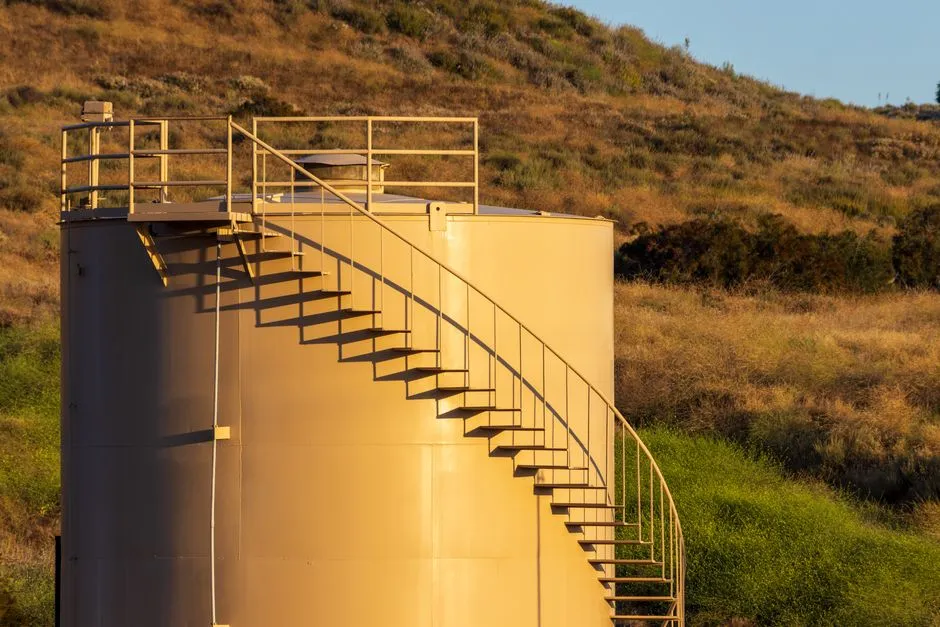
White water and broke represent the highest-volume, highest-TSS streams in a paper mill, and the comparison favors DAF on both TSS and FOG. The Ecologix 2026 selection guide reports a clarifier solids-reduction figure of roughly 90%, but that benchmark was measured on heavy inorganic wastewater, not on near-buoyant wood fibre and stickies — for fibre-bearing streams, the Hubbe et al. review names DAF as a mainstream P&P unit operation and the Ecologix P&P page confirms that particles "with densities similar to water" are the primary DAF duty case. On oily streams, Ecologix measured DAF at 95% FOG removal against a clarifier's 70% — a 25-point advantage that transfers directly to stickies, defoamer residues, and sizing agents in white water. DAF also operates at a much higher surface loading rate and a smaller footprint per m³/h than a clarifier, which matters in a mill where floor space is consumed by paper machines, reel halls, and stock prep. The hydraulic envelope for mill-scale units is well established: the DAF system covers 4–300 m³/h across 13 standard models. DAF wins on fibre and white water for both TSS and FOG and is the de-facto primary unit in modern P&P mills.
| Parameter | DAF | Gravity Clarifier (lamella) |
|---|---|---|
| TSS removal on P&P fibre stream | 80–90% (Hubbe et al., mainstream P&P duty) | 40–60% (low-density fibre and stickies resist settling) |
| FOG / stickies removal | ~95% (Ecologix 2026) | ~70% (Ecologix 2026) |
| Surface loading rate | 15–40 m³/m²·h hydraulic | 1–3 m³/m²·h conventional; 20–40 m³/m²·h lamella |
| Footprint per m³/h | Small | Large (lamella reduces but does not eliminate) |
| Air compressor / polymer OPEX | Moderate | Negligible |
| Sludge consistency | Thick float (3–5% DS typical) | Thin underflow (1–2% DS), harder to dewater |
DAF vs Clarifier for Colour, Bleach Plant, and Pulping Liquor
Colour and COD removal are not best done by primary physical separation alone, as the Hubbe et al. review notes that more than 40% of the organic matter in chemical pulping effluent is poorly biodegradable (Dahlman et al. 1995). If a primary physical step is chosen, DAF still wins over a clarifier because lignin-rich colloids are low-density and respond to micro-bubble attachment, while a clarifier struggles and produces a thin, hard-to-dewater sludge on the same stream. The chlorinated loading that once drove primary-unit sizing has fallen sharply — AOX emissions have been reduced by over 80% since 1990 (Friere et al. 2003, cited in Hubbe et al.) — so modern DAF sizing on bleach plant and pulping blowdown is more about TSS capture than AOX protection. The defensible configuration is DAF primary on colour/blowdown streams, followed by biological treatment (often activated sludge or MABR) for residual COD and colour, with the DAF acting as a load-leveller that keeps the biological stage within its kinetic envelope.
DAF vs Clarifier for Evaporator Condensate: The Stream Most Specs Get Wrong
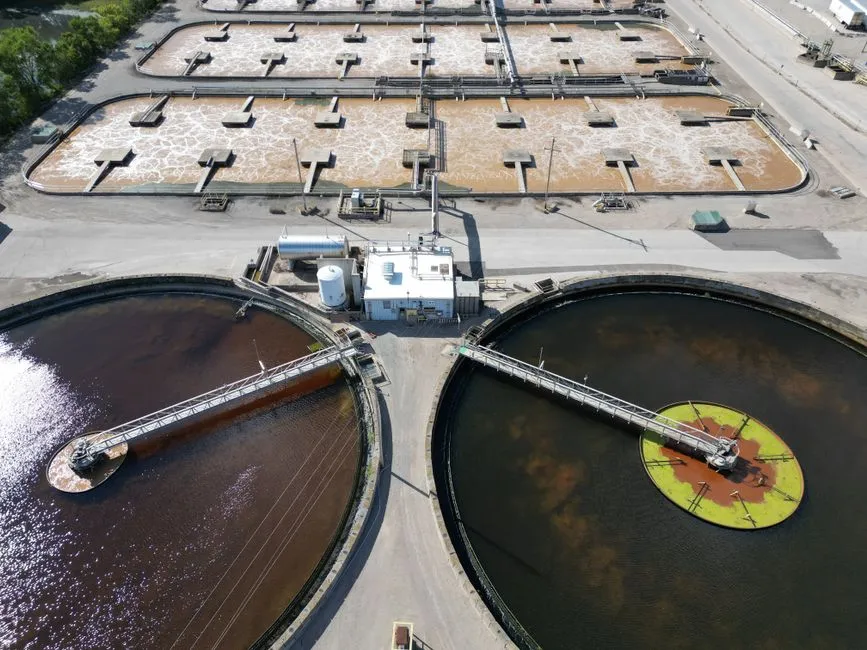
Evaporator condensate is often mismanaged because engineers default to "primary clarification" without checking the inlet numbers. Condensate is low-TSS (typically below 200 mg/L), low-FOG, low-pH, and warm — the opposite of a DAF or clarifier duty. A clarifier on condensate is over-spec, occupies floor space, and adds sludge-handling cost for almost no TSS gain; DAF is also wrong, because FOG is essentially zero and the bubble-attachment advantage is wasted while the compressed-air OPEX keeps running. The economic answer is usually a polish step downstream of pH correction — multimedia filtration, UF, or direct biological polishing, as covered in the MABR for pulp and paper wastewater guide. For a mill writing a new spec, the right line on the P&ID is "condensate → pH correction → multimedia filter → biological polish," with no DAF and no clarifier in the train.
Cost, Footprint, and OPEX: When the Clarifier Still Wins
The technology choice must be balanced against operational costs. Per the Ecologix 2026 selection guide, clarifiers have lower upfront and operational costs with no compressor load, while DAF carries higher capex and moderate power draw for the saturated-air compressor, pumps, and polymer system. On heavy, settleable streams — grit chambers, primary fibre loss from save-alls, and sand-laden effluents — a lamella clarifier is the cheaper workhorse and reaches surface loading rates of 20–40 m³/m²·h, which is competitive with DAF on footprint while costing far less to run. On the 4–300 m³/h DAF range, the OPEX premium is mostly saturated-air compressor power and polymer, both of which are well-understood at P&P scale and well-amortised against the value of recovered fibre and reduced biosolids load. The defensible decision rule for procurement is to spend DAF OPEX on the streams where it pays back in FOG and stickies capture, and use a HydropureWater lamella clarifier only where gravity is sufficient.
| Cost driver | DAF | Lamella Clarifier |
|---|---|---|
| Capex per m³/h | Higher (recycle pump, saturator, compressor, scraper) | Lower (tank, lamella pack, sludge scraper) |
| Power draw | Moderate (air compressor, recycle and feed pumps) | Low (feed lift only) |
| Chemical OPEX | Polymer for flocculation, coagulant on demand | Minimal flocculant on demand |
| Maintenance | Saturator, compressors, bubble nozzles, scrapers | Sludge scrapers, lamella pack inspection |
| Best-fit stream | Fibre, colour, FOG-bearing streams | Grit, sand-laden streams, low-FOG polishing |
Matching the Configuration to PPER, BREF, and Cluster Rules
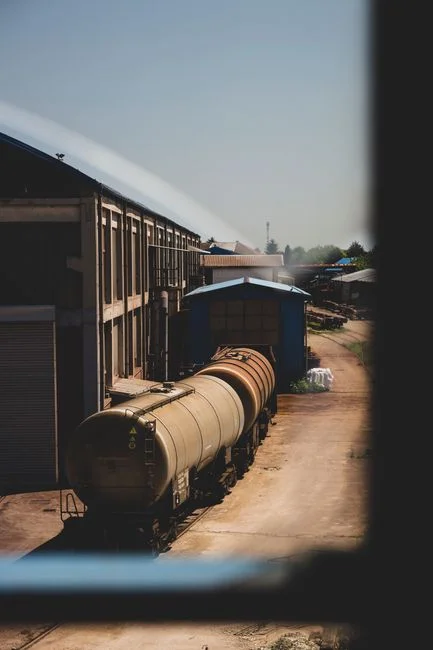
The compliance frame makes the technology choice defensible, not just technically attractive. The Canadian PPER (Environment and Climate Change Canada 2016, cited in Hubbe et al.) caps TSS and BOD in the final discharge and requires the secondary biological stage to be operating — so the primary DAF or clarifier must protect that stage from shock loads. The EU IED/BREF documents (BREF 2015) and the US Cluster Rules both push mills toward best-available-technology combinations, and the Hubbe et al. review explicitly lists DAF plus activated sludge as a named configuration. A DAF primary consistently delivers a lower and more stable TSS load to the activated sludge stage than a clarifier on fibre streams, reducing the risk of bulking and permit excursions. For mills targeting PPER or EU BAT-AEL compliance on fibre-bearing streams, DAF primary is the lower-risk choice even if its capex is higher.
Frequently Asked Questions
Which technology wins on FOG removal in a paper mill — DAF or clarifier?
DAF wins. Ecologix's 2026 comparison measured 95% FOG removal on a DAF against 70% on a clarifier for the same oily stream, a 25-point advantage that transfers directly to stickies, defoamer residues, and sizing agents in white water and bleach plant effluent.
Is a clarifier ever the right primary on a pulp and paper stream?
Yes, but only on the heavy or already-settleable streams — grit, sand-laden effluents, and primary fibre loss from save-alls. On fibre-rich white water, colour-bearing bleach plant effluent, and any stream with FOG or stickies, a lamella clarifier is underspecified and a DAF is the correct primary.
Should a DAF or clarifier be used on evaporator condensate?
Neither. Condensate is typically below 200 mg/L TSS with negligible FOG, so both units are over-spec. The right train is pH correction followed by multimedia filtration, UF, or direct biological polishing rather than a primary solids-removal step.
What removal efficiency should a DAF primary deliver to meet PPER and BREF BAT-AEL?
For a DAF primary on fibre-bearing white water, expect 80–90% TSS removal and roughly 95% FOG and stickies removal, which produces a stable, low-shock load to the downstream activated sludge stage required by the Canadian PPER and the EU BREF BAT-AEL configuration.