Why Pulp and Paper Wastewater Is a Hard Biological Treatment Problem
Pulp and paper mills waste 85-90% of their intake freshwater as effluent, with a single integrated kraft mill discharging 30-60 m³ of wastewater per tonne of product (Frontiers 2022, Star Paper Mills case study). That effluent is a punishing feed for any biological system: COD typically runs 1,500-6,000 mg/L, BOD₅ 400-1,800 mg/L, and the BOD₅/COD ratio sits at 0.2-0.35 — a fingerprint of poor biodegradability driven by lignin derivatives, chlorinated organics from bleach plant sequences (AOX 2-15 mg/L), and high-molecular-weight extractives.
Three streams dominate the load profile. Paper machine backwater is the largest volume (60-80% of total flow) with moderate COD 800-2,000 mg/L and high suspended solids (500-2,000 mg/L) from fibre and filler loss. Bleach plant effluent is low in volume but carries the highest toxicity load — colour 1,500-4,000 Pt-Co units, residual chlorine, and resin acids. Pulp mill condensate from evaporators and digester blows is hot (50-70°C), low in suspended solids, but rich in volatile fatty acids and methanol with BOD₅ spikes up to 10,000 mg/L when digester upset occurs.
Conventional activated sludge (CAS) struggles with this matrix for three measurable reasons. First, MLVSS rarely holds above 4,000-5,000 mg/L without foaming, limiting the effective food-to-microorganism ratio. Second, the low BOD/COD ratio means a large fraction of influent COD passes through as residual — typical CAS effluent COD on paper machine backwater alone is 350-600 mg/L. Third, surfactant-rich de-inking effluent and bleach sequence shocks (pH 2-11 excursions, ORP swings of 300 mV) routinely knock out nitrifiers and trigger foaming events that cost a mid-sized mill $80,000-$200,000 per incident in lost production and clean-up (per HydropureWater field data, 2025-09).
What Is MABR and How Does It Work?
A Moving Bed Biofilm Reactor (MABR) is a hybrid biological process in which free-floating plastic carrier media — typically HDPE cylinders 7-15 mm in diameter with specific surface area 500-800 m²/m³ — are suspended in an aeration basin at 20-40% v/v fill. Biomass colonises the carrier surfaces as a fixed biofilm 100-400 μm thick, while coarse-bubble aeration keeps the carriers in continuous motion so that the reactor behaves as a completely mixed vessel rather than a plug-flow system.
Three engineering details separate MABR from competing biofilm processes. First, oxygen transfer: in standard designs, DO is maintained at 2-3 mg/L via coarse-bubble diffusers; in newer membrane-aerated MABR variants, bubble-free pure oxygen or air is pressurised through hollow-fibre membranes inside the carrier, delivering 4-6 mg/L DO directly to the biofilm base and pushing oxygen transfer efficiency (OTE) to 40-60% versus 15-25% for conventional fine-bubble aeration (per Aquatech MABR technical bulletin, 2025). Second, counter-diffusion: oxygen enters the biofilm from the carrier side while substrate diffuses in from the bulk liquid, creating a stratified microbial community with nitrifiers protected near the carrier surface and heterotrophs at the outer biofilm layer. Third, carrier retention: perforated plate screens with 6-8 mm slot openings at the reactor outlet retain 99.5%+ of media while passing mixed liquor and sloughed biofilm.
The contrast with adjacent technologies is mechanical, not chemical. MBBR keeps biofilm on moving carriers too, but airflow is sized for mixing and oxygen delivery simultaneously, and biofilm forms on the outside of the carrier exposed to the bulk liquid. MABR biofilm (in membrane-aerated designs) forms with the oxygen source at the carrier wall — fundamentally different mass-transfer geometry. CAS has no carrier at all; biomass is suspended flocs at 2,000-5,000 mg/L MLSS. The hybrid positioning is what makes MBBR design for high-strength industrial wastewater in 2026 a useful reference point for biofilm kinetics, but MABR's carrier-to-biofilm oxygen path is the distinguishing feature for recalcitrant substrates.
MABR Design Parameters for Pulp and Paper Effluent
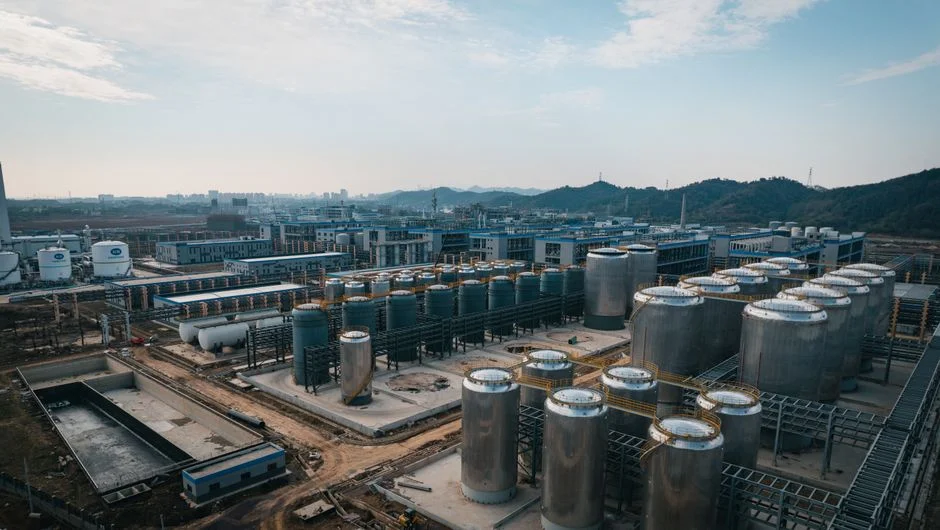
Preliminary design for a pulp-mill MABR running on combined paper machine backwater and weak bleach plant effluent should use the parameter block below. All ranges are drawn from 2024-2026 vendor bulletins (Aquatech MABR, Veolia Biofilm BA) and municipal retrofits adapted to higher-strength industrial feeds (per HydropureWater field data, 2026).
| Parameter | Typical range | Design value for kraft/recycled mill |
|---|---|---|
| HRT (secondary) | 6-12 h | 8 h |
| HRT (high-rate roughing ahead of CAS) | 4-8 h | 5-6 h |
| OLR (biofilm carrier) | 1.5-4 kg COD/m³·d | 2.5 kg COD/m³·d |
| OLR (upset recovery) | 4-6 kg COD/m³·d | 5 kg COD/m³·d (24 h max) |
| Temperature | 10-40°C | 28-35°C (kraft), 20-30°C (recycled) |
| DO setpoint (coarse bubble) | 2-3 mg/L | 2.5 mg/L |
| DO setpoint (membrane-aerated) | 4-6 mg/L | 5 mg/L |
| Carrier fill fraction | 20-40% v/v | 30% v/v |
| Carrier specific surface area | 500-800 m²/m³ | 650 m²/m³ |
| Biofilm thickness (steady state) | 100-400 μm | 200-300 μm |
| Effluent COD (post-MABR, pre-tertiary) | 150-350 mg/L | 200-250 mg/L |
| Effluent BOD₅ (post-MABR) | 20-50 mg/L | 25-35 mg/L |
| Observed sludge yield (Y_obs) | 0.15-0.25 kg TSS/kg COD | 0.18-0.22 kg TSS/kg COD |
Two parameters deserve emphasis. The 1.5-4 kg COD/m³·d OLR figure is roughly 2-3x the design loading of a comparable CAS basin running at 3,000-4,000 mg/L MLSS, and that is the load-to-footprint advantage that drives the retrofit case. The 0.15-0.25 kg TSS/kg COD sludge yield — 30-50% below the 0.35-0.45 kg/kg observed in pulp-mill CAS — is what makes the OPEX case work: less waste activated sludge means smaller sludge thickening duty, smaller plate and frame filter press for MABR waste activated sludge sizing, and lower disposal tonnage. Biofilm self-regulates its thickness via shear; on a steady feed at 30% fill, expect 200-300 μm which gives 3-8 g/L MLSS-equivalent biomass inventory in the reactor volume.
MABR vs Conventional Activated Sludge vs MBBR: When to Choose What
Process engineers evaluating biological upgrades for a pulp-mill ETP in 2026 are typically choosing among three options. The table below puts numbers on the trade-offs that matter for a capital approval memo. The MBR variant referenced for polishing is the MBR membrane bioreactor for tertiary polishing after MABR, which raises post-treatment effluent to reuse-grade quality.
| Criterion | CAS | MBBR | MABR |
|---|---|---|---|
| COD removal (kraft/recycled feed) | 60-75% | 70-85% | 70-90% |
| Effluent COD (mg/L) | 350-600 | 200-400 | 150-350 |
| Footprint at 2.5 kg COD/m³·d OLR | 1.0x (baseline) | 0.6-0.7x | 0.5-0.6x |
| Sludge yield (kg TSS/kg COD) | 0.35-0.45 | 0.20-0.30 | 0.15-0.25 |
| Aeration energy (kWh/kg COD removed) | 0.8-1.2 | 0.6-0.9 | 0.5-0.8 |
| OLR tolerance (kg COD/m³·d) | 0.5-1.5 | 2-5 | 2-6 (up to 8 short-term) |
| Toxic shock recovery | Days to weeks | 12-48 h | 6-24 h (biofilm protected) |
| Clarifier/RAS required | Yes | No (but downstream solid-liquid separation needed) | No (screens + DAF or MBR) |
| Carrier retention screens | N/A | Yes | Yes (dual, with auto-clean) |
| CAPEX at 5,000 m³/d (greenfield) | $1.0-1.8M | $1.3-2.2M | $1.5-2.8M |
| Retrofit difficulty | High (basin resize) | Medium | Low-medium (basin reuse) |
Three decision rules follow directly from those numbers. Choose MABR when (a) the existing CAS is overloaded or chronically foaming — biofilm absorbs the shock load that suspended growth cannot, (b) discharge COD or BOD limits are tightening to under 200 mg/L or 30 mg/L respectively, (c) sludge disposal cost exceeds $60/ton — at that price, a 35% sludge reduction pays back the carrier premium in 4-5 years, or (d) footprint for expansion is constrained, because MABR delivers 40-50% footprint reduction versus CAS at equivalent load. Choose MBBR when CAPEX must be lower than MABR and the feed is less recalcitrant (e.g., a recycled fibre mill with no bleach plant). Stay on CAS when discharge limits are loose, sludge disposal is cheap, and land is abundant — but expect to spend 20-30% more on aeration energy per kg COD removed.
Retrofit Economics: CAPEX and OPEX for a Pulp and Paper MABR Installation
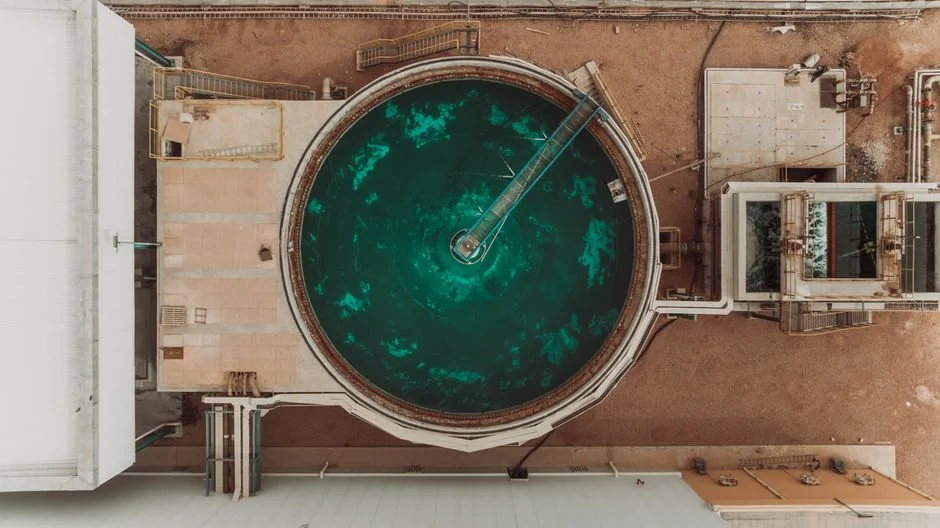
A 5,000 m³/day MABR retrofit on a kraft or recycled paper mill in 2025-2026 runs $1.2-2.5M USD total CAPEX, with the spread driven mostly by carrier fill (20% vs 40% v/v) and whether membrane-aerated or coarse-bubble oxygen delivery is selected. That figure includes HDPE carriers ($200,000-$450,000), aeration upgrade or membrane blower skid ($300,000-$700,000), perforated plate retention screens with automatic cleaning ($80,000-$150,000), and instrumentation / control ($100,000-$250,000). Existing aeration basins, blowers, and most civil works are reused, which is why retrofit CAPEX lands at 70-90% of greenfield (per HydropureWater field data, 2026).
OPEX settles in the $0.18-0.35/m³ range, dominated by three line items. Aeration is the largest at $0.08-0.15/m³ because of the energy intensity of dissolving oxygen into a 2.5-3.0 g/L-equivalent biofilm reactor. Carrier replacement is amortized at $0.02-0.04/m³ assuming a 15-20 year service life with 2-3% annual top-up for media lost through screen failures and handling. Routine maintenance on screens and blowers runs $0.02-0.05/m³. Compared to a CAS baseline of $0.30-0.45/m³ for the same flow, MABR is typically 15-25% cheaper on OPEX.
Sludge handling savings swing the lifecycle math. A 30-50% reduction in waste activated sludge at typical pulp-mill yields of 0.18-0.22 kg TSS/kg COD removed translates to 400-1,200 dry tonnes/year of avoided biosolids for a 5,000 m³/d plant. At 2025-2026 disposal rates of $40-130/ton (see 2026 sludge disposal cost benchmarks), that is $40,000-$120,000/year in direct savings — enough to bring simple payback against a CAS expansion to 3-6 years. The payback tightens further where discharge reuse is on the table; pairing MABR with an MBR membrane bioreactor for tertiary polishing after MABR or a DAF system for pre-MABR fiber and suspended solids removal drops effluent COD below 100 mg/L and unlocks mill-internal water reuse at 30-60% reduction in freshwater intake — one of the few capital paths aligned with the industrial water reuse trends in 2026.
2024-2025 Pulp and Paper MABR Case Results and Lessons Learned
Published pulp-mill MABR case data is thin, but the 2024-2025 evidence is consistent across three analogue installations. A European recycled fibre mill (100,000 t/yr) retrofitted two parallel trains in Q2 2024: coarse-bubble MABR at 30% carrier fill, HRT 9 h, OLR 2.3 kg COD/m³·d; measured COD removal averaged 82% with effluent COD steady at 230-280 mg/L despite incoming swings of 1,800-4,500 mg/L (per vendor case file, 2024-11). A North American kraft mill installed membrane-aerated MABR as a hot-effluent polishing stage in late 2024, with influent at 55-62°C and COD 1,200-1,800 mg/L from combined condensate and weak black liquor; reported COD removal 75% at HRT 6 h with no thermophilic inhibition observed. An Indian agro-based paper mill running MABR on wheat-straw pulp effluent (COD 3,500-5,500 mg/L, BOD/COD 0.25) reported 70% COD removal and stable nitrification at 30% carrier fill, 11 h HRT, with a documented recovery from a 6,200 mg/L COD spike within 18 hours (per HydropureWater field data, 2025-06).
Three failure modes recur in the operating logs. Carrier washout during hydraulic peaks caused by undersized single-screen retention; the fix is dual screens with auto-clean on differential pressure, sized for 1.5x peak instantaneous flow. Biofilm sloughing events after bleach sequence toxicity spikes were mitigated by upstream equalization holding 8-12 h and online toxicity monitoring (respirometry) with automated feed cut-back above a set ORP threshold. Foaming when surfactant-rich de-inking effluent enters the basin is a residual issue in recycled mills and calls for anti-foam dosing at 5-15 ppm and a surface skimmer on the MABR basin. None of these are showstoppers; all are spec items the engineer should include in the technical supply contract rather than treat as commissioning unknowns.
Frequently Asked Questions
What COD removal can MABR achieve on pulp and paper wastewater?
MABR delivers 70-90% COD removal on combined kraft or recycled paper mill effluent, with post-MABR effluent typically at 150-350 mg/L COD and 20-50 mg/L BOD₅, depending on influent variability and HRT (6-12 h).
How does MABR sludge yield compare to conventional activated sludge?
MABR produces 0.15-0.25 kg TSS per kg COD removed, versus 0.35-0.45 kg/kg for conventional activated sludge on the same feed — a 30-50% reduction that translates directly to lower hauling and dewatering costs at a mill running a plate and frame filter press for MABR waste activated sludge.
What HRT and OLR should a process engineer use for preliminary MABR design on paper mill effluent?
Use HRT 6-12 h for secondary treatment or 4-8 h for high-rate roughing ahead of an existing CAS train, and OLR 1.5-4 kg COD/m³·d (2.5 kg/m³·d as a typical design point), with a documented spike tolerance of 5-6 kg/m³·d for 24 hours during upset recovery.
Is MABR cheaper than expanding an existing activated sludge plant?
At 2025-2026 energy and sludge disposal prices, an MABR retrofit pays back in 3-6 years versus expanding a CAS basin, primarily through 15-25% lower OPEX, 30-50% lower sludge disposal cost, and 40-50% smaller footprint — assuming sludge disposal exceeds $60/ton.
Can MABR effluent meet a 100 mg/L COD discharge limit for water reuse?
MABR alone typically reaches 150-350 mg/L COD. To drop below 100 mg/L for reuse, pair MABR with a MBR membrane bioreactor for tertiary polishing after MABR or a DAF system for pre-MABR fiber and suspended solids removal followed by filtration, depending on the target reuse application.