Why Yeast Wastewater Is a Special Sludge Dewatering Problem
Yeast-industry wastewater carries a COD envelope of 8,000–25,000 mg/L with BOD₅/COD ≈ 0.55, TSS 5,000–30,000 mg/L, total nitrogen 300–900 mg/L, and total phosphorus 40–120 mg/L — well above the envelope a generic food-industry filter press is sized for. The dry solids that reach the press are 95–98% water and gelatinous, because residual yeast cell walls (β-glucans, mannoproteins) hold water in a compressible matrix that blinds standard monofilament cloth within 2–4 hours of operation. Skipping feed characterization is the single most common reason a "right-sized" press underperforms on day one: the supplier quoted 28% DS on a 4% TS feed with low colloidal fraction, and the real sludge is 1% TS with 60% colloidal.
Stream character also varies sharply within the yeast sector. Baker's yeast washwater typically settles to 4–8% TS after gravity thickening and dewaters predictably. Brewer's yeast slurry from fermenter bottoms can hit 6–10% TS but carries hop polyphenols that compete with PAM. Yeast extract plants produce the stickiest stream of all — autolysate residues raise the soluble COD fraction above 30% and push the colloidal fraction high enough that recessed-chamber presses routinely choke without DAF pre-thickening.
| Parameter | Baker's yeast washwater | Brewer's yeast slurry | Yeast extract plant |
|---|---|---|---|
| COD (mg/L) | 8,000–15,000 | 10,000–18,000 | 15,000–25,000 |
| TSS (mg/L) | 5,000–15,000 | 8,000–20,000 | 12,000–30,000 |
| BOD₅/COD ratio | 0.55–0.65 | 0.50–0.60 | 0.45–0.55 |
| Total nitrogen (mg/L) | 300–600 | 400–700 | 600–900 |
| Total phosphorus (mg/L) | 40–80 | 60–100 | 80–120 |
| Sludge character after thickening | Granular, 4–8% TS | Paste-like, 6–10% TS | Gelatinous, 3–6% TS |
Pretreatment and Polymer Conditioning Before the Filter Press
Polymer conditioning is the controllable variable that decides whether the press hits its rated cake dryness or chokes on day one. The conditioning train runs: equalization (24 h HRT minimum) → pH adjustment to 6.5–7.5 with caustic or sulfuric → cationic polyacrylamide dosing at 3–8 kg per ton of dry solids → 5–10 minutes of gentle mixing at 30–60 rpm for floc growth. Skipping the pH step is the second most common commissioning failure: PAM hydrolysis shifts outside the 6.5–7.5 band, charge demand doubles, and the dose the supplier quoted no longer applies.
For yeast sludge, the working polymer is cationic PAM with 40–60% charge density and 8–12 MDalton molecular weight. Anionic PAM performs poorly on the predominantly cationic yeast biomass surface — flocs form but never grow large enough to release bound water. The floc quality target is visible, sand-grain-sized flocs that pour cleanly when a 1 L beaker is tilted; stringy flocs signal over-dosing (reached 5–6 kg/tDS on a plant running 6% colloidal), and pinpoint flocs signal under-dosing.
Locking in the dose requires a 6-beaker jar test on-site: 1 L samples, 200 rpm rapid mix for 30 seconds, then 30 rpm slow mix for 10 minutes, with dose increments of 1 kg/tDS per beaker. Supplier-quoted doses assume a different sludge envelope and will be off by a factor of 1.5–3× on a yeast line. Integrate the dose with an automatic polymer dosing for yeast sludge conditioning unit tied to the feed flow meter; manual dose adjustment lags feed variability by 20–40 minutes, long enough to send a full chamber into the cloth.
Filter Press Designs That Work on Yeast Sludge
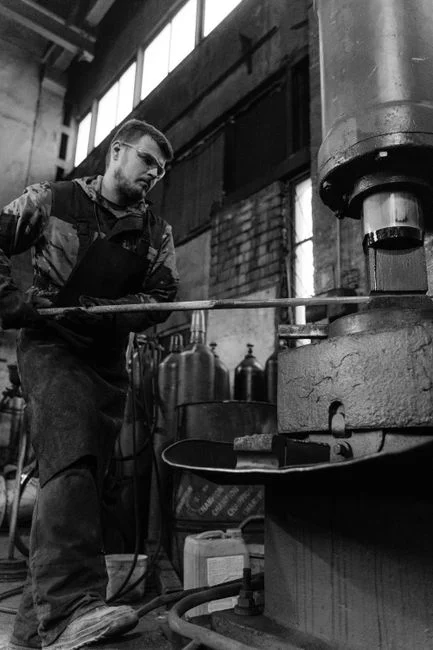
Three mechanical configurations are credible for a yeast plant, and the choice is driven by cake destination, daily volume, and labor model. The recessed chamber filter press runs an 18–35 minute cycle at 0.6–0.8 MPa feed pressure with 25–32 mm cake thickness, delivering 28–35% DS on properly conditioned yeast sludge — the right pick for plants above 20 m³/d. The conventional plate-and-frame press trades cycle time (45–90 min) and runs lower feed pressure (0.4–0.6 MPa), but achieves the driest cake in the lineup at 35–42% DS, which is why yeast extract producers who ship cake for animal feed specify it. A diaphragm/squeeze hybrid adds 1.0–1.5 MPa of mechanical squeeze in the last 20% of the cycle, pushing cake dryness 2–4 percentage points higher at a 15–25% CAPEX premium.
PLC-controlled plate shifting cuts operating labor to one operator per shift versus 3–4 for a manual press, and the payback at three-shift operation is under 14 months. Standard catalog filtration areas run 1–500 m², which covers the full 1 m³/h pilot to 80 m³/h production range; specifying a plate and frame filter press for yeast wastewater sludge within that envelope is straightforward. Cloth selection matters as much as press geometry: multifilament polypropylene clogs within 2–4 hours on yeast sludge, while a singed monofilament polyester at 80–120 µm opening extends cycle count by a factor of 3–5×.
| Design | Cycle time | Feed pressure | Cake thickness | Cake DS on yeast sludge | Best fit |
|---|---|---|---|---|---|
| Recessed chamber | 18–35 min | 0.6–0.8 MPa | 25–32 mm | 28–35% | Plants > 20 m³/d |
| Plate-and-frame | 45–90 min | 0.4–0.6 MPa | 20–30 mm | 35–42% | Yeast extract / cake sale |
| Diaphragm squeeze | 25–40 min | 0.6–0.8 MPa + 1.0–1.5 MPa squeeze | 25–32 mm | 32–38% | Drier cake at 15–25% capex premium |
| Manual plate shifting | +10–20 min labor | Any | Any | Same as machine | < 5 m³/d, single shift |
Sizing a Filter Press for a Yeast Wastewater Plant — Worked Example
Use this five-step calculation to validate any supplier quote against your own plant data. Worked example: a yeast extract line producing 10 m³/h of thickened sludge at 1.0% TS, two shifts per day, 16 hours of press runtime.
- Feed solids: 10 m³/h × 1.0% TS × 1,000 kg/m³ = 100 kgDS/h; 100 × 16 h = 1,600 kgDS/day.
- Cake target: 68% moisture (32% DS) for extract-grade cake → each kg of dry solids carries 68/32 = 2.13 kg of water in the cake versus ~99 kg in the feed → press must remove 4,700 L of water per cycle batch for a 1,600 kgDS day.
- Chamber volume: 15 L chamber × 80 chambers = 1,200 L total; at 80% fill efficiency → 960 L cake per cycle. To remove 4,800 L/day at 960 L/cycle → 5 cycles/h × 16 h = 80 cycles/day, which clears 1,600 kgDS in a single shift envelope.
- Filter area: 80 plates × 0.9 m × 0.9 m ≈ 65 m² filtration area — sits inside the standard 1–500 m² envelope.
- Derate for blinding: subtract 15–20% from rated capacity for the first 60 days while cloth pores load with colloidal β-glucan; oversize the polymer make-up unit and cloth wash system by the same margin.
| Step | Input | Result |
|---|---|---|
| Feed flow | 10 m³/h at 1.0% TS | 100 kgDS/h |
| Daily load (2 shifts) | 16 h runtime | 1,600 kgDS/day |
| Cake moisture target | 68% moisture / 32% DS | 4,700 L water to remove |
| Chamber count | 15 L × 80 chambers @ 80% fill | 960 L cake per cycle |
| Cycles required | 4,800 L/day ÷ 960 L | 5 cycles/h, 80 cycles/day |
| Filter area | 80 × 0.9 m × 0.9 m plates | ~65 m² total |
Filter Press vs. Belt Press vs. Screw Press vs. Centrifuge for Yeast Sludge
The four mechanical dewatering options that show up in yeast-plant CAPEX reviews behave very differently on this specific sludge. A belt press delivers only 22–28% DS but at $0.10–$0.18/m³ OPEX — the winner when cake goes to landfill and dryness carries no commercial value. A screw press caps at 20–26% DS with 0.6 m³/h typical throughput and the lowest CAPEX ($15,000–$40,000), which fits small baker's yeast plants under 5 m³/d. A decanter centrifuge hits 24–30% DS but burns $0.35–$0.65/m³ in OPEX and is sensitive to feed variability, so it remains a brewery workhorse more than a pure yeast-line tool. A filter press is the only option that hits 28–42% DS at mid-range OPEX ($0.18–$0.32/m³); the higher CAPEX pays back when the cake is sold, incinerated, or used as a nutrient recycle.
Decision rule: if the cake is a product, a waste-to-energy feedstock, or carries a tipping fee above $35/tonne, specify a filter press; if the cake is landfill and CAPEX is the binding constraint, look at a screw press comparison for small yeast plants or a belt press. Centrifuges are rarely the right answer on a pure yeast line because the colloidal fraction destroys scroll life in 4–8 months.
| Technology | Cake DS on yeast sludge | OPEX ($/m³) | CAPEX range (2026) | Best-fit application |
|---|---|---|---|---|
| Belt press | 22–28% | 0.10–0.18 | $40,000–$90,000 | Landfill cake, no commercial value |
| Screw press | 20–26% | 0.08–0.15 | $15,000–$40,000 | Small baker's yeast, < 5 m³/d |
| Decanter centrifuge | 24–30% | 0.35–0.65 | $80,000–$220,000 | Breweries, variable feed |
| Filter press (recessed/PAF) | 28–42% | 0.18–0.32 | $28,000–$185,000 | Cake sold, incinerated, or recycled |
2026 Cost Benchmarks — CAPEX, OPEX, and Payback for Yeast Plants
Turnkey 2026 CAPEX for a yeast-duty filter press runs $28,000–$65,000 for 1–5 m³/h units, $95,000–$160,000 for 10 m³/h, and $140,000–$185,000 for 25–40 m³/h. These figures assume stainless contact parts, hydraulic closure, and PLC controls; a manual 1 m³/h plate-and-frame at the low end still hits the $28,000 floor once freight, install, and instrumentation are included. OPEX per cubic meter of filtrate breaks down as polymer $0.06–$0.14, energy $0.04–$0.07, labor $0.05–$0.08, and cloth replacement amortized $0.02–$0.04, for a $0.18–$0.32 total. At a $45/tonne sludge disposal cost, a 10 m³/h line producing 12 tDS/day pays back in 18–30 months against haul-off savings alone.
Four line items hide inside supplier quotes and routinely add 12–18% to turnkey cost: a cloth wash water system (10–15 m³/h at 0.4 MPa), a cake conveyor sized for 30–45% DS handling, a polymer make-up unit rated at 8–12 kg/tDS, and building ventilation for CH₄ released from yeast-rich cake (LEL monitoring per NFPA 820). For CAPEX defense, anchor the food-industry wastewater pretreatment design review in parallel with the press quote — under-sized equalization upstream is the most common reason a budget press fails its dryness guarantee.
| Capacity | 2026 turnkey CAPEX | OPEX ($/m³ filtrate) | Payback vs. $45/t haul-off |
|---|---|---|---|
| 1–5 m³/h | $28,000–$65,000 | 0.18–0.32 | 24–40 months |
| 10 m³/h | $95,000–$160,000 | 0.18–0.30 | 18–30 months |
| 25–40 m³/h | $140,000–$185,000 | 0.18–0.28 | 14–24 months |
Frequently Asked Questions
What cake moisture can a filter press realistically hit on yeast sludge? A properly polymer-conditioned recessed-chamber press running 0.6–0.8 MPa delivers 28–35% DS (65–72% moisture) on baker's and brewer's yeast sludge, while a plate-and-frame or diaphragm-squeeze press can push 35–42% DS on extract-grade feed (HydropureWater field data, 2026).
How much cationic PAM does yeast sludge actually need? Yeast sludge typically needs 3–8 kg of cationic PAM (40–60% charge density, 8–12 MDalton) per ton of dry solids, but only an on-site 6-beaker jar test locks the dose for a specific feed — supplier defaults are routinely 1.5–3× off.
Filter press vs. belt press for yeast wastewater — which wins? A filter press wins on cake dryness (28–42% DS versus 22–28% DS for a belt press) and is the only option that pays back when cake is sold or incinerated, while a belt press wins on CAPEX ($40,000–$90,000 versus $95,000–$185,000) when the cake is landfill.
How long does filter cloth last on yeast sludge before blinding? Multifilament polypropylene cloth blinds in 2–4 hours, while a singed monofilament polyester cloth at 80–120 µm opening runs 200–400 cycles before blinding forces a wash — the cloth choice is the largest single OPEX lever after polymer dose.
What hidden costs sit inside a 2026 filter press quote? The cloth wash water system, cake conveyor, polymer make-up unit, and CH₄ ventilation for yeast-rich cake add 12–18% to turnkey cost and should be itemized separately in any vendor proposal; see the plate and frame filter press for yeast wastewater sludge scope for a standard line-item breakdown, and pair the install with remote monitoring of filter press performance to catch blinding early.
Related Equipment
- DAF pre-thickening upstream of the filter press — specifications, capacity range, and technical data