
Why Tannery Wastewater Is Hard to Treat in 2026
Tannery wastewater (TWW) is a complex effluent containing high biological oxygen demand (BOD), chemical oxygen demand (COD), total dissolved solids (TDS), and toxic heavy metals, particularly chromium — a combination that makes its management a serious environmental concern according to a 2025 review in ScienceDirect on algae-based remediation (S3). Sodium chloride used during skin preservation to prevent rot pushes chloride concentrations up to 50% in TWW, which limits the effectiveness of pH-dependent advanced oxidation processes (AOPs) that would otherwise be the standard polish on a textile effluent (S4, Science of the Total Environment, 2024).
Tannic acid and similar polyphenols are recalcitrant, toxic to a wide range of microorganisms, and give TWW a low BOD/COD ratio, which is why stand-alone biological treatment underperforms on raw tannery streams (S5, IOP Conference Series, 2022). This profile points toward combined chemical or electrochemical pretreatment followed by biological or membrane polishing for 2026 effluent treatment plant (ETP) retrofits.
Two further operational realities often get missed at the design stage. First, chromium interferes with standard dichromate-based COD measurement, so laboratory numbers reported for Cr-bearing streams must be interpreted with care when sizing a COD removal budget. Second, the same high chloride load that blocks classical AOPs also drives corrosion in uncoated carbon-steel equipment, which is a line item any 2026 ETP designer needs to raise with the mechanical vendor before signing the purchase order.
Fenton and Fenton-Based Oxidation for Recalcitrant COD
Conventional Fenton chemistry requires pH conditioning into the acidic window, which adds to the saline matrix of chloride-rich TWW and increases total dissolved solids and operating costs (S4). A 2024 electrochemical peroxidation (ECP) study published in Science of the Total Environment tested a Fenton-based approach at neutral, un-conditioned pH on real tannery wastewater; the system removed up to 60% of recalcitrant COD without pH adjustment, and at 750 mA reached 69.7% COD removal alongside 97.8% color removal (S4). The same study flagged 500 mA as the best energy trade-off, a data point for any 2026 buyer writing an RFQ where kWh per cubic metre is a board-level metric.
Mechanistically, ECP generates iron oxides and hydroxides in situ that act as coagulants, adsorbing contaminants while mineralising recalcitrant fractions through Fenton-type hydroxyl radical chemistry (S4). The sludge produced in the S4 work was characterised by FTIR, SEM and XRD, confirming an iron-oxide-dominated precipitate with potential for recovery rather than landfill. For 2026 retrofit decisions, modified or neutral Fenton avoids chloride buildup and removes the chemical-handling footprint of a classical Fenton line, but it requires careful electrode cost analysis — the S4 authors state explicitly that electrodes, not energy, contributed the most to the total process cost. That finding inverts the assumption that Fenton is inexpensive and pushes electrode lifetime to the top of the vendor-evaluation list.
Electrocoagulation: How the 94.92% COD Result Was Achieved
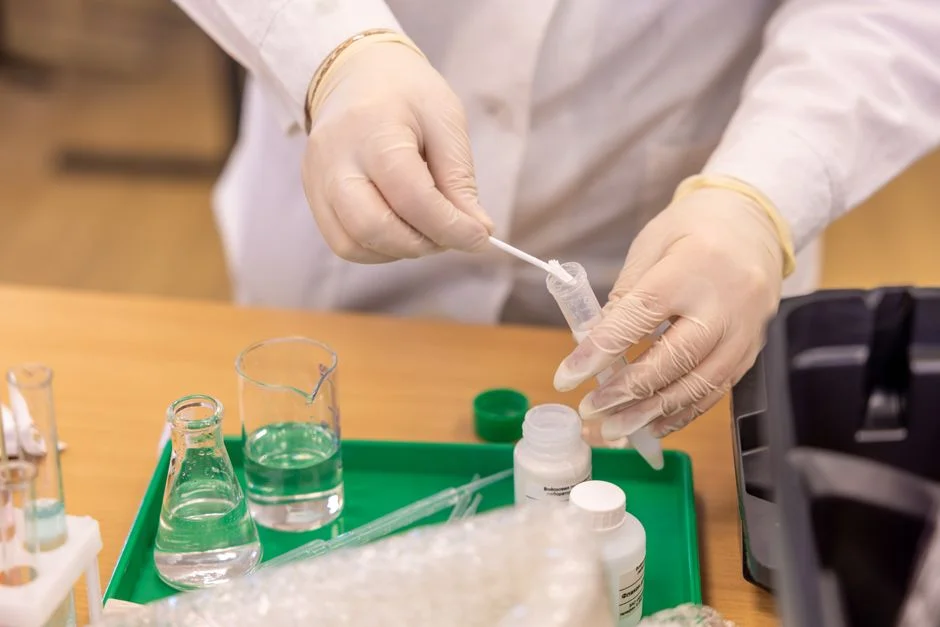
An electrocoagulation (EC) cell with an aluminum anode and stainless-steel cathode, run at 30 A/m² on a 1,000 mg/L synthetic tannic-acid feed, achieved 94% tannic-acid removal and 94.92% COD removal in a 2022 IOP study (S5). Maximum COD removal occurred at the natural pH 4.11 of the sample, while tannic-acid removal was higher at pH 6 and pH 8 — confirming that pH control is method-specific and that running EC on real TWW at its native pH is a defensible design choice (S5). Two kinetic facts are critical for sizing: COD removal took 120 minutes, longer than the 60-minute tannic-acid disappearance, so EC reactors for TWW must be sized for the slower kinetic. Removal efficiency also dropped as the initial tannic acid concentration rose from 500 to 800 to 1,000 mg/L, meaning influent strength sets the upper bound of the working window.
This positions EC as a high-yield, chemical-free step for 2026 designs, though sludge handling must be planned for the Al/Tannin floc it produces. A dissolved air flotation (DAF) system downstream of the EC cell is a common way to separate the lightweight floc before it reaches the biological stage, where residual aluminum would otherwise suppress microbial activity.
| Parameter | Operating point in the 94.92% COD case (S5) | Design implication for 2026 |
|---|---|---|
| Anode / cathode | Aluminum anode, stainless-steel cathode | Al electrodes must be replaceable; cathode is the lower-cost consumable |
| Current density | 30 A/m² | Rectifier sizing and electrode area are linked directly |
| Initial tannic acid | 1,000 mg/L | Higher feeds reduce removal — confirm influent strength before quoting |
| Optimal pH for COD | 4.11 (natural sample pH) | No acid dosing required when raw TWW is in this band |
| Optimal pH for tannic acid | 6 and 8 | If tannic acid is the regulated parameter, raise pH before EC |
| Contact time (COD) | 120 min | Reactor HRT must be sized to COD kinetic, not tannic acid kinetic |
| Contact time (tannic acid) | 60 min | Faster; useful for intermediate sampling |
Side-by-Side Comparison: Fenton, ECP, EC, and Biological Treatment
Fenton chemistry delivers high COD removal potential but requires pH adjustment that worsens the chloride load and is sensitive to influent variability (S4). Electrochemical peroxidation (neutral pH) reaches 60–69.7% COD removal and 97.8% color removal at 750 mA on real TWW, generating an in-situ iron-oxide coagulant that simplifies solids separation (S4). Electrocoagulation with an aluminum anode reaches 94.92% COD removal at 30 A/m² and pH 4.11 over 120 minutes on a 1,000 mg/L tannic-acid feed (S5). Stand-alone biological treatment is ineffective on tannic acid and Cr-bearing streams and is useful only after COD and toxicity have been cut by a chemical or electrochemical step (S3, S5). The pattern supported for high-strength TWW is a hybrid train: primary settling → EC or ECP → biological or MBR polish.
| Criterion | Fenton (classical) | ECP (neutral Fenton) | EC (Al anode) | Stand-alone biological |
|---|---|---|---|---|
| Reported COD removal on TWW | High in theory, but no head-to-head TWW figure in supplied research | 60% recalcitrant COD at 500 mA; 69.7% at 750 mA (S4, 2024) | 94.92% at 30 A/m², 1,000 mg/L tannic acid (S5, 2022) | Low on raw tannic acid / Cr streams (S3, S5) |
| Chloride tolerance | Poor — pH conditioning adds to TDS | Tested on real TWW with up to 50% chloride (S4) | Not adversely affected by chloride in the supplied data | Inhibited at high salinity |
| pH control needed | Yes, acidic window | No — operated at native pH (S4) | No for COD at native pH 4.11 (S5) | Neutral, but upstream toxicity limits biomass |
| Sludge type | Iron hydroxide Fenton sludge | Iron oxides / hydroxides, characterised for recovery (S4) | Al / tannin floc (S5) | Biological waste activated sludge |
| Dominant cost driver | Chemical reagents (H₂O₂, acid) | Electrodes, per S4 cost analysis | Al electrode consumption + power | Aeration energy + footprint |
| Best fit in a 2026 train | Rarely as primary on TWW; possible after desalination | Tertiary polish on real TWW after primary settling (S4) | Primary or secondary COD step (S5) | Final polish only after EC/ECP cuts toxicity |
Designing a 2026 Hybrid Train for Tannery COD Compliance
The lab data above translate into a five-block process flow for procurement and EPC teams. At the headworks, a rotary mechanical bar screen followed by primary settling drops suspended solids before any electrochemical cell, since high TSS blocks electrodes and reduces current efficiency. The EC or ECP reactor is the main COD-reduction step, sized using current density (A/m²) and contact time — approximately 120 minutes for the EC case at 30 A/m² in S5 — as the design anchors. Tertiary polishing with an MBR membrane bioreactor or equivalent biological stage is required to meet discharge or reuse limits, because EC and ECP alone leave residual COD and color that exceed most 2026 reuse thresholds.
Sludge from EC (Al/Tannin floc) and ECP (iron oxides and hydroxides) must be dewatered with a plate and frame filter press before disposal, and the S4 study explicitly characterised the iron sludge for potential recovery rather than landfill, which resonates with 2026 ESG reporting. Where chemical dosing is still used — for pH trim, antifoam, or nutrient addition to the biological stage — an automatic chemical dosing system that is PLC-controlled and skid-mounted provides rapid installation and reproducible dose-to-flow ratios that an operations team can audit.
Sizing, Cost, and 2026 Equipment-Sourcing Checklist
Converting the lab data into an RFQ requires a fixed list of parameters a supplier must answer in writing. Ask for guaranteed current density (A/m²) and contact time, benchmarked against the 30 A/m², 120-minute EC case from S5 and the 500 mA ECP trade-off from S4. Confirm chloride tolerance up to 50% so the chosen cell or Fenton variant does not lose performance on real TWW brines (S4). Request electrode material options (Al, Fe, mixed-metal) and published COD-removal curves for tannery effluent, not just generic dye or textile data. Verify that the downstream biological or MBR polish is sized to the residual COD and chromium expected after the electrochemical step, and that sludge dewatering capacity matches EC and ECP solids production.
On budget, the headline is that electrodes were the largest cost contributor in the S4 cost analysis, so total cost of ownership — electrode lifetime, replacement interval, and availability of spares in the buyer's region — should drive vendor selection rather than headline equipment price. For a paired flotation step upstream of the MBR, a dissolved air flotation (DAF) system sized to the EC floc load is a common 2026 specification. Engineers comparing methods across plants can also cross-reference the best technology to remove COD and BOD from industrial wastewater buyer guide, the electrocoagulation system engineering guide for non-tannery feeds, and the regional textile wastewater treatment guide for a different influent profile.
Frequently Asked Questions
Which single method gives the highest COD removal on tannery wastewater in 2026?
On the data in the supplied research, electrocoagulation with an aluminum anode at 30 A/m² and 1,000 mg/L initial tannic acid reached 94.92% COD removal in the 2022 IOP study (S5). No supplied source reports a higher single-method figure for tannery effluent.
How does the 50% chloride level in tannery wastewater affect Fenton or ECP choice?
Frequently Asked Questions
What is the best technology to remove COD from tannery wastewater in 2026?
As of 2026, the industry standard for high-strength tannery effluent involves a multi-stage approach combining Electro-Fenton (EF) or advanced oxidation processes (AOP) with membrane bioreactors (MBR). While biological treatment handles biodegradable fractions, oxidative processes are required to break down recalcitrant tanning agents, achieving COD reduction rates of 85% to 95% to meet strict discharge limits below 250 mg/L.
How much does a tannery wastewater COD removal system cost to install?
Capital expenditure for a comprehensive tannery wastewater treatment plant typically ranges from $1.5 million to $5 million for a facility processing 500 cubic meters per day, depending on the complexity of the secondary and tertiary stages. Operating costs are heavily influenced by energy consumption and electrode replacement, averaging between $0.80 and $2.50 per cubic meter of treated effluent.
Can electrocoagulation handle 50% chloride tannery wastewater?
Yes, electrocoagulation (EC) is highly effective in high-salinity environments because the high chloride concentration increases the electrolyte conductivity of the wastewater, which reduces energy consumption. However, at 50% chloride saturation, the system must utilize dimensionally stable anodes (DSA) to prevent excessive electrode passivation and to mitigate the risk of generating toxic chlorinated byproducts like perchlorates.
How do I size an electrocoagulation reactor for tannery effluent?
Sizing is determined by the required charge loading (Faraday's Law) and hydraulic retention time (HRT), which generally ranges from 30 to 90 minutes for tannery streams. Engineers must calculate the total current density—typically between 10 and 50 A/m²—based on the influent COD concentration and the specific surface area of the sacrificial iron or aluminum electrodes required to achieve the necessary mass transfer for flocculation.
Will tannery wastewater meet discharge limits for chromium after EC or ECP treatment?
Electrocoagulation and Electro-Coagulation-Precipitation (ECP) are exceptionally efficient at removing trivalent chromium (Cr3+), often achieving removal efficiencies exceeding 99%. By operating the system at an alkaline pH (8.0 to 9.0), chromium is effectively precipitated as chromium hydroxide, consistently bringing effluent concentrations below the international regulatory threshold of 0.5 mg/L to 2.0 mg/L.