Why Florence-Area Food and Beverage Plants Need a Pretreatment-First Strategy in 2026
The receiving utility sets the BOD, TSS, and nutrient limits for food or beverage facilities discharging to a municipal system in the United States, and exceeding them can stop production faster than almost anything else (Integrated Water Services, food & beverage industry page). In Alabama, the Alabama Department of Environmental Management (ADEM) administers the underlying state program, but the day-to-day permit envelope a brewery, meat plant, dairy, or produce processor must hit is written into the local POTW's industrial pretreatment program (IPP), typically anchored on 40 CFR 403 General Pretreatment standards for categorically regulated industries and on local limits for everything else. Federal EPA, ADEM, and local utility rule-making are moving in the same direction — tighter effluent quality, more nutrient control, and more scrutiny on water-intensive sectors like food and beverage (Integrated Water Services, Navigating Evolving Wastewater Regulations).
On top of that discharge pressure sits a federal material-efficiency push: the US 2030 food-loss-and-waste reduction goal reframes producers as resource-recovery operators, which raises the bar on plant-level water and waste accounting even when the immediate driver is the sewer permit (Nature Food, 2024 — State-level policies alone are insufficient). For a Florence/Shoals plant, the practical implication is that the design target in 2026 is not "meet ADEM's default numbers." It is "meet the local POTW's site-specific BOD, TSS, FOG, pH, ammonia, and nutrient limits on the worst shift of the year." Confirm whether the facility falls under 40 CFR 403 categorical standards, request the current local limits from the receiving utility, and pull the discharge permit language before any equipment is sized.
The Four Wastewater Failure Modes That Trip Up F&B Plants
Permit excursions in food and beverage plants almost always trace back to one of four stream problems, and the 2026 process train must be mapped to all four.
First, high BOD/COD load. Proteins, carbohydrates, and raw-material organics drive oxygen depletion, microbial inhibition, and excess sludge when the biological step is overloaded (USP Technologies, food & beverage page). Second, fats, oils, and grease (FOG) plus high suspended solids dominate meat, protein, dairy, and poultry streams; FOG must be removed upstream of biology or it coats diffusers, ruins settling, and triggers POTW complaints (Integrated Water Services, Navigating Evolving Wastewater Regulations; USP Technologies, food & beverage page). Third, pH and alkalinity instability. Outside the right range, nitrification collapses, sludge settles poorly, and ammonia passes through the effluent (USP Technologies, food & beverage page). Fourth, variable flow and load — the single most common cause of excursions in this sector. Cleaning cycles, seasonal processing runs, and batch production create loading spikes that crash systems sized only for average conditions; Integrated Water Services uses a brewery producing 82,000 barrels a year as the textbook high-BOD example of why average-day design fails (Integrated Water Services, food & beverage industry page). Match the symptom to the unit operation, and the rest of the train design falls into place.
A 2026 Process Train for Florence-Area F&B Pretreatment
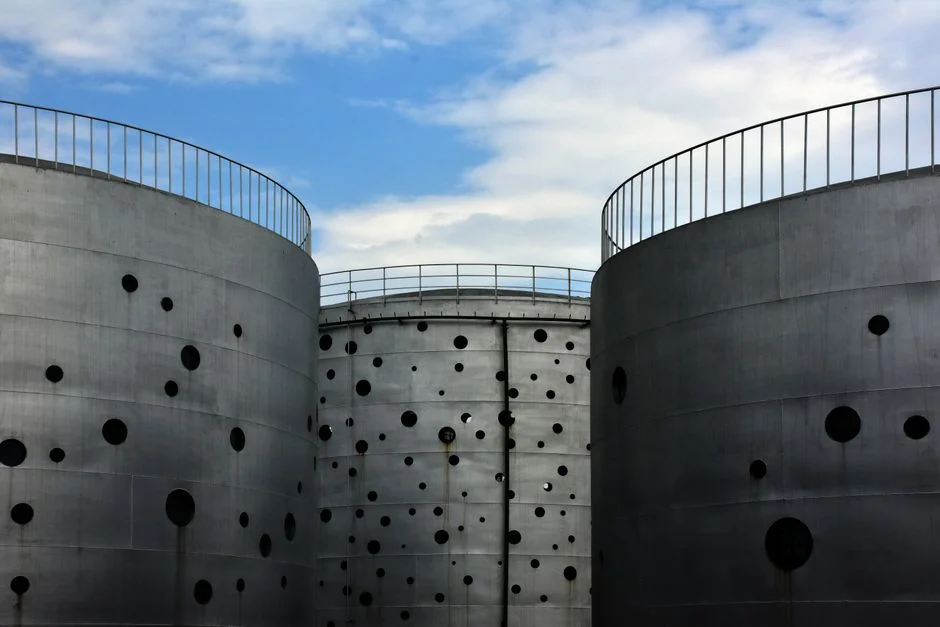
The 2026 reference train for a Florence/Shoals food and beverage discharger runs headworks → equalization → DAF → biological/MBR → nutrient and pH polishing → disinfection, with anaerobic digestion as an optional step for high-strength streams. Each step has a defined job in the permit envelope.
Step 1 — Headworks screening. A rotary mechanical bar screen for headworks protects downstream pumps, DAF, and membranes from rags, plastics, bottle caps, and fibrous debris. The brewery/CIP failure mode IWS describes — rags and labels passing through to biology — starts here, so screen selection must be sized for surge solids, not steady flow.
Step 2 — Equalization. Surge/equalization tanks sized to the actual peak production profile, not the daily average, are the single most important insurance policy against permit excursions during CIP and seasonal runs (Integrated Water Services, food & beverage industry page). For a Florence brewery, that typically means covering the longest CIP flush plus the brew-day peak; for a meat or dairy plant, it means covering the kill-floor or batch flush window.
Step 3 — DAF (dissolved air flotation). An industrial DAF system for FOG and suspended solids is the standard for meat, protein, and dairy streams; micro-bubble skimming pulls FOG and TSS before they hit the biological step (USP Technologies, food & beverage page). DAF also buffers load swings between equalization and biology.
Step 4 — Biological treatment / MBR. An MBR membrane bioreactor combines activated sludge with membrane filtration, delivering higher and more stable BOD, TSS, and ammonia removal than conventional aeration — exactly what tightening utility limits reward (Integrated Water Services, Navigating Evolving Wastewater Regulations).
Step 5 — Nutrient and pH polishing. An automatic chemical dosing system for pH and nutrient control stabilizes alkalinity for nitrification and doses coagulant or carbon source where biological nutrient removal alone cannot meet ammonia, total nitrogen, or phosphorus limits (USP Technologies, food & beverage page). For plants targeting water reuse, this step is where UF or RO would follow — see the soft drink wastewater UF guide and the 2026 industrial water-reuse outlook for reuse-side design context.
Step 6 — Disinfection. UV or chlorine dioxide meets the receiving utility's microbial targets before the sewer; confirm the technology and CT requirements with the local POTW.
Optional Step 7 — Energy recovery. High-strength streams support anaerobic digestion with a CHP turbine. At Bear Republic Brewery, the integrated anaerobic system generated roughly 50% of the site's electricity and 25% of its hot water from biogas recovered during treatment (Integrated Water Services, food & beverage industry page). The same logic is now being applied to dairy and meat processors with strong, warm waste streams.
| Step | Unit operation | Primary permit parameters controlled | Failure mode if undersized |
|---|---|---|---|
| 1 | Rotary mechanical bar screen | Solids protection for downstream units | Pump ragging, DAF nozzle clogging, membrane fouling |
| 2 | Equalization / surge tank | Flow and load smoothing (BOD, TSS, pH) | CIP and seasonal spikes crash biology |
| 3 | Dissolved air flotation (DAF) | FOG, TSS, partial BOD | FOG breakthrough, POTW complaints, diffuser fouling |
| 4 | Biological / MBR | BOD, COD, TSS, ammonia | Effluent BOD/TSS exceedance, poor nitrification |
| 5 | Chemical dosing (pH, nutrients) | pH, alkalinity, TN, TP | Ammonia breakthrough, eutrophication risk at receiving water |
| 6 | Disinfection (UV / ClO2) | Microbial targets per POTW | Noncompliance with sewer disinfection requirements |
| 7 (optional) | Anaerobic digestion + CHP | Energy recovery, sludge reduction | Missed OPEX and ESG gains from biogas |
Designing for Peak Loading, Not Averages
Equalization volume plus controls constitutes the most effective insurance a Florence-area plant can buy, as it maintains the permit envelope on the worst day of the year. IWS warns that systems "sized only for average conditions" are crashed by CIP, seasonal, and batch spikes, and recommends building equalization and treatment capacity around the actual operating profile including peaks (Integrated Water Services, food & beverage industry page).
For high-BOD/COD streams, conventional fine-bubble diffusers can fail under peak organic load; jet aeration through KLa Systems is the documented upgrade path for difficult organic streams, with over 1,700 jet aeration projects cited by IWS in high-demand applications such as citrus lagoons, poultry, and meat processing (Integrated Water Services, food & beverage industry page). A high-efficiency sedimentation tank between DAF and biology protects the MBR from solids slugs during peak runs. Sensors and PLC control on equalization, DAF, and MBR let the plant ride out a spike without an operator manually throttling flows — which is where most excursions start.
2026 Monitoring and Compliance Checklist for Florence F&B Plants
Run this checklist against the plant before the next ADEM or POTW inspection. Each item represents a question an inspector — or an autosampler — will answer before the operator does.
| Check | What to verify | Pass criterion |
|---|---|---|
| Permit basis | Confirm 40 CFR 403 General Pretreatment vs. local limits; pull current BOD, TSS, FOG, pH, ammonia, TN, TP limits | Written limits on file, dated within 12 months |
| Equalization volume | Longest CIP cycle + worst seasonal run, not daily average (IWS, food & beverage industry page) | Calculated HRT ≥ peak window at design flow |
| DAF performance at peak | FOG and TSS removal at actual peak flow, not design average; FOG breakthrough is the most common POTW complaint (USP Technologies, food & beverage page) | Effluent FOG and TSS within permit at peak |
| pH and alkalinity control | Nitrification stability; pH swings break ammonia removal (USP Technologies, food & beverage page) | pH in control band across CIP cycles |
| Online instrumentation | pH, conductivity, and TSS on equalization and DAF outlet so a spike is detected before the receiving utility's autosampler does | Alarms set on deviation, not just on effluent |
| Records and reporting | Self-monitoring reports, BMP/PP notifications, slug control plan | All reporting current to ADEM and POTW schedule |
Frequently Asked Questions
Who actually sets the discharge limits for a food or beverage plant near Florence, Alabama?
The receiving POTW sets site-specific BOD, TSS, FOG, pH, and nutrient limits through its industrial pretreatment program, administered under 40 CFR 403 General Pretreatment standards where applicable and under local limits otherwise; ADEM oversees the underlying state framework. A buyer should request the current local limits and the categorical applicability determination from the POTW before sizing any equipment, because the design target is the local envelope, not a state default.
What does a DAF actually do in a brewery or meat plant pretreatment train?
An industrial DAF system is the dedicated FOG and suspended-solids removal step used in meat, protein, and dairy plants; micro-bubble skimming pulls non-soluble contaminants out before they overload the biological step (USP Technologies, food & beverage page). On a brewery/CIP stream it is less central than on a meat or dairy stream, but it still protects biology from slug loads.
When is an MBR worth the higher capex over conventional aeration for a Florence F&B plant?
An MBR is worth the premium when the POTW limits are tightening on BOD, TSS, and ammonia simultaneously, or when the site is space-constrained; MBRs combine biological treatment with membrane filtration for higher and more stable removal than conventional aeration (Integrated Water Services, Navigating Evolving Wastewater Regulations). For a small brewery with only BOD and TSS limits, conventional activated sludge may still meet the envelope — confirm the local limits and the worst-day load before selecting.