Why Indianapolis Mining and Metals Plants Are Revisiting Clarifier Selection in 2026
Indianapolis mining and metal-finishing operations produce a hybrid wastewater stream containing heavy settleable mineral fines from parts washing, cutting, and grinding, mixed with lighter oils, greases, flotation reagents, and fine slimes. A single sedimentation tank that worked in the early 2000s now struggles to hit both TSS and FOG limits on the same pass.
Kemco's industrial wastewater overview lists "sand, lint, oils & greases, heavy metals, and VOCs" as the target contaminants that dissolved air flotation (DAF) is engineered to address (Kemco, 2025). Heavy metals ride on TSS and FOG phases, meaning a clarifier that only targets one carrier will underperform on total metals. The 2026 IUPUI / Marion County pretreatment posture is pushing Indianapolis facilities toward primary clarification units that can hit TSS, FOG, and metals limits in a single step, rather than relying on downstream polishing alone to clean up a marginal primary.
The right framing is not "DAF vs clarifier" as competing brands, but rather two physical separation mechanisms—flotation versus sedimentation—that handle different particle populations. The selection question is which mechanism, or which sequence of mechanisms, fits the actual stream at a given plant.
How a DAF Clarifier Actually Separates Solids, Oils and Metals
A DAF unit saturates a side-stream of clarified water with pressurized air to generate 30–50 micron micro-bubbles upon depressurization into the flotation tank (Clearwater Industries, 2026). Those bubbles attach to flocculated particles, oils, and greases and float them to the surface, where a skimmer pulls the resulting sludge blanket into a collection trough. Clarified water exits below the floating blanket through a supernatant outlet (Clearwater Industries, 2026).
Most DAF designs include a sediment compartment so heavier settleable solids are removed at the bottom rather than re-entering the clarified water. A DAF unit functions as a combined flotation and clarifier device (Clearwater Industries, 2026). For a plant that previously believed DAF "only floats" and a clarifier "only settles," the practical reality is that a DAF handles both populations in one tank.
Coagulants, flocculants, and pH adjustment are typically dosed upstream through flocculation tubes (15–45 second flash mix) or agitated mix tanks to build particles the bubbles can attach to (Clearwater Industries, 2026). The COMPACT DAF product line packages this conditioning, the DAF cell, sensors, and PLC controls into a single skid for flows up to 66 GPM, with a modular two-skid configuration above that breakpoint (Clearwater Industries, 2026). Because heavy metals ride on TSS and FOG, removing those carrier phases via DAF also strips particulate and emulsified metal species—Kemco lists heavy metals among DAF's target contaminants (Kemco, 2025).
How a Conventional or Lamella Clarifier Handles the Same Stream
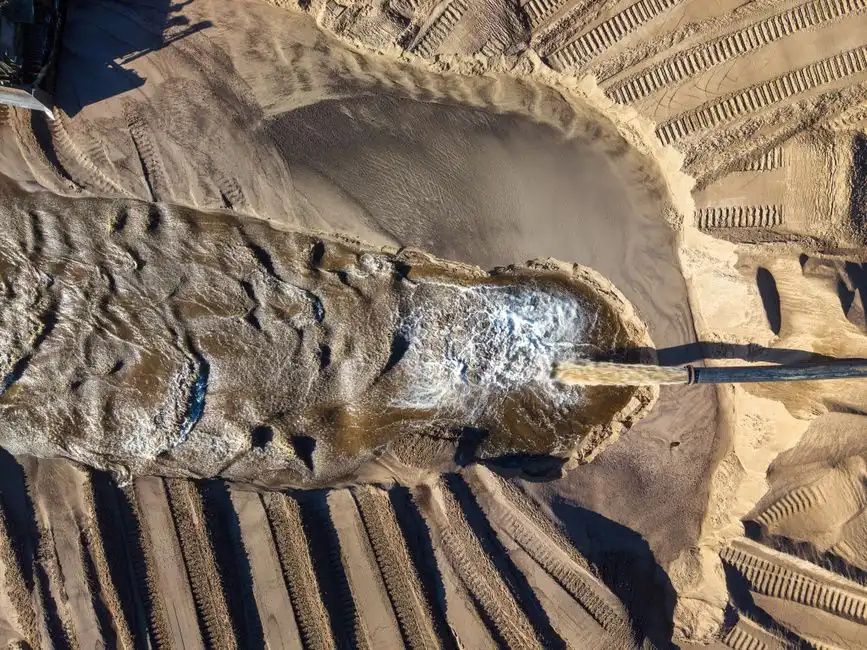
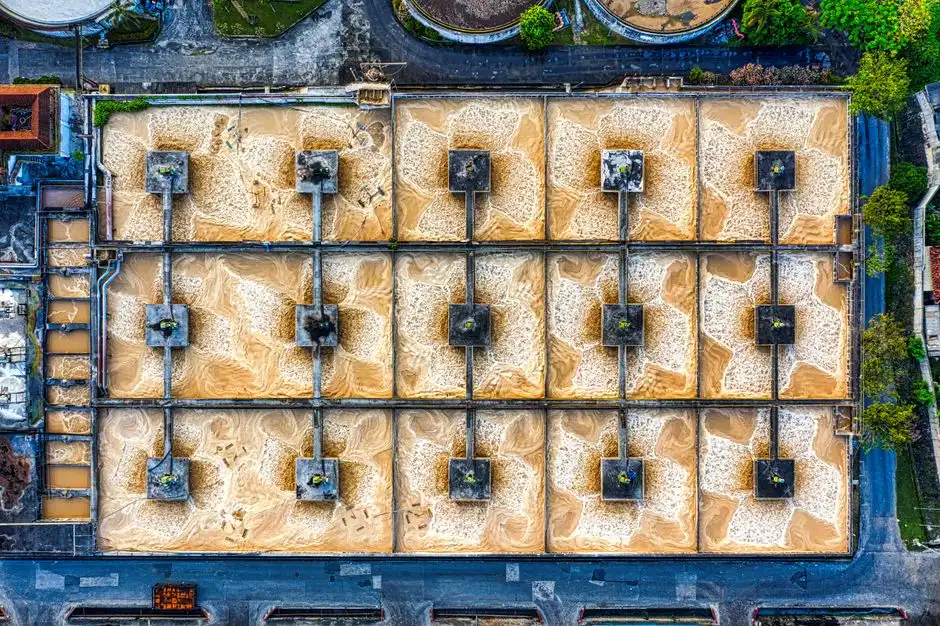
Sedimentation clarifiers rely on gravity to move particles with a specific gravity greater than water to a sludge hopper, while clarified supernatant overflows a peripheral launder. A conventional clarifier has no mechanism for capturing light oils, FOG, or low-specific-gravity flotation slimes without prior chemical destabilization, and the basin footprint for a given flow is large compared with stacked-plate designs.
Lamella (inclined-plate) clarifiers shorten the effective settling path using stacked plates, which raises the achievable surface loading rate and shrinks the footprint. A well-designed lamella clarifier reaches surface loading rates of 20–40 m/h while reducing chemical consumption versus a conventional tank of equivalent flow (HydropureWater lamella clarifier catalog, 2025). The plate pack performs the separation; the basin around it is essentially a structural shell.
Lamella clarifiers excel on heavy, fast-settling mineral slurries and sludges from metal-finishing rinsewater where the particles are coarse and dense. They are the wrong tool for a stream dominated by emulsified oils or flotation froth. Kemco's process flow places coarse filtration (hydrocyclone or shaker screen) and pH control upstream of any clarifier, then sludge dewatering downstream—that frame holds whether the primary unit is a DAF or a lamella clarifier (Kemco, 2025). For a mining or metals plant evaluating a HydropureWater high-efficiency lamella clarifier as the primary, the same upstream and downstream unit operations apply.
DAF vs Clarifier: Side-by-Side Parameter Comparison
The table below summarizes the engineering parameters a process engineer can copy into an evaluation memo. Cells that depend on site-specific influent characterization, regulatory effluent targets, or vendor scope are marked "request vendor data."
| Parameter | Dissolved Air Flotation (DAF) | Lamella / Conventional Clarifier |
|---|---|---|
| Primary separation mechanism | Micro-bubble flotation of buoyant and flocculated particles; sediment compartment captures heavy fraction (Clearwater, 2026) | Gravity sedimentation; plate pack shortens settling path in lamella designs |
| Target particle type | FOG, emulsified oils, light suspended solids, flocculated colloids, low-specific-gravity slimes (Clearwater, 2026) | Heavy, fast-settling mineral fines, dense metal-bearing sludges |
| Micro-bubble size | 30–50 microns (Clearwater, 2026) | N/A — no bubbles generated |
| Typical hydraulic capacity | 4–300 m³/h standard model range; COMPACT DAF single skid up to 66 GPM (≈15 m³/h), modular two-skid above (Clearwater, 2026) | Wide range, sized by surface loading rate and basin area |
| Surface loading rate | Set by hydraulic retention, not Stokes settling | 20–40 m/h design envelope (HydropureWater lamella clarifier catalog, 2025) |
| Footprint intensity | Higher per m³/h on the cell itself, but combines flotation + sediment in one tank | Compact for lamella design; large for conventional circular clarifier |
| Sensitivity to flow surges | Skimmer and sludge blanket can be disrupted by sudden hydraulic spikes; sized with surge margin | Plate pack more tolerant of gradual flow variation; poor with rapid sludge resuspension |
| Chemical demand | Coagulant + flocculant + pH adjustment typical via flocculation tubes or mix tanks (Clearwater, 2026) | Coagulant + flocculant; lamella design can reduce chemical consumption (HydropureWater, 2025) |
| Sludge consistency | Floated sludge blanket typically thicker, often dewaterable without further thickening (Clearwater, 2026) | Settled sludge from hopper, often 1–3% solids depending on feed |
| Capital / operating complexity | Higher mechanical complexity (recirculation pump, saturation vessel, skimmer, controls) | Lower mechanical complexity; pumps, plates, sludge rake |
| Removal efficiency vs. FOG | High (request vendor data for specific influent) | Low without prior chemical destabilization |
| Removal efficiency vs. TSS (heavy fines) | Adequate via sediment compartment, but not its strong suit | High on dense, settleable fines |
Matching Indianapolis Mining and Metals Streams to the Right Clarifier
Not every stream at a given plant needs the same primary unit. A practical mapping for Indianapolis mining, metal-finishing, and steel/mill operations follows:
| Stream archetype | Dominant particle population | Recommended primary unit | Rationale |
|---|---|---|---|
| Pre-finishing rinsewater, pickling bath overflow (after pH control) | High metal-bearing TSS, dense sludges, low oil | Lamella clarifier | Gravity settling is fast; lamella footprint fits a tight plant; DAF would over-treat the oil fraction that is not there |
| Machining, stamping, drawing, parts-washing lines | Cutting fluids, tramp oils, emulsified FOG, fine metal chips | DAF | Emulsified oils and FOG dominate; DAF micro-bubbles attach to oil droplets and float them; sediment compartment handles tramp grit |
| Mineral processing water with residual flotation reagents | Reagent-laden froth, fine gangue, light slimes | DAF primary + lamella polish (hybrid train) | DAF captures the reagent/froth fraction; downstream lamella polishes heavy fines before discharge |
| Steel/mill coolant and lube wastewater | Free and emulsified oils, TSS, occasional heavy slag fines | DAF | Same logic as parts-washing; FOG removal is the compliance driver, sediment compartment handles fines |
| Mixed plant flow > 66 GPM (≈15 m³/h), space-constrained | Variable; FOG + TSS both present | Modular two-skid COMPACT DAF (Clearwater, 2026) | Modular configuration handles flow above the single-skid breakpoint while keeping plug-and-play installation |
For Indianapolis plants that must discharge to the sanitary sewer under 2026 IUPUI / Marion County FOG and TSS limits, the practical posture is to treat a DAF unit as the primary compliance-critical device. When the stream is heavy on dense metal-bearing fines and light on oil, a HydropureWater high-efficiency lamella clarifier can serve as the primary with a downstream DAF handling residual FOG; the reverse is rarely true.
Sizing a DAF or Clarifier for an Indianapolis Plant: The Inputs You Must Gather
Sizing decisions succeed when the engineer starts from the stream characterization rather than a model number. The minimum data set to size either unit type includes: average and peak flow (m³/h), influent TSS, FOG, total metals of concern, pH range, temperature, and available floor space and ceiling height. Without these, neither a DAF model nor a lamella surface loading rate can be defended to a procurement manager or a regulator.
Pre-treatment is non-optional on either unit. Kemco's process flow places coarse filtration (hydrocyclone or shaker screen) and pH control ahead of the DAF or clarifier; the hydrocyclone strips high-density solids such as sand and grit, while the shaker screen handles both fine and coarse particles across varying flow rates (Kemco, 2025). Skipping this step is the most common reason a DAF cell overloads with grit or a lamella plate pack blinds prematurely.
For DAF, the 4–300 m³/h standard model range maps to discrete sizes, and the COMPACT DAF configuration splits at 66 GPM—single skid up to that point, modular two-skid above (Clearwater Industries, 2026). Oversizing is cheaper than under-sizing because hydraulic surges will scour the sludge blanket and carry floated solids back into the clarified water. An automatic chemical dosing system for DAF pretreatment sized to the actual coagulant and flocculant demand keeps the conditioning chemistry stable across flow swings.
For lamella clarifier sizing, the 20–40 m/h surface loading band is the design envelope (HydropureWater lamella clarifier catalog, 2025). Verify the chosen loading against jar tests on real wastewater rather than a generic settling curve. A DAF unit is sized to the same data set plus the bubble–particle attachment kinetics from jar or pilot testing. Pilot or jar data is the gating input, while the model number is the output. For broader context on how a primary clarification unit fits into a full 2026 sewer pretreatment train, see the 2026 mining and metals sewer pretreatment compliance playbook; for high-recovery reuse cases tied to acid mine drainage, the ZLD configuration for acid mine drainage in 2026 walks through the downstream side of the train.
Frequently Asked Questions
What capital and operating cost difference should we expect
Frequently Asked Questions
Should a mining or metals factory in Indianapolis choose a DAF or a clarifier in 2026?
The choice depends primarily on the density and settling velocity of your specific waste stream. For Indianapolis facilities facing space constraints or high volumes of low-density particles like emulsified oils, greases, or light metal hydroxides, a Dissolved Air Flotation (DAF) system is generally superior due to its rapid separation kinetics. If your process generates heavy, inorganic mineral solids that settle rapidly via gravity, a clarifier remains the industry standard for durability and lower operational complexity.
What flow rate range does an industrial DAF system cover compared to a lamella clarifier?
Industrial DAF systems typically handle flow rates ranging from 10 GPM to over 1,500 GPM, depending on the tank surface area and air-to-solids ratio. Lamella clarifiers offer a wider range, starting from small 5 GPM modular units for batch processing up to 3,000+ GPM for large-scale continuous operations. Because lamella clarifiers utilize inclined plates to increase effective settling area, they can process higher hydraulic loads within a smaller physical footprint than a standard circular clarifier.
How do DAF and clarifier costs compare for a small-to-medium Indianapolis metal-finishing plant?
For a small-to-medium facility, a lamella clarifier typically has a lower initial capital expenditure (CAPEX) due to its simple mechanical design and lack of pressurized air systems. However, a DAF unit incurs higher operational expenditure (OPEX) due to electricity consumption for air compressors and the recurring cost of coagulant and flocculant polymers required to float contaminants. In the 2026 market, maintenance costs for DAF systems are higher due to the need for periodic cleaning of saturation nozzles and skimmer blade adjustments.
What contaminants in mining and metals wastewater does DAF remove that a clarifier misses?
DAF is specifically engineered to remove hydrophobic contaminants with a specific gravity near or less than 1.0, such as fats, oils, greases (FOG), and certain petroleum hydrocarbons that typically remain suspended in a clarifier. While clarifiers are effective at removing dense metal precipitates like iron or zinc hydroxides, DAF excels at capturing finely dispersed metallic particles and light colloidal matter that would require excessive chemical flocculation time in a gravity-based system.
Is DAF or a lamella clarifier better for meeting 2026 Indianapolis sewer pretreatment limits?
Meeting strict Indianapolis sewer pretreatment limits for heavy metals and Total Suspended Solids (TSS) often necessitates a hybrid approach. While a lamella clarifier is highly effective at meeting TSS limits for dense minerals, DAF is frequently required as a secondary or primary stage to meet stringent local limits on Oil & Grease (O&G) and emulsified compounds. If your effluent contains a complex mixture of dissolved metals and process lubricants, a DAF system provides the necessary removal efficiency to ensure compliance with 2026 local discharge permits.