Christchurch Sizing Inputs You Must Collect First
The four numbers that determine whether a containerized MBR STP in Christchurch is correctly sized are the design population, the per-capita wastewater load, the peak factor, and the target effluent quality. A 50 gpd per-capita load (about 189 L/day) is the reference used by Pure Aqua to estimate population served by its MBR-C containerized systems, and it is a defensible starting point when local water-supply or consent data is not yet in hand (Pure Aqua, 2025). For a residential block, the design population is straightforward: count full-time residents. For a camp, occupancy swings between mid-week lows and weekend or event peaks, so the population to use is a peak head-count, not an annual average.
The peak factor is what most undersized plants get wrong. Pure Aqua's containerized MBR-C treats domestic sewage at near-ambient temperature and is designed around a 20 °C liquid temperature with an operating envelope of 20–30 °C (Pure Aqua, 2025), so hydraulic peaks rather than cold-weather biology are usually the controlling case for a Christchurch camp. Hinada specifies that camp and resort projects should select a peak factor that reflects concentrated morning and evening shower, kitchen and laundry windows (Hinada). The fourth input is the effluent end use, because once the treated water is destined for irrigation reuse rather than stream discharge, add-on decisions for chemical P removal, air flotation or ozone shift the equipment list and the price.
From Population to Design Flow: A Worked Christchurch Example
Take a 200-person peak-occupancy camp as the worked case. Using Pure Aqua's 50 gpd per-capita reference, average daily flow is 200 × 189 L ≈ 37.8 m³/day, or roughly 38 m³/day (Pure Aqua, 2025). Apply a peak factor of 2.5 for the camp, reflecting simultaneous shower, kitchen and laundry draws, and the peak design flow becomes about 95 m³/day. That figure sits well inside the 10–200 m³/day single-skid range cited by Hinada for their mobile containerized MBR (Hinada), so a single 40-foot ISO unit is technically sufficient. The same 200-person camp with a residential-style 1.8 peak factor would only need about 68 m³/day peak, which would fit a smaller skid.
Designers must then verify physical space constraints for the selected equipment. For larger projects, the rule of thumb is that anything above about 200 m³/day per single skid should be split across two parallel containers rather than pushed beyond the manufacturer's comfort range (Hinada). Footprint has to be confirmed against the chosen container before flow is locked. Hinada's published reference units run from 1.5 × 2.0 × 4.0 m for a 10 m³/day plant to 2.3 × 2.5 × 11.5 m for 80–120 m³/day units (Hinada), and both envelopes fit a standard 20-foot or 40-foot ISO footprint. A peer-reviewed reference for similar sizing logic, applied to a tropical context, is in this guide on sizing a containerized MBR STP in Yangon.
Containerized MBR Reference Parameters
The table below consolidates published parameter ranges for containerized MBR packages. Any quote that falls well outside these rows should be questioned before it is signed.
| Parameter | Published value | Source |
|---|---|---|
| Single-skid flow range | 10–200 m³/day ("better less than 200 m³/day") | Hinada, 2025 |
| 40-foot ISO container capacity | More than 1,200 m³/day with internal stainless-steel tanks | MENA-Water, 2025 |
| Container options | 20-foot and 40-foot high-cube ISO containers | Pure Aqua, 2025 |
| UF membrane nominal pore size | 0.04 µm (PVDF hollow fiber) to 0.06 µm (Hinada flat sheet) | Pure Aqua, 2025; Hinada, 2025 |
| MLSS in bioreactor | 6,000–8,000 mg/L | Hinada, 2025 |
| Design / operating temperature | 20 °C design, 20–30 °C operating range (68–86 °F) | Pure Aqua, 2025 |
| Footprint, 10 m³/day unit | 1.5 × 2.0 × 4.0 m (W × H × L) | Hinada, 2025 |
| Footprint, 80–120 m³/day unit | 2.3 × 2.5 × 11.5 m (W × H × L) | Hinada, 2025 |
| Power consumption | 2.5 kW/h (10 m³/day), 3.5 kW/h (20 m³/day), 6.5 kW/h (80 m³/day), 7.5 kW/h (120 m³/day) | Hinada, 2025 |
| Control | PLC with touch screen, automatic running, remote-monitoring option | Hinada, 2025; Pure Aqua, 2025 |
| Pre-treatment | Drum screen, 1.5 mm perforation | Pure Aqua, 2025 |
| Annual chemical cleanings | 1–2 maintenance cleanings per year | MENA-Water, 2025 |
For the membrane module itself, the DF series flat-sheet MBR membrane module sits inside this 0.04–0.06 µm pore-size band that the published references use. MENA-Water is explicit that quality testing is done at the factory, so the unit arrives as a plug-and-play wastewater skid needing only power, inlet and outlet tie-ins (MENA-Water, 2025).
Choosing the Right Process Train and Add-Ons
The baseline process train for a small containerized MBR is A/O biological treatment followed by MBR filtration, and Hinada's 20 m³/day reference plant uses exactly that combination (Hinada, 2025). When denitrification or tighter total-nitrogen limits are required, the train upgrades to A²/O + MBR. Skyview notes that A²/O + MBR systems are tunable through sludge retention time, sludge recycling rate, and MLSS targets, which is the same 6,000–8,000 mg/L range Hinada uses to shrink the aeration tank (Skyview, 2025; Hinada, 2025).
Engineers select add-ons based on effluent targets rather than standard configurations. Skyview lists chemical P removal, air flotation, and ozone as modular A²/O + MBR options for sites that need tighter nutrient or organics polishing (Skyview, 2025). For irrigation reuse downstream of the MBR, a polishing disinfection step is typical; a UV sterilizer polishing stage is one option that pairs naturally with a UF-grade MBR permeate. Hinada's published output water quality is described as meeting "international standards, for discharge or reuse in irrigation or recycle application" (Hinada, 2025); confirm the specific limits with Environment Canterbury before locking the train.
Installation, Footprint and Site Constraints in Christchurch
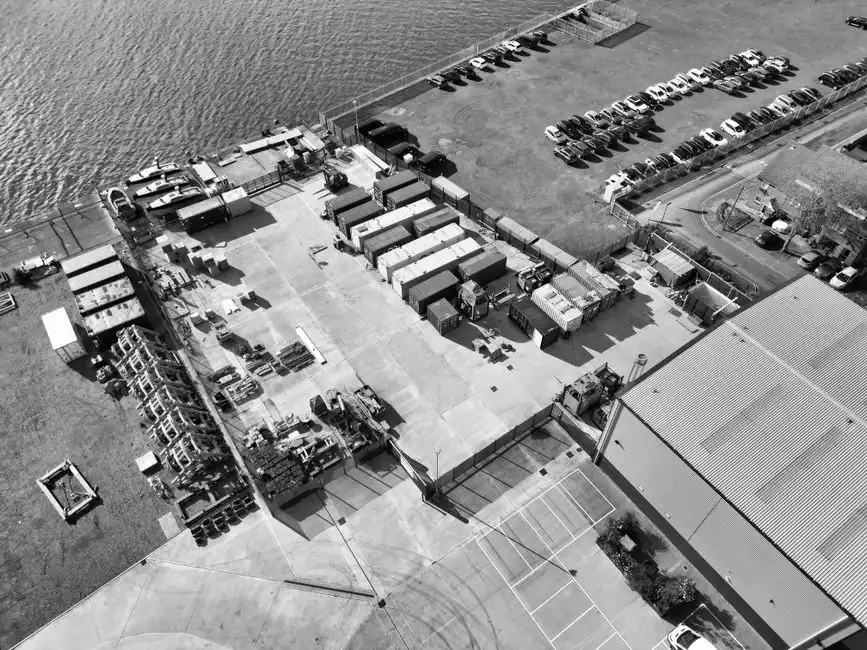
On a Christchurch site, the main constraints are delivery access, power supply, setbacks to boundaries and waterbodies, and the available pad footprint. MENA-Water is explicit that containerized ISO plants are quality-tested at the factory and need only power, wastewater inlet and treated-water outlet connections on site, which is the practical meaning of plug-and-play in the field (MENA-Water, 2025). Hinada confirms the same delivery model: pre-assembled, pre-tested, then installed in days rather than months (Hinada, 2025).
These units minimize civil work requirements compared to traditional concrete-tank plants. Power sizing for off-grid or generator-backed camps is straightforward from published numbers: 2.5 kW/h for a 10 m³/day unit, 3.5 kW/h for a 20 m³/day unit, 6.5 kW/h for an 80 m³/day unit, and 7.5 kW/h for a 120 m³/day unit (Hinada, 2025). Footprint is the second site win: the MBR replaces large secondary clarifiers and keeps the biological and membrane tanks inside a single ISO container, so a single civil pad typically replaces multiple concrete tanks (Hinada, 2025). Routine membrane maintenance is light, with MENA-Water stating only 1–2 chemical cleanings per year (MENA-Water, 2025), but the screen, aeration blower and sludge handling still need safe access for an operator. For a comparable temperate-climate sizing case outside New Zealand, see the containerized MBR sizing in Maputo guide; for a broader buyer's perspective on effluent plant specification, the Edmonton effluent treatment plant buyer's guide covers selection logic in more detail.
Frequently Asked Questions
What flow range can a single containerized MBR handle?
A single skid is rated at 10–200 m³/day in Hinada's mobile containerized MBR line, with a comfort note that single-skid design is best kept under 200 m³/day. Above that, either a 40-foot ISO with internal stainless-steel tanks delivering more than 1,200 m³/day is available (MENA-Water, 2025), or the flow is split across two parallel containers.
How do I turn population into m³/day for a Christchurch camp?
Use Pure Aqua's 50 gpd per-capita reference (about 189 L/day) as a starting load, then multiply by a peak factor appropriate to the use. For camps with concentrated morning and evening shower, kitchen and laundry windows, a 2.0–2.5 peak factor is typical; for residential blocks, 1.5–1.8 is more common. Always cross-check the resulting peak against the chosen container's rated flow before locking the spec (Hinada, 2025; Pure Aqua, 2025).
Can the treated water be reused for irrigation?
Yes. Both Hinada and MENA-Water describe MBR permeate as clear, low-SS water suitable for irrigation reuse, with MENA-Water quoting virus and bacteria reduction of 99.9999% through the UF stage (MENA-Water, 2025; Hinada, 2025). Any site-specific irrigation limits still need to be checked against the local consent, and a downstream UV or chlorine-dioxide polish is normal where higher-grade reuse is required.
What should I ask a supplier before buying a containerized MBR for a Christchurch project?
Send the supplier a fixed input pack: design population, peak factor, influent profile (BOD, COD, TSS, ammonia, FOG), effluent target, available footprint, power supply, and any consent constraints such as discharge quality or irrigation limits. Ask for a written confirmation that their quoted skid sits inside the 10–200 m³/day single-skid range or that they are proposing a 40-foot ISO multi-skid layout, and request a PLC and remote-monitoring I/O list to compare with another quote. As a sizing sanity check, confirm the per-capita loading and peak factor the vendor applied, because mismatched inputs are the most common reason a plant arrives undersized (Hinada, 2025; Pure Aqua, 2025).
Related Equipment
- HydropureWater integrated MBR system — specifications, capacity range, and technical data