What Makes Casting Wastewater a Hard COD Problem
Chemical oxygen demand in a foundry or die-casting plant is a sum parameter that bundles machine cutting emulsions, die-release agents, quench-water carry-over, phenolic and furan binder residues, shot-blast dust, and cleaning detergents into one number that biology, electrochemistry and membranes must handle simultaneously (ClearFox, 2025). The COD fraction that is readily biodegradable sits next to a refractory fraction from synthetic coolants and binder washes, and the two demand different unit operations.
The COD load feeds directly into downstream sizing: a high-COD stream inflates aeration demand for any biological step and raises the energy draw of the aeration basin (ClearFox, 2025). The hottest COD sources on a casting shop floor are the die-casting coolant overflow, quench water, shot-blast wet dust, and painting or coating rinsewater, each carrying a different ratio of biodegradable to refractory carbon. Oil and grease (typically 50–500 mg/L in mixed foundry effluent) coat membranes, smother biomass, and consume hydroxyl radicals before they can attack dissolved COD, so a vendor quoting COD removal without an upstream FOG step is selling the wrong train.
Before vendor selection, collect data on a representative 24-hour composite: total and soluble COD, oil and grease, TSS, temperature, pH, and the metals a direct-discharge permit is likely to cap (zinc, copper, nickel, lead, chromium). The Bensadok et al. (2008) study on electrocoagulation of cutting-oil emulsions with aluminium plate electrodes remains the closest published analogue to die-casting emulsion COD, and the inlet characterisation in that work is a useful template for what to send a vendor.
Pre-Treatment: DAF and Oil Removal Before the COD Step
Free and emulsified oil must be removed before any COD-destruction step, as oil coats electrodes, fouls membranes, and consumes Fenton reagents before they reach the dissolved COD. Dissolved air flotation is the standard first stage: a saturated recycle stream is injected into the flotation tank, micron-scale bubbles attach to oil droplets and floatable solids, and the skimmings carry most of the FOG out of the process stream. The DAF line covers 4–300 m³/h across 13 standard models and is widely deployed on food, paper and petrochemical duty where emulsified oil is a similar problem.
The aggressiveness of pre-treatment depends on the discharge route. Indirect discharge to a publicly owned treatment works can accept a partially treated stream with residual COD, because the POTW biology finishes the job; direct discharge to a surface water body demands near-fully removed FOG before biology can do useful work and before the effluent meets metals limits (ClearFox, 2025). For foundries running batch casting cycles, equalisation is part of pre-treatment: a buffer tank dampens the COD spikes that would otherwise knock out biomass and starve electrocoagulation cells during idle periods. Coagulant and flocculant choice (typically polyaluminium chloride for colloidal COD, or a cationic polymer for emulsified oil) is the cheapest lever for COD-fraction removal on suspended solids; the PLC-controlled coagulant and Fenton reagent dosing system can be specified in this role.
Primary COD Destruction: Electrocoagulation vs Fenton Oxidation
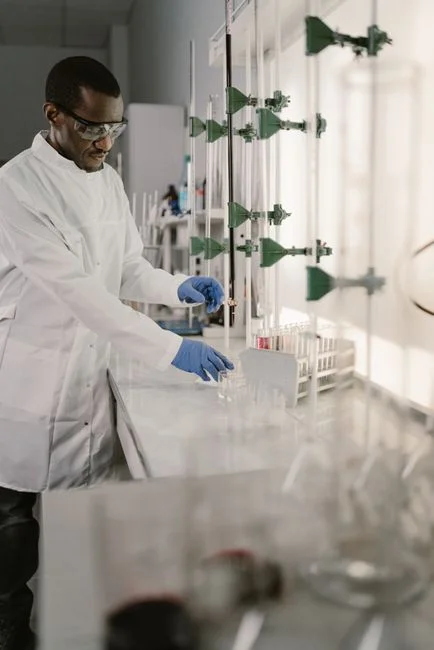
Electrocoagulation and Fenton oxidation are the two single-step routes that attack dissolved and emulsified COD rather than just settling it out. Muslim and Asel (Wasit University, doi:10.31185/ejuow.vol11.iss1.433) reported 99.5% COD removal and 94.2% oil removal from petroleum refinery wastewater at 710 mg/L inlet COD and 95 mg/L inlet oil, using 4 aluminium and 4 iron electrodes, a 2 cm inter-electrode gap, 12 cm submergence depth, pH 7, 50 minutes of treatment, 10.5 V cell voltage, 0.5 g/L NaCl supporting electrolyte, an energy draw of approximately 12 kWh/m³, and a treated-stream TSS of 73 mg/L. The mechanism is sacrificial Al and Fe anodes releasing coagulant hydroxides in situ that sweep dissolved and colloidal COD while simultaneous electroflotation lifts oils and fines; the foundational mechanism is documented in Mollah et al. (2001). While the Muslim and Asel work was run on petroleum refinery feed, the COD and oil window it covers is a reasonable proxy for medium-strength casting streams, and the Bensadok et al. (2008) cutting-oil emulsion work cited in the same reference list is the closer analogue for high-oil casting effluent.
Fenton oxidation uses Fe²⁺ catalysing H₂O₂ to generate hydroxyl radicals that mineralise refractory COD such as phenolic binder residues and synthetic coolant surfactants; it operates best at pH near 3 and needs a downstream neutralisation step, which adds a chemical dosing skid and a sludge-handling load. Safari, Azadi Aghdam and Kariminia (2016) reported EC for COD and diesel removal from oily wastewater, El-Naas et al. (2009) assessed electrocoagulation for petroleum refinery wastewater, and Abdelwahab et al. (2009) demonstrated electrochemical phenol removal from refinery wastewater, all cited in the same S1 reference set. The trade-off is that EC is electricity-driven and electrode-consuming but produces a relatively low-volume sludge, while Fenton is reagent-driven and produces a higher iron-rich sludge volume; foundries with intermittent hot batches often pair Fenton upstream of EC to crack refractory fractions before the EC cell finishes the work. A side-by-side parameter comparison is below.
| Parameter | Electrocoagulation (Al/Fe) | Fenton Oxidation (Fe²⁺/H₂O₂) |
|---|---|---|
| Best demonstrated COD removal | 99.5% at 710 mg/L inlet COD (Muslim & Asel, Wasit University, S1) | Documented for refinery and phenolic wastewaters (Abdelwahab et al., 2009, S1); casting-specific value not in research data |
| Oil removal | 94.2% at 95 mg/L inlet oil (Muslim & Asel, S1) | Partial; H₂O₂ demand scales with FOG, so DAF upstream is required |
| Optimal pH | Near neutral (pH 7 in Muslim & Asel, S1) | ~3 with downstream neutralisation |
| Energy / reagent demand | ~12 kWh/m³ at the cited duty (Muslim & Asel, S1); plus sacrificial electrodes | H₂O₂:COD and Fe²⁺:H₂O₂ stoichiometry must be requested from vendor for the specific feed |
| Sludge | Al/Fe hydroxide floc; moderate volume | Iron-rich; higher volume, higher metals content |
| Closest published analogue to casting | Bensadok et al. (2008) cutting-oil emulsions, S1 references | Abdelwahab et al. (2009) refinery phenol, S1 references |
Polishing: MBR, Ceramic UF and RO for Reuse-Quality Effluent
What electrocoagulation or Fenton leave behind is mostly soluble refractory COD and dissolved salts, which is the fraction a biological or membrane polish must remove before the stream is safe for direct discharge or reuse. An MBR couples activated sludge with a submerged 0.1 µm PVDF membrane; the membrane holds the biomass at high MLSS so the basin footprint drops, and the effluent turbidity and TSS fall to near-reuse levels without a separate clarifier. MBR biological polishing after electrocoagulation or Fenton is a proven configuration for this duty. Ramadhani et al. (2025, Jurnal Penelitian Pendidikan IPA) reported that a 70:30 fly ash to kaolin ceramic membrane sintered at 750 °C reduced COD by 57%, TDS by 13% and TSS by 93% in batch filtration, while the same 70:30 ratio sintered at 950 °C reduced COD by 52%, TDS by 12% and TSS by 95%; the higher sintering temperature helps TSS but trades COD removal against flux. Ceramic tolerates the heat and aggressive clean-in-place chemistry a polymeric UF cannot, which is relevant for foundries with hot streams and oily cleaning residues.
For water reuse on cooling-tower make-up or rinsewater recycling, UF alone rarely hits conductivity and dissolved-COD targets, and an RO polishing stage is needed; industrial RO units commonly run at 75–95% recovery, with the figure depending on feed salinity and the membrane selected. Sequencing matters: MBR before UF/RO removes the biodegradable COD that would otherwise foul the membranes, and ceramic UF tolerates the backwash chemistry that a polymeric membrane would not survive long-term. The UF polishing for foundry rinsewater reuse stage sits between MBR and RO in this configuration.
2026 Treatment-Train Matrix: Match the Train to the Discharge Route
The right train is determined by where the effluent goes (POTW, surface water, or back into the plant) and the inlet COD and oil levels. The matrix below maps the three realistic trains a foundry or die-casting plant will choose between in 2026.
| Train | Discharge route | Unit operations | When it fits |
|---|---|---|---|
| A — Indirect to POTW | Municipal sewer | DAF → equalisation → biological (CAS or MBR) → sludge dewatering | POTW accepts the residual COD and metals; foundry has no hot metals streams. Lowest CAPEX of the three trains. |
| B — Direct to surface water | Receiving water body | DAF → EC or Fenton → MBR → UF (RO only if reuse is also targeted) | Permit requires tight COD and metals compliance; aligns with the Muslim and Asel EC dataset (99.5% COD, S1) followed by a polishing membrane. |
| C — Zero-liquid-discharge / reuse | Cooling-tower make-up, rinsewater recycle | Train B plus RO → evaporation or crystallisation | Water cost or local water-stress rules make reuse economic; CAPEX and OPEX are both higher. |
If inlet COD is above 5,000 mg/L or oil and grease is above 200 mg/L, the design should include an EC or Fenton stage in front of biology; below those thresholds, biology-first is usually cheaper and simpler. For the US compliance overlay, 40 CFR 464 (Metal Finishing) is the federal analogue for a foundry's metals-bearing streams, and the EU Industrial Emissions Directive 2010/75/EU sets BAT-AELs for surface-treatment activities; both expect metals limits alongside COD, so DAF and a chemical precipitation stage should be included in the train.
Buying and Sourcing Checklist for 2026
Procurement teams should request a documented pilot on casting or die-casting effluent from each vendor, rather than relying on refinery or generic oily water data, as COD fractions, temperature profiles, and binder chemistry differ significantly. For electrocoagulation skids, request the electrode-consumption rate in kg Al per kg COD removed and the specific energy in kWh/m³ at the proposed duty; for Fenton, request the H₂O₂:COD and Fe²⁺:H₂O₂ stoichiometry at the proposed operating pH. Confirm the membrane material choice up front: ceramic vs polymeric PVDF. Ceramics tolerate heat and aggressive CIP but carry higher CAPEX, and the Ramadhani et al. (2025) 57% COD figure in batch filtration provides a lower bound for vendor guarantees, with continuous-flux data on the specific feed requested alongside it.
Sludge handling belongs inside the scope. EC and Fenton both generate sludge, and a filter press for EC and Fenton sludge sized to the expected dry-solids output keeps the OPEX story accurate. Require PLC data exposure on the MBR and EC skids so the foundry EHS team can prove compliance continuously; this is where the electroplating wastewater COD removal in 2026 guide and the anodizing wastewater COD removal in 2026 guide overlap, as the same automation expectations apply across the surface-treatment category.
Frequently Asked Questions
What is the realistic 2026 budget range per m³/day for a casting wastewater COD removal train?
CAPEX and OPEX vary with inlet COD, oil content, discharge route and the level of automation; request a site-specific budgetary quote from each shortlisted vendor broken down by DAF, EC or Fenton, MBR,
Frequently Asked Questions
What is the realistic 2026 budget per m³/day for a casting wastewater COD removal train, and which line item dominates?
In 2026, capital expenditure for a robust casting wastewater treatment train typically ranges from $1,200 to $2,800 per m³/day of capacity, depending on the complexity of the organic load. High-strength emulsified oil removal often pushes projects toward the upper end of this spectrum.
The dominant line item is the chemical oxidation and sludge management system, which accounts for approximately 35% to 45% of total project costs. Ongoing operational expenditures are heavily driven by chemical reagent consumption and hazardous waste disposal fees associated with the generated sludge.
How do I shortlist a casting wastewater treatment supplier in 2026 without committing to a single technology up front?
To shortlist vendors, issue a performance-based Request for Proposal (RFP) that defines required effluent quality (e.g., <100 mg/L COD) rather than specifying a process. Require all bidders to provide a pilot-study plan and a life-cycle cost analysis (LCCA) covering a 10-year horizon.
Evaluate candidates based on their track record with complex industrial streams containing high concentrations of phenolic resins, mineral oils, and suspended solids. Verify that they possess the capability to perform on-site treatability testing to validate their proposed process efficiency before final equipment procurement.
Which COD limit applies to a foundry in 2026 — direct discharge to surface water or indirect discharge to a municipal POTW?
The applicable limit depends entirely on your National Pollutant Discharge Elimination System (NPDES) permit or local pretreatment agreement. Direct discharge to surface water is strictly regulated under federal guidelines, often requiring COD levels below 50-100 mg/L, depending on the receiving stream's Total Maximum Daily Load (TMDL).
Indirect discharge to a Publicly Owned Treatment Works (POTW) is governed by local limits, which typically focus on preventing interference with the municipal plant's biological process. While POTWs may accept higher COD loads, they often enforce strict surcharges for loads exceeding 500-1,000 mg/L and prohibit specific hazardous constituents common in casting effluent.
Is electrocoagulation or Fenton oxidation the better primary step for high-temperature casting effluent with emulsified oil?
Electrocoagulation (EC) is generally the superior primary step for high-temperature, emulsified oil streams because it effectively destabilizes oil-water emulsions through charge neutralization without the thermal degradation issues or chemical handling complexity associated with Fenton oxidation. EC systems can tolerate higher temperature fluctuations common in casting effluent, often performing optimally between 30°C and 50°C.
Fenton oxidation is better suited as a tertiary polishing step for refractory organics. Applying Fenton as a primary step for high-oil loads often results in excessive chemical consumption and rapid fouling of downstream equipment due to the uncontrolled precipitation of iron-organic sludge.
What inlet data must I collect on my casting effluent before a vendor can size an EC, Fenton or MBR train?
You must provide a 12-month historical data set including seasonal variations in flow rate (m³/day) and organic load (COD/BOD). Essential chemical parameters include Total Suspended Solids (TSS), Total Oil and Grease (TOG), pH, temperature, and specific concentrations of phenolic compounds, surfactants, and heavy metals.
Additionally, provide a detailed characterization of the sludge volume index and a lab-scale treatability report if possible. Without accurate data on the presence of non-biodegradable organic fractions or inhibitory substances, vendors cannot appropriately size the reaction tanks or determine the required hydraulic retention time (HRT) for the treatment train.