DAF or Clarifier: What Food & Beverage Plants in Garden City Are Actually Choosing in 2026
Two boxes usually sit on a Garden City food or beverage plant's 2026 bid list: a dissolved air flotation (DAF) unit and a gravity or lamella clarifier, and the engineer's job is to pick one, or pick both. The reason both keep showing up is that food plant wastewater is rarely single-character: a dairy or meat line carries fats, oils and grease (FOG) and protein-rich colloids that float, while beverage rinses and bakery washwater carry heavy settleable suspended solids that drop to the floor of a tank. Clearwater/SigmaDAF markets DAF specifically to remove FOG, TSS, BOD, COD, oils and low-specific-gravity floatable solids in food and industrial streams (S1, S4), and Salher positions its DE-LA lamellar device as a continuous settler for suspended sediments in the 5–100 m³/h range used in industrial wastewater trains (S3).
The 2026 working answer in most Garden City pretreatment rooms is a hybrid: a DAF upstream to strip FOG and floatable organics, then a lamella clarifier downstream to polish fine TSS before sewer discharge, with a chemical dosing skid feeding both and a plate and frame filter press handling the combined sludge, which is the standard packaged train that the HydropureWater DAF system (4–300 m³/h) and HydropureWater lamella clarifier are designed to slot into.
How a DAF System Treats Food and Beverage Wastewater
DAF clarifies by lifting, not by settling. The vessel is first filled with clean water, a recirculation pump pressurises a side stream and saturates it with air, and the pressurised stream is released back into the main tank where dissolved air comes out of solution as 30–50 micron micro-bubbles (S1, S4). Those micro-bubbles attach to flocculated particles and to low-specific-gravity floatables — FOG, light food particles, protein colloids — and the combined bubble–particle aggregate rises to the surface, where a chain-and-flight or paddle skimmer scrapes the float layer into a sludge trough. A supernatant outlet beneath the float blanket recovers clarified water, and a bottom auger or sludge hopper removes any heavier solids that still settle (S1, S4).
For a Garden City food line, the mechanism matters because FOG and protein colloids are exactly the contaminants that defeat a plain settling tank: they are buoyant, they coat settling surfaces, and they escape over a clarifier's effluent weir. DAF also handles the variable, high-strength flows typical of food plants, where batch CIP releases, seasonal production swings, and product change-overs push influent strength well above municipal averages.
Chemical conditioning is what makes the bubbles stick. Coagulant, pH adjustment, and a polymer flocculant are dosed upstream of the DAF through either floc tubes (a 15–45 second serpentine flash mix with dosing locations for each chemical) or impeller mix tanks for longer contact time (S1). Dosing is set by jar testing, and the HydropureWater automatic chemical dosing skid is sized to feed the same floc tubes and mix tanks described in the Clearwater process narrative. On the equipment side, packaged DAF capacity scales widely: the HydropureWater DAF range covers 4–300 m³/h across 13 standard models, and the Clearwater/SigmaDAF COMPACT DAF uses a single skid up to 66 GPM and switches to a modular two-skid layout above 66 GPM (S1, S4).
How a Clarifier (Gravity and Lamella) Treats Food and Beverage Wastewater
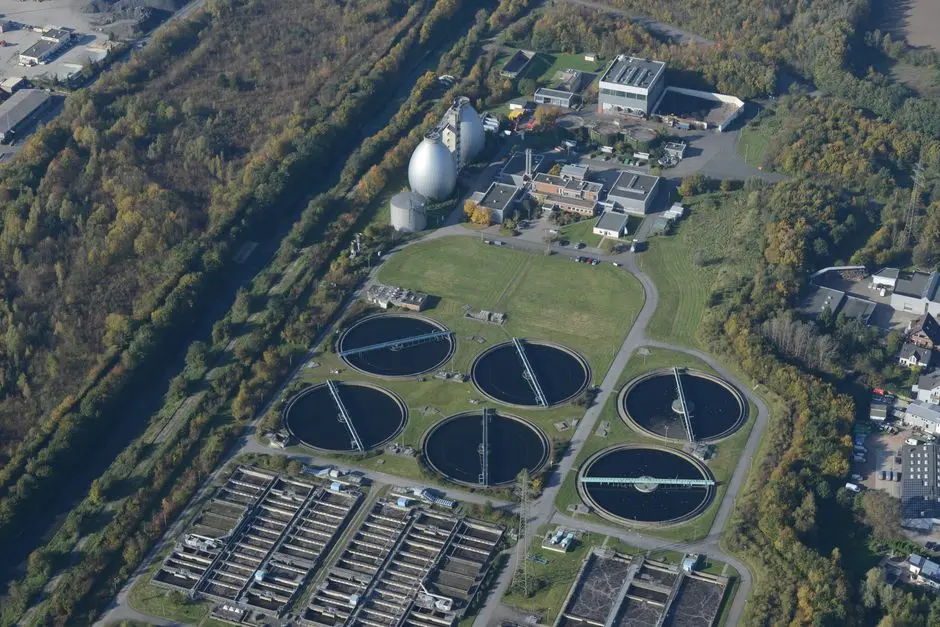
A clarifier does the opposite job: it lets gravity pull suspended solids out of a quiescent water column. Two clarifier families show up in food plant bid lists. Conventional gravity clarifiers are large circular or rectangular tanks with a slow-moving scraper, a centre feed well, and an overflow launder; they are robust, low-energy, and forgiving of grit and heavy settleable solids. High-rate lamella (inclined-plate) clarifiers, such as the Salher DE-LA designed for continuous settling of suspended sediments in the 5–100 m³/h range (S3), compress the same settling job into a much smaller footprint by stacking many inclined plates inside the tank. Wastewater flows between the plates, solids drop the short distance to the plate face and slide down into a sludge hopper, and clarified water exits through a collection launder at the top.
Lamella geometry raises the effective surface loading rate — the HydropureWater high-efficiency sedimentation tank is rated at 20–40 m/h of surface loading and is described as using up to 30% less chemical than conventional layouts — which is why lamella units dominate tight plant rooms where a gravity clarifier simply will not fit. That same compactness comes with a hard limitation: lamella plates are not designed to capture light floatable FOG, which is why Salher's range explicitly puts its Vespa DAF unit in a separate category from the DE-LA lamellar settler (S3). A clarifier in a high-FOG line will let the floatables escape over the weir and will coat the plate surfaces, which is the practical reason food plant bid lists usually contain both technologies.
DAF vs Clarifier: Parameter Comparison for Food & Beverage Wastewater
The table below is built directly from the published ranges in the research. Use it as a one-glance reference and read the interpretation line beneath it before specifying.
| Parameter | DAF (dissolved air flotation) | Gravity / Lamella clarifier |
|---|---|---|
| Target contaminants | FOG, oils, low-specific-gravity floatables, TSS, BOD, COD (S1, S4) | Heavy settleable suspended solids, TSS polishing (S3) |
| Micro-bubble or plate mechanism | 30–50 micron micro-bubbles attaching to floc (S1, S4) | Inclined plates shortening settling path (S3) |
| Typical packaged flow range | 4–300 m³/h (HydropureWater DAF range); 66 GPM single-skid breakpoint, two-skid above (S1, S4) | 5–100 m³/h (Salher DE-LA, S3); 20–40 m/h surface loading (HydropureWater lamella) |
| Footprint hint | Needs headroom for skimmer travel and sludge trough (S1) | Compact inclined-plate stack fits tight plant rooms (S3) |
| Chemical demand | Coagulant + pH adjustment + polymer flocculant via floc tubes or mix tanks (S1) | Coagulant/flocculant typically lower; up to 30% chemical reduction vs conventional (HydropureWater lamella) |
| FOG handling | Primary mechanism — float layer skimmed (S1, S4) | Poor — floatables escape over the weir; plates foul (S3) |
| TSS handling | Effective for floatables and most TSS; some fine TSS passes with underflow (S1, S4) | Effective for settleable TSS; used downstream to polish DAF underflow (S3) |
| Sludge output | Float scum + bottom auger sludge; thicker, more dewatered float layer (S1, S4) | Hopper sludge; lower solids concentration than DAF float |
| Best fit in a process train | Primary FOG/BOD removal upstream of biological or sewer discharge (S5) | Primary TSS settler on low-FOG lines, or polishing step after DAF (S3) |
Interpretation: if FOG or floatable organic load dominates the influent, DAF wins because the buoyant fraction is what the clarifier cannot hold. If settleable TSS dominates and chemical budget is tight, a lamella clarifier wins because it does the same settling job in a smaller tank with less chemistry. Many Garden City lines need both, and a packaged DAF followed by a lamella clarifier is the most common working train for combined FOG plus TSS removal (S1, S3; HydropureWater DAF system (4–300 m³/h), HydropureWater lamella clarifier).
Which Food and Beverage Sub-Sectors in Garden City Should Pick DAF, Clarifier, or Both
The right separator depends less on plant size and more on what is in the wastewater. World Water Works case studies on dairies, meat processing, brewing, and egg processing show DAF retrofits driven by FOG, BOD, and tightening discharge limits (S5), and the matrix below maps that evidence to the typical Garden City sub-sectors.
| Sub-sector | Typical load | Primary separator | Why |
|---|---|---|---|
| Dairy (fluid milk, ice cream, yogurt, cheese) | High FOG, high BOD, variable flow | DAF, often with lamella polish | World Water Works dairy case: $30,000+/month sewer surcharges, $20,000+/month saved after DAF (S5); previous CAF system approached $14/1,000 gallons in operating cost (S5) |
| Meat and poultry (slaughter, processing, rendering) | Very high FOG, blood, suspended solids | DAF (often two-stage) | Legacy skim tanks repeatedly modified to meet tighter limits; DAF is the documented upgrade path (S5) |
| Egg processing | High BOD, TKN, TSS | DAF + downstream biological | 2016 consent order required BOD, TKN, TSS removal before municipal discharge (S5) |
| Brewing / beverage bottling | Variable organic load, sugars, low FOG on rinse lines | Lamella clarifier (with chemical dosing), or DAF if caustic CIP dominates | Lower FOG fraction; settleable TSS dominates; lamella fits tight plant rooms (S3; HydropureWater catalog) |
| Bakery / confectionery | Starch, sugar, intermittent flour slurries | Lamella clarifier with coagulation | Low FOG, mostly settleable suspended solids; chemical load is modest (S3; catalog) |
| Fruit and vegetable processing | Pulps, sugars, seasonal peaks | DAF upstream + lamella polish | Combination of floatable organics and settleable solids; seasonal flows suit modular DAF + lamella (S1, S3; HydropureWater DAF system (4–300 m³/h), HydropureWater plate and frame filter press for sludge) |
| Combination-product plant (multiple lines) | Mixed FOG and TSS across CIP and product change-overs | DAF → lamella in series | DAF strips FOG and floatable BOD; lamella catches residual TSS before discharge (S1, S3; HydropureWater automatic chemical dosing skid) |
For procurement, the matrix is the engineering call: dairy and meat lines default to DAF-first because the FOG load is the problem sewer authorities surcharge on (S5); bottling and bakery lines default to lamella with chemical dosing because settleable TSS is the problem and chemistry budgets are tighter (S3; HydropureWater catalog). Combination plants and any plant polishing discharge before a sensitive municipal treatment works should plan for a DAF → lamella train and budget the plate and frame filter press for the combined sludge stream.
Sizing, Footprint and 2026 Cost Considerations for a Garden City Install
Before specifying either unit, the engineer must collect the inputs a supplier's application engineer will ask for: average and peak flow in m³/h, influent FOG, TSS, BOD and COD concentrations, pH range, temperature, available floor area and headroom, and the local sewer authority's discharge limits (S1). The bid will not be defensible without those numbers; Clearwater explicitly recommends talking to an application engineer with this data set before selecting a DAF model (S1).
Operating-cost evidence anchors the 2026 capex conversation. World Water Works documents a dairy previously treating wastewater with a CAF system that approached $14/1,000 gallons in operating cost, and another dairy that was facing escalating sewer surcharges of over $30,000/month and reduced its wastewater costs by over $20,000/month after a DAF retrofit (S5). The numbers to put in front of procurement are not a per-unit DAF price, which depends on capacity, material (304SS or 316SS), and skid count (S4), but the avoided surcharge and the displaced chemistry that the DAF or lamella replaces, which is how the case studies above justified the install (S5).
Footprint is the second lever. Lamella clarifiers compress the settling area into inclined plates and fit where a gravity clarifier will not (S3; HydropureWater catalog). DAF skids, in contrast, need vertical clearance above the tank for the skimmer and trough, and the COMPACT DAF switches from one skid to a two-skid modular layout above 66 GPM (S1, S4), which is a real floor-space and rigging constraint to verify early. Both trains should reserve downstream floor area for the sludge dewatering press, which is why the HydropureWater plate and frame filter press belongs in the same procurement lot as the primary separator.
Specifying the Right System: A 2026 Procurement Checklist for Garden City Factories
1. Confirm influent characterisation. Lock down average and peak flow (m³/h), FOG, TSS, BOD, COD, pH and temperature, and pull the local sewer authority's discharge limits, before you pick a technology (S1).
2. Decide DAF, lamella, or DAF → lamella using the sub-sector matrix above, and weight FOG fraction, BOD, settleable TSS, and the available footprint in the plant room (S3, S5; HydropureWater DAF system (4–300 m³/h), HydropureWater lamella clarifier).
3. Select skidded or modular layout. Use the 66 GPM single-skid / two-skid breakpoint for the COMPACT DAF (S1, S4), the HydropureWater 4–300 m³/h DAF range to bracket capacity (catalog), and the 20–40 m/h surface loading on the lamella to verify the footprint claim (catalog; S3).
4. Bundle chemical dosing and sludge dewatering into the same procurement lot as the primary separator, so the floc tubes, mix tanks, and the HydropureWater plate and frame filter press arrive with matched controls and the interface risk between skids stays with one supplier (S1).
5. Require jar testing and a treated-effluent sample. Both Clearwater and Salher emphasise jar testing for flocculant selection and contact time (S1, S3), and the case studies that justified the DAF retrofits (S5) all hinged on jar-tested chemistry rather than a catalogue dose.
Frequently Asked Questions
For a Garden City food plant with high FOG, is a DAF enough or do we still need a clarifier?
A DAF is the right primary unit for high-FOG lines because micro-bubbles lift FOG, light floatables, and flocculated organics that a clarifier would let escape over the weir (S1, S4). Many plants still add a lamella clarifier downstream as a polishing step to catch the finer TSS that passes with the DAF underflow, which is the working DAF → lamella train described in the parameter table and the sub-sector matrix (S3; HydropureWater catalog).
What flow rate can a packaged DAF or lamella clarifier cover in 2026?
The HydropureWater DAF range covers 4–300 m³/h across 13 standard models, and the HydropureWater lamella clarifier is designed for 20–40 m/h surface loading (catalog). For comparison, the Salher DE-LA lamellar device is rated for continuous settling of suspended sediments at 5–100 m³/h (S3), and the Clearwater/SigmaDAF COMPACT DAF uses a single skid up to 66 GPM and switches to a modular two-skid layout above that (S1, S4). The actual size for your line must be confirmed by jar testing and an application-engineering review, not selected from a catalogue alone (S1).
How much can a modern DAF retrofit cut operating cost for a US food plant?
World Water Works reports a dairy that was facing escalating sewer surcharges of over $30,000/month and reduced its wastewater costs by over $20,000/month after a DAF retrofit (S5), and a separate dairy whose previous CAF system was approaching $14/1,000 gallons in operating cost before the DAF replacement (S5). These are the operating-cost anchors a Garden City engineer should put in front of procurement; the capex line itself varies with capacity, material (304SS or 316SS), and skid count, so request a sized quote from the supplier rather than applying a generic per-m³/h number (S4).
What is the typical lead time and supplier-selection risk for a DAF or clarifier in the US?
Packaged DAF and lamella units are factory-built and skid-mounted, with North American manufacturing and assembly documented for Clearwater/SigmaDAF at Brown Deer, WI (S4). The buyer-side risk is under-sizing: both the Clearwater and Salher narratives emphasise that the equipment and chemistry must be selected after jar testing and an application-engineering review (S1, S3), and the World Water Works Kansas Dairy case is a direct example of a system that was "improperly designed and utilised inefficient equipment" by a prior supplier before being replaced (S5). The procurement check is therefore to require a jar-test report, a treated-effluent sample, and a written sizing calculation from the supplier, and to refuse a quote that does not include all three.