Why Bloemfontein's 2026 Sewage Picture Is a Compliance Driver, Not Just Headlines
A 1 September 2026 investigation reported by Mzansi 24, citing the Enca community feed, states that none of Mangaung's 13 municipal wastewater treatment works are operating properly, that seven of those works record 0% compliance across key effluent-quality indicators, and that approximately 25 million litres of raw sewage reportedly enter a roadside ditch every day near Sterkwater Wastewater Treatment Works, where three Archimedes screw pumps are reported missing.
The same investigation raises concerns about sewage from Botshabelo and Thaba Nchu reportedly flowing towards Maselspoort Dam, an important water source for Bloemfontein, which means any new private discharge in the catchment now faces a source-protection objection that did not exist at the same intensity a decade ago. For an estate developer, body-corporate housing manager, hotel or resort owner, school or hospital facility manager, or EPC contractor working in Mangaung in 2026, that is the operating reality the DWS Water Use Authorisation will be written against — not a national average.
The financial backdrop compounds the risk. The same investigation reports that Mangaung returned approximately R141 million in unspent conditional grants to National Treasury during 2024/25, including about R49 million intended for informal-settlement upgrades, and that the municipality accumulated roughly R5 billion in unauthorised expenditure over four years. Mangaung has been under a Section 139 administration since 2019, yet service delivery in water and sanitation has not stabilised. The implication for a private project is direct: a Bloemfontein estate, hotel, school or housing scheme cannot rely on the municipal plant as a hydraulic buffer or as a fallback in a permit emergency, because the council is itself under DWS and Treasury scrutiny. The Department of Water and Sanitation sets the discharge limits any new plant must meet, but the Mangaung system has not been meeting its own.
Statutorily, the framework is already split in a way that puts the burden of proof on the developer. Part B of Schedule 4 of the Constitution assigns domestic wastewater and sewage disposal to local government as a service authority, while Section 3 of the National Water Act 36 of 1998 and Section 3 of the Water Services Act 108 of 1997 place the Minister of Water and Sanitation as the resource custodian over the receiving waterbody (HSF brief, cited in the national 2026 domestic sewage treatment guide). A 2026 Bloemfontein buyer therefore walks into a system where the municipality is both the service authority that must be satisfied operationally and the party whose own non-compliance raises the bar on the project they are signing off on.
The 2026 Regulatory Frame for Domestic Sewage in Mangaung
The DWS Green Drop Programme is the closest thing South Africa has to a national wastewater scorecard: it assesses reticulation, pumping, treatment and discharge across the value chain and adds a cumulative risk rating per works, but it is an incentive-based initiative, not a regulation (HSF brief, as cited in the national guide). The last publicly released Green Drop summary, covering 2013 data, identified 824 wastewater treatment works across 152 municipalities with a combined design capacity of 6.5 billion litres per day; 248 of those works (30.1%) were in critical condition, a further 161 (19.5%) were in poor condition, and only 60 (7%) earned Green Drop Certification (DWS 2013 executive summary, cited via the HSF brief). Those numbers still define the public benchmark any 2026 application is measured against, even though the 2013 survey is now more than a decade old.
Discharge quality is set through a parallel route. Water Use Authorisations issued under the National Water Act 36 of 1998 translate the General and Special Limits into site-specific conditions on a region-by-region basis, while SANS 241 governs any water intended for reuse or human-contact end use, and the Water Services Act 108 of 1997 imposes the basic-sanitation duty on municipalities (HSF brief, as cited in the national 2026 domestic sewage treatment guide). A 2026 buyer should confirm the current SANS 241 edition and the current General and Special Limit values with DWS before locking a specification, rather than relying on a 2018 or 2019 compilation. Internationally, South Africa ranked 50th of 180 on the 2018 Environmental Performance Index Wastewater Treatment Index and 133rd on access to sanitation (Yale EPI 2018, cited via the HSF brief), and the South African Institution of Civil Engineers' 2017 Infrastructure Report Card described urban wastewater as "acceptable but under stress" and rural infrastructure as "unfit for purpose" (SAICE 2017, cited via the HSF brief).
For a Bloemfontein project, the practical reading is that the DWS regional office, not the Mangaung municipality alone, is the determinative reviewer on effluent quality and Special Limits, and that the Maselspoort Dam source-protection argument is now a real input into any new authorisation. This is the frame the next sections use to size the plant and choose the train.
Bloemfontein Design Envelope: Temperature, Conductivity and Metals to Size Against
Textbook defaults under-size South African biological capacity and miss metal risks. A 2015–2016 Eastern Cape study of three municipal sewage works reported effluent temperatures of 19–36 °C, electrical conductivity of 60–1,095 mS/m, alkalinity of 2.6–20.9 mg/L, and nitrate spanning 0.24 up to 26 in the units reported in the source, with pH, TDS, turbidity, COD, DO, free chlorine, chloride, sulphate, phosphate, ammonium and EC also characterised (Polish Journal of Environmental Studies, DOI 10.15244/pjoes/74156). Those are the values a biological stage and clarifier must be designed against in this country, not a colder, softer catchment's defaults.
Metals data shifts the design problem further. Lukhele and Msagati, reporting on four Gauteng wastewater treatment works, measured mean metal concentrations of 0.132–4.914 mg/L in wastewater and 0.127–4.631 mg/L in receiving surface water (Environmental Monitoring and Assessment 198(8):862, 20 July 2026). Arsenic, chromium and lead in effluents exceeded permissible values for safe river discharge, and surface water concentrations of As, Cd, Co, Fe, Mn, Ni and Pb exceeded thresholds for agricultural and domestic use (Environ Monit Assess, 20 July 2026). The same Gauteng plants recorded sludge metal concentrations from 16.425 to 2,466 mg/kg, with zinc the most abundant and cadmium the least — a solids-stream number that decides whether a plate and frame filter press is sized correctly (Environ Monit Assess, 20 July 2026).
The Mangaung water picture intensifies the receiving-waterbody pressure. The Mzansi 24 investigation reports a daily potable shortfall of approximately 68 million litres against average demand of about 255 million litres, and that during 2024/25 Mangaung purchased 85 million kilolitres but sold only 44 million kilolitres, meaning approximately 41 million kilolitres were lost at a value of around R495 million (S3, 1 September 2026). A stressed source water means the DWS region is more likely to impose Special Limits rather than General Limits on a new discharge, which is why the metals envelope above matters even for a small estate plant. Neither the Eastern Cape nor the Gauteng source is Free State-specific, so a 2026 Bloemfontein buyer should commission local influent testing rather than assume Mangaung domestic sewage matches either envelope. The table below summarises the parameter envelope that the supplier's equipment should be demonstrated to handle.
| Parameter | Source envelope (range or mean) | Source |
|---|---|---|
| Effluent temperature | 19–36 °C | Polish J Environ Stud, DOI 10.15244/pjoes/74156 |
| Electrical conductivity | 60–1,095 mS/m | DOI 10.15244/pjoes/74156 |
| Alkalinity | 2.6–20.9 mg/L | DOI 10.15244/pjoes/74156 |
| Nitrate | 0.24–26 (units as reported) | DOI 10.15244/pjoes/74156 |
| Mean metals in wastewater (As, Cd, Co, Cr, Cu, Fe, Mn, Pb, Ni, Zn) | 0.132–4.914 mg/L | Environ Monit Assess 198(8):862, 20 July 2026 |
| Mean metals in receiving surface water | 0.127–4.631 mg/L | Environ Monit Assess 198(8):862, 20 July 2026 |
| Sludge metals (total) | 16.425–2,466 mg/kg (Zn most abundant, Cd least) | Environ Monit Assess 198(8):862, 20 July 2026 |
Choosing the Right Train for a 2026 Bloemfontein Project: A/O Package, MBR, or Constructed Wetland Hybrid
A standard compliant train in 2026 runs preliminary screening and grit removal, biological treatment, secondary clarification, disinfection, and sludge thickening and dewatering, with biological treatment configured as A/O package, conventional activated sludge or MBR (Polish J Environ Stud, DOI 10.15244/pjoes/74156). The choice inside that envelope defines footprint, operator skill and reuse quality, and the Maselspoort source-protection context is the tie-breaker when the design is borderline.
Package A/O plants combine anoxic/aerobic biological contact oxidation, sedimentation and disinfection in a single buried unit, with a 1–80 m³/h class being the typical specification for residential communities, hotels, hospitals and rural schools, and the unit installed below grade and landscaped over to free up surface land (HydropureWater product description for the WSZ underground A/O package sewage plant). MBR systems substitute a submerged membrane, typically 0.1 μm PVDF, for the secondary clarifier, delivering near-reuse-quality effluent from a much smaller footprint, and an integrated MBR membrane bioreactor system is the configuration specified where the end use is reuse rather than disposal. Constructed-wetland hybrids, including work integrating constructed wetlands with microbial fuel cells (InTech, DOI 10.5772/intechopen.75658), suit eco-sensitive or low-energy sites at the cost of larger land area, which is relevant near Maselspoort Dam where receiving-waterbody sensitivity is high.
For discharge to a sensitive river, biological treatment alone is not enough. The 2026 Gauteng metals data shows As, Cr and Pb in effluents exceeded permissible values for safe river discharge (Environ Monit Assess 198(8):862, 20 July 2026), so a polishing or co-precipitation step is often required before the effluent reaches the receiving waterbody. For reuse in toilet flushing, vehicle wash, or restricted garden irrigation, the standard path is biological treatment plus filtration and either a UV sterilizer for water treatment or a chlorine dioxide generator; the Gauteng 2026 health risk assessment also flagged non-carcinogenic and carcinogenic risk for workers and farmers handling sludge through incidental ingestion (Environ Monit Assess 198(8):862, 20 July 2026), so a plate and frame filter press for sludge dewatering is not optional. The table below maps the end use to the train and the auxiliary equipment.
| End use | Biological train | Polishing / disinfection | Solids handling |
|---|---|---|---|
| Discharge to sensitive river (DWS Special Limits) | A/O or MBR | Co-precipitation or ion exchange; UV or chlorine dioxide to meet microbiological limits | Mechanical dewatering to reduce handling risk |
| Irrigation (agricultural or landscape) | A/O or MBR | Filtration plus UV or chlorine dioxide; confirm SANS 241 microbiological compliance | Mechanical dewatering; controlled disposal |
| Reuse (toilet flush, vehicle wash, garden) | MBR preferred for tight footprint and reuse quality | UV sterilizer or chlorine dioxide generator | Plate and frame filter press for volume reduction |
| Low-energy / eco-sensitive site | A/O plus constructed-wetland hybrid | Polishing wetland or UV depending on reuse class | Wetland sludge removed on multi-year cycle |
Sizing for a Bloemfontein 2026 Project: Hydraulic, Load, and Site Logic
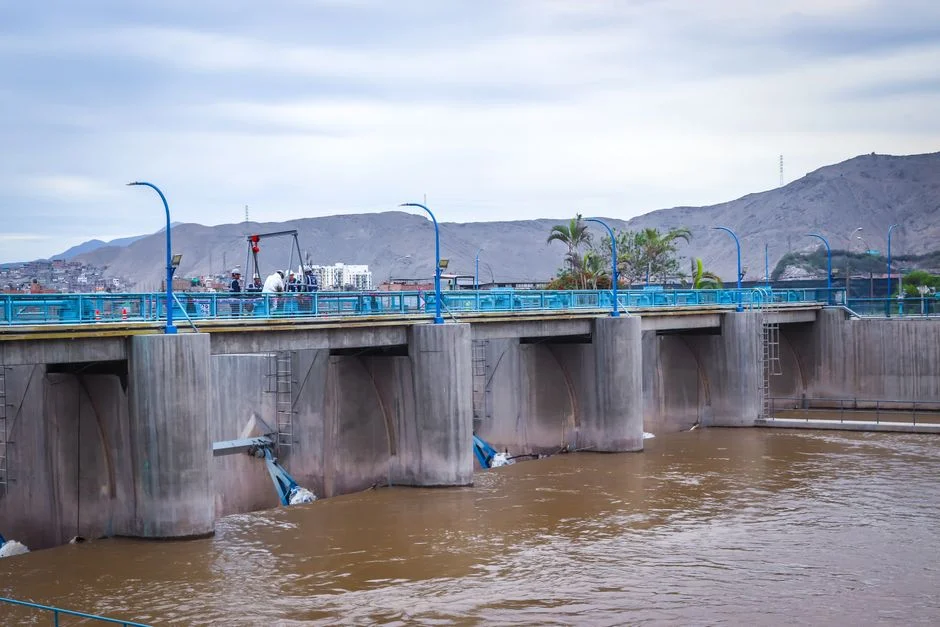
Treat any claimed municipal spare capacity with caution. The 2013 Green Drop summary's nominal 22.2% national surplus is now more than a decade old, and the 2013 data already placed 30.1% of 824 works in critical condition (DWS 2013 executive summary, cited via the HSF brief). The Mangaung picture in 2026 — 0% compliance at seven works, 25 ML/day reportedly spilling at Sterkwater, and overflows reportedly reaching Maselspoort — confirms that any 2026 design basis should be self-sufficient, not network-buffer-dependent.
Set the load basis against the measured South African envelopes: effluent temperatures up to 36 °C and electrical conductivity up to 1,095 mS/m (DOI 10.15244/pjoes/74156), and wastewater metal means up to 4.914 mg/L (Environ Monit Assess 198(8):862, 20 July 2026). Those ranges justify conservative design margins over textbook defaults, particularly for biological kinetics and clarifier sizing, and they justify a high-efficiency sedimentation tank ahead of the biological stage where space allows. Site constraints usually decide the process before flowsheets are drawn: rural and estate sites that want surface land freed up typically need a buried package train with a rotary mechanical bar screen upstream; urban retrofits with limited footprint typically go to MBR.
Build a routine influent and effluent sampling plan into the contract, covering pH, TDS, turbidity, COD, DO, free chlorine, chloride, sulphate, phosphate, ammonium and EC, as the Eastern Cape study used (DOI 10.15244/pjoes/74156), so the plant can demonstrate SANS 241 and DWS compliance over time. The Mangaung water-loss context — approximately 41 million kilolitres reportedly lost in 2024/25 at a value of around R495 million (S3, 1 September 2026) — also means a Bloemfontein buyer should not size the plant on "average" municipal supply; the plant may have to operate with intermittent inflow and must handle shock loads accordingly. For comparable reference points, the rural sewage treatment in South Africa engineering guide and the hotel and resort wastewater treatment in South Africa guide walk through similar siting logic for adjacent project types.
Frequently Asked Questions
What is the 2026 state of municipal sewage treatment in Bloemfontein and Mangaung?
A 1 September 2026 Mzansi 24 investigation reports that none of Mangaung's 13 municipal wastewater treatment works are operating properly, that seven of them record 0% compliance across key effluent indicators, that approximately 25 million litres of raw sewage per day reportedly spills near Sterkwater Wastewater Treatment Works where three Archimedes screw pumps are reported missing, and that overflows from Botshabelo and Thaba Nchu reportedly flow towards Maselspoort Dam (S3, 1 September 2026). Mangaung has reportedly been under a Section 139 administration since 2019 and is reported to have returned approximately R141 million in unspent conditional grants in 2024/25.
Which standards apply to a new package or MBR domestic sewage plant in Bloemfontein in 2026?
Part B of Schedule 4 of the Constitution assigns domestic wastewater to local government as a service authority; Section 3 of the National Water Act 36 of 1998 and Section 3 of the Water Services Act 108 of 1997 place the Minister of Water and Sanitation as the resource custodian over the receiving waterbody; Water Use Authorisations translate General and Special Limits into site-specific conditions; and SANS 241 governs any water intended for reuse or human-contact end use, with the current edition to be confirmed with DWS and SABS in 2026 (HSF brief, cited via the national 2026 domestic sewage treatment guide). The DWS Green Drop Programme is the public scorecard but is incentive-based, with the 2013 summary still the de facto national benchmark.
What budget envelope should a Bloemfontein estate, school, or housing scheme plan for in 2026?
The research data does not include 2026 South African pricing for package plants, MBR skids, UV units, chlorine dioxide generators, or plate and frame filter presses, so no capital or operating cost figure is reproduced here. A buyer should request itemised quotes covering the biological train (A/O package or MBR), preliminary and secondary treatment unit costs, the disinfection package, sludge dewatering equipment, installation and commissioning, and a multi-year spares and consumables allowance. Without those line items, a capital price cannot be compared meaningfully against operating cost (S4).
How do I shortlist suppliers for a 2026 Bloemfontein domestic sewage plant?
Use local credibility signals first. South African-specific package plants referenced in the market are tested and approved by bodies such as Umgeni Water and Durban Metro (Scarab), and that is a useful filter when shortlisting (S4). Ask each supplier for the influent and effluent parameter ranges their equipment is designed for, the SANS 241 or DWS compliance evidence they can demonstrate, recent reference plants of similar hydraulic and load size, and the lead time and local after-sales support for the specific model. Confirm that the proposed disinfection and sludge dewatering equipment is sized for the metal and solids load reported in the 2026 Gauteng study (Environ Monit Assess 198(8):862, 20 July 2026) rather than for textbook defaults.