Why Domestic Sewage Treatment in South Africa Is a 2026 Priority
Domestic sewage treatment in South Africa sits on a fault line between constitutional duty and operational reality. Local government is the assigned service authority for domestic wastewater and sewage disposal under Part B of Schedule 4 of the Constitution, while national government, acting through the Minister of Water and Sanitation, is the resource custodian under Section 3 of the National Water Act 36 of 1998 and Section 3 of the Water Services Act 108 of 1997 (HSF brief). The split of responsibility matters for any 2026 procurement: the municipality signs off on the discharge authorisation, but the Department of Water and Sanitation (DWS) sets the limits the plant must hit.
Global benchmarking places South Africa mid-pack on treatment quality but near the bottom on access. The 2018 Environmental Performance Index ranked the country 50th of 180 on the Wastewater Treatment Index and 133rd on access to sanitation (Yale EPI, 2018). Within South Africa, the South African Institution of Civil Engineers' 2017 Infrastructure Report Card described urban wastewater infrastructure as "acceptable but under stress" and rural infrastructure as "unfit for purpose" (HSF brief, citing SAICE 2017). For an estate developer, housing manager or EPC contractor sizing a 2026 project, that is the operating envelope: municipalities vary widely, rural catchments often fail, and the constitutional right to an environment not harmful to health is being tested in the courts — the South African Human Rights Commission opened an urgent inquiry into raw sewage spills into the Vaal River (HSF brief). Equipment selection in 2026 cannot be separated from that compliance pressure.
The Regulatory Framework: Green Drop, SANS 241 and DWS Limits
The DWS Green Drop Programme, launched in 2008, is the closest thing South Africa has to a national wastewater scorecard. It assesses the full value chain — reticulation, pumping, treatment and discharge — and adds a cumulative risk rating per treatment works, but it is an incentive-based initiative, not a regulation (HSF brief). The last publicly released Green Drop summary, covering 2013 data, identified 824 wastewater treatment works across 152 municipalities with a combined design capacity of 6.5 billion litres per day. Of those 824 works, 248 (30.1%) were in critical condition, a further 161 (19.5%) were in poor condition, and only 60 (7%) earned Green Drop Certification (HSF brief, citing DWS 2013 executive summary). Those numbers define the public benchmark any 2026 municipal, residential or hybrid project is measured against.
Discharge quality is set through a parallel route: Water Use Authorisations issued under the National Water Act, which translate the General and Special Limits into site-specific conditions, and SANS 241 for any water intended for reuse or human-contact end use. The current SANS 241 edition and the latest General/Special Limit values should be confirmed with DWS in 2026 rather than pulled from older compilations. Stats SA's 2017 General Household Survey (cited in the HSF brief) reported 82.2% of households with access to flush toilets connected to a public sewer/septic tank or a VIP pit toilet, while 3.1% still had no sanitation or used bucket toilets — the residual demand that package and decentralised plants are sized to serve.
| Instrument | What it controls | Status in 2026 | Source |
|---|---|---|---|
| Green Drop Programme | Performance assessment across the wastewater value chain; cumulative risk rating per works | Incentive-based; last public summary 2013, still the de facto national benchmark | HSF brief; DWS 2013 executive summary |
| Water Use Authorisation (NWA 36 of 1998) | Site-specific discharge limits derived from General and Special Limits | Statutory; conditions set by DWS region-by-region | HSF brief; National Water Act 36 of 1998 |
| SANS 241 | Chemical and microbiological quality for water intended for reuse or human contact | Confirm current edition with DWS/SABS in 2026 | HSF brief; SANS 241 |
| Water Services Act 108 of 1997 | Obligation on municipalities to provide basic sanitation services | Statutory; Section 3 defines the duty | HSF brief |
What South African Sewage Actually Looks Like: Influent and Effluent Data
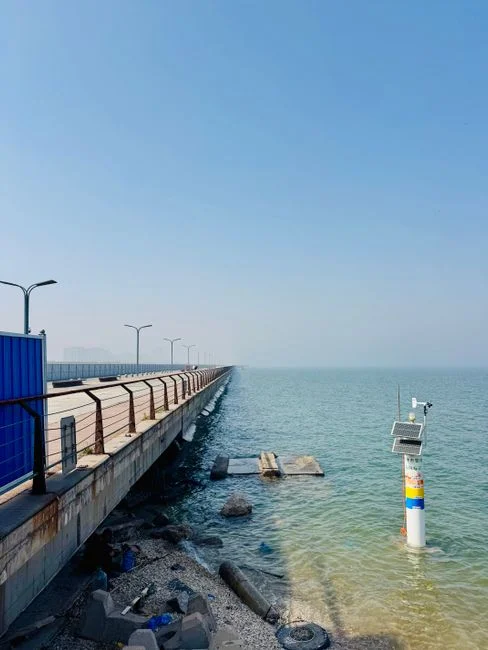
Designers who pull textbook defaults into a South African context will under-size biological capacity and miss metal risks. A 2015–2016 Eastern Cape study of three municipal sewage works reported effluent temperatures of 19–36 °C, electrical conductivity of 60–1,095 mS/m, alkalinity of 2.6–20.9 mg/L, and nitrate spanning 0.24 up to 26 in the units reported in the source (Polish Journal of Environmental Studies, DOI 10.15244/pjoes/74156). The same study evaluated pH, TDS, turbidity, COD, DO, free chlorine, chloride, sulphate, phosphate, ammonium and EC — the parameter envelope any compliant plant should be expected to handle (DOI 10.15244/pjoes/74156).
Metals data shifts the design problem further. Lukhele and Msagati, reporting on four Gauteng wastewater treatment works, measured mean metal concentrations of 0.132–4.914 mg/L in wastewater and 0.127–4.631 mg/L in receiving surface water (Environmental Monitoring and Assessment 198(8):862, 20 July 2026). Arsenic, chromium and lead in effluents exceeded permissible values for safe river discharge, and surface water concentrations of As, Cd, Co, Fe, Mn, Ni and Pb exceeded thresholds for agricultural and domestic use (Environ Monit Assess, 20 July 2026). The same Gauteng plants recorded sludge metal concentrations from 16.425 to 2,466 mg/kg, with zinc the most abundant and cadmium the least — relevant to sludge handling and disposal design (Environ Monit Assess, 20 July 2026).
| Parameter | Range observed | Location / period | Source |
|---|---|---|---|
| Effluent temperature | 19–36 °C | Eastern Cape, three works, Sep 2015–Feb 2016 | DOI 10.15244/pjoes/74156 |
| Electrical conductivity | 60–1,095 mS/m | Eastern Cape, same study | DOI 10.15244/pjoes/74156 |
| Alkalinity | 2.6–20.9 mg/L | Eastern Cape, same study | DOI 10.15244/pjoes/74156 |
| Nitrate | 0.24–26 (units as reported) | Eastern Cape, same study | DOI 10.15244/pjoes/74156 |
| Mean metals in wastewater | 0.132–4.914 mg/L (As, Cd, Co, Cr, Cu, Fe, Mn, Pb, Ni, Zn) | Gauteng, four WWTPs, 2026 | Environ Monit Assess 198(8):862, 20 July 2026 |
| Mean metals in receiving surface water | 0.127–4.631 mg/L | Gauteng, four WWTPs, 2026 | Environ Monit Assess 198(8):862, 20 July 2026 |
| Sludge metal concentrations | 16.425–2,466 mg/kg (Zn most abundant, Cd least) | Gauteng, four WWTPs, 2026 | Environ Monit Assess 198(8):862, 20 July 2026 |
Process Trains Used in Compliant South African Domestic Plants
A compliant South African train typically runs preliminary screening, grit removal, biological treatment, secondary clarification and disinfection, with sludge thickening and dewatering added for the solids stream (DOI 10.15244/pjoes/74156). The choice inside that envelope defines footprint, operator skill and reuse quality.
Package A/O (anoxic/aerobic) plants combine biological contact oxidation, sedimentation and disinfection in a single buried unit. An underground A/O package sewage treatment plant in the 1–80 m³/h class is the typical specification for residential communities, hotels, hospitals and rural schools, with the unit installed below grade and landscaped over to free up surface land. MBR systems substitute a submerged membrane — typically 0.1 μm PVDF — for the secondary clarifier, delivering near-reuse-quality effluent from a much smaller footprint; an MBR membrane bioreactor system is the configuration specified where the end use is reuse rather than disposal. Constructed-wetland hybrids, covered in academic work on integrating constructed wetlands with microbial fuel cells (InTech, DOI 10.5772/intechopen.75658), suit eco-sensitive or low-energy sites, at the cost of larger land area. For a deeper look at the wetland option as part of a hybrid train, see the practical explanation of how a constructed wetland works. Local credibility checks also matter: South African-specific package plants referenced in the market are tested and approved by bodies such as Umgeni Water and Durban Metro (Scarab), and that is a useful filter when shortlisting suppliers.
Matching the Process to the Discharge or Reuse Target
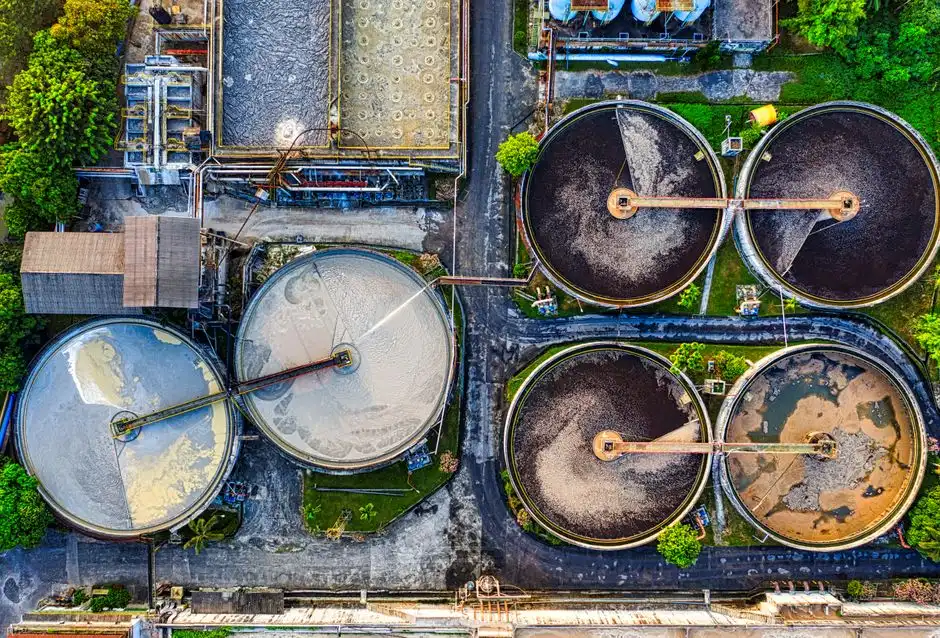
The 2026 Gauteng metals data makes the discharge decision more than a paperwork exercise. Arsenic, chromium and lead in effluents exceeded permissible values for safe river discharge (Environ Monit Assess, 20 July 2026), so a discharge-to-river design must do more than meet standard biological targets — a polishing or co-precipitation step is often required to pull those metals down before they reach the receiving waterbody. For irrigation end uses, the surface water thresholds for As, Cd, Co, Fe, Mn, Ni and Pb in the same study must be met alongside SANS 241 microbiological targets, which favours MBR or A/O followed by filtration and disinfection. For reuse in toilet flushing, vehicle wash or restricted garden irrigation, the standard path is biological treatment plus filtration and either a UV sterilizer for water treatment or a chlorine dioxide generator; ozone is an option where footprint is tight. The Gauteng health risk assessment also flagged non-carcinogenic and carcinogenic risk for workers and farmers handling sludge through incidental ingestion (Environ Monit Assess, 20 July 2026), so the solids stream is not optional — a plate and frame filter press for sludge dewatering reduces volume, improves handling and reduces that exposure pathway. The complementary picture from a comparable compliance environment is laid out in the domestic sewage treatment in Haifa 2026 process and compliance guide.
| End use | Process core | Polishing / disinfection | Sludge handling |
|---|---|---|---|
| Discharge to sensitive river (DWS Special Limits) | A/O or MBR plus metal-removal step (co-precipitation / ion exchange) | UV or chlorine dioxide to meet microbiological limits | Mechanical dewatering to reduce handling risk |
| Irrigation (agricultural or landscape) | A/O or MBR with filtration | UV or chlorine dioxide; confirm SANS 241 microbiological compliance | Mechanical dewatering; controlled disposal |
| Reuse (toilet flush, vehicle wash, garden) | MBR preferred for tight footprint and reuse quality | UV sterilizer or chlorine dioxide generator | Plate and frame filter press for volume reduction |
| Low-energy / eco-sensitive site | Constructed-wetland hybrid | Polishing wetland or UV depending on reuse class | Wetland sludge removed on multi-year cycle |
Sizing and Siting Considerations for 2026 Projects
The hydraulic basis should start with average daily flow and a measured peak factor, not the nominal 22.2% surplus capacity reported in the 2013 Green Drop summary (HSF brief) — that figure is now more than a decade old and the 2013 data already placed 30.1% of works in critical condition. Treat any claimed 2026 spare capacity with caution. The load basis should be set against measured South African envelopes: effluent temperatures up to 36 °C and electrical conductivity up to 1,095 mS/m from the Eastern Cape study (DOI 10.15244/pjoes/74156), and wastewater metal means up to 4.914 mg/L from the Gauteng 2026 study. Those ranges justify conservative design margins over textbook defaults, particularly for biological kinetics and clarifier sizing.
Site constraints usually decide the process choice before any flowsheet is drawn. Rural and estate sites that want surface land freed up typically need a buried package train with a rotary mechanical bar screen upstream and a high-efficiency sedimentation tank ahead of the biological stage. Urban retrofits with limited footprint typically go to MBR. Build a routine influent and effluent sampling plan into the contract — covering pH, TDS, turbidity, COD, DO, free chlorine, chloride, sulphate, phosphate, ammonium and EC as the Eastern Cape study used (DOI 10.15244/pjoes/74156) — so the plant can demonstrate SANS 241 and DWS compliance over time. For a comparable rural reference point outside the country, the rural sewage treatment in Ghana 2026 engineering and sourcing guide walks through similar siting logic.
Frequently Asked Questions
What process train is typically used in a compliant South African domestic plant in 2026?
The standard compliant train in 2026 is preliminary screening and grit removal, followed by biological treatment (A/O package, conventional activated sludge, or MBR), secondary clarification, disinfection, and sludge thickening and dewatering (Polish Journal of Environmental Studies, DOI 10.15244/pjoes/74156). Package A/O and MBR are the configurations most often specified for new residential, estate and resort plants.
How do I choose between discharge to a river, irrigation and reuse when sizing a 2026 plant?
Match the end use to the limit set first. For discharge to a sensitive waterbody, the Water Use Authorisation conditions and DWS General and Special Limits apply, and the 2026 Gauteng metals data shows that As, Cr and Pb frequently exceed safe river discharge values — so a polishing or metal-removal step is often necessary beyond biological treatment (Environ Monit Assess 198(8):862, 20 July 2026). For irrigation, both SANS 241 microbiological targets and the agricultural thresholds for As, Cd, Co, Fe, Mn, Ni and Pb flagged in the same study must be met, which usually points to MBR or A/O with filtration plus UV or chlorine dioxide disinfection. For reuse, the same biological-plus-disinfection path applies with a tighter microbiological envelope.
What budget and cost items should a buyer request quotes for in 2026?
The research data does not include 2026 South African pricing for package plants, MBR skids, UV units, chlorine dioxide generators, or plate and frame filter presses. A buyer should request itemised quotes for: the biological train (A/O package or MBR), preliminary and secondary treatment unit costs, the disinfection package, sludge dewatering equipment, installation and commissioning, and a multi-year spares and consumables allowance. Without those line items, a capital price cannot be compared meaningfully against operating cost.
How should a buyer assess and shortlist South African sewage-treatment suppliers in 2026?
Check that the proposed plant has been independently tested or approved against local conditions — for example, package plants that have been tested and approved by bodies such as Umgeni Water and Durban Metro (Scarab) carry a credibility signal. Ask each supplier for the influent and effluent parameter ranges their equipment is designed for, the SANS 241 or DWS compliance evidence they can demonstrate, and the lead time and local after-sales support for the specific model. Demand recent reference plants of similar hydraulic and load size, and confirm that the proposed disinfection and sludge dewatering equipment is sized for the metal and solids load reported in the 2026 Gauteng study (Environ Monit Assess 198(8):862, 20 July 2026) rather than for textbook defaults.