Why Sizing a Containerized MBR STP in Mexico City Is Different
A containerized MBR sewage treatment plant in Mexico City is governed by two constraints that generic MBR sizing guides never mention: basin elevation and federal discharge regulation. Mexico City sits above 2,200 m elevation, and at that altitude the air density drop reduces the mass flow delivered by standard aeration blowers, so diffuser and blower ratings pulled from a sea-level datasheet must be re-rated before they are used to size the biological stage.
The second constraint is regulatory. NOM-001-SEMARNAT-2021 sets the daily maximum permissible limits for pollutants in wastewater discharges to national receiving bodies, and any packaged MBR quoted for a CDMX apartment tower, gated community, workers' camp or remote resort must demonstrate compliance with the table that applies to the project's receiving water classification. That is what drives the selection of an anoxic pre-chamber for nitrogen polishing and the inclusion of an in-situ membrane cleaning train. Without those, an otherwise well-sized plant fails the conformance test.
Containerized MBR plants ship fully assembled, pre-tested and plug-and-play, so on-site civil work collapses into a pad and a power connection, but every engineering decision the supplier made — blower sizing, MLSS setpoint, membrane area, cassette count, pumping head — is locked inside a datasheet the buyer has to read critically. Submerged flat-plate MBR systems run a biomass concentration of 6,000–12,000 mg/L, supported by S1, and use membranes with an average pore size of 0.2 μm and a nominal maximum of 0.4 μm, so reactor volume and membrane area scale with different rules than conventional activated sludge. A buyer who treats the container as a black box will under-size the membrane stage or over-size the tank. The HydropureWater integrated MBR membrane bioreactor is one of the containerized references that has to be read against the local constraints, not in isolation.
Step 1: Build the Hydraulic and Organic Load Profile
Step 1 is load definition, because every later calculation in the workflow — bioreactor volume, membrane area, container fit-out — is a function of average daily flow, peak hourly flow and influent pollutant concentration. The first decision is the population equivalent (PE): permanent residents in an apartment tower, shift workers in a camp and visitors in a resort have different fixture-use patterns and different day-night ratios, so each group is counted separately and then summed.
Per-capita flow in CDMX residential projects is normally anchored on the local water utility's billing data or on a CONAGUA-aligned design figure. The research supplied for this article does not publish a CDMX-specific per-capita number, so the buyer should request the design figure the local utility (SACMEX or the concessioned operator for the delegation) uses for residential blocks and worker housing, rather than rely on a generic international default. For an apartment tower this is usually combined with a fixture-unit count, because peak flows in vertical stacks behave differently from horizontal camp distribution.
Peak factor selection is the second input. Residential towers with permanent occupancy typically use 2.0–2.5 to convert average daily flow into peak hourly flow that the membrane flux has to handle; workers' camps and shift-change resorts use 2.5–3.0 because the morning shower block and the change-of-shift return compress demand into short windows. The peak factor is the single largest sensitivity in the workflow — a 0.5 increase can flip the membrane cassette count.
Influent COD, BOD5 and NH3-N concentrations complete the load. The supplied research does not publish default values for Mexican residential or camp sewage, so influent sampling at the discharge manhole of an analogous project is the correct input to request before any final sizing is signed off. For a broader view of how COD and BOD removal technology is selected for similar loads, the Best Technology to Remove COD BOD From Industrial Wastewater (2026 guide) covers the upstream process decisions that feed this step.
| Input | Source of value | Action by buyer |
|---|---|---|
| Population equivalent (PE) | Project brief, unit count or bed count | Confirm with developer or camp operator |
| Per-capita flow (L/person·day) | Local water utility design figure | Request from SACMEX or delegation operator |
| Peak factor (–) | Occupancy pattern | 2.0–2.5 residential, 2.5–3.0 camp |
| Influent COD / BOD5 / NH3-N (mg/L) | Site sampling or analogous project data | Commission sampling before final sizing |
Step 2: Size the Bioreactor from the 6,000–12,000 mg/L MLSS Range
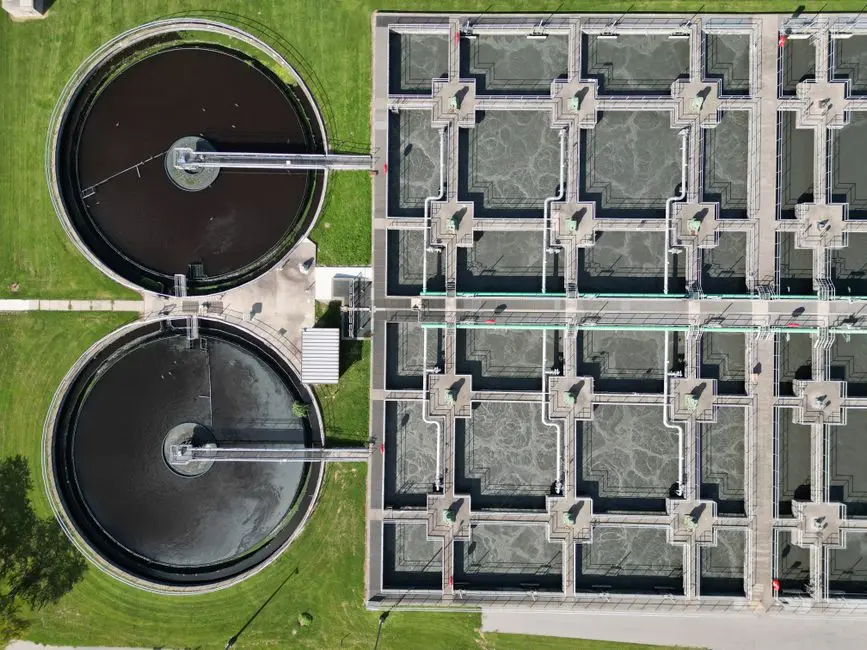
Step 2 is the reactor volume, and it is where the high-MLSS character of a submerged MBR pays off. The aeration tank volume is solved from the standard relationship: Volume = (organic load) ÷ (F/M ratio × MLSS). The research supplied does not publish a single F/M value for submerged MBR on domestic sewage, so the F/M ratio is a design input the buyer confirms with the MBR supplier, typically in the 0.05–0.20 kg BOD/kg MLSS·day band for MBR operation on residential wastewater.
The MLSS term is the one that genuinely changes the answer. Submerged MBR systems sustain a biomass concentration of 6,000–12,000 mg/L (S1), which is roughly three to six times a conventional activated-sludge plant running at 2,000–3,000 mg/L. Pushing MLSS to the upper part of the range compresses the aeration tank to a fraction of a CAS volume, which is what allows the whole biological stage to fit inside a single ISO container; pushing it too high hurts oxygen-transfer efficiency and scours the membranes, so the supplier's recommended operating window should be respected.
Where nitrogen removal is required, the configuration changes. S1 documents an anoxic pre-chamber designed to optimize nitrification-denitrification and allow simultaneous COD and nitrogen removal, sized at roughly 20–30% of the aeration volume. This is the configuration that aligns the plant with NOM-001-SEMARNAT-2021 nitrogen limits, and it is the configuration the supplier's datasheet should be checked against. As a cross-check, hydraulic retention time inside the aeration chamber is typically 6–10 hours at this MLSS range for domestic sewage; if the calculated volume gives an HRT outside that envelope, the inputs (load, F/M or MLSS) are inconsistent and need to be revisited.
Step 3: Size the Membrane Module and Confirm Flux
Step 3 is where the throughput bottleneck lives. In a containerized MBR, the membrane area — not the tank — sets the ceiling on peak hourly flow, so the membrane stage is sized after the bioreactor is dimensioned, not before. The required membrane area is calculated as peak flow ÷ (sustainable net flux × modules per cassette), and the sustainable net flux is read off a flux-vs-TMP curve provided by the membrane supplier.
The supplied research does not publish a specific sustainable flux figure for flat-plate UF on domestic sewage, so the buyer should ask the supplier for the operating envelope — typically expressed as net flux, backwash interval and recovery — rather than pick a number from memory. As a sizing reference, the DF-series flat-sheet MBR membrane module cassettes cover 80–225 m² of membrane area per cassette and produce 32–135 m³/day per cassette, depending on the model and the influent conditions; these ranges are useful for an order-of-magnitude check against the calculated area.
Two performance claims from the research directly affect compliance. The membrane's average pore size is 0.2 μm with a nominal maximum of 0.4 μm (S1), and the membrane stage reduces virus and bacteria by 99.9999% (S2). At those removal rates, the membrane stage alone can satisfy the fecal coliform targets of NOM-001-SEMARNAT-2021 for many receiving-body classes without tertiary chlorination, but the buyer must still check the specific limit that applies to the receiving body in the project's delegation. Membrane relaxation and backwash cycles (S1) reduce net throughput, so the peak-flow check must include the duty cycle the supplier programs into the permeate pump — a common source of under-sizing on shift-change peaks.
Step 4: Match the Plant to a 20-ft, 40-ft or I-Version Container
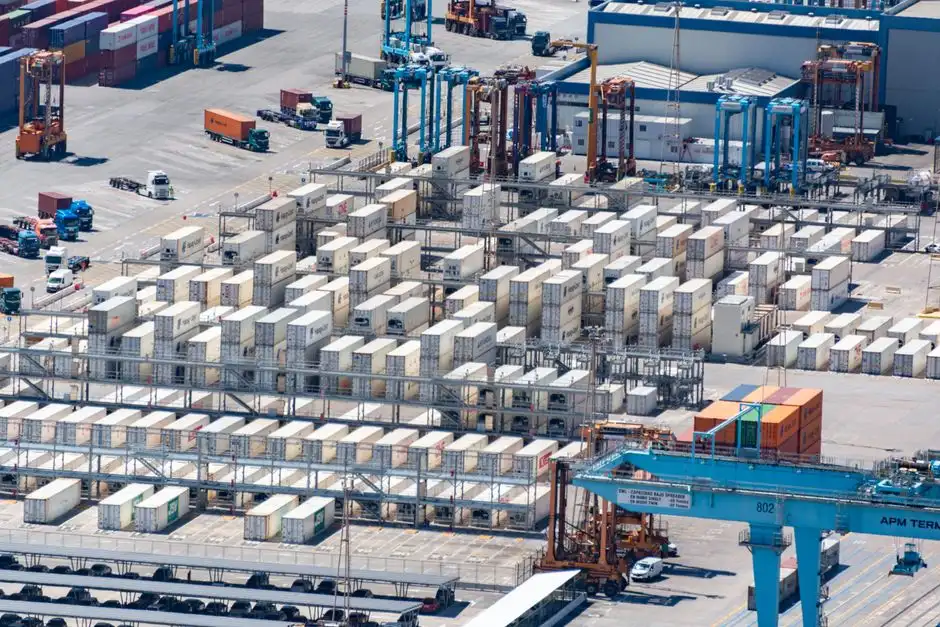
Step 4 turns the hydraulic answer into a container-format decision. The benchmark from S2 is that a single 40-ft ISO container can filter more than 1,200 m³/day, and that figure is the practical ceiling for fitting an entire biological and membrane stage into one frame; above that, the train moves to multiple 40-ft containers or to a U-Version where aeration and buffering move into underground civil tanks.
Below roughly 50 m³/day, a 20-ft container or a skid-mounted I-Version is usually the lowest-cost option. The I-Version (S2, S4) is the fully integrated mobile format — all mechanical equipment and plant control inside the ISO frame — which is suited to remote resorts and workers' camps where the plant may be relocated as the project phases move. The U-Version is the alternative where the aeration and buffering tanks are built as underground civil works on site, with the 20-ft or 40-ft frame carrying the membrane cassette, blowers and control panel. In CDMX delegations with strict visual-impact rules or soil constraints, U-Version may be the only practical fit; in remote sites with no civil-works capacity, I-Version is faster.
Containerized MBR systems are modular and prefabricated, so future capacity is added by parallel units (S1, S2) without disturbing the running plant. The buyer's job at this step is to leave room on the pad for a second unit if the apartment tower or camp is phased, and to confirm that the supplier's control panel can synchronize multiple cassettes in parallel. The decision summary:
| Format | Indicative capacity | Best-fit project | Notes |
|---|---|---|---|
| 20-ft ISO container / skid | Up to ~50 m³/day | Small resort, remote camp phase 1 | Lowest CAPEX, limited expansion headroom |
| 40-ft ISO container (I-Version) | Up to >1,200 m³/day (S2) | Apartment tower, gated community, large camp | Plug-and-play, mobile, parallel-train expandability |
| U-Version (underground tanks + 20/40-ft head) | Site-dependent | Urban sites with burial or aesthetic constraints | Requires civil works; lower visual impact |
Step 5: Verify NOM-001-SEMARNAT-2021 Compliance and Operating Envelope
Step 5 closes the loop with the regulatory check. The supplier's expected pollutant removal efficiencies (S1) are compared against the specific NOM-001-SEMARNAT-2021 table that applies to the receiving body the project discharges to — rivers, reservoirs, soils and coastal waters each have different daily maximum permissible limits for BOD, COD, total suspended solids, total nitrogen and fecal coliform. The buyer should request the supplier's conformance statement against the relevant table, not a generic municipal-wastewater figure.
For projects whose influent carries total nitrogen above the discharge limit, the anoxic pre-chamber configuration from S1 is the working answer: it allows simultaneous COD and nitrogen removal through nitrification-denitrification in a single train, which is what the MBR format can deliver without adding a separate tertiary denitrification stage. Upstream of the MBR, a coarse bar screen and grease/fats removal are mandatory — S1 states that submerged MBR systems must not receive fats, oils or hair, and the standard headworks pairing for the bioreactor is the GX rotary mechanical bar screen.
On the operating side, S2 states that the membranes do not need regular chemical cleaning except one or two maintenance clearings per year, and S1 describes an in-situ cleaning system supplied with the plant so modules are never removed for routine maintenance. The chemical dosing for those cleanings is handled by an automatic chemical dosing system, which is also what supports the in-situ cleaning train the supplier commits to in writing. A warranty clause that ties membrane performance to the buyer's chemical dosing regime is the cleanest way to lock this into the supply contract.
Frequently Asked Questions
What size containerized MBR STP do I need for a 200-person residential community in CDMX?
Start with the load profile from Step 1: 200 residents × per-capita flow × peak factor. With a CDMX-aligned per-capita figure (request from the local utility) and a 2.0–2.5 peak factor, peak hourly flow is the number that sets the membrane cassette count, not average daily flow. Below ~50 m³/day average, a 20-ft ISO frame is the right container; a 200-person community typically sits above that, so the realistic answer is a single 40-ft I-Version or a skid-mounted unit sized from the calculated peak flow and sustainable flux. Ask the supplier for the cassette count, not just the container size.
Does a containerized MBR meet NOM-001-SEMARNAT-2021 without tertiary treatment?
For fecal coliform, the membrane stage's 0.2 μm average pore size and 99.9999% virus-and-bacteria reduction (S1, S2) typically meet the standard without chlorination, but the project-specific answer depends on the table that applies to the receiving body classification — rivers, reservoirs, soils and coastal waters each carry different daily maximum permissible limits. For total nitrogen, NOM-001-SEMARNAT-2021 usually requires a nitrification-denitrification step; the configuration in S1 adds an anoxic pre-chamber for that. The check the buyer should run is a line-by-line conformance statement from the supplier against the specific NOM-001 table, not a generic compliance letter.
What should I ask a containerized MBR supplier before placing the order?
Four items: (1) the flux-vs-TMP curve and operating envelope for the membrane module, because sustainable flux is the number that sizes the cassette count; (2) the blower rating at the project's elevation, with an explicit derating for the 2,200 m+ CDMX basin; (3) the in-situ cleaning system and the chemical dosing regime, because S2 commits to one or two cleanings per year and the supplier's scope should include the dosing hardware; (4) lead time and factory acceptance test scope, since plug-and-play delivery (S1, S2) is the reason civil works collapse to a pad. Comparing at least two suppliers on those four points is the most reliable way to defend the selection.
What CAPEX should I budget for a packaged MBR STP for a CDMX apartment tower?
The supplied research does not publish a price, so a budget figure should not be inferred from generic ranges. What the buyer should request from each shortlisted supplier, on a like-for-like basis, is: containerized scope, cassette model and count, blower rating (derated for CDMX altitude), anoxic pre-chamber if nitrogen removal is in scope, headworks bar screen, chemical dosing system, factory acceptance test, delivery to site and commissioning. Two or three written quotations on that scope, plus a separate installation-and-civil estimate, are the inputs a project manager needs to defend a budget to a developer or board — the actual figure will be supplier-specific and site-specific.